

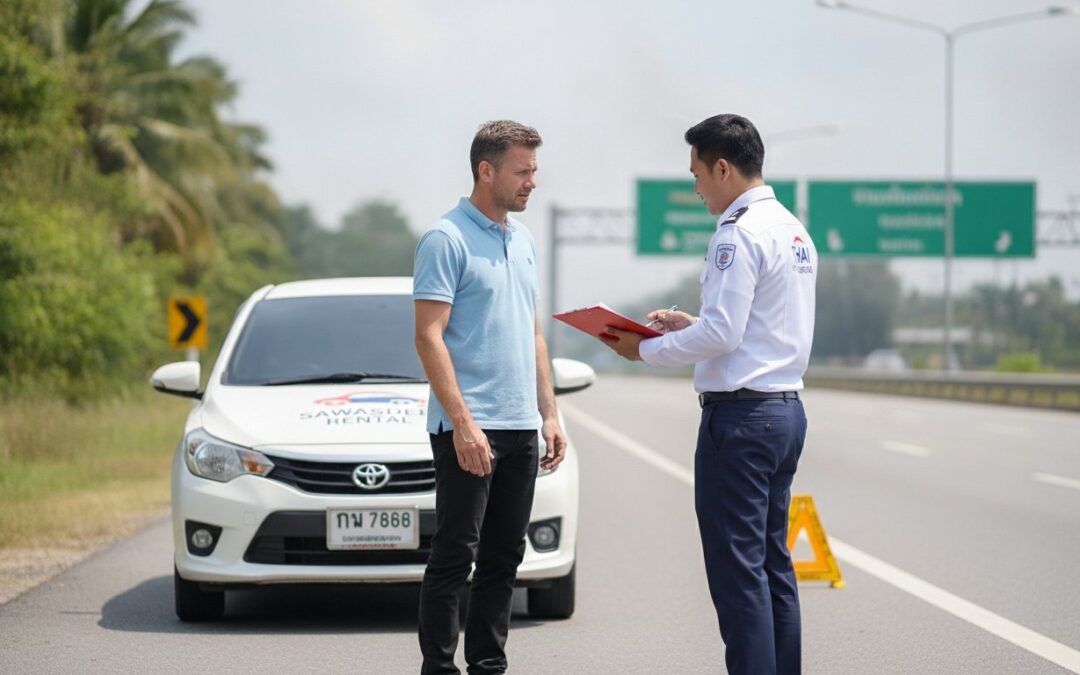
You might think your first call after a fender bender should be to the local police, but in the Land of Smiles, the most important person at the scene is actually the insurance surveyor. It’s incredibly stressful to find yourself standing on the side of a busy Thai highway, worrying about language barriers or whether you’ll be unfairly blamed while your security deposit hangs in the balance. We know exactly how that feels; it’s why we’ve designed this authoritative guide on the rental car accident procedure Thailand requires in 2026.
Our guide provides the clarity you need to protect your deposit and ensure your insurance coverage remains intact. We’ll walk you through the essential “do not move” rule that prevents claim rejections and provide a verified checklist of who to call, including the Tourist Police at 1155 and emergency medical services at 1669. You’ll also learn how the strict new traffic fine system launched on August 1, 2026, affects your rental agreement and tax renewal. This is your roadmap to handling Thai road protocols with the confidence of a savvy local expert, keeping your journey smooth and your wallet protected.
Key Takeaways
- Learn why following the “do not move” rule is the most critical step to prevent your insurance claim from being rejected at the scene.
- Master the official rental car accident procedure Thailand mandates, including the direct lines for English-speaking Tourist Police and medical responders.
- Understand how “First Class Insurance” and your specific “Excess” amount work together to limit your financial liability after an incident.
- Discover how to use the surveyor’s “Claim Slip” as a powerful tool to protect your security deposit from unfair deductions.
- See why selecting a reputable agency with clear English terms and documenting the vehicle’s condition via video can save you from unexpected “Loss of Use” charges.
Immediate Steps at the Scene: The ‘Do Not Move’ Rule
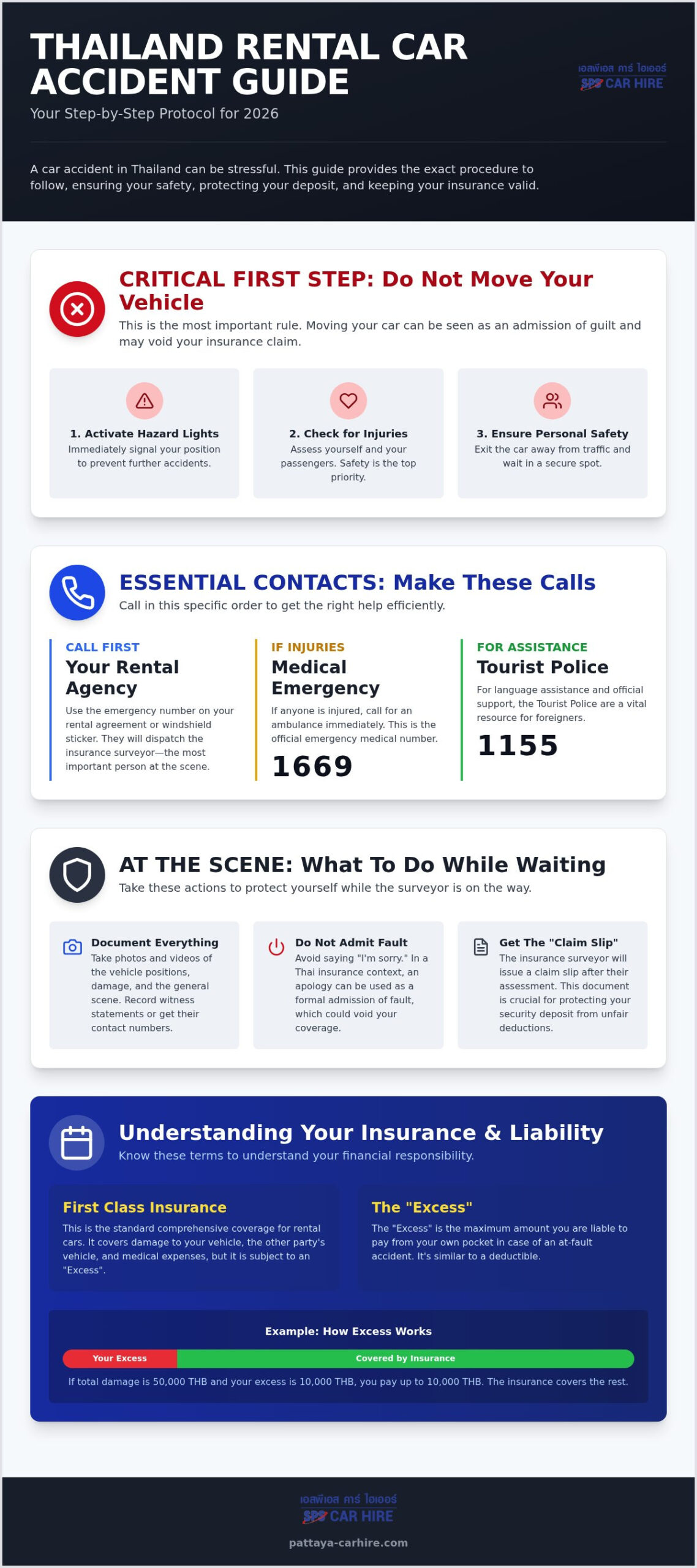
The moment a collision occurs, your adrenaline spikes and your first instinct might be to pull over to clear the lane. Don’t do it. Stop the vehicle exactly where the impact happened and switch on your hazard lights immediately. In the fast moving world of transportation in Thailand, signaling your position is the only way to ensure other drivers don’t turn a minor scrape into a multi car pileup. Once the car is secured, check yourself and your passengers for injuries. If anyone requires medical attention, dial 1669 for an ambulance right away. This is the official emergency number for medical responders who can coordinate with local hospitals.
Following the correct rental car accident procedure Thailand mandates starts with one non negotiable rule: do not move your vehicle under any circumstances until a surveyor or a police officer tells you to. While you wait, look for witnesses. Many locals or fellow travelers might stop to help, but they won’t stay forever. Ask for their phone numbers or record a short video of them describing what they saw. Having a third party account is a powerful tool when the insurance companies begin their investigation later that day. It’s your best defense against being unfairly blamed for an incident you didn’t cause.
Why Moving the Vehicle is a Legal Risk
In Thailand, the resting position of the vehicles is the most vital piece of evidence for the insurance surveyor. Think of the accident site as a forensic scene that needs to stay preserved. If you move your car to the shoulder to be polite to other motorists, you’re effectively tampering with the evidence. This simple act of courtesy is often interpreted by authorities as an admission of guilt or an attempt to hide the true nature of the crash. You should only shift the vehicle if you receive a direct order from a uniformed police officer or if staying in place poses a life threatening danger, such as a vehicle fire or a blind corner on a high speed road.
Ensuring Personal Safety While Waiting
Safety doesn’t end once the cars stop moving. Exit your vehicle from the side away from active traffic and find a secure spot on the roadside shoulder. You’ll need to talk to the other party involved, but keep the conversation brief and professional. Avoid the “I’m sorry” trap at all costs. While it feels like a natural courtesy, in a Thai insurance context, an apology can be framed as a formal admission of fault. A “No Fault Admission” rule is a standard insurance requirement in Thailand, which means any statement you make regarding blame could potentially void your coverage. Stick to the facts, exchange contact details, and wait for the savvy experts to arrive and handle the paperwork.
Essential Contacts: Calling the Rental Agency and Tourist Police
Once you’ve secured the scene and confirmed everyone’s safety, your focus must shift to the official rental car accident procedure Thailand requires for insurance validity. Your very first call should be to the emergency hotline provided by your rental agency. This number is usually found on a sticker on the windshield or within your rental agreement. When you speak to them, be clear about your location and request that they dispatch an insurance surveyor to the scene immediately. While you wait, keep a simple log in your phone of the exact time you called and the names of every representative or official you speak with. This documentation is your best friend if there are later disputes about response times or instructions given.
Choosing a transparent provider like SPS Car Hire ensures you have a reliable team backing you up during these high pressure moments. Having a savvy local expert at the end of the line makes all the difference when you’re trying to navigate unfamiliar protocols in a foreign language. It’s about moving quickly from confusion to a structured plan of action.
The Role of the Insurance Surveyor
In many Western countries, you wait for the police to write a report. In Thailand, the insurance surveyor is the most critical person at the scene. These professionals are third party experts hired by the insurance company to determine liability right there on the road. When they arrive, they will take extensive photos, examine the damage, and interview both parties. If the surveyor determines you aren’t at fault, they will issue you a “claim slip” on the spot. You should trust the surveyor’s professional assessment over any suggestions or pressure from the other driver. Their report is what the rental agency uses to process your claim and, more importantly, protect your security deposit.
Working with the Tourist Police (1155)
While the Royal Thai Police handle the legal side, tourists should always dial 1155 to reach the Tourist Police. These officers are specifically trained to assist visitors and, crucially, they speak English. They act as a vital bridge between you and local authorities who may not be fluent in your language. Having a Tourist Police officer present during statement recording ensures your side of the story is accurately captured. As noted in this Canadian government travel advisory, road safety and legal interactions can be complex for foreigners. For more context on navigating local traffic, check out our Essential Driving Tips and Road Rules for Tourists in Thailand: 2026 Guide. Their presence provides a layer of protection against being unfairly blamed as the “rich foreigner,” ensuring the process remains fair and transparent.
Understanding Thai Car Rental Insurance and Liability
Mastering the rental car accident procedure Thailand requires is only half the battle; you also need to understand the financial safety net beneath you. In Thailand, the gold standard is “First Class Insurance,” also known as Type 1. This is the most comprehensive coverage available, protecting the vehicle, the passengers, and third party property. However, even with premium coverage, you’ll likely encounter an “Excess” or deductible. This is the maximum amount you’re responsible for paying if you’re found at fault or if the other party can’t be identified. It’s a standard cap designed to keep daily rental rates budget friendly while ensuring you aren’t hit with a massive bill for a total loss.
Your liability hinges on the surveyor’s final report. Under Thai law, incidents are categorized as At Fault, Not At Fault, or Mutual Fault. If it’s Mutual Fault, both drivers are deemed responsible, and each pays their own insurance excess. It’s also vital to remember that your insurance is only valid if you’re driving legally. This means having a valid International Driving Permit (IDP) alongside your original home license. As the Australian Government travel advice for Thailand points out, road accidents are a significant risk, and failing to meet local licensing requirements can void your protection entirely.
First Class Insurance vs. Basic Coverage
When you’re comparing options, it’s important to look beyond the daily price tag. High quality car rental insurance provides peace of mind by covering third party property damage, which can be astronomical in a serious collision. Most budget friendly rentals utilize a standard excess, typically starting around 5,000 baht, to maintain their competitive edge. We always advise our clients to be transparent about their needs; for example, long term packages often offer more robust support. Just remember that any insurance coverage is immediately void if the driver is under the influence of alcohol or drugs. We take your safety seriously, and the law does too.
The ‘No Party’ Accident (Single Vehicle Damage)
Not every incident involves another driver. If you scrape a pillar in a tight parking garage or clip a signpost, you’re involved in a “No Party” accident. Even if the damage seems like a minor scratch, you must notify the rental agency immediately. The surveyor still needs to document the incident to process the claim under your First Class policy. Without an identified third party to claim against, you’ll be responsible for the excess fee listed in your contract. First Class insurance doesn’t always mean zero-cost if a third party isn’t identified. Keeping us in the loop from the start ensures there are no surprises when it’s time to return the vehicle.
The Claims Process: Managing Repairs and Deposits
After the surveyor leaves the scene, the focus of the rental car accident procedure Thailand follows shifts to the financial aftermath. The most valuable document in your possession now is the ‘Claim Slip’. This small piece of paper is your shield against losing your security deposit. If you were found ‘Not At Fault’, this slip confirms that the other party’s insurance company is responsible for the costs. When you return the vehicle, presenting this slip allows the agency to close the case without deducting repair costs from your held funds. Typically, deposit refunds are processed within 7 to 14 business days, depending on your bank’s policies and whether the vehicle was returned with a clear claim status.
One detail that catches many travelers off guard is the ‘Loss of Use’ charge. This is a daily fee charged by the rental agency to cover the revenue lost while the car is in the repair shop. Even with First Class insurance, most standard contracts require the renter to pay this daily rate for the duration of the repairs if they are found at fault. For those on long term car rental insurance Thailand plans, these terms are often more flexible, but it’s essential to check your specific agreement. If you want a rental experience with no hidden surprises, you should book your next vehicle with SPS Car Hire to ensure every term is explained clearly in English.
Repair Timelines and Vehicle Replacement
If the collision was severe enough that the car is no longer drivable, the rental agency will coordinate towing. Replacement vehicle policies vary, but most budget friendly agencies will provide a new car if one is available in their fleet. You should be aware that a replacement car usually requires a completely new security deposit, as the previous deposit is tied to the damaged vehicle’s claim. Long term rental packages often include prioritized maintenance and faster replacement turnaround times to ensure your life in Thailand remains uninterrupted.
Navigating the Police Station Visit
A trip to the local police station is mandatory if there are injuries, significant property damage, or a dispute over fault that the surveyor couldn’t resolve. At the station, the officer will record formal statements and may issue a ‘Fine for Careless Driving’. This is a standard administrative fee, often ranging from 400 to 1,000 baht, paid directly at the station’s desk. Never sign any document written in Thai without a translator or a Tourist Police officer present. Your statement is a legal record, and having a savvy advocate ensures that nothing is lost in translation during the final report filing.
How to Secure a Protected Rental in Thailand
Prevention is always better than a cure, especially when it comes to the rental car accident procedure Thailand requires. Your journey starts long before you turn the key; it begins with choosing a partner that speaks your language literally and legally. Always opt for a reputable local agency that provides every term of the insurance agreement in clear English. If a contract feels vague or the staff can’t explain the excess fees, walk away. You deserve total transparency so you can drive without the nagging fear of hidden costs or unfair charges if something goes wrong.
Before you leave the lot, perform a meticulous inspection of the vehicle. Take a high definition video that circles the entire car, focusing on the wheels, bumpers, and glass. This digital record is your ultimate proof of the car’s condition at pickup. Ensure your rental includes First Class Insurance to cap your financial exposure. While budget rentals are great, saving a few hundred baht on a policy that lacks third party property coverage is a gamble you don’t want to take. Finally, save the emergency numbers for the Tourist Police (1155) and the agency hotline in your phone contacts immediately. Being prepared means you can react with calm confidence if an incident occurs.
Why Local Expertise Matters
You gain an immediate advantage when renting from a provider like SPS Car Hire because you’re backed by direct local support. We’ve spent years building relationships with surveyors and authorities, which helps us simplify the accident process for our clients. We believe the “best price” isn’t just about the lowest daily rate; it’s a combination of budget friendly pricing and premium, transparent insurance protection. You get the reliable vehicles you need without the detachment of a global corporation, ensuring a savvy local is always ready to help you navigate local protocols.
Final Checklist Before Driving
- Confirm your International Driving Permit (IDP) is valid and matches your home license.
- Review and sign the rental agreement only after confirming the insurance excess amount.
- Check the windshield for the ‘Por Ror Bor’ sticker, which is the mandatory compulsory insurance.
- Verify that the spare tire and jack are in good condition and ready for use.
Don’t leave your safety to chance. Secure your next budget-friendly rental with full transparency at SPS Car Hire and experience the peace of mind that comes with expert local guidance.
Take Control of Your Thai Road Trip
Standing on the roadside after an incident shouldn’t ruin your holiday or drain your bank account. By sticking to the “do not move” rule and immediately contacting the Tourist Police at 1155, you ensure that evidence remains intact and your voice is heard. The most critical takeaway is the role of the insurance surveyor; their claim slip is the only document that truly secures your deposit against unfair deductions. Mastering the rental car accident procedure Thailand mandates for 2026 transforms a stressful moment into a manageable process.
We are here to make sure you never have to navigate these protocols alone. Our team provides dedicated support for long-term expat rentals and offers first-class insurance options to keep your liability at a minimum. With our Best Price Guarantee on all rentals, you get premium protection without the premium price tag. We pride ourselves on being the savvy local guide you need for a friction-free journey.
View our budget-friendly rental fleet with transparent insurance options and start your journey with a partner you can trust. Safe travels and confident driving are just a click away.
Common Questions About Thai Accident Protocols
What is the first thing I should do after a car accident in Thailand?
Stop your vehicle immediately and switch on your hazard lights to warn other drivers of the obstruction. Your priority is checking all parties for injuries and dialing 1669 if anyone needs an ambulance. Following the official rental car accident procedure Thailand requires, you must leave the car exactly where it stopped. This preserves the scene for the insurance surveyor, who uses the resting positions of the vehicles to determine exactly how the collision occurred.
Do I need to call the police for a minor car rental scratch?
You should always contact your rental agency first, even for a small scratch or dent. While you might not need the regular police for a minor scrape, the insurance company usually requires a surveyor to document the damage. If you return the car with undocumented damage, the agency will likely deduct the repair costs and “Loss of Use” fees directly from your security deposit because the insurance claim cannot be processed without a report.
Will my rental insurance cover me if I don’t have an International Driving Permit?
Your insurance coverage will likely be void if you drive without a valid International Driving Permit (IDP) and your original home license. Thai law and insurance providers require drivers to be fully legal to maintain protection. If you’re involved in an incident without these documents, you become personally liable for all damages to the rental car and any third party property, which can lead to a massive financial burden.
What is ‘First Class Insurance’ in the context of a Thai car rental?
First Class Insurance, or Type 1, is the highest level of protection available for vehicles in Thailand. It provides comprehensive coverage for your rental car, its passengers, and any damage caused to third party property. While it offers the best peace of mind, it typically includes a set “Excess” or deductible. This means you only pay a capped amount if you are found at fault, rather than the full cost of repairs.
Can I move my rental car if it’s blocking traffic after an accident?
You must not move the vehicle unless a uniformed police officer gives you a direct order to do so. In the rental car accident procedure Thailand follows, the resting position of the cars is the primary evidence for determining liability. Moving the vehicle prematurely can be interpreted as an admission of guilt or tampering with the scene. The only exception is if staying in place creates a life threatening hazard for you or others.
How much will I have to pay if the accident was my fault?
You are responsible for paying the “Excess” fee defined in your rental agreement, which is the maximum deductible for an at fault accident. Additionally, you may be charged “Loss of Use” fees, which cover the daily rental income the agency loses while the car is in the repair shop. These costs are standard in budget rentals, but choosing a transparent agency ensures you know these exact amounts before you even sign the contract.
What happens to my security deposit after an accident claim?
Your security deposit remains held by the agency until the insurance claim is officially resolved. If the surveyor issues you a “Not At Fault” claim slip, your deposit is typically released in full within 7 to 14 business days. However, if you are found at fault or if the other party cannot be identified, the agency will deduct the agreed excess and any applicable administrative fees from the deposit before returning the balance.
Who should I call if the other driver doesn’t speak English?
Call the Thai Tourist Police at 1155 to request an English speaking officer for mediation and translation. They are specifically trained to assist visitors and can explain the situation to the local police and the other driver. Having a professional translator present prevents misunderstandings and ensures that your version of events is recorded correctly in the official police report, protecting you from being unfairly blamed for the incident.
 -
- -
- -
- -
- -
- -
- -
-