


Most travelers believe a standard car rental collision damage waiver Thailand policy is enough until they’re standing on a busy roadside trying to explain a minor dent to a police officer. It’s completely normal to feel overwhelmed by the local terminology, especially when you’re trying to figure out if “Type 1” insurance actually means you’re fully protected. You want to explore the beautiful landscapes without the constant fear that a stray motorbike or a tight parking spot will result in a massive bill or, worse, legal complications.
I’ve seen many visitors get caught in the trap of choosing the cheapest option only to realize it lacks the essential “Bail Bond” coverage required by Thai law in serious accidents. This guide is here to change that by showing you exactly how First Class insurance acts as your ultimate financial and legal shield. You’ll discover how to secure total peace of mind for your 2026 journey, from understanding the mandatory 645 Baht CTP digital policies to knowing which specific clauses in your agreement keep your bank account safe. We’ll break down the layers of protection so you can drive with the confidence of a savvy local guide who knows the inside track.
Key Takeaways
- Distinguish between mandatory government insurance and First Class (Type 1) coverage to ensure you aren’t left paying for vehicle repairs out of pocket.
- Learn why First Class is the only tier that covers “own damage,” protecting you from costs related to single-vehicle accidents like hitting a curb or wall.
- Discover how a car rental collision damage waiver Thailand limits your financial liability while providing essential legal bail bond protection.
- Identify the critical “licensing trap” where an invalid driver’s license can instantly void your entire insurance policy and legal safeguards.
- Gain the confidence to compare rental agreements effectively, ensuring your budget-friendly vehicle doesn’t compromise on essential 2026 safety standards.
Understanding First Class (Type 1) Insurance and the Car Rental Collision Damage Waiver in Thailand
When you step off the plane and look for a set of wheels, the paperwork can feel like a maze of Thai script and confusing jargon. You’ll likely hear the terms “Type 1” and “First Class” used interchangeably; in the local market, they’re exactly the same thing. This is the highest level of protection available, and it’s what separates a stress-free road trip from a financial nightmare. A robust car rental collision damage waiver Thailand policy is built on this First Class foundation, ensuring that you aren’t left holding a massive bill for a vehicle you don’t even own. It’s the “inside track” for anyone who wants to drive without the constant weight of “what-if” scenarios hanging over their head.
Compulsory vs. Voluntary: The Bare Minimum Trap
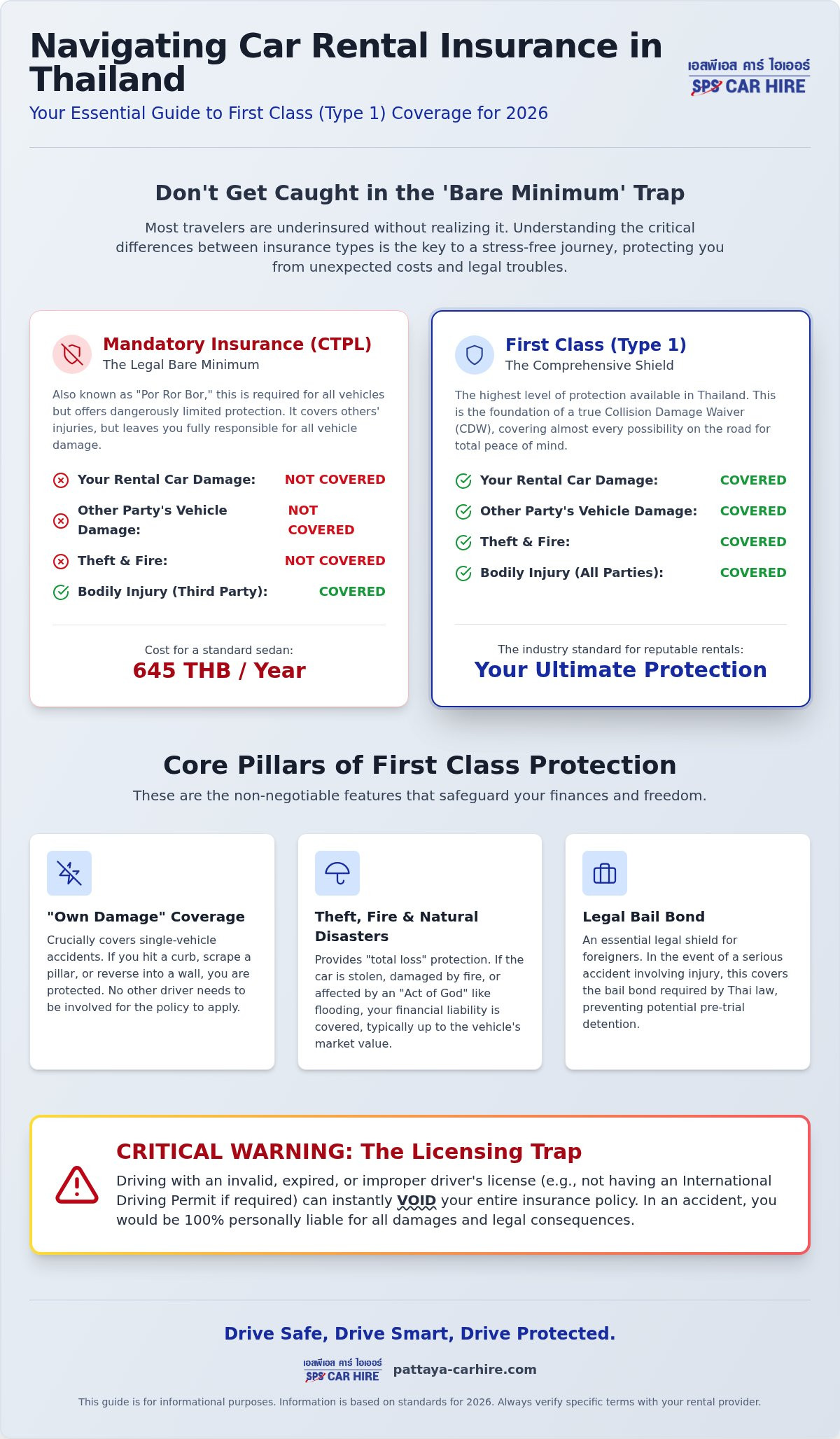
Every vehicle in Thailand must have Compulsory Third Party Liability (CTPL), known locally as Por Ror Bor. As of January 2026, these policies are entirely digital, and for a standard sedan, they cost a fixed 645 Baht per year. While the liability limit for bodily injury is capped at 5,000,000 THB, there’s a catch that catches many expats off guard: it covers zero property damage. If you scrape a luxury SUV or dent your rental’s bumper, the compulsory insurance won’t pay a single satang toward the repairs. First Class insurance is the top-tier voluntary protection in Thailand that shields your finances from almost every road-related risk. Without it, your personal savings are the only thing standing between you and the high cost of Thai body shops. Don’t settle for the bare minimum and hope for the best.
The ‘All-In’ Philosophy of First Class Coverage
The beauty of First Class coverage lies in its “own damage” clause. Unlike Type 2 or Type 3 insurance, which often only pay out if you can identify a third party at fault, First Class protects the vehicle regardless of who caused the incident. This is essentially a Damage Waiver that limits your financial exposure to a pre-agreed excess amount. Reputable national rental agencies prioritize this tier because it offers a three-way shield: it covers you, your rental car, and the other party’s property. A quality car rental collision damage waiver Thailand agreement provides this comprehensive safety net, turning a potential legal and financial disaster into a simple insurance claim. For long-term renters and expats, this isn’t a luxury; it’s a necessary tool for maintaining your freedom on the road. It removes the friction from the rental process and lets you focus on the destination.
The Core Pillars of First Class Coverage: Your Vehicle and Beyond
Thai roads are vibrant but unpredictable. While most people worry about hitting another car, the reality is that many rental claims involve stationary objects rather than other drivers. This is where the true value of a premium car rental collision damage waiver Thailand becomes apparent. It doesn’t just cover the big accidents; it protects you against the everyday mishaps that happen when you’re maneuvering through narrow alleys or crowded parking structures. Understanding these pillars ensures you aren’t left with a surprise bill for damage you didn’t even realize was your responsibility.
Own Damage: When No One Else Is to Blame
In the insurance world, “own damage” refers to incidents where no other vehicle is involved. Imagine you’re backing into a tight spot at a local market and clip a concrete pillar. In many standard policies, this would be a direct out-of-pocket expense because there’s no “other guy” to hold responsible. However, First Class insurance is specifically designed to handle these “no-party” claims. Whether it’s a minor scratch from a low-hanging branch or a dent from a high curb, your financial exposure is limited to the excess amount stated in your agreement. This pillar is a lifesaver for long-term renters who want to return their vehicle at the end of a lease without facing a staggering bill for cumulative minor wear and tear.
Theft, Fire, and the ‘Acts of God’ Clause
Your protection shouldn’t stop when you turn off the engine. If you’re parking on the street or in unsecured areas, the risk of theft or fire is a genuine concern that needs addressing. First Class coverage includes total loss protection, which means if the vehicle disappears or is destroyed by fire, the insurer steps in to cover the depreciated value of the car. This level of security is essential for anyone looking for budget car and truck rental options that still provide top-tier safety nets without the premium price tag.
Beyond theft, Thailand’s weather presents its own unique challenges. During the monsoon season, flash floods can turn a street into a river in minutes, posing a massive risk to the vehicle’s electrical and engine components. First Class is the only insurance tier providing comprehensive flood protection, ensuring that engine damage from rising waters doesn’t become your financial burden. While other tiers might leave you high and dry (or rather, wet and broke), First Class treats natural disasters as part of its comprehensive promise. It’s the ultimate “no-stress” choice for expats who understand that Thai traffic and weather require more than just the basics.
Third-Party Liability and Legal Protection: The Foreigner’s Shield
First Class insurance isn’t just about the car; it’s about your personal freedom. While the car rental collision damage waiver Thailand protects the physical vehicle, the third-party liability section acts as a legal firewall. In Thailand, accidents involving injuries can quickly escalate into complex legal battles. Having this shield means the insurance company steps in to handle the financial and legal weight of medical costs or property damage for others. It’s a level of security that allows you to focus on the road instead of worrying about potential lawsuits.
Personal Accident (PA) coverage is another layer often overlooked by casual renters. While you’re busy protecting the “other guy,” PA ensures that you and your passengers have medical coverage and compensation for permanent disability. High-quality policies in 2026 often include up to 1,000,000 ฿ for these instances. It’s a comprehensive approach that looks after the people inside the car as much as the car itself. This all-in-one protection is why we always recommend checking the specific PA limits in your agreement.
The Reality of Liability Limits in Thailand
Standard Compulsory Third Party (CTP) insurance is strictly for bodily injury and is capped at 5,000,000 ฿ per accident. However, it doesn’t cover property damage at all. If you accidentally hit a storefront or a high-end vehicle, you’re on the hook for every satang of that repair bill without voluntary coverage. First Class insurance provides a massive buffer, often covering millions of Baht in third-party property damage. This prevents a single mistake from turning into personal financial ruin, acting as a critical safety net between your bank account and a legal claim.
The Bail Bond: A Critical Safety Net
Most travelers don’t realize that under Thai law, a serious accident involving injury can lead to immediate detention while the police investigate. It’s a terrifying prospect for any foreigner in a different country. This is where the “Bail Bond” feature of a First Class policy becomes your most valuable asset. The insurance company provides a financial guarantee to the court, which allows for your release during the legal process.
I’ve seen how this one clause changes everything for expats. Instead of sitting in a cell, you’re free to handle your affairs while the insurer’s legal team does their job. It’s the primary reason savvy long-term renters refuse to settle for anything less than Type 1 coverage. It isn’t just about money; it’s about ensuring a mistake on the road doesn’t end your journey prematurely. This is the “inside track” on why premium protection is the only way to drive with true peace of mind.
What a Car Rental Collision Damage Waiver in Thailand Does NOT Cover
Even with the most robust protection, your policy isn’t an invitation for recklessness. Many renters assume that “First Class” means they’re covered no matter what, but that’s a dangerous misconception. A car rental collision damage waiver Thailand is a legal contract. If you break the fundamental rules of that agreement, the insurer has every right to walk away. Understanding these exclusions is just as important as knowing what’s covered because it prevents a simple mistake from becoming an unpayable debt. I’ve seen too many travelers lose their peace of mind because they ignored the fine print.
The Legal Requirements for Coverage Validity
The biggest trap for foreigners is the licensing requirement. In 2026, rental companies are implementing stricter documentation checks to ensure safety and prevent fraud. You must hold a valid Thai driver’s license or a recognized International Driving Permit (IDP). Simply showing a license from your home country isn’t enough to satisfy Thai insurance underwriters. If you’re involved in an accident without the correct paperwork, your First Class status disappears instantly. You can read more about how this fits into the bigger picture in our guide on comprehensive car rental insurance in Thailand.
Beyond licensing, your behavior behind the wheel dictates your coverage. Driving under the influence (DUI) is the fastest way to lose your protection. If a police report indicates alcohol or drugs were involved, the insurance company will deny the claim. This leaves you responsible for all vehicle repairs and third-party liabilities. Similarly, using a budget rental for commercial racing or illegal activities voids the agreement. These rules aren’t meant to be restrictive; they’re in place to keep everyone on the road safe and ensure the system works for responsible drivers.
Understanding the Excess (Deductible)
Even when a claim is successful, you’ll likely encounter an “excess” or deductible. This is a pre-agreed amount you pay toward repairs before the insurance covers the rest. Standard excess amounts in Thailand typically range from 5,000 ฿ to 20,000 ฿ depending on the vehicle category. It acts as a shared responsibility between you and the insurer.
- Fault-Based Excess: You pay this if you’re found responsible for the accident.
- No-Fault Excess: You might still pay a small fee for “no-party” claims, like finding a scratch in a parking lot where the culprit didn’t leave a note.
Always read the fine print in your rental agreement regarding these deductibles. Some providers offer an upgrade to Super Collision Damage Waiver (SCDW) for roughly 200 ฿ to 500 ฿ per day to reduce this excess to zero. If you’re looking for a best price car and truck rental that keeps these terms transparent and straightforward, always ask for a clear breakdown of the deductible before you sign. This level of clarity is what removes the friction from your journey and keeps your holiday stress-free.
Choosing a Rental with First Class Insurance: The Savvy Strategy
Finding the right vehicle is about more than just the daily rate. A savvy driver knows that the lowest sticker price doesn’t always equal the best value. In the Thai market, reputable agencies prioritize First Class insurance because it protects their assets while giving the renter a safety net that actually works. When you compare a car rental collision damage waiver Thailand from a top-tier provider versus a roadside shop, the difference usually lies in the fine print regarding liability and legal support. You want to find that sweet spot where budget-friendly rates meet premium protection. It’s about ensuring your ฿1,000 daily rental doesn’t turn into a ฿50,000 liability because you skimped on the waiver.
The contract is your only defense in a foreign country. Don’t let the excitement of the trip rush you through the signing process. Look for the specific mention of “Type 1” or “First Class” status. Verify the excess amounts for collisions and ensure there are no hidden fees for “cleaning” or “admin” that eat into your budget. A transparent agreement is the first sign of a reliable partner. I always recommend checking these three specific points before you drive away:
- The Excess Cap: Ensure the maximum you pay per incident is clearly defined.
- Bail Bond Inclusion: Confirm the insurer provides the legal guarantee for your release.
- Reporting Protocols: Know exactly who to call and how to document a claim to stay covered.
The Benefit of Long-Term Rental Packages
Monthly rentals are a game-changer for expats and long-term visitors. They often come with better insurance terms because the risk is spread over a longer period, making it easier for agencies to include premium coverage at a lower daily cost. This reduces the daily friction of worrying about every minor incident on the road. It provides a level of financial stability that daily hires simply can’t match. Check out our extended vehicle hire solutions to see how we structure these for maximum value and total peace of mind.
The SPS Car Hire Advantage
We focus on removing the stress from your journey by providing well-maintained, fully insured budget vehicles. Our commitment to transparency means you’ll never find hidden traps in our agreements. We act as your local guide, making sure you understand the 2026 regulations and never feel stranded or confused by local terminology. We believe that everyone deserves the highest level of protection, regardless of their budget. Secure your budget-friendly rental with First Class protection today and experience the difference of a transparent, customer-centric approach that puts your safety first.
Drive with the Confidence of a Savvy Local
Exploring the vibrant landscapes of Thailand should be about the journey, not the paperwork. We’ve explored how a comprehensive car rental collision damage waiver Thailand acts as your ultimate shield, covering everything from minor parking scratches to the critical legal bail bond that protects your freedom. By choosing First Class protection, you’re opting for a “no-stress” experience that safeguards your finances against the unpredictable nature of local traffic and monsoon weather.
Remember that your coverage is only as strong as your documentation. Keeping a valid International Driving Permit and following the rules of the road ensures your insurance remains a solid guarantee rather than a voided contract. At SPS Car Hire, we combine our independent local expertise with a Best Price Guarantee to ensure you get premium protection without the premium price tag. Whether you’re here for a week or looking for specialized long-term packages for expats, we’re dedicated to removing the friction from your journey. You deserve the peace of mind that comes from knowing every detail is handled by experts who care about your safety.
Book Your Fully Insured Budget Rental Now and start your adventure with total financial and legal peace of mind.
Frequently Asked Questions
Is First Class insurance mandatory for car rentals in Thailand?
No, only Compulsory Third Party (CTP) insurance is legally required for all vehicles in Thailand. However, relying solely on the mandatory 645 ฿ digital policy is a massive risk. It only covers basic third-party medical expenses and offers zero protection for your rental vehicle. First Class insurance is a voluntary addition that we highly recommend for anyone who wants to avoid paying for expensive repairs out of their own pocket.
Does First Class insurance cover me if I am at fault in an accident?
Yes, First Class (Type 1) insurance is designed to cover your vehicle regardless of who is at fault. This is a core part of a high-quality car rental collision damage waiver Thailand agreement. Whether you scrape a wall or collide with another car, the insurance company handles the repair costs minus your agreed excess. It provides the financial peace of mind that lower tiers like Type 2 or Type 3 simply cannot offer.
What happens if I have an accident and don’t have an International Driving Permit?
Your insurance coverage will be voided immediately if you drive without a valid International Driving Permit (IDP) or a Thai license. Insurance companies in Thailand are very strict about legal documentation. If you’re involved in an accident and cannot produce the correct license, you’ll be personally responsible for all damages and legal fees. Always ensure your paperwork is in order before you get behind the wheel of a rental.
Does First Class insurance cover damage caused by flooding?
Yes, First Class is the only insurance tier in Thailand that consistently includes coverage for natural disasters, including flooding. Given the intensity of the Thai rainy season, this protection is non-negotiable. If flash floods damage the engine or electrical systems of your rental, a First Class policy ensures the insurer picks up the bill. It’s a critical safety net for long-term renters living in flood-prone areas.
What is a ‘Bail Bond’ and why do I need it in my insurance policy?
A Bail Bond is a financial guarantee provided by the insurer to ensure your release from police detention following a serious accident. In Thailand, drivers can be detained during a criminal investigation if there are injuries involved. Having this bond in your policy means the insurance company provides the necessary funds to the court so you can remain free while the legal process moves forward. It’s an essential shield for every foreign driver.
Will First Class insurance cover theft of my personal belongings inside the car?
No, standard First Class insurance covers the vehicle and third-party liabilities, but it typically excludes personal belongings stolen from inside the car. To protect your laptop, cameras, or luggage, you would need a separate Personal Accident and Effects (PAE) policy or rely on your travel insurance. We recommend never leaving valuables in your vehicle, even when it’s parked in areas you consider safe or well-lit.
What is the difference between a CDW and First Class insurance?
A Collision Damage Waiver (CDW) is specifically a waiver that limits your financial responsibility for the rental car’s damage to a set excess amount. First Class insurance is a much broader category. It includes the car rental collision damage waiver Thailand plus third-party property damage, bodily injury coverage, fire and theft protection, and the critical bail bond. Think of CDW as a single component and First Class as the entire comprehensive package.
Can I get First Class insurance for a motorbike rental?
While First Class insurance is standard for our car and truck rentals, it’s much harder to find for motorbikes in the Thai market. Most motorbike rentals come with only the basic compulsory insurance. However, SPS Car Hire specializes in providing reliable motorbike hire with transparent terms. We always advise riders to check their specific rental agreement and ensure they have robust personal travel insurance that specifically covers motorbike accidents before heading out.
 -
- -
- -
- -
- -
- -
- -
-