

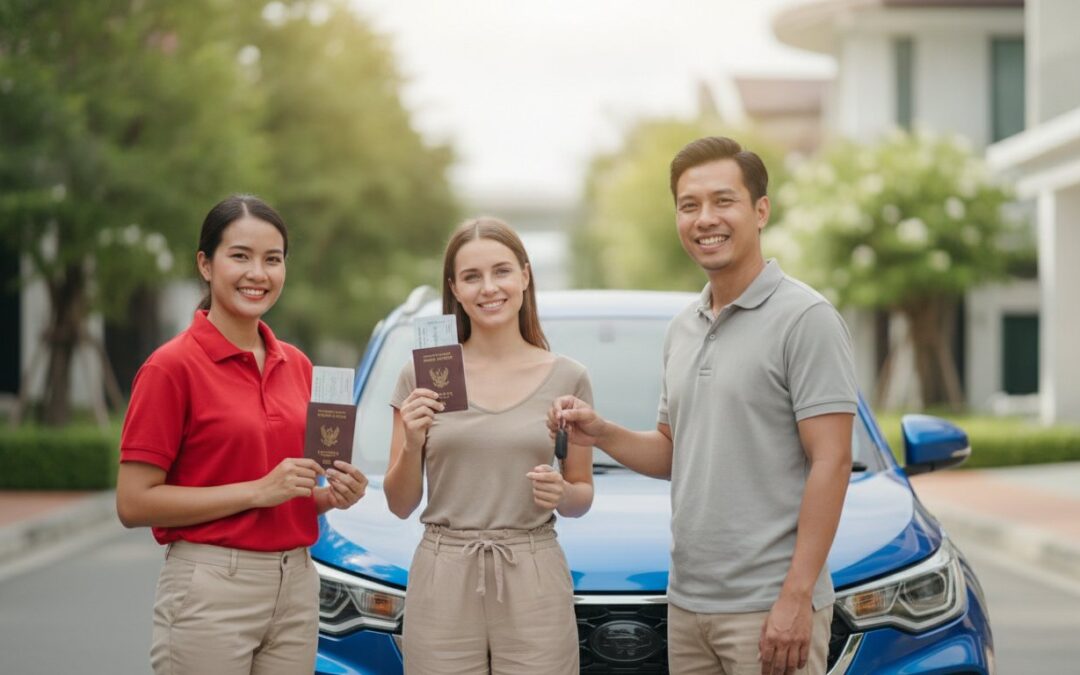
Imagine pulling over for a routine check near a busy Thai intersection only to realize your International Driving Permit is the wrong version for the latest 2026 regulations. It’s a stressful moment that can lead to a 1,000 ฿ fine or, even worse, an invalidated insurance policy. Understanding the car rental requirements Thailand for foreigners doesn’t have to be a headache if you have the right local advice. You likely want the freedom of the open road without the nagging fear of being uninsured or losing a massive deposit to a technicality.
We’re here to clear up the confusion and get you behind the wheel with total confidence. This guide breaks down the essential paperwork you need before you land and explains how to navigate the different insurance tiers available today. You’ll learn exactly which IDP convention is required, how to keep your security deposit between 5,000 ฿ and 20,000 ฿, and how to spot a rental deal that actually protects you. We’ll walk you through the 2026 legal updates so you can focus on the journey rather than the fine print.
Key Takeaways
- Prepare your original passport with a valid entry stamp and a driving license in English or with a certified translation to avoid rental desk delays.
- Secure the correct International Driving Permit (IDP) from your home country, as failing to match the right convention can lead to 1,000 ฿ fines or voided insurance.
- Prioritize “First Class” insurance and understand how security deposits, typically ranging from 5,000 ฿ to 20,000 ฿, are handled to protect your budget.
- Master the specific car rental requirements Thailand for foreigners to ensure you’re driving legally and safely on the left side of the road.
- Explore long-term rental packages if you’re staying for a month or more, as these often provide better value and simplified paperwork for expats.
Essential Documents for Renting a Car in Thailand
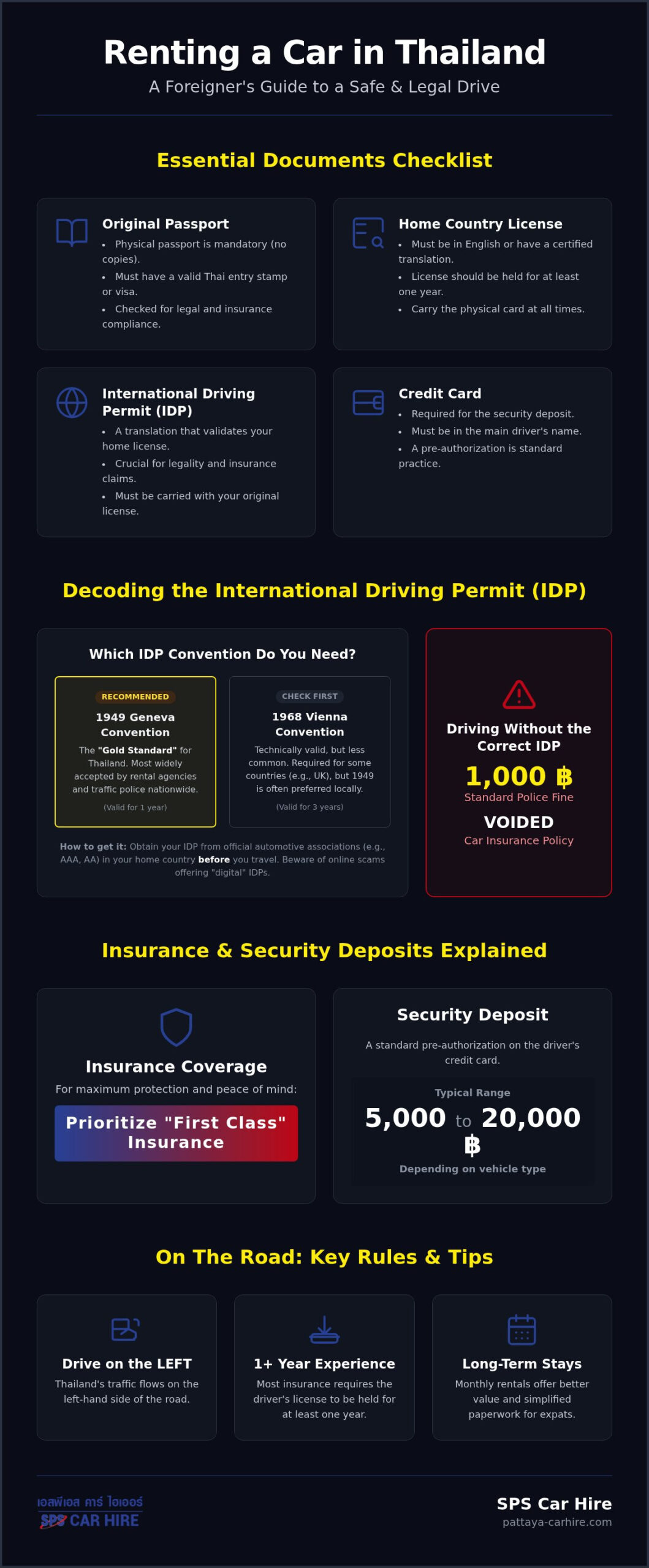
Walking into a rental office without the right paperwork is a fast way to ruin a holiday. While we pride ourselves on a smooth process, the car rental requirements Thailand for foreigners are set by law and insurance providers to ensure everyone stays protected. You need four core items to secure your keys: your original passport, a valid home driving license, the correct International Driving Permit (IDP), and a credit card in the driver’s name for the deposit.
Passport and Visa Requirements
Rental agencies must see your physical passport for verification. A photocopy or a digital image on your phone won’t cut it for legal registration. We check for a valid entry stamp or visa because standard insurance policies often become void if your stay in the country has expired. Whether you’re here on a standard tourist exemption or a Non-Immigrant visa for work, the agency records these details to comply with Department of Land Transport regulations. This transparency protects you from legal trouble if you encounter a checkpoint.
Home Country License Validity
Your home country license is your primary proof of driving competence. However, it isn’t enough on its own. You’ll need to carry the physical card alongside your IDP at all times while behind the wheel. If your license isn’t written in the Latin alphabet, you must provide a certified English translation. Most visitors can drive using their home license and an IDP for up to 90 days. After this period, the Thai driving licence system requires you to apply for a local license if you’re staying long-term. We always recommend that your license be at least one year old, as many insurance providers require this experience level for full coverage.
The IDP and Financial Security
Think of the IDP as the essential bridge between your home country’s rules and Thai traffic police expectations. It’s a translation document that validates your existing license, not a replacement for it. Driving without one can result in a 1,000 ฿ fine and could leave you personally liable for damages in an accident. Finally, ensure you have a credit card ready for the security deposit. While the specific amount depends on the vehicle type, expect a pre-authorization between 5,000 ฿ and 20,000 ฿. This is a standard industry practice that keeps the process fast and secure, allowing us to offer the best rates without compromising on service quality.
Understanding the International Driving Permit (IDP) Maze
An IDP is essentially a standardized translation of your home license. It doesn’t replace your license; it validates it for local authorities. If you’re looking into car rental requirements Thailand for foreigners, this document is your most important legal shield. Without it, your insurance is likely void, and you’re technically driving unlicensed in the eyes of the law. We’ve seen many travelers arrive with only their home license, only to find they can’t legally leave the rental lot.
Which IDP Year Do You Need?
Thailand’s relationship with international treaties can be confusing for visitors. The country is a signatory to both the 1949 Geneva Convention and the 1968 Vienna Convention. While the 1968 version is technically valid, the 1 year 1949 IDP remains the gold standard for most local checkpoints and rental desks. The 1949 IDP is the most widely accepted version for tourists. If you are coming from Britain, the UK Government Driving Permit Requirements state that you must have a 1968 IDP, but having both or checking with your local provider is a savvy move. Most agencies prefer the 1949 version because it’s universally recognized by every traffic officer in the Kingdom.
How to Obtain and Validate Your IDP
You must obtain your IDP in your home country before you fly to Thailand. Never fall for “online only” or “instant digital IDP” websites; these are often scams that provide worthless PDFs. Official bodies like AAA in the United States or the AA in the UK are the only reliable sources. Once you arrive, remember that the permit is useless on its own. You are legally required to carry both the IDP and your original, physical home license at all times. If you forget your physical license at home, the IDP is not considered a valid substitute.
Driving without the correct version isn’t just a minor oversight. If you’re stopped at a roadside check, the standard fine is 1,000 ฿. However, the real danger lies in the event of an accident. If your IDP doesn’t match the required convention, your “First Class” insurance might refuse to pay out, leaving you with a bill for tens of thousands of ฿. For peace of mind and to explore great value car and truck rental options with SPS Car Hire, always double check your permit’s expiration date before you head out. Checking these details early ensures your journey across Thailand remains stress free and legal.
Insurance and Security Deposits Explained
Navigating the financial side of a rental can feel like a minefield, but it’s simpler than you think. While the car rental requirements Thailand for foreigners include basic paperwork, the real security comes from your choice of coverage. Every legal vehicle in Thailand carries Compulsory Third-Party Liability (CTPL), but this only covers minimal bodily injury. It doesn’t protect the car or your wallet from significant repair bills if you’re at fault in an accident.
Why First Class Insurance is Essential
Standard rental agreements usually include a basic Collision Damage Waiver (CDW). However, this often comes with a high ‘excess’ or deductible, meaning you could be liable for the first 5,000 ฿ to 30,000 ฿ of any damage. For true peace of mind, we always recommend upgrading to First Class insurance. This comprehensive tier covers theft, fire, and property damage to both vehicles involved. First Class insurance is the only way to ensure full bail-bond coverage. If you want a deep dive into how these policies work, check out our guide on car rental insurance.
Managing the Security Deposit
Most agencies require a security deposit to cover potential traffic fines or minor damages not covered by insurance. According to Lonely Planet’s Thailand Transport Guide, using a credit card is the standard method for these ‘holds’ or pre-authorizations. While some local shops might ask for cash, using a credit card in the driver’s name is much safer. It ensures the funds are simply blocked rather than physically handed over, making the refund process smoother.
At SPS Car Hire, we prioritize transparent deposit terms to avoid any surprises when you return the vehicle. Deposits typically range from 5,000 ฿ to 20,000 ฿ depending on the car class. To protect your money, follow this simple checklist during the handover:
- Take a high-quality video walking around the entire vehicle before leaving the lot.
- Photograph any existing scratches or dents, no matter how small they seem.
- Ensure the fuel level matches exactly what is stated on the rental contract.
- Check the condition of the spare tire and ensure all tools are present.
Being thorough at the start means you can drive away with confidence. Documenting the vehicle’s condition ensures your deposit will be released without delay once the car is back in our hands. This straightforward approach is why savvy travelers choose us for a reliable, friction-free experience.
Age Restrictions and Driving Rules
Age isn’t just a number; it’s a critical factor in your insurance liability. Most reputable agencies set the minimum age at 21 for standard vehicles. Beyond your birth date, you generally need to have held your home license for at least one year. If you’re under 25, be prepared for ‘young driver’ surcharges that can add several hundred ฿ to your daily rate. These fees cover the higher insurance risks associated with less experience. Requirements for budget scooter rental are sometimes more flexible regarding age, but the car rental requirements Thailand for foreigners remain strict to protect both the driver and the agency.
Minimum and Maximum Age Limits
While the lower limit is standard, senior drivers also face specific guidelines. If you’re over 75, many companies require a fresh medical certificate to prove you’re fit for the road. This isn’t about doubting your skills; it’s a simple step that ensures your ‘First Class’ insurance remains valid. Different brands have different caps, with some cutting off at 65 and others extending much further with the right paperwork. Always check the specific age policy of your chosen vehicle class before finalizing your booking.
Rules for Additional Drivers
Never let an unregistered friend take the wheel, even for a short trip. Every person who drives must be listed on the rental agreement with their passport and IDP on file. If an unregistered driver has an accident, the insurance company will almost certainly deny the claim. This leaves you personally responsible for all damages, which can easily reach hundreds of thousands of ฿. You can always add a driver mid-rental by visiting a local office with their physical documents and paying a small daily fee.
Driving in Thailand requires a sharp shift in mindset. You must drive on the left side of the road and stay alert for motorcycles weaving through gaps in traffic. As of the April 2026 traffic law updates, enforcement is stricter than ever. Fines for running red lights, speeding, or failing to stop for pedestrians now reach up to 4,000 ฿. Not wearing a seatbelt or driving the wrong way can cost you 2,000 ฿. The blood alcohol limit is strictly 0.05%, and for anyone under 20, it drops to 0.02%. Stick to these rules to keep your journey smooth and cost-effective. If you’re ready to hit the road, book your best price car and truck rental with us and get the inside track on safe driving.
Booking Your Vehicle: Short-Term vs. Long-Term Stays
Deciding between a quick rental and a monthly lease often comes down to your itinerary and budget. While the basic car rental requirements Thailand for foreigners remain consistent regardless of duration, the financial advantages of extended hire are impossible to ignore. For those staying longer than a few weeks, daily rates quickly become a burden. Transitioning to a monthly package provides the stability of a personal vehicle without the heavy costs of ownership or the high daily turnover fees of international brands.
Savings with Monthly Rental Packages
Daily rates are perfect for a short coastal run, but savvy travelers know that monthly packages offer the best value. When you commit to a longer term, we can offer significant discounts that bring the daily cost down considerably. This is particularly true for those looking at long term truck rental, which is a popular choice for expats who need the extra utility for moving gear or exploring more rugged terrain. At SPS Car Hire, we leverage our independent local roots to guarantee the best price for these extended stays, ensuring your budget goes further while you enjoy a high-quality, well-maintained vehicle.
The Final Inspection and Handover
The moment you receive the keys is your last chance to ensure everything is perfect. Don’t let the excitement of the journey make you skip the basics. Check the tire pressure and tread depth, and ensure the spare wheel and jack are in the trunk. It’s also wise to peek at the fluid levels to ensure the car is ready for a long haul. Most reputable agencies operate on a “Full-to-Full” fuel policy, which is the industry standard in Thailand. This means you receive the car with a full tank and must return it the same way to avoid high refueling surcharges.
Before you shift into gear, take 60 seconds to perform a slow video walkthrough of the car. Capture every panel, the roof, and the interior dashboard. This simple actionable step is your ultimate protection when it comes time to return the vehicle. Having this visual record ensures that you won’t be held responsible for pre-existing marks. Once you’ve checked the paperwork against the vehicle’s condition, you’re legally ready to experience the freedom of the Thai roads with total confidence.
Hit the Road with Total Confidence
You now have the inside track on the car rental requirements Thailand for foreigners for 2026. From securing the correct 1949 IDP to understanding why First-Class insurance is non-negotiable for your safety, you’re ready to navigate the Kingdom like a savvy local. Remember that documenting your vehicle and registering every driver are the final steps to a worry-free experience. These small details ensure that your deposit stays safe and your focus remains on the beautiful scenery ahead.
We’ve built our reputation on transparency and value, ensuring you never face hidden fees or confusing terms. Whether you’re here for a week of exploration or settling in for a year, we provide the reliable vehicles and local expertise you need to stay mobile. Secure your budget-friendly car or truck rental today with SPS Car Hire and benefit from our Best Price Guarantee on all vehicles, comprehensive First-Class Insurance options, and dedicated long-term expat packages. We’re proud to be your trusted partner on the road. The open road is waiting for you; go out and enjoy every kilometer of your Thai adventure.
Frequently Asked Questions
Can I rent a car in Thailand with just my US or UK driving license?
No, you cannot legally drive with just a US or UK license. You must present it alongside a valid International Driving Permit (IDP). While some smaller shops might overlook this, it’s one of the non-negotiable car rental requirements Thailand for foreigners to ensure your insurance remains valid and to avoid 1,000 ฿ fines at police checkpoints. Always keep both physical documents in the vehicle during your journey.
Do I need an International Driving Permit (IDP) to rent a car in Thailand?
Yes, an IDP is mandatory for all non-ASEAN visitors. This document acts as a standardized translation of your home license. Without a 1949 or 1968 convention permit, you are technically driving unlicensed. This can lead to your insurance being voided in the event of an accident, leaving you personally liable for all repair costs and legal fees. It is your primary legal shield on Thai roads.
What is the minimum age to rent a car in Thailand for foreigners?
The standard minimum age is 21 years old for most budget car and truck rentals. Additionally, most agencies require you to have held your home country’s driving license for at least one year. Drivers under 25 should expect “young driver” surcharges, while those over 75 may need to provide a medical certificate to satisfy insurance providers and guarantee their fitness for the road. Always verify these limits before booking.
Is a credit card mandatory for the car rental deposit?
Yes, a credit card in the primary driver’s name is the industry standard for security deposits. This allows the agency to place a “hold” or pre-authorization on funds, which usually ranges from 5,000 ฿ to 20,000 ฿. While some local operators might accept cash, credit cards offer better protection for the traveler and ensure a faster, more transparent refund process once the vehicle is returned to the lot.
What happens if I get into an accident in a rental car in Thailand?
You must contact the rental agency and the insurance provider immediately before moving the vehicle. Provide your passport, driving license, and IDP to the responding officer. If you have secured a First-Class insurance policy, the provider will handle the negotiations and bail-bond coverage. Avoid admitting fault or paying any cash on the spot; let the professional adjusters handle the documentation and damage assessment to ensure your deposit is handled correctly.
Can I rent a car in Thailand with a tourist visa?
Yes, renting with a tourist visa or a standard visa exemption stamp is perfectly legal. You must provide your original passport showing the valid entry stamp to the rental desk. Agencies track this to ensure you are in the country legally, as an expired visa can invalidate your insurance coverage. For those staying longer than 90 days, consider looking into specialized long-term car rental packages for better value.
Are there additional fees for adding a second driver?
Most agencies charge a small daily fee to add an additional driver to the contract. Every person who intends to drive must present their passport, home license, and IDP at the rental office to be officially registered. Skipping this step is risky; if an unregistered driver is involved in an accident, the insurance policy will not cover the damages, regardless of who was at fault or the circumstances.
Can I take my rental car to neighboring countries like Laos or Cambodia?
No, standard rental agreements strictly prohibit taking vehicles across international borders. Rental cars are registered for use only within the Kingdom of Thailand. Attempting to cross into Laos, Cambodia, or Malaysia will void your insurance and is often flagged by GPS tracking systems. If you need transport in neighboring countries, it is best to arrange a separate rental once you have crossed the border to stay fully legal and insured.
 -
- -
- -
- -
- -
- -
- -
-