

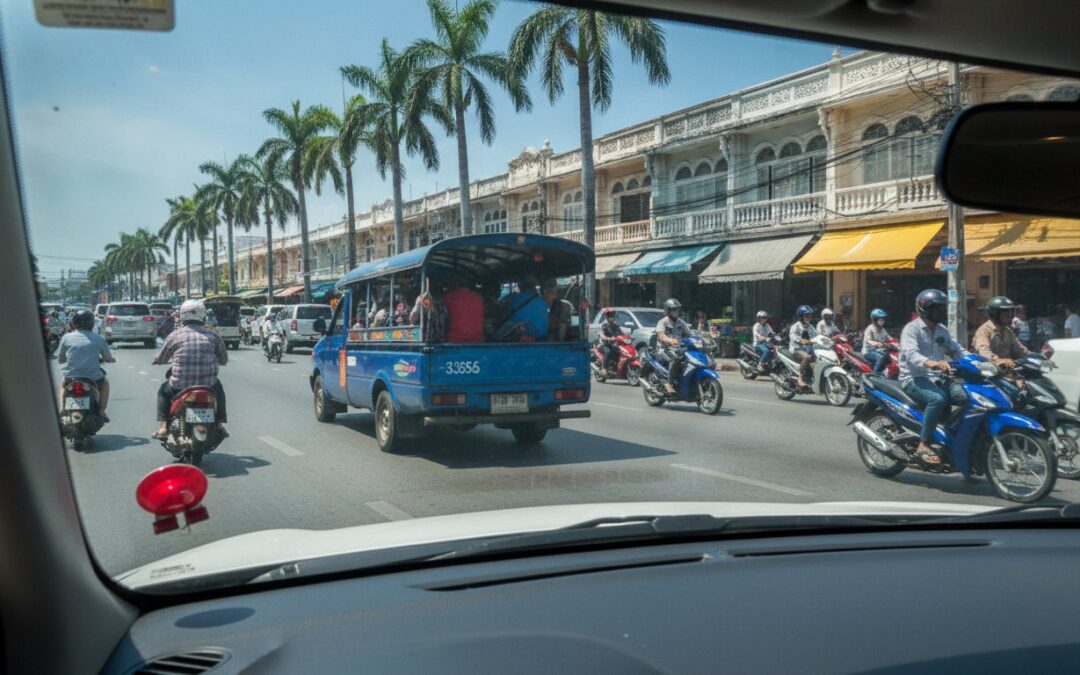
Did you know that motorcycles account for over 70% of road accidents during Thailand’s major holiday periods? If that statistic makes you grip your steering wheel a little tighter, you aren’t alone. It’s no secret that navigating Pattaya traffic feels like joining a high-speed, unscripted performance where the rules change at every intersection. You’re likely concerned about the swarm of bikes, the unpredictability of police checkpoints, or the hidden costs that often lurk behind “budget” rental deals that aren’t actually transparent.
We understand those frustrations because we’ve lived them. This guide will transform your driving anxiety into the quiet confidence of a savvy local expert. You’ll master the complexities of urban driving with professional strategies for safety, efficiency, and smart vehicle selection. We’re going to break down the strict 2026 traffic fine schedules and clarify the mandatory International Driving Permit requirements for the current year. By the end of this article, you’ll know exactly how to avoid the worst congestion while ensuring your rental experience is both budget-friendly and fully protected by the right insurance and legal knowledge.
Key Takeaways
- Carry a valid 1949 Geneva Convention International Driving Permit alongside your home license to stay legally compliant and avoid the updated 2026 traffic fines.
- Understand the unwritten “Hierarchy of the Road” to safely anticipate the movements of larger vehicles and the thousands of motorbikes you’ll encounter daily.
- Master the unique flow of Thai roads by learning how to balance high-speed arterials with narrow side streets when navigating Pattaya traffic.
- Optimize your journey by learning when to utilize high-speed national tollways versus secondary roads for a more cost-effective and efficient travel experience.
- Select the right budget-friendly vehicle, such as a resilient pickup truck or a nimble compact car, to handle local road conditions and seasonal weather changes with ease.
Understanding the Dynamics of Navigating Pattaya Traffic Nationally
Driving in Thailand requires a fundamental shift in how you perceive the road. You’ll quickly notice a unique flow where high-speed arterial highways lead directly into “sois,” or narrow lanes, that barely fit a single vehicle. Successfully navigating Pattaya traffic is often considered the ultimate test for any driver in the country because it forces you to adapt to these transitions instantly. It’s a concentrated version of the national driving experience, combining heavy commercial trucks, thousands of nimble motorbikes, and pedestrians into one fast-moving puzzle.
Recent national trends show a steady increase in vehicle density across all major provinces. This means that travel times have become more unpredictable, especially in urban hubs. To stay safe, you must adopt a philosophy of predictability and local awareness. Don’t expect others to follow rigid road rules; instead, focus on being visible and moving with the collective rhythm of the traffic around you.
The National Context of Urban Congestion
City layouts in Thailand often contribute to significant bottlenecks because they were frequently built around central markets or historical landmarks. This creates specific “rush hour” windows that can trap unprepared travelers for hours. When you look at Thailand’s transportation system, you see a network that is highly dependent on road travel, making urban centers the primary points of friction. National holidays and weekend escapes also flood these roads, so a national perspective is vital if you plan on crossing between regions. Knowing the local timing and typical bottlenecks can save you half a day of sitting in gridlock.
Why Self-Drive is the Preferred Choice for Savvy Travelers
Many visitors find that while public transport is available, it lacks the flexibility needed for genuine exploration. We recommend a self-drive approach to reclaim your time and comfort. Consider these benefits of choosing your own vehicle:
- Total Autonomy: Stop whenever you see a local market or a scenic viewpoint without negotiating with a driver.
- Cost Efficiency: For expats or business travelers, our long-term car rental packages are significantly cheaper than relying on daily private hires.
- Last-Mile Ease: Your budget car and truck rental takes you right to your doorstep, removing the need to walk in the heat or rain.
Having your own vehicle reduces the anxiety of navigating unfamiliar areas. Whether you opt for a best price motorbike rental for quick city hops or a sturdy truck for national travel, the freedom of the open road is the best way to experience the country’s true character. It’s about more than just getting from point A to B; it’s about the security and convenience of being in the driver’s seat.
Essential Road Rules and Legal Requirements in Thailand
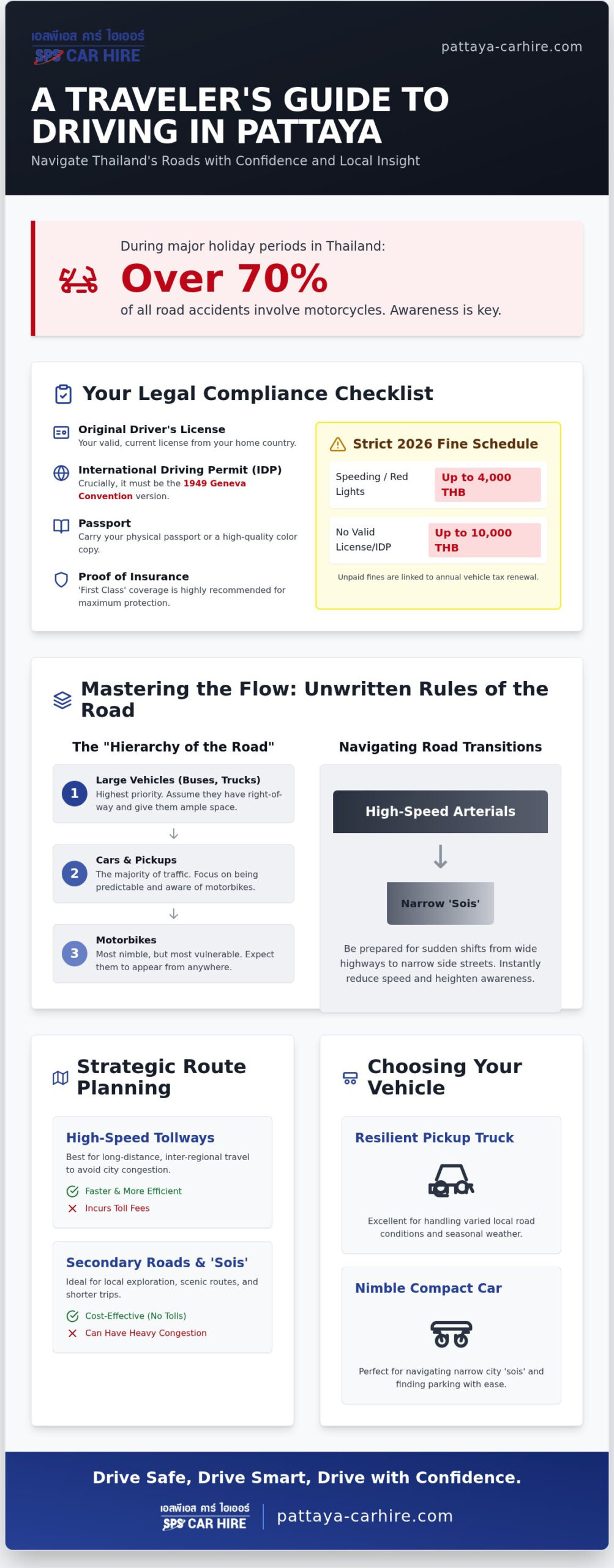
Staying legal is the first step to a stress-free journey. While navigating Pattaya traffic, you’ll likely encounter frequent checkpoints. Being prepared makes these interactions quick and professional. Since April 1, 2026, Thailand has strictly enforced a new schedule of traffic fines. Penalties for speeding or running red lights now reach up to 4,000 THB. Furthermore, driving without a valid license can cost you up to 10,000 THB, and unpaid fines are now linked to your annual vehicle tax renewal as of August 2026.
Use this checklist to ensure you’re fully compliant before hitting the road:
- Original License: Your valid driver’s license from your home country.
- International Driving Permit (IDP): Must be the 1949 Geneva Convention version.
- Passport: Carry your physical passport or a high-quality color copy of the photo and visa pages.
- Insurance: Valid proof of coverage, preferably ‘First Class’ for maximum protection.
We always advise opting for ‘First Class’ insurance. It provides the most comprehensive coverage for foreign drivers, protecting you from the high costs of accidents involving third parties. This is especially critical in congested urban zones. You can find more details in our Car Rental Requirements and Insurance Explained guide.
Documentation for Foreign Drivers
Thailand officially recognizes the 1949 Geneva Convention on Road Traffic for tourists. Even in 2026, some local authorities may not accept the 1968 version, so stick to the 1949 permit to avoid unnecessary fines. If you’re renting a scooter, your IDP must specifically have the “A” class motorcycle endorsement. Always carry your physical documents. Digital copies are often rejected at roadside stops. For a reliable vehicle that meets all legal standards, check out our best price car and truck rental options.
Speed limits are generally 50-60 km/h in town and 90-120 km/h on major highways. Police checkpoints are common, particularly near city borders and on main roads at night. Stay calm, be polite, and have your documents ready. Check the official guidelines for foreign drivers to stay updated on any sudden policy shifts or safety advisories.
Traffic Signs and Signals
Deciphering Thai road signs is usually straightforward since most are bilingual. However, the sheer volume of information can be overwhelming when navigating Pattaya traffic for the first time. The ‘Left Turn on Red’ rule is a prime example of local nuance. You can often turn left at a red light after coming to a complete stop, unless a sign explicitly prohibits it. Always yield to oncoming traffic from the right first.
At T-junctions without lights, the vehicle on the “main” road always has priority. U-turn slots are another unique feature of the national road network. These are common on high-speed highways. Remember that traffic in the fast lane has the right of way. Be patient and wait for a significant, safe gap before merging into the flow of traffic.
Mastering Urban Road Etiquette and Motorbike Safety
While official laws provide the framework, an unwritten “Hierarchy of the Road” actually governs the flow of Thai traffic. In practice, right-of-way is often determined by the size and momentum of the vehicle. When you’re navigating Pattaya traffic, you’ll quickly see that buses and large trucks expect smaller cars to yield, regardless of who arrived at the intersection first. Understanding this dynamic isn’t about being intimidated; it’s about staying safe by anticipating the behavior of larger drivers who may have limited visibility or longer braking distances.
Communication on these roads uses a different vocabulary than what you’re likely used to at home. For example, if a driver flashes their high beams at you, they aren’t inviting you to pull out. In Thailand, this signal means “I’m coming through and I’m not stopping.” It’s an assertive warning to stay put. Similarly, use your horn sparingly. A short, light tap is a friendly way to say “I’m here” when passing a bike or entering a blind curve. Avoid long, aggressive blasts, as these are seen as a serious loss of face and can escalate tensions. You can find more about these cultural nuances in the official guidelines for driving in Thailand.
Managing the Motorbike Swarm
Motorbikes are the lifeblood of Thai transit, but they also represent the highest risk on the road. During the Songkran 2026 holiday period alone, motorcycles were involved in over 70% of all reported accidents. Expect “lane splitting” to happen constantly; bikes will filter past you on both the left and right sides, even in moving traffic. Before making any lateral move, use the 3-second rule: check your mirrors, signal your intent, and wait three full seconds to ensure a bike isn’t accelerating into your blind spot. Your indicators are your most vital tool for signaling your intentions to the hundreds of riders surrounding your vehicle.
The Unspoken Rules of Thai Driving
The transition from high-speed highways to urban streets requires a “Jai Yen,” or a cool heart. Heavy congestion is a reality, and getting frustrated only leads to poor decision-making. One of the most dangerous maneuvers you’ll face is the U-turn slot. When executing a U-turn, remember that vehicles in the oncoming fast lane rarely slow down for you. If you’ve opted for a best price motorbike rental or a compact car, give yourself extra room and never assume an oncoming truck will brake. Patience is your best safety feature. By moving predictably and staying calm, you’ll find that even the most chaotic intersections have a rhythm you can master.
Strategic Route Planning for National Travel
Digital navigation tools are indispensable when you’re navigating Pattaya traffic, but they require a bit of local skepticism. While apps like Google Maps are generally accurate for major routes, they sometimes suggest “shortcuts” through narrow residential sois or unpaved rural tracks that aren’t suitable for standard vehicles. Always cross-reference your digital route with the physical signage. If a suggested turn looks suspiciously narrow or lacks official road markers, stay on the main arterial. This is the best way to ensure you don’t end up stuck in a bottleneck that your GPS hasn’t detected yet.
Planning your journey around the national “Golden Rule” of timing will save you hours of frustration. Traffic in urban centers follows a rigid rhythm. Leaving the city even thirty minutes late can double your travel time. For those planning extended visits, it’s often more efficient to have your own wheels rather than relying on local transport. You can learn more about the cost-saving benefits in our guide on Car Rental vs Taxi for Long Stays. When you’re ready to hit the road, our low cost car and truck rental options provide the reliability you need for long-distance exploration.
Tollways and Expressways
Using the elevated tollway system is a smart investment for any cross-country trip. These “Upper Level” roads bypass the chaotic local intersections and traffic lights that slow down ground-level travel. To navigate these effectively, you must understand the two primary payment methods used on national motorways.
| Feature | M-Flow System | Cash/EasyPass Booths |
|---|---|---|
| Entry Method | No barrier; camera-based | Physical barrier; stop to pay |
| Payment | Online/App within 2 days | Immediate cash or card |
| Best For | Registered residents | Tourists and rental users |
Stick to the cash lanes unless your rental provider has specifically confirmed an M-Flow registration for the vehicle. Unpaid M-Flow charges lead to heavy fines that are now strictly enforced as of 2026. Also, keep an eye on sign colors: Blue Signs indicate high-speed expressways and tollways, while Green Signs mark standard national highways.
Avoiding the Rush Hour Trap
National traffic peak times are predictably brutal, typically running from 07:30 to 09:30 and again from 16:30 to 19:00. A major contributing factor is the “School Run.” In Thai urban centers, schools are often clustered together, creating massive localized gridlock twice a day as parents drop off and pick up students. If your route takes you near a major education hub, add at least forty minutes to your expected travel time. For fuel and rest, look for large PTT stations. These are the gold standard for national travel, offering clean restrooms, 7-Eleven convenience stores, and reliable cafes to recharge before you continue navigating Pattaya traffic and the roads beyond.
Choosing the Right Budget Vehicle for Thai Road Conditions
Selecting the right vehicle is the final piece of the puzzle for mastering the local roads. While your driving skills and route planning are essential, the physical capabilities of your car or bike will dictate your comfort and safety levels. When you’re navigating Pattaya traffic, you need a vehicle that aligns with your specific needs, whether that’s squeezing through narrow residential alleys or hauling luggage across provincial lines for a long-distance relocation. We believe that “budget” should never mean sacrificing quality or reliability. Every vehicle in our fleet is maintained to high standards to ensure your journey is as smooth as possible.
Vehicle Selection Framework
Different travelers require different tools. If your primary goal is navigating Pattaya traffic within the city limits, a compact car is your best bet. These nimble vehicles are easy to park in crowded areas and can navigate tight turns where larger SUVs might struggle. For those planning to explore the country nationally, we highly recommend a pickup truck. Trucks are the national favorite for a reason. They offer superior durability, massive luggage space, and essential flood resilience during the monsoon season. A higher ground clearance allows you to handle unexpected road debris or shallow water with confidence. Solo travelers on a strict budget often prefer our best price motorbike rental options, which provide the ultimate “traffic buster” capability for filtering through stationary vehicles during peak hours.
Regardless of the model you choose, look for these non-negotiable features:
- Powerful Air Conditioning: The heat is relentless; you need a system that cools the cabin quickly.
- Automatic Transmission: Constant gear shifting in stop-and-go urban traffic is exhausting.
- Modern Safety Tech: Ensure your rental includes ABS and airbags as a minimum standard.
The SPS Car Hire Advantage
We pride ourselves on being more than just a rental agency; we’re your savvy local guide to the road. Our Best Price Guarantee ensures you get the most value for your money without any hidden “tourist pricing” or surprise fees at the counter. For expats and business professionals, our specialized long-term car rental packages offer a cost-effective alternative to daily transport costs. We provide transparent agreements and first-class insurance options that give you total peace of mind. Stop worrying about the logistics and start enjoying the freedom of the open road. Explore our fleet of budget cars and trucks today and see why we’re the trusted choice for national mobility.
Drive With Confidence Across Thailand
You’ve now got the local’s inside track on how to handle everything from narrow city sois to high-speed national motorways. By keeping your 1949 IDP handy and understanding the unwritten hierarchy of the road, you’ll move with a level of confidence most visitors never achieve. Mastering the art of navigating Pattaya traffic is just the beginning; the real reward is the freedom to explore every corner of Thailand without the limitations of a taxi schedule.
We’re here to ensure that freedom doesn’t come with hidden stress. As a locally owned agency, we provide 24/7 national support and a Best Price Guarantee on every vehicle in our fleet. Whether you need a compact car for city errands or a rugged truck for a provincial move, our premium packages include First-Class Insurance to keep you fully protected. Don’t let the complexity of the roads hold you back from the experience of a lifetime.
Book Your Budget Car or Truck Rental Today and start your self-drive adventure with the support of a team that knows these roads better than anyone else. Thailand’s stunning landscapes are waiting for you, and now you have the skills to reach them safely.
Frequently Asked Questions
Is it safe for foreigners to drive in Thai city traffic?
Yes, it’s safe if you adopt a defensive mindset and respect the local rhythm. Thousands of expats drive daily without incident. Success depends on staying alert and moving predictably. While navigating Pattaya traffic can seem overwhelming at first, the key is to stay calm and follow the flow. Most urban accidents result from sudden movements or speed. If you drive with a ‘Jai Yen’ or cool heart, you’ll find the experience manageable and rewarding.
What documents do I need to rent a car in Thailand in 2026?
You need three primary documents: your original home country driving license, a valid 1949 Geneva Convention International Driving Permit (IDP), and your physical passport. Since 2026, authorities have increased strictness regarding physical documentation. Digital copies or photos of your IDP are often rejected at police checkpoints. Ensure your IDP specifically lists the vehicle class you intend to drive. Carrying these physical documents ensures you avoid heavy fines and legal complications during your travels.
How do I deal with motorbikes weaving through traffic?
The best strategy is to maintain your lane and avoid sudden swerves. Motorbikes expect you to move in a straight, predictable line. Always check your side mirrors before turning or changing lanes, as riders often filter through on both sides simultaneously. Use your turn signals at least three seconds before moving. This gives riders enough time to adjust their speed. By being the most predictable vehicle on the road, you significantly reduce the risk of a collision.
Are there many toll roads when driving between cities?
Yes, Thailand has an extensive network of expressways and motorways connecting major regions. These roads are generally faster and better maintained than secondary routes. While they require a small fee, they allow you to bypass heavy urban congestion. Look for blue signs to identify these high-speed routes. Most rental drivers should use the cash lanes at toll booths, as the M-Flow camera system requires specific pre-registration that varies by vehicle and provider.
What should I do if I am involved in a minor traffic accident?
Stop your vehicle immediately and contact your rental provider’s 24/7 support line. Do not move the vehicles until instructed by the police or an insurance surveyor, as this can affect the liability assessment. Take clear photos of the scene and all involved vehicles from multiple angles. Our first-class insurance options simplify this process by providing professional adjusters who handle the negotiations. Stay polite and wait for official guidance before signing any documents or paying on-site.
Is an International Driving Permit (IDP) mandatory for all rentals?
Yes, an IDP is mandatory for tourists to drive legally in Thailand. Without it, you face fines of up to 10,000 THB as of the 2026 regulations. More importantly, driving without a valid IDP can void your insurance coverage in the event of an accident. When navigating Pattaya traffic or any national road, carrying both your home license and the 1949 IDP ensures you’re fully protected and compliant with Thai law.
How do I find the best price for a long-term car rental?
You’ll find the most competitive rates by booking specialized long-term car rental packages directly with a locally owned agency. These packages are designed for expats and business travelers staying 30 days or longer. Unlike daily rentals, long-term options offer significant discounts and often include maintenance and insurance in the flat monthly rate. We offer a Best Price Guarantee on all vehicle classes, ensuring you get premium national mobility without the high costs of daily taxi hires.
Can I rent a pickup truck for a local move or business trip?
Yes, renting a pickup truck is a practical choice for business trips or moving personal belongings between cities. Trucks are the national favorite because they handle heavy loads and varied road conditions with ease. Our budget car and truck rental options include late-model pickups with automatic transmissions and powerful air conditioning. These vehicles provide the durability needed for long-distance travel while offering the extra cargo space required for commercial utility or seasonal relocations across the country.
 -
- -
- -
- -
- -
- -
- -
-