


Would you be surprised to learn that a First Class insurance policy can be legally void the second a rental fee changes hands? Most travelers choose a first class insurance car rental because they want the ultimate safety net, yet many don’t realize that without a specific commercial endorsement, that total protection is just a piece of paper. It’s a stressful realization to have after an accident, especially when you’re trying to navigate unfamiliar Thai roads and complex insurance terminology. You’re right to want the best coverage possible, but the labels can be misleading if you don’t know what to look for in the fine print.
We’re here to help you master these complexities so your vehicle hire is fully protected without hidden legal traps. This guide provides absolute clarity on financial liability limits and ensures your policy is legally valid for rental use. We’ll walk you through the latest OIC regulations, the critical difference between private and commercial endorsements, and how to verify your coverage before you drive away. You’ll gain the confidence to handle any situation on the road, ensuring your journey remains focused on the experience rather than the paperwork. Let’s make your next rental experience in Thailand completely stress-free.
Key Takeaways
- Understand why Category 1 (First Class) is the only OIC-regulated tier that offers comprehensive protection for both you and the vehicle.
- Learn how to spot the “Hire and Reward” clause to ensure your first class insurance car rental remains legally valid the moment you pay for your hire.
- Discover the vital “Bail Bond” feature and why this specific benefit is your most important legal safeguard during road disputes.
- Master a simple step-by-step checklist to verify your insurance documents before you sign, ensuring there are no hidden liability traps.
- See how choosing a savvy local provider allows you to enjoy premium insurance security without sacrificing budget-friendly rental rates.
What is First Class Insurance in the Vehicle Hire Market?
In Thailand, “First Class” isn’t just a marketing buzzword used by rental agencies; it’s a technical classification officially known as Category 1 insurance. This tier represents the highest level of protection available under the regulations set by the Office of Insurance Commission (OIC). When you search for a first class insurance car rental, you’re looking for a policy that covers almost every eventuality on the road. It’s the industry standard for anyone who wants to avoid the massive financial risks associated with traffic accidents or vehicle damage. This isn’t about a specific brand of insurance, but rather a government-regulated standard of comprehensive care.
For foreign drivers and long-term expats, this level of coverage is non-negotiable. The local driving environment can be unpredictable, and legal disputes are often complicated by language barriers or unfamiliar local customs. Having a Category 1 policy means you have a professional insurance surveyor on your side from the moment an incident occurs. It transforms a potentially bank-breaking situation into a manageable administrative process. We always advise our clients that while you can find cheaper daily rates elsewhere, those savings vanish instantly if the insurance doesn’t stand up when you need it most.
The Core Components of Category 1 Coverage
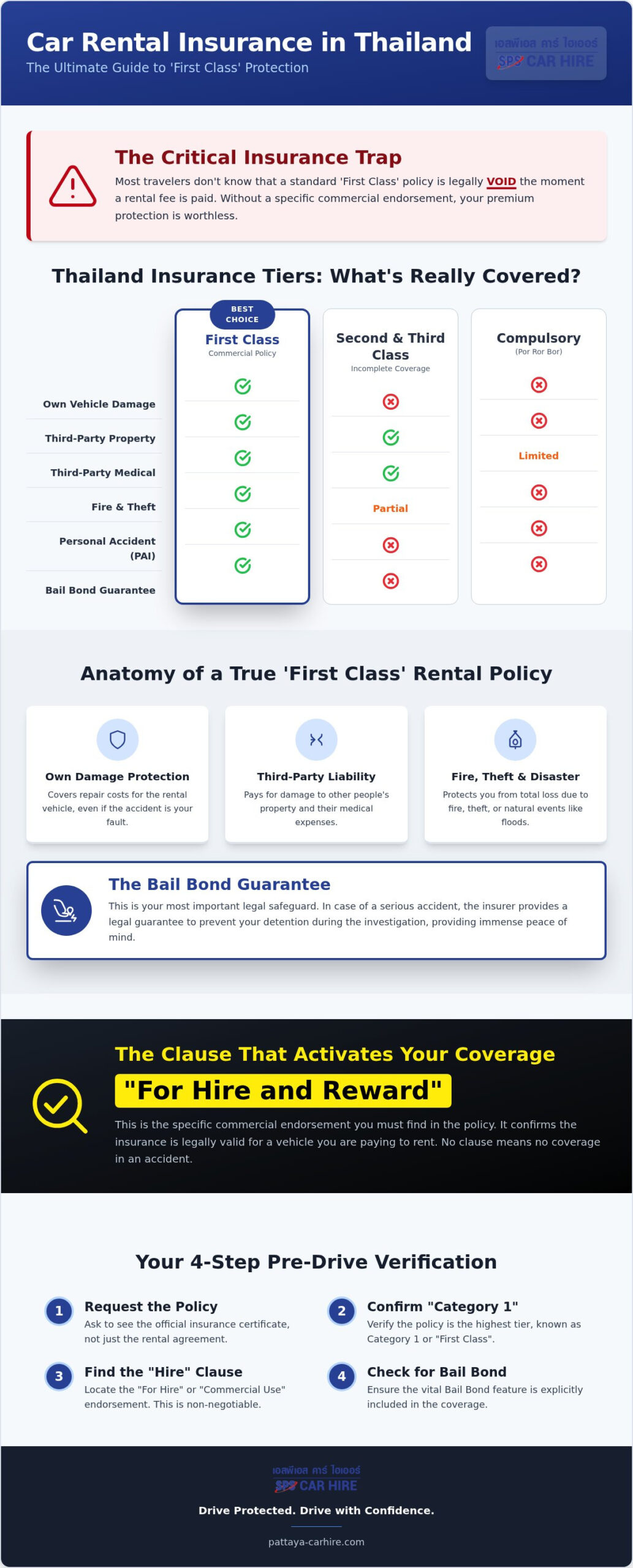
A true first class insurance car rental policy includes several layers of protection that lower tiers simply ignore. First, it features “Own Damage” protection. This ensures that the cost of repairing the hired vehicle is covered even if you were at fault or if no other party was involved, such as hitting a post or a stray animal. Second, it provides robust third-party liability. This is vital because it pays for damage to other people’s property and medical expenses for third parties. Finally, it includes clauses for fire, theft, and natural disasters. If a flash flood damages the car while it’s parked or a thief targets the vehicle, a Category 1 policy keeps your wallet protected from total loss.
First Class vs. Compulsory Insurance
Every vehicle in Thailand must have “Por Ror Bor,” which is the basic compulsory insurance required by law. Relying on this for a rental is a dangerous mistake. Compulsory insurance is strictly for medical compensation for victims; it provides zero coverage for vehicle repairs or property damage. If you’re involved in a collision with only basic cover, you’ll be personally liable for every satang of repair costs for both vehicles. First Class insurance acts as your primary financial shield, bridging the massive gap between basic legal requirements and the reality of modern repair costs. It ensures that your holiday or expat life isn’t derailed by a single moment of bad luck on the road.
Comparing Coverage: Why First Class is the Industry Standard
Choosing a lower tier of insurance might seem like a clever way to save a few Baht, but it’s a false economy that often leads to financial disaster. Second and Third Class policies are fundamentally unsuitable for the vehicle hire market because they leave massive gaps in your protection. While a Third Class policy only covers damage to other people’s property, Second Class adds fire and theft but still excludes repairs to your own rental car. If you’re driving a modern vehicle, the repair costs for even a minor scrape can be staggering. A first class insurance car rental eliminates this risk by ensuring the vehicle itself is covered, regardless of who caused the incident.
One of the most critical yet overlooked features of Category 1 insurance is the “Bail Bond.” In Thailand, if an accident involves serious injury, authorities may detain those involved during the initial investigation. A bail bond is a legal guarantee provided by the insurer to prevent the driver’s detention during accident investigations. This benefit alone provides immense peace of mind for expats and travelers who may not be familiar with local legal proceedings. Additionally, First Class coverage includes Personal Accident Insurance (PAI) for the driver and all passengers, ensuring medical expenses are covered. The claims process is also simplified; the insurer sends a professional surveyor directly to the roadside to document damage and handle negotiations. This level of service is why savvy drivers always look for best price car and truck rental options that prioritize these premium protections.
Understanding the Deductible (Excess)
The “Excess” is a fixed amount you agree to pay toward a claim, but only if you are at fault or if there is no identifiable third party involved. By including a standard excess in the policy, we can keep our daily rental rates budget-friendly while still providing top-tier coverage. It’s important to distinguish between “Damage” excess, which applies to collisions, and “Theft” excess, which applies if the vehicle is stolen. Having a clear, upfront excess amount means you know exactly what your maximum out-of-pocket expense will be before you even turn the key. It removes the anxiety of “hidden” costs that often plague lower-quality rental agreements.
Financial Liability Limits
First Class insurance acts as a definitive cap on your financial exposure. If you are involved in an accident where you are not at fault and the third party is clearly identified, the excess is typically waived entirely. This ensures you don’t pay for someone else’s mistake. Even in “at-fault” scenarios, your liability is strictly limited to the agreed excess amount, protecting your savings from the high costs of parts and labor. This transparent approach to liability is what makes Category 1 the gold standard for a stress-free experience on the road. We believe that absolute clarity on these limits is the foundation of a trustworthy rental relationship.
The “Hire and Reward” Clause: Avoiding the Insurance Trap
A common mistake travelers make is assuming that any policy labeled as “Category 1” is valid for their trip. While a first class insurance car rental provides the highest level of protection, that protection is strictly conditional on how the vehicle is used. There’s a critical legal distinction between private use and “Hire and Reward” insurance. The moment money changes hands for a vehicle hire, a standard private policy becomes legally void. If you’re driving a car covered only by a private policy, you’re essentially driving without any insurance at all, regardless of what the rental shop tells you.
Some smaller, illegitimate rental shops try to cut corners by using these cheaper private policies to keep their overheads low. They might even suggest the “friendship” excuse, asking you to tell the insurance surveyor that you’re simply borrowing a friend’s car if an accident happens. Don’t fall for this trap. Insurance surveyors in Thailand are highly trained experts who know exactly how to spot a commercial rental transaction. Lying to an insurer is considered fraud, and it can lead to criminal charges. It’s simply not worth the risk to save a few Baht on the daily rate when the consequences are so severe.
The Legal Consequences of Invalid Insurance
If you’re caught in an accident with an invalid policy, the financial fallout is immediate and total. You lose all coverage, meaning you become personally liable for every satang of vehicle repair costs and medical bills for everyone involved. In serious cases involving injury, this can escalate into legal disputes that might complicate your visa status or lead to travel bans while the case is pending. We believe that a “Best Price” should never come at the cost of your legal safety. Ensuring your policy is specifically endorsed for commercial hire is the only way to guarantee true peace of mind. For more details on these technicalities, check out our comprehensive 2026 guide to vehicle protection.
Verifying Commercial Endorsements
Protecting yourself starts with knowing how to read the insurance certificate before you drive away. A valid first class insurance car rental must have a specific code or endorsement indicating it is for commercial use or “Hire and Reward.” You should also verify that the vehicle is registered for rental use with the Department of Land Transport. Legally compliant rental vehicles undergo specific inspections to ensure they meet safety standards for the public. Don’t be afraid to ask to see the original insurance schedule. A reputable provider will be proud to show you that their fleet is fully licensed and commercially insured, proving they are a savvy business operator who prioritizes your safety.
Your Pre-Drive Checklist: How to Verify Coverage
Before you turn the key and merge into traffic, you must perform a final verification of your paperwork. A reputable agency will never hesitate to show you the full policy details for your first class insurance car rental. This isn’t just about being cautious; it’s about ensuring your financial safety net is actually attached to the car you’re driving. Take five minutes to cross-reference the documents on the desk with the vehicle in the lot. It’s the simplest way to avoid the “hidden” traps that cause so much anxiety for travelers in Thailand. Being diligent now prevents a massive headache later if you need to make a claim.
Document Inspection Steps
Start by asking for the original or a high-quality copy of the Category 1 policy schedule. Don’t settle for a generic “insurance included” line on a rental receipt. First, verify that the vehicle’s chassis number on the certificate matches the plate on the car’s dashboard or door frame. If these numbers don’t align, the policy is effectively worthless for that specific vehicle. Next, look specifically for a “Commercial Use” or “Hire” endorsement. This is often a red stamp or a specific code in the policy description that confirms the insurer knows the vehicle is being used as a rental. As we discussed earlier, a private policy is void the moment you pay for the hire, so this stamp is your most important piece of evidence.
Questions to Ask Your Rental Agent
Don’t be afraid to be direct with your agent. A professional operator offering best price car and truck rental will appreciate your diligence. Ask specifically: “Is this policy valid for self-drive rental use?” This forces the agent to confirm the commercial status of the vehicle. Next, clarify the exact excess amount for a “no-party” accident, such as a scratched bumper in a parking lot. You should also confirm that the policy includes 24-hour roadside assistance and a replacement vehicle. If the car breaks down on a quiet road at midnight, you need a guaranteed number to call for immediate help. Finally, check the expiry date. Ensure the coverage extends at least 24 hours beyond your scheduled return time to account for any unexpected travel delays. Checking the “Schedule of Benefits” section will show you the exact limits for property damage, providing absolute clarity on your financial exposure.
Why SPS Car Hire Prioritises Your Protection
At SPS Car Hire, we believe that providing a budget-friendly vehicle shouldn’t mean compromising on your safety or legal standing. We’ve built our reputation on being the savvy local guide who does things the right way. Every vehicle in our fleet, from our compact cars to our rugged trucks, comes with a genuine first class insurance car rental policy that is fully endorsed for commercial hire. We don’t play games with “friendship” excuses or private policies because we value your peace of mind as much as our own. Our commitment to transparency means that when we quote a price, it includes the premium protection you need to drive with confidence across Thailand.
We understand the needs of the expat community and long-term travelers better than anyone else. That’s why we’ve developed specialized long-term car rental packages that maintain these high insurance standards for months at a time. You won’t find any hidden fees or confusing legal jargon in our agreements. Instead, you’ll find a clear explanation of your liability limits and the absolute certainty that your policy is legally valid. We take pride in being an independently owned and operated business that puts the customer at the center of everything we do. It’s about removing friction from your journey so you can enjoy the road ahead.
The Savvy Local Advantage
We handle all the complex paperwork and OIC regulatory hurdles so you don’t have to. Our team ensures that every vehicle is properly registered with the Department of Land Transport for rental use, which is a step many smaller operators skip to save money. This proactive approach means your first class insurance car rental is always backed by a compliant, well-maintained fleet. We also maintain our vehicles to rigorous standards to ensure that every car and truck remains fully eligible for insurance coverage. If you’re planning a stay of several weeks or longer, you might want to explore our extended vehicle hire solutions in Thailand for even better value and protection.
Booking Your Stress-Free Rental
Getting behind the wheel shouldn’t be a stressful experience. Our online booking process is designed to be fast and direct, providing clear insurance summaries right from the start. Whether you need a fuel-efficient car for city driving, a sturdy truck for a move, or a nimble motorbike for local trips, we apply the same consistent protection standards across our entire range. We invite you to compare our service and security to any other provider in the market. Secure your best-price rental with full First Class protection today and experience the difference that local expertise and genuine care can make to your journey.
Drive with Certainty and Total Protection
Understanding the technicalities of Category 1 coverage and the “Hire and Reward” clause is the difference between a stress-free trip and a legal nightmare. You’ve learned how to verify certificates, why the bail bond feature is vital, and why commercial endorsements are non-negotiable for any rental. Choosing a first class insurance car rental shouldn’t feel like a gamble; it’s about having a reliable safety net that actually works when you need it most. We’ve built our service on the idea that budget prices should never mean compromised security.
We’re dedicated to providing a Best Price Guarantee on all car and truck rentals while maintaining 100% Commercial “Hire and Reward” Insurance compliance. Whether you need a vehicle for a quick trip or you’re seeking specialised long-term packages for expats and business, we ensure every detail is legally sound. We take the stress out of the paperwork so you can focus on the journey ahead. View our budget-friendly fleet with First Class insurance and enjoy the freedom of the road with the confidence that a savvy local guide has your back. Your safe and protected adventure starts right here.
Frequently Asked Questions
What is the main difference between First Class and other insurance tiers?
First Class (Category 1) is the only tier covering damage to the rental vehicle itself, regardless of fault. While lower tiers only protect third parties, this comprehensive level ensures the car you’re driving is repaired without you facing the full cost. It also includes the bail bond feature, which is vital for legal protection. We only provide this top-tier coverage to ensure you’re never exposed to massive financial risks.
Does First Class insurance cover theft of the rental car?
Yes, vehicle theft is a standard component of every legitimate first class insurance car rental policy. This protection ensures you aren’t held financially responsible for the full value of the car if it’s stolen. You must still follow basic safety protocols, such as locking the doors and keeping the keys with you. Negligence, like leaving the engine running while you pop into a shop, can void this specific coverage.
Will I have to pay an excess if the accident wasn’t my fault?
You won’t pay an excess if the accident is clearly the fault of an identified third party. Once the insurance surveyor confirms the other driver is responsible, your liability is waived. You only pay the agreed excess in “at-fault” scenarios or incidents where no third party is present, such as hitting a stationary object. This transparent system ensures you only pay when you’re actually responsible for the damage.
Is my home country driving licence enough for the insurance to be valid?
Your home country licence is usually sufficient for short visits if it’s in English, but an International Driving Permit (IDP) is highly recommended. For insurance to remain legally valid under Thai regulations, you must hold a licence recognized by the Department of Land Transport. Carrying both your original licence and an IDP prevents any disputes with surveyors. It’s a simple step that ensures your protection is never called into question.
Does First Class insurance cover damage to the tyres and windows?
Category 1 insurance covers tyres and windows when damage occurs during a collision or accident. These items fall under the “Own Damage” clause of the policy. However, insurers won’t cover tyres damaged by normal wear and tear or reckless driving on unsuitable terrain. As long as you’re driving on gazetted roads and follow the rental agreement, these vital components are protected against accidental damage and breakage.
What happens if I have an accident in a car that only has private insurance?
You’ll likely face total financial liability because private insurance is voided the moment a vehicle is used for hire. The insurer will reject the claim once they discover a rental transaction took place. This leaves you personally responsible for all repair costs, medical bills, and third-party damages. It’s a dangerous trap that illegitimate shops use to save money, often leading to severe legal complications for the driver.
Are passengers covered under a First Class rental insurance policy?
Every valid first class insurance car rental includes Personal Accident Insurance (PAI) for the driver and all passengers. This coverage pays for medical expenses and provides compensation in the event of injury. It ensures that everyone inside the vehicle has a financial safety net for hospital care, regardless of who caused the accident. We prioritize this coverage to ensure your family and friends are always protected while on the road.
Do I need to pay extra for roadside assistance with First Class insurance?
Most premium Category 1 policies include 24-hour emergency roadside assistance as a standard feature. This covers essential services like towing, jump-starts, and flat tyre changes without any additional fees. We make sure this benefit is active for every vehicle we hire out. It guarantees that help is only a phone call away if you encounter mechanical trouble, ensuring your journey remains smooth and completely stress-free.
 -
- -
- -
- -
- -
- -
- -
-