


Could a long-term rental give you the freedom of a car in Thailand without the costs and responsibilities of owning one? If you’re weighing expat car rental against a lease or purchase, the terms can blur together, and a low headline rate doesn’t always show which option offers better value.
The right setup depends on how long you’ll stay, how certain your plans are, and which responsibilities you want to take on. This guide compares renting, leasing, and buying, then outlines the contract details to review, including costs, insurance, and ongoing responsibilities. It also explains how long-term self-drive rental through SPS Car Hire can provide access to a vehicle during an extended stay without committing to ownership.
Key Takeaways
- Understand how long-term rental differs from a formal lease or buying, so you can match the arrangement to your stay and plans.
- Look beyond the advertised rate. Compare the agreement’s duration, extension rules, included services, and return conditions.
- Choose a vehicle based on your passengers, luggage, parking needs, and regular journeys, not assumptions about vehicle size.
- Prepare your documents, verify current Thai licence requirements through official sources, and record the vehicle’s condition at handover.
- Consider whether a long-term rental fits your plans. SPS Car Hire offers budget-friendly long-term self-drive rentals for extended stays.
Expat Car Rental in Thailand: How Renting Differs from Leasing or Buying
Reliable transport can make an extended stay easier, but choosing how to get a vehicle involves several decisions. A rental, a formal lease, and buying a car all provide access to the road, but they differ in commitment, upfront costs, and ownership responsibilities. Compare them against your plans, not just the monthly payment.
Long-term car rental means paying to use a vehicle for an agreed period under a rental agreement. You drive the vehicle, but you don’t own it. A formal lease is a separate contractual arrangement, and the responsibilities and options for either arrangement depend on its terms.
What does long-term car rental mean for an expat?
An extended self-drive rental gives you a vehicle for an agreed period, so you can manage everyday journeys without buying one. It can suit a stay with an uncertain end date, but a longer rental doesn’t automatically let you shorten, extend, or change the agreement freely. Read the terms before you commit. For background on the different ways people travel around the country, see this overview of Transport in Thailand.
With a rental, the rental company retains ownership while you pay to use the vehicle. A formal lease is a separate contractual arrangement that may involve a longer commitment or different upfront requirements. Buying means taking ownership, along with its associated costs and responsibilities. “Long-term rental” describes an extended rental period, not another name for leasing.
Should you rent, lease, or buy during an extended stay?
Use this comparison as a starting point. Terms affect the balance, so compare the full commitment and likely responsibilities rather than assuming one option is always better value.
- Rental: You pay to use a vehicle for a defined period. Upfront obligations and flexibility depend on the agreement. It may suit a shorter stay or an uncertain end date when you want access without ownership.
- Formal lease: A contractual commitment that may run longer and can involve a significant down payment or a Thai co-signer for a foreign applicant. It may suit someone with settled plans who is comfortable with the lease terms.
- Buying: You take ownership, pay the purchase costs, and handle ongoing responsibilities for the vehicle. It may suit a longer, settled residence if you’re prepared to manage ownership and eventual resale.
There’s no universal winner. Compare the full rental or lease cost for the period you expect to drive, any upfront payments, and the time and expense involved in maintaining or selling a vehicle you own. Consider how often you’ll drive and whether your plans could change. For someone considering expat car rental Pattaya, the practical question is whether an agreed rental term fits better than taking on ownership commitments. A budget-friendly long-term self-drive rental provides access to a car or truck without buying one. The agreement’s specific terms determine the details.
How to Evaluate an Expat Car Rental Program Before Choosing
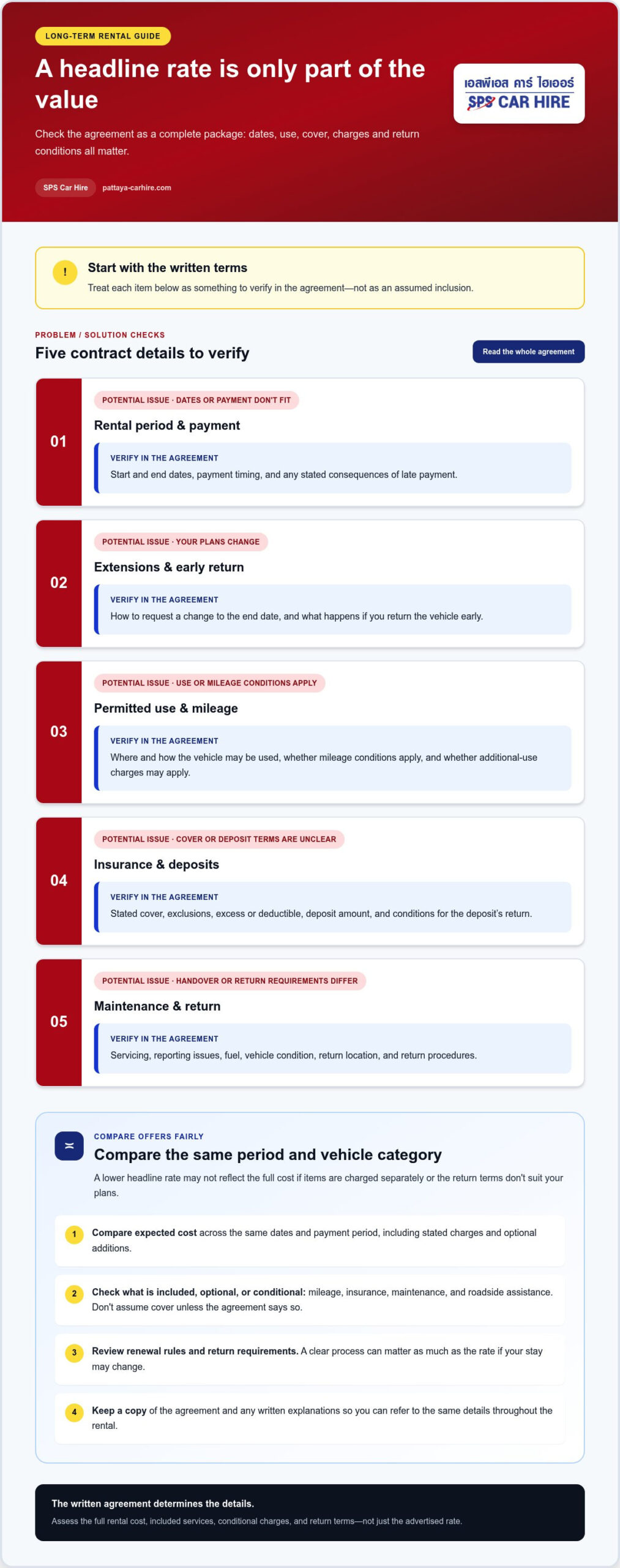
A headline rate is only one part of a long-term rental’s value. Rental periods, payment schedules, permitted use, insurance terms, and return conditions can all affect the overall cost and convenience. When considering a long-term rental, read the written agreement from start to finish and work out what it means for your actual stay, not just the advertised rate.
Which contract terms affect the value of a long-term rental?
Read the agreement as a complete package. First, check that the dates and payment schedule fit your plans. Then look for terms that could affect the cost or convenience of using and returning the vehicle. Treat each item below as something to verify in the agreement, not as an assumed inclusion.
- Rental period and payment: Note the start and end dates, payment timing, and any stated consequences of late payment.
- Extensions and early return: Check how to request a change to the end date and what happens if your plans shift or you return the vehicle early.
- Permitted use and mileage: Check where and how the vehicle may be used, and whether mileage conditions or additional-use charges apply.
- Insurance and deposits: Identify the stated cover, exclusions, excess or deductible, deposit amount, and conditions for its return. For more detail on cover terminology, see this guide to car rental insurance options.
- Maintenance and return: Check what the agreement says about servicing, reporting issues, fuel, vehicle condition, return location, and return procedures.
How can you compare rental offers fairly?
Compare the same rental period and vehicle category, then separate what the written terms include from optional extras and conditional charges. A lower headline rate may not reflect the full cost if important items are charged separately or the return terms don’t suit your plans.
- Compare the expected cost across the same dates and payment period, including stated charges and optional additions.
- Check whether mileage, insurance, maintenance, or roadside assistance is included, optional, or subject to conditions. Don’t assume any of these are covered unless the agreement says so.
- Review renewal rules and return requirements. A clear process can matter as much as the rate if your stay may change.
- Keep a copy of the agreement and any written explanations of its terms so you can refer to the same details throughout the rental.
This comparison helps you assess total value instead of focusing on a single number. SPS Car Hire offers budget-friendly long-term car rental packages for customers who need a vehicle for an extended stay.
Choose a Rental Car That Fits Your Stay and Everyday Driving
A vehicle that works for a weekend itinerary may feel awkward during months of commuting, shopping, and errands. Start with your regular routine: who will travel with you, how much luggage or equipment you’ll carry, where you’ll park, and what your typical journeys look like. These practical details matter more than choosing a vehicle for an occasional unusual trip.
Choose a vehicle size for regular use, not occasional exceptions. A larger vehicle may help with a particular long drive or family visit, but it can be less convenient if most journeys involve one or two people and tight parking. A small car, on the other hand, may not suit a household that regularly travels together with luggage.
What vehicle size makes sense for your daily routine?
Choose a category that comfortably handles your most common journeys. A compact car can be a practical starting point for solo driving or a couple with modest luggage. A sedan may better suit regular passenger use or extra bags, while a larger vehicle category may suit families, group trips, or bulky items. These are general comparisons, not promises about a particular rental fleet.
- For commuting and errands: Consider how many seats you routinely need and whether a more compact size would make parking easier.
- For family routines: Account for regular passengers, bags, and the space needed to get everyone in and out comfortably.
- For mixed daily and longer journeys: Balance passenger and luggage capacity against how easy the vehicle will be to use during ordinary trips.
Picture a normal week before choosing. If you sometimes need extra room, consider how often that happens and whether it justifies driving a larger category every day. Match the vehicle to your regular pattern of use, and don’t assume a specific model or feature is included unless the rental details say so.
Which use patterns make a car more practical than other transport?
Independent driving can be useful if your routine includes several stops, frequent errands, passengers, or journeys beyond a regular commute. A car gives you control over when to leave and how to combine trips. Taxis or public transport may suit a simpler routine with fewer journeys, limited parking, or little need to carry belongings. The better fit depends on your habits and the full cost and convenience of each option.
For a fair comparison, map out your expected journeys over a typical week. Note how often you travel, whether stops are close together, and when you need to carry people or belongings. Then weigh self-drive rental against other ways of getting around based on your whole routine, not just one trip. This related guide to car rental versus taxi options can help you consider the trade-offs.
For expat car rental Pattaya, choose a vehicle that suits your everyday passengers, parking, and journeys. Occasional needs should inform your choice without dictating it.
Prepare Your Documents and Review the Rental Handover Carefully
A smooth pickup starts before you reach the vehicle. Prepare your documents, read the rental terms, inspect the car, and record its condition before driving away. This helps you spot missing paperwork and document existing marks or return expectations while they’re easy to discuss.
What should expats prepare before collecting a rental car?
Gather your identity, driving, and payment documents, then compare them with the rental agreement and current official requirements. Thailand’s driving rules depend on your circumstances. Current 2026 guidance says drivers from outside ASEAN need an International Driving Permit (IDP) alongside a valid home-country licence. It also says foreigners residing in Thailand for more than 60 days on a non-tourist visa need a Thai driving licence. Verify the latest requirements with Thailand’s Department of Land Transport before driving, as your visa and situation may affect what applies.
- Identity: Have your passport details available in the form requested for the rental.
- Driving documents: Check which of your valid licence, IDP, or Thai licence applies to your circumstances, and prepare the relevant documents.
- Payment: Check the agreement for accepted payment methods and any payment information or documents required at pickup.
Make sure every person who may drive is named in the agreement and meets its stated requirements. Read the permitted-use terms, too. A driver or use not covered by the agreement can create complications if there’s an incident or dispute.
What should you check during the vehicle handover?
Take your time before leaving. Match the vehicle to the rental documents, then check its visible condition and basic operation. Photograph existing marks clearly, showing both their location and scale, and keep the images with your rental records. Ask for existing damage to be acknowledged in writing so the handover record matches your photos.
- Review the agreement first. Confirm the rental period, named drivers, permitted use, return time and location, and any stated return requirements.
- Walk around the exterior. Look for scratches, dents, cracks, wheel marks, and other visible damage. Photograph each area, including the wider panel for context.
- Check the interior and controls. Note visible stains or damage, then familiarise yourself with the basic controls before setting off.
- Record the condition. Share the photos and written notes through the agreed handover process, and keep a copy of the acknowledgement.
- Review support and return details. Find the emergency contact, breakdown procedure, and return instructions in the agreement before you need them.
Careful checks at pickup can prevent uncertainty later. SPS Car Hire offers a budget-friendly self-drive option through its long-term car rental packages. Review the agreement before setting out.
Make Extended Self-Drive Rental Simple with SPS Car Hire
If your stay is extended but your plans may change, a long-term self-drive rental can provide regular access to a vehicle without the commitment of buying one. It can suit expats who need a car or truck for everyday journeys but don’t want to take on ownership and its responsibilities. Choose based on your expected rental period, driving routine, and the terms of the agreement.
Why consider SPS Car Hire for an extended stay?
SPS Car Hire offers self-drive car and truck rentals, including long-term rental packages for extended stays. Its budget-friendly options and best-price guarantee give customers a way to balance cost with vehicle access. You drive yourself, and the rental agreement sets out the conditions for using the vehicle.
A rental package can be useful when you want to avoid buying a vehicle before you know how long you’ll stay. You arrange to use a vehicle for an agreed period rather than taking on ownership. A long-term rental is not a formal lease, and the terms of your rental agreement set out your responsibilities and options.
Value isn’t just about choosing the lowest rate. Consider how well the vehicle suits your regular journeys, how long you need it, and whether the agreement fits your plans. A budget-friendly rental that meets your everyday needs can provide a straightforward way to use a vehicle during an extended stay without owning one.
What are the next steps to arrange a long-term rental?
Start with a clear picture of your stay and driving routine. Estimate how long you need a vehicle, consider your regular passenger and luggage requirements, and choose a category that makes sense for everyday use. Then review the rental options and read the agreement carefully to understand the rental period, payment terms, permitted use, and return conditions before committing.
- Set your timeframe: Decide how long you expect to need a vehicle and consider whether your plans may change.
- Define your daily needs: Think about passengers, luggage, regular journeys, and parking.
- Choose a suitable option: Focus on the vehicle category and rental period that match your routine.
- Read the terms: Check the agreement for conditions that affect use, payment, and return.
SPS Car Hire offers budget-friendly self-drive car and truck rentals, with long-term packages for extended stays. Explore self-drive rental options and review the terms that fit your plans.
Choose a Rental That Works for Your Next Chapter
Turn your plans into a simple personal brief: when you need a vehicle, who will drive, and what your ordinary week looks like. This gives you a practical basis for choosing an arrangement that supports daily life rather than an imagined perfect itinerary. If your stay or routine is uncertain, account for that from the start. Clear priorities make it easier to compare options and avoid paying for a setup that doesn’t match how you’ll actually drive.
If you’re considering expat car rental Pattaya, use that brief to choose a suitable option and read the terms before committing. Consider what will make your time in Thailand more convenient, then select a self-drive arrangement that fits your plans and budget. Explore budget-friendly self-drive rentals for your extended stay.
Frequently Asked Questions
Can someone else drive a car rented for my use?
Only if the rental agreement allows it and the additional driver is properly named. Don’t assume a spouse, colleague, or family member is covered simply because you gave them the keys. Before sharing the car, check each driver’s eligibility, accepted licence documents, and any age or other conditions stated in writing. If someone else needs to drive, have the agreement updated before they use the vehicle.
Is a deposit required for a long-term car rental in Thailand?
A deposit may or may not apply. The rental agreement sets the requirement for your arrangement. Before confirming, check the amount, accepted payment method, refund timing, and reasons a deduction may be made. Check how the deposit is returned, too, since a card hold and a completed refund may appear differently on your statement. Keep any receipt and the relevant contract details with your booking records.
Can I take a rental car outside Thailand?
Don’t assume a rental car can be taken across an international border. Cross-border use depends on the rental agreement and applicable rules. Permission for ordinary driving within Thailand doesn’t establish permission to travel abroad. Read the written terms before planning an international trip. If the contract doesn’t clearly explain cross-border use, don’t make that journey until you have clear written authorization and understand any applicable conditions.
What should I do if a rental car breaks down?
Stop somewhere safe, then follow the breakdown instructions in your rental agreement and use the emergency contact provided with the rental. Don’t arrange repairs or continue driving if the vehicle may be unsafe, unless the agreement’s instructions direct you to do so. Roadside assistance and responsibility for repair costs depend on the contract. Note what happened and follow the stated process for reporting the problem.
Does a long-term rental include servicing and maintenance?
Servicing and maintenance arrangements depend on the specific agreement, so read the terms before booking rather than assuming routine work is included. Identify who arranges scheduled servicing, how to report a warning light or mechanical fault, and what to do if the vehicle needs repair. Keep relevant messages and service records, and follow the agreement’s instructions before arranging work or authorizing a repair.
Can I extend a car rental if my stay in Thailand changes?
An extension depends on the agreement and vehicle availability, so don’t assume it will happen automatically. Review the notice period and extension process well before the original return date. Confirm the revised rental period and whether any terms change, including payment timing or return arrangements. If your plans are uncertain, keep the relevant dates and extension instructions handy so you can act promptly if your stay changes.
Is insurance included in an expat car rental?
Cover can differ between rental agreements, so check the written terms rather than assuming every rental has the same insurance. Look for the type of cover, exclusions, any excess you may have to pay, and the steps required after an incident. Check how and when to report damage, and what information or documentation the agreement requires. Understanding these details before driving helps you know what to do if something goes wrong.
 -
- -
- -
- -
- -
- -
- -
-