

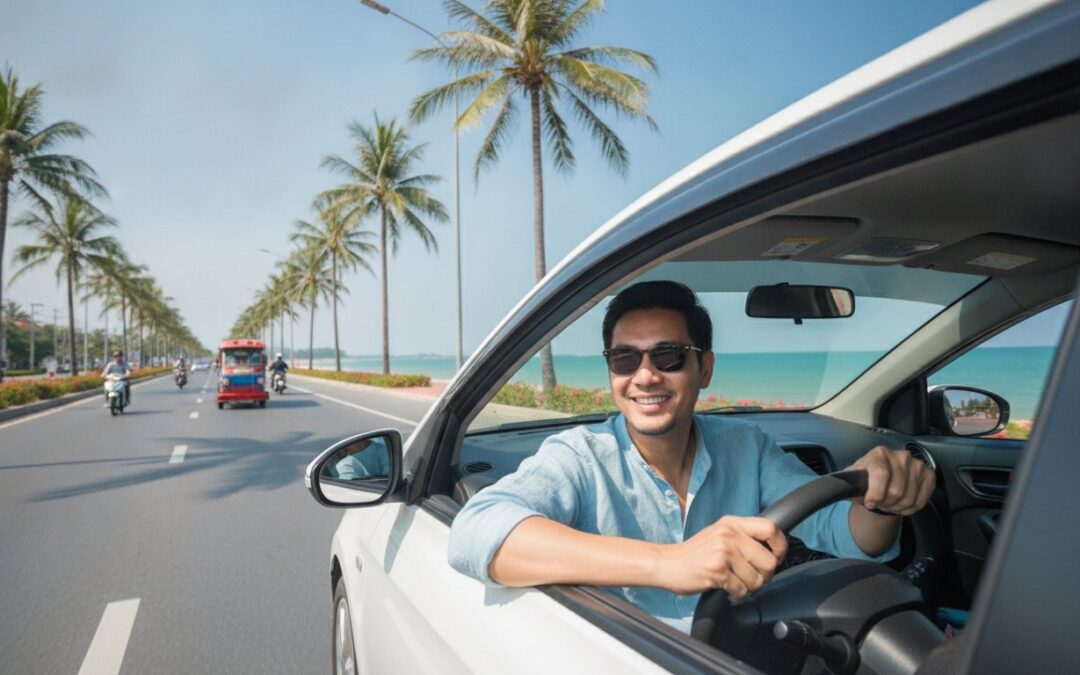
Forget everything you know about rigid lane discipline; driving in Thailand is actually a sophisticated system of negotiated flow where the biggest vehicle usually wins the right of way. If you’re driving in Thailand for the first time, it’s completely natural to feel a surge of anxiety when you see swarms of motorbikes weaving through busy traffic or wonder how to handle a police checkpoint without a massive headache. We know that the prospect of navigating these bustling roads can feel like a high-stakes puzzle, especially when you’re worried about accidents or unexpected fines.
You don’t need to be a daredevil to get around safely and comfortably. You simply need the inside track on local etiquette and the latest 2026 regulations to stay protected. This guide will help you master the essential road rules, explain how to avoid those new 4,000 THB traffic fines for common errors, and show you exactly how to choose a reliable rental with SPS Car Hire. By the time you finish reading, you’ll have the confidence to ditch the taxi schedules and explore the coast on your own terms with total peace of mind.
Key Takeaways
- Learn how to navigate the local road hierarchy where larger vehicles often expect right of way so you can stay safe and avoid unnecessary stress.
- Master the “negotiated flow” technique to handle traffic like a savvy resident, making driving in Pattaya for the first time feel natural and predictable.
- Identify the exact documentation you need, including why the 1968 Convention IDP is essential for keeping your insurance valid and avoiding police fines.
- Discover why choosing a compact budget car over a large SUV gives you a massive advantage when searching for parking in the city’s busy central zones.
- Gain the confidence to explore beyond taxi routes by understanding unwritten etiquette and how to avoid the most common safety hazards on the road.
The Fundamentals of Navigating Thailand’s Road System
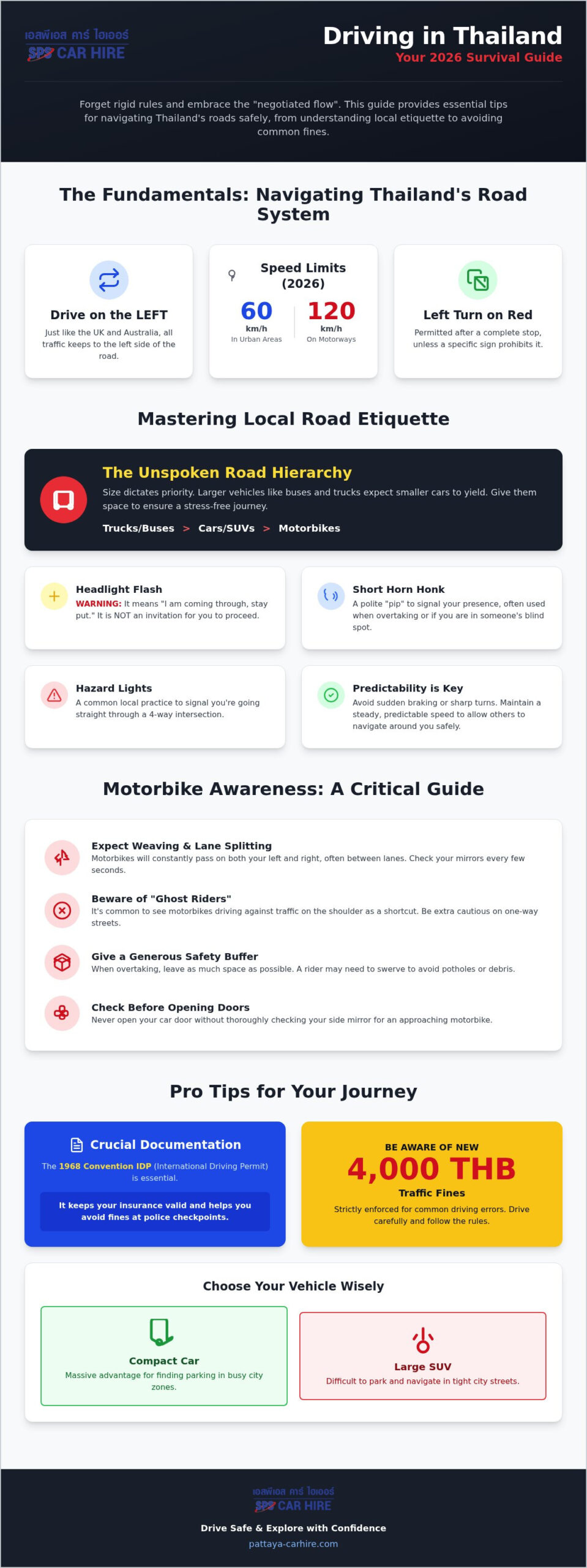
Adjusting to the local rhythm is your first priority when driving in Pattaya for the first time. Like the UK and Australia, vehicles stay on the left side of the road. While this seems simple, the real challenge lies in understanding the unspoken hierarchy. On Thailand’s road system, size often dictates priority. Large buses and heavy trucks generally expect smaller cars to yield, regardless of who technically has the right of way. Staying alert and giving these giants plenty of room will keep your journey stress-free.
Speed limits are strictly enforced as of 2026 to improve safety. You’ll need to keep it under 60 km/h within urban areas and busy city centers. Once you hit the major motorways, the limit increases to 120 km/h. You’re permitted to turn left at a red light after a complete stop unless a specific sign tells you otherwise. This keeps traffic moving, but always watch for motorbikes appearing in your blind spot before you commit to the turn.
Understanding the Flow of Traffic
Lane discipline in Thailand is often secondary to the concept of “negotiated flow.” Instead of staying strictly within painted lines, drivers fill available space to keep the momentum going. You’ll notice motorbikes constantly buzzing on both your left and right sides. The safest approach is to maintain a predictable, steady speed so they can navigate around you. If you need to change direction on a divided highway, get comfortable with U-turns. They are the primary way to reach the opposite side of the road and are frequently found every few kilometers, often with dedicated lanes to help you merge safely.
Essential Traffic Signs and Signals
Most signs use international symbols and include English subtitles, making them easy to read. However, local signals require a bit of translation. If an oncoming driver flashes their headlights at you, they aren’t inviting you to go first; they’re warning you that they are coming through and you should stay put. At busy intersections, you might also see police officers directing traffic with hand signals. Follow their lead over the automated lights if they are present, as they are managing the immediate flow to prevent gridlock during peak hours.
Mastering Local Road Etiquette and Unwritten Rules
If you’re driving in Pattaya for the first time, you’ll quickly realize that the painted lines on the road are often treated as mere suggestions. This is the concept of “negotiated flow” in action. Drivers here use every inch of available pavement to keep traffic moving, often creating extra lanes where none officially exist. It’s a fluid system based on spatial awareness rather than rigid adherence to a rulebook. To stay safe in this environment, you must be predictable. Avoid sudden, sharp braking at all costs. If you slam on your anchors unexpectedly, the driver or motorbike rider behind you likely won’t have time to react, as they expect you to maintain your momentum.
Vigilance is your best tool for survival. You should develop the habit of checking your side mirrors every few seconds. Lane-splitting is the standard behavior for motorbikes, and a rider can appear in your blind spot in a heartbeat. Zebra crossings also require a different mindset than what you might be used to back home. In practice, pedestrians do not always have the right-of-way. If you stop abruptly for a person waiting to cross, you might cause a multi-vehicle collision behind you. Always check your rear-view mirror before yielding to ensure the traffic behind you is prepared to stop.
Communicating with Other Drivers
Communication on Thai roads has its own distinct dialect. Your horn isn’t a weapon used to express anger; it’s a short, polite “pip” to let someone know you’re in their blind spot or about to overtake. You’ll also notice a unique local quirk at intersections. Many drivers turn on their hazard lights when going straight through a four-way crossroad to signal they aren’t turning left or right. While this isn’t technically in the official handbook, it’s a common way locals manage confusion. Before you head out, ensure you have the official documentation for driving easily accessible in case you encounter a routine checkpoint.
Sharing the Road with Two-Wheeled Vehicles
Sharing space with thousands of motorbikes requires a generous safety buffer. When you overtake a rider, give them as much room as possible to account for sudden wobbles or debris in the gutter. Be specifically prepared for “ghost riders”-motorbikes driving against the flow of traffic on the shoulder. This is a common sight, especially on one-way streets where riders take a shortcut. Never open your car door without a thorough mirror check first. This simple “Dutch Reach” habit prevents you from accidentally dooring a passing rider. If you want the freedom to master these local nuances at your own pace, securing a best price car rental is the most reliable way to gain independence on the road.
Documentation and Insurance Requirements for Renters
When you’re driving in Pattaya for the first time, your paperwork is your first line of defense. You must carry a valid driving license from your home country, but that alone isn’t enough to satisfy local police or insurance adjusters. It must be accompanied by an International Driving Permit (IDP). While the 1949 Convention IDP is still circulating, the 1968 Convention IDP is the preferred choice in 2026 because it aligns with modern Thai insurance standards and typically offers a longer validity period. You should also keep your passport safe in your hotel; carrying a high-quality photocopy of your photo page and your latest entry stamp is usually sufficient for roadside checks.
Compulsory Third Party Liability insurance only covers basic medical expenses for injured parties and provides no financial protection for damage to your rental vehicle or other property. Understanding the risks associated with road safety in Thailand highlights why choosing the right coverage is a non-negotiable step for any visitor. Don’t settle for the bare minimum legal requirement if you want a stress-free trip.
Comparing Insurance Coverage Levels
There is a massive gap between Compulsory Third Party Liability (CTPL) and what locals call “First-Class” insurance. CTPL is the ฿645 annual mandatory policy that allows a vehicle to be taxed, but it’s essentially useless for protecting your wallet after a collision. First-Class Commercial Insurance is the only level we recommend for foreigners. It covers your vehicle, third-party property, and provides much higher medical limits. When reviewing your agreement, pay close attention to the “excess” or deductible. This is the fixed amount you’ll pay out-of-pocket before the insurance kicks in. A lower excess usually means a slightly higher daily rate, but it offers better protection against the minor scrapes that are common in Pattaya’s tight parking spots.
The Rental Agreement Checklist
Before you turn the key, perform a thorough inspection of the vehicle and its documents. The car must have a copy of the vehicle registration document, known as the “Blue Book” or Lem Tabian, in the glovebox. Check the square tax sticker on the windshield to ensure it hasn’t expired. If the date has passed, the vehicle is technically illegal to drive. You should also take a high-definition video walking around the car, zooming in on any existing scratches, dents, or wheel scuffs. This digital evidence is your best insurance against unfair damage claims when you return the vehicle. A savvy renter never leaves the lot without documenting the fuel level and ensuring the spare tire is properly inflated.
Proactive Safety Measures for First-Time Drivers
Driving in Pattaya for the first time requires a blend of technical skill and sharp situational awareness. While GPS apps are indispensable for finding your way through the city’s winding streets, you shouldn’t follow them blindly. Digital maps occasionally suggest illegal U-turns or fail to account for temporary road closures and construction. Always prioritize the physical road conditions you see through your windshield over the voice on your phone. We also strongly advise against long-distance driving at night. Many local vehicles, particularly older trucks and motorbikes, may have broken tail lights, and hazards like deep potholes or stray animals become significantly harder to spot after sunset.
Police checkpoints are a routine part of the landscape here, often set up to check for licenses and helmets. If you’re flagged down, stay calm, remain polite, and have your documentation ready as discussed in our previous section. Ensure every passenger is wearing a seatbelt, as the fine is 2,000 THB per person. Most importantly, Thailand has a zero-tolerance approach to drink-driving. The legal blood alcohol limit is 0.05%, and 0.02% for those with temporary licenses. A first offense can result in a fine of up to 20,000 THB and potential prison time. If you plan on enjoying the local nightlife, play it safe and leave the car at home.
Navigating Busy Urban Areas and Tourist Hubs
Pattaya’s central district relies heavily on a massive one-way system, primarily involving Beach Road and Second Road. Missing your turn often means a long loop through heavy traffic, so plan your lane changes early. Finding parking in these high-traffic zones is notoriously difficult. If you must “double park” in a designated area, it’s a local custom to leave your car in neutral and the handbrake off. This allows other drivers to physically push your vehicle forward or backward to reach their own car. Always look at the curb before pulling over; red and white paint signifies a strict no-stopping zone, while yellow and white indicates a loading area where parking is prohibited.
Hazard Perception and Defensive Driving
Defensive driving is your best protection against the unpredictable. You must stay alert for traffic merging from small side streets, known as “sois,” as many drivers will pull out into the main road without looking. Public transport vehicles, specifically the blue “baht buses,” are another common hazard. They frequently make sudden, unannounced stops in the middle of the road to pick up passengers. During the monsoon season, heavy rain can trigger flash flooding in minutes. If you encounter deep water, don’t attempt to drive through it, as it can easily stall your engine or hide open drainage covers. To ensure you’re behind the wheel of a vehicle that can handle these varied conditions, consider booking a budget car and truck rental from a provider that prioritizes maintenance and safety.
Selecting a Reliable Budget Vehicle for Your Journey
Choosing the right vehicle is the final piece of the puzzle when you’re driving in Pattaya for the first time. While a large SUV might look impressive, it can quickly become a liability in the city’s narrow side streets and crowded parking structures. We recommend matching your vehicle size strictly to your group and luggage requirements. A compact budget car is almost always the superior choice for urban navigation. It allows you to squeeze into tight spots where larger vehicles would simply have to keep circling the block. If you’re planning an extended stay of 30 days or more, you can secure significantly better value by choosing long term car rental packages that reduce your daily costs. Regardless of the duration, you must ensure your agreement includes first-class insurance to guarantee total peace of mind against any unforeseen incidents.
Evaluating Rental Companies
Independent local agencies often provide a level of personal service and flexibility that international chains simply can’t match. When you rent from a savvy local guide, you get the “inside track” on road conditions and immediate support if something goes wrong. Look for a “best price guarantee” that is transparent and includes all 2026 taxes and fees upfront. This avoids the frustration of hidden surcharges at the counter. Choosing a self-drive rental gives you the ultimate freedom to explore at your own pace. You won’t be tied to the schedules of tour buses or the fluctuating prices of ride-share apps during peak hours.
Specialized Options: Trucks and Motorbikes
There are times when a standard sedan isn’t enough. If you’re moving house, carrying sports equipment, or planning to explore the more rugged rural roads outside the city, a pickup truck rental offers the extra utility and road presence you need. For solo travelers or couples on a tight budget, budget scooter rentals are a popular way to zip through traffic, though they require a much higher level of personal caution. At SPS Car Hire, we focus on providing budget-friendly, reliable vehicles that perform perfectly in local conditions. We don’t stock temperamental luxury supercars; we provide practical, high-quality cars and trucks that get you where you need to go without any unnecessary friction.
Take the Wheel with Total Confidence
Mastering the “negotiated flow” of traffic and securing the correct 1968 Convention IDP are the essential first steps for a safe journey. By respecting the local vehicle hierarchy and choosing a compact car for easier parking, you’ll avoid the most common headaches foreigners face. Driving in Pattaya for the first time becomes a rewarding experience once you trade initial confusion for genuine local knowledge. You’ve now got the tools to navigate the city safely while avoiding expensive fines and unnecessary stress.
We’re dedicated to making your transition to Thai roads as smooth as possible. Our fleet comes with a Best Price Guarantee on all cars and trucks, giving you high-quality service without the corporate price tag. You’ll also benefit from comprehensive First-Class Insurance and the expert “savvy guide” support that only a locally owned team can provide. Check our 2026 budget rental rates and book your vehicle today to start your adventure with total confidence. The freedom of the open road is just a few clicks away; stay alert and enjoy the ride.
Frequently Asked Questions
Do I really need an International Driving Permit (IDP) to drive in Thailand?
Yes, you absolutely need an IDP to drive legally and ensure your insurance remains valid. Without it, you face a fine of up to 2,000 ฿ and total financial liability in the event of an accident. Non-ASEAN visitors must carry both their original home country license and the IDP at all times. Most rental companies won’t even hand over the keys without seeing both documents, so ensure you secure yours before leaving home.
What happens if I get pulled over by the police for the first time?
Pull over safely, turn off the engine, and remain polite while the officer approaches. Show your license, IDP, and the vehicle registration copy kept in the glovebox. If you’ve committed a minor infraction like failing to wear a seatbelt, expect a 2,000 ฿ fine. Most interactions are straightforward and professional if you follow the officer’s instructions. Having a high-quality photocopy of your passport photo page and entry stamp is also highly recommended.
Is it difficult to find parking in major tourist areas?
Parking in central Pattaya is notoriously difficult during peak hours and on weekends. Look for “No Parking” red and white curb markings to avoid being towed or fined by local traffic police. If you must double park in a designated zone, leave your car in neutral so other drivers can physically move it to get out. It’s a common local practice that prevents gridlock in tight spaces. Choosing a compact car makes this process much easier.
What should I do in the event of a minor road accident?
Call your insurance provider immediately using the emergency number found on the windshield sticker. Do not move the vehicles until the insurance surveyor or police arrive unless they specifically instruct you to do so. Document everything with clear photos of both cars and the surrounding road layout from multiple angles. Your insurance agent will handle the negotiation with the other party, which is why having premium first-class coverage is so vital for foreign visitors.
Can I rent a car with a debit card, or is a credit card required?
Yes, many independent local agencies allow you to rent using a debit card or a cash security deposit. This is a major advantage over international chains that strictly require a high-limit credit card. It’s a great option for those driving in Pattaya for the first time who want to avoid high bank fees. Just ensure you receive a formal receipt for any cash deposit you leave with the agency to ensure a smooth return process.
How does the “Left Turn on Red” rule work at intersections?
You can turn left on a red light after coming to a complete stop, provided there isn’t a sign explicitly forbidding it. Always yield to oncoming traffic and check your blind spot for motorbikes before proceeding. This rule helps keep traffic moving, but it requires high levels of caution. If you aren’t 100% sure the path is clear, it’s perfectly acceptable to wait for the green light to ensure your safety.
Is it safe to drive a rental vehicle at night?
We advise against driving long distances at night because visibility is often poor and many older vehicles have broken tail lights. Road hazards like deep potholes or stray dogs are much harder to see, significantly increasing your risk of a collision. If you must drive after dark, stick to well-lit main roads and reduce your speed. Local knowledge is key, as unlit construction sites can appear on side streets without warning.
What is the difference between Compulsory and First-Class insurance?
Compulsory insurance (CTPL) only covers basic medical costs for third parties, while First-Class insurance provides comprehensive protection for vehicle damage, theft, and third-party property. When driving in Pattaya for the first time, First-Class coverage is the only way to ensure you aren’t personally liable for expensive repairs. It offers the highest level of protection and is the standard recommendation for all travelers who want a stress-free and transparent self-drive experience.
 -
- -
- -
- -
- -
- -
- -
-