

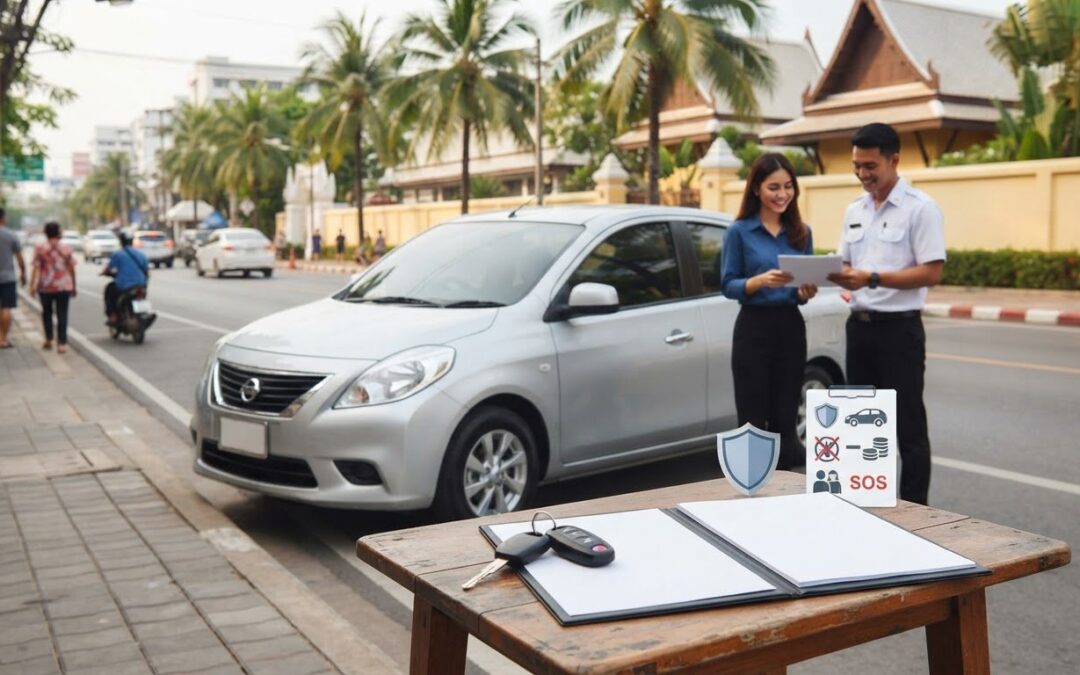
Could a rental quote say “insurance included” and still leave you paying after an accident? Yes. The label alone doesn’t explain what’s protected, what’s excluded, or whether an excess applies. The answer to “does car rental include insurance in Thailand” depends on the cover described in the agreement and policy wording, not just the quote.
Thailand requires vehicles to carry compulsory motor insurance, known as Por Ror Bor, but this basic cover doesn’t cover property damage. Rental cover may provide broader protection, though terms vary. SPS Car Hire states that its rental cars include full first-class insurance. The applicable policy wording sets out the specific cover.
Before you book, compare compulsory cover, rental insurance, and any travel insurance you have. Check the exclusions, the excess, and the steps to follow if there’s an incident. This guide explains what to look for in the agreement so you can make a considered choice about a budget-friendly self-drive rental.
Key Takeaways
- The answer to “does car rental include insurance in Thailand” depends on the rental agreement, so look beyond the quote’s insurance label.
- “First-class” describes a level of cover, not a standard set of benefits. Check which events and drivers the written policy covers.
- Compulsory motor insurance, rental-provided cover, and travel insurance serve different purposes. Compare their actual policy terms.
- Before accepting the car, review the excess, exclusions, authorized drivers, emergency contacts, and claim steps.
- SPS Car Hire’s website describes its rental cars as including full first-class insurance. The applicable policy wording sets out the specific cover.
Does Car Rental in Thailand Include Insurance? Start With the Rental Terms
Sometimes, but it depends on the rental company and the agreement. If you’re asking, “does car rental include insurance in Thailand,” read the terms attached to your quote before assuming every type of damage or cost is covered. “Insurance included” is a starting point, not a complete description of your protection.
Included insurance tells you that cover is part of the rental. The policy terms explain what that cover protects. SPS Car Hire states that its rental cars include full first-class insurance. Read the applicable rental documents to understand the specific cover. The wording matters whether you’re comparing a budget-friendly rental or another option.
What does “insurance included” mean when renting a car in Thailand?
It means insurance is presented as part of the rental, but it doesn’t establish which drivers are covered, what vehicle use is allowed, or what conditions apply to a claim. Those details depend on the agreement and applicable policy. Don’t assume that one company’s “included” cover matches another’s, even when the labels sound similar.
Road travel is one part of the broader transport picture described in this overview of transportation in Thailand. For your rental, focus on the practical question: what do the documents say applies to this vehicle and your planned use?
Why the rental agreement matters as much as the insurance label
A short listing may use broad language, while the policy documents spell out definitions and conditions. Read the insurance section alongside the rental agreement. Pay particular attention to the excess, exclusions, and instructions for reporting an accident. These terms can affect what you may have to pay and what steps you’re expected to take.
Before accepting the car, locate the relevant documents and make sure you know where to find the accident instructions and emergency contact details. If the language is unclear, don’t rely on an assumption based on the label alone. For a closer look at common terms and cover types, read this car rental insurance explainer.
What First-Class Rental Insurance in Thailand May Cover, and What to Check
“First-class insurance” can sound comprehensive, but the phrase doesn’t define the protections or conditions on its own. SPS Car Hire’s website describes its rental cars as including full first-class insurance. Treat this as an inclusion statement, not a substitute for the policy wording. The documents for your rental define what applies. If you’re weighing up does car rental include insurance in Thailand, focus on the actual terms rather than the label.
Which coverage details should renters look for?
Review the policy for the types of claims it addresses and any limits or conditions. For example, third-party liability, damage to the rental vehicle, and theft may each have separate terms. Don’t assume that protection for one automatically means protection for another.
Check these details before you accept the car:
- Covered events and limits: See which incidents are eligible and whether different claim types have separate limits.
- Eligible drivers and permitted use: Confirm who may drive and whether your planned use of the vehicle meets the policy conditions.
- Reporting requirements: Find out what the agreement says to do after an accident, theft, or other incident, and which details or documents may be required.
Answer these questions from the specific policy rather than making assumptions about all first-class cover. For wider information on road travel and safety, consult the UK government travel advice.
How exclusions and excess can change the real protection
Exclusions describe situations or types of loss the policy doesn’t cover. They may relate to how the vehicle was used, who was driving, or the circumstances of an incident. Read the exclusions alongside the covered events, since a claim can depend on meeting the policy’s conditions.
An excess, also called a deductible in some documents, is the amount you may have to contribute toward an eligible claim. It may not apply in the same way to every claim, so look for the stated amount and the situations where it applies. A policy can include cover and still leave you responsible for an excess or for losses excluded by its terms.
A coverage label alone cannot establish whether a particular claim is eligible. For a deeper explanation of policy terms, see this rental insurance coverage guide. If you’re comparing options, explore a budget-friendly self-drive car rental and review its written terms before driving.
Thailand Rental Insurance Compared: Compulsory Cover, Rental Insurance, and Travel Insurance
To understand what “insurance included” means for a Thai rental, separate the different policies that may be relevant. Compulsory motor insurance, cover arranged for the rental vehicle, and your travel insurance serve different purposes. They may overlap, but having more than one policy doesn’t guarantee that every loss will be covered or reimbursed.
| Type of cover | Who provides it | What to verify |
|---|---|---|
| Compulsory motor insurance (Por Ror Bor) | Arranged for the vehicle to meet Thailand’s compulsory insurance requirement | Current policy documents, who and what the cover applies to, and its limits. The compulsory cover is generally focused on bodily injury and death, not damage to property. |
| Rental-provided insurance | Arranged through the rental company and applicable policy | Whether it addresses damage to the rental car, theft, or third-party claims. Also check limits, eligible drivers, exclusions, and any excess. |
| Personal travel insurance | Purchased by the traveler | Whether the plan includes relevant medical or travel benefits, and whether rental-car damage or an excess is covered or excluded. |
How compulsory motor insurance differs from rental insurance
Compulsory motor insurance is the required baseline, not a substitute for understanding the rental policy. In Thailand, it is commonly known as Por Ror Bor and is generally associated with bodily injury and death benefits. Don’t assume it pays for damage to the rented vehicle or other property. For current terminology and scope, check the Office of Insurance Commission’s official guidance and review the vehicle’s policy documents. The Tourism Authority of Thailand also offers guidelines for tourists on driving and vehicle requirements.
Can travel insurance replace rental-car insurance?
Don’t treat travel insurance as an automatic replacement. A plan may help with eligible medical expenses or travel disruption, while rental-car damage and excess may be addressed separately, limited, or excluded. The exact answer depends on the insurer, plan, and circumstances of a claim. Read both policies and check how they define the event, eligible costs, and any conditions.
So, does car rental include insurance in Thailand? A rental may include cover, but compulsory insurance and travel insurance don’t establish what the rental policy protects. Check for gaps and don’t assume one insurer will reimburse costs another policy excludes. For help weighing transport options alongside insurance, see this car rental versus taxi comparison.
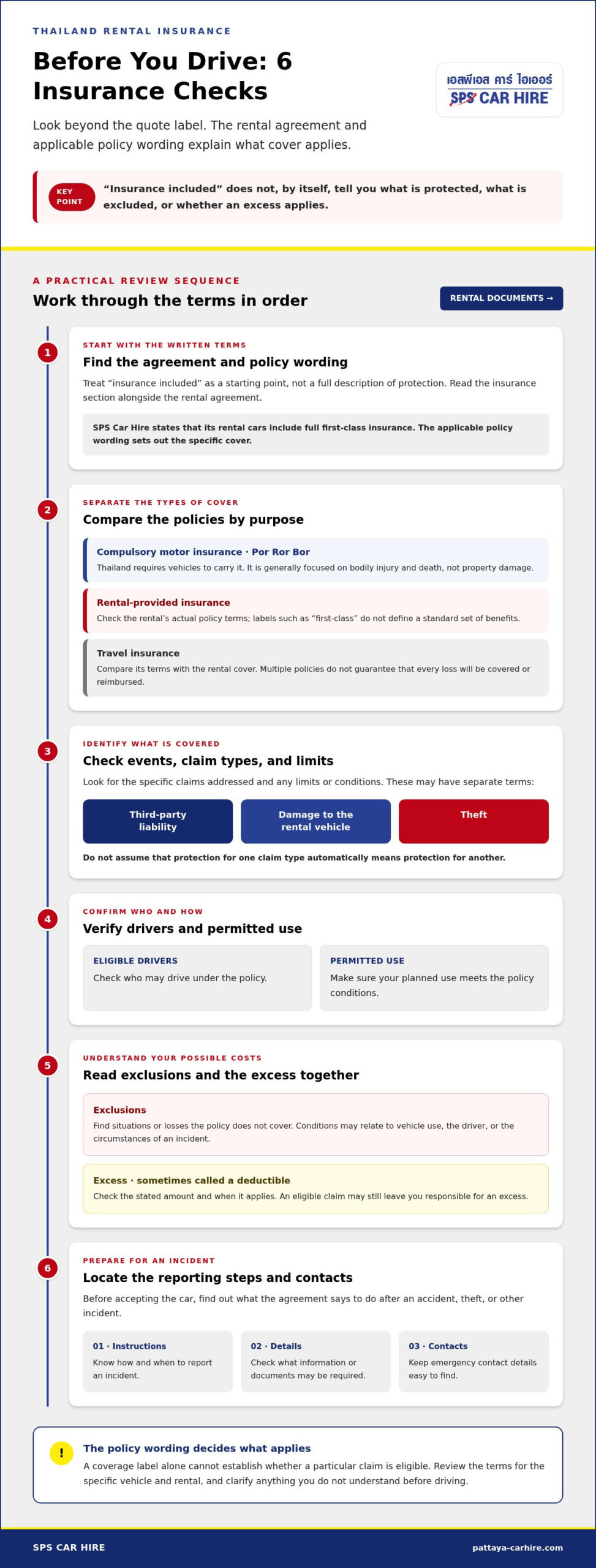
Before You Drive: A Thailand Rental Car Insurance Checklist
A few minutes with the paperwork and vehicle can make the rental terms easier to follow if something goes wrong. Before setting off, work through this checklist and keep the agreement’s instructions accessible throughout the rental.
What to check in the agreement before collecting the car
- Match the renter and drivers. Check that the named renter and every additional driver who may use the car are recorded correctly. Don’t assume another person is covered simply because they’re travelling with you.
- Find the insurance documents. Locate the policy schedule or insurance section, then read it alongside the rental agreement. Identify the covered events, applicable limits, excess, exclusions, and any conditions on vehicle use.
- Save the reporting instructions. Note the emergency contact details and the steps the agreement requires after an accident, theft, or damage. Keep the relevant documents and contacts easy to access, not buried in an email you can’t open offline.
- Inspect and record the car’s condition. Walk around the vehicle before driving. Note existing marks or damage on the handover record, and take clear photos or video of the exterior and interior. Make sure the record reflects what you observed before accepting the car.
What to do if an accident or damage occurs
Safety comes first. Follow emergency instructions that apply to the situation and avoid putting yourself or others at further risk. Once safe, use the reporting process in your rental agreement rather than relying on assumptions about how a claim should be handled.
Record relevant details and photograph the scene or vehicle damage when it’s safe and appropriate. Keep copies of reports, messages, and documents connected with the incident, and follow the agreement’s instructions about who to notify and when. These steps help you provide a clear account, but they don’t guarantee a particular claims decision.
Before accepting the keys, make sure you can answer these questions: Who is allowed to drive? What excess may apply? Which number should you call, and what does the agreement say to do next? If you’re still comparing options, explore self-drive car rental options and review the written terms before setting off.
SPS Car Hire and Included First-Class Insurance: Understand the Next Step
The clearest answer to “does car rental include insurance in Thailand” is in the rental terms for the vehicle you’re booking. An insurance inclusion can be a useful part of a budget-friendly self-drive rental, but the phrase alone doesn’t show which claims are covered or whether you could still be responsible for costs.
How to evaluate an included-insurance rental
SPS Car Hire’s website describes its rental cars as including full first-class insurance. Use that statement as a starting point, then read the applicable agreement and policy wording to understand the specific protection. Policy terms can change, so refer to the current documents for your rental rather than relying only on a short description.
Before booking or accepting the vehicle, compare the written terms with what matters to you. In particular, check:
- Eligible drivers: Are you and anyone else who may drive listed or otherwise covered under the terms?
- Exclusions and permitted use: What situations or vehicle use could fall outside the cover?
- Excess: What amount could you have to contribute to an eligible claim, and when might it apply?
- Claim instructions: Who must be notified, and what steps does the agreement require after an incident?
This quick review helps you compare the insurance inclusion with your priorities. It also keeps expectations realistic: included insurance doesn’t automatically remove every possible renter liability, and no label can replace the actual policy terms.
Choose a rental with clearer expectations
For a straightforward decision, consider the rental cost and insurance wording together. SPS Car Hire’s stated inclusion of full first-class insurance may be relevant if you’re comparing value-focused rentals, but the policy documents explain the specific protections, conditions, and responsibilities. Keep the agreement and claim instructions accessible, and make sure the named drivers and vehicle details are correct before you set off.
Ready to plan your self-drive rental? Explore SPS car rental options, review the terms for your booking, and choose with a clear understanding of what the included insurance says.
Book Your Thailand Rental With Clearer Expectations
So, does car rental include insurance in Thailand? It can, but the phrase “insurance included” doesn’t tell you exactly what a policy covers. Your rental agreement and insurance documents set out the applicable protections, exclusions, excess, eligible drivers, and steps to follow if something happens.
Read the current policy wording for the specific details before driving. SPS also emphasizes budget-friendly self-drive rentals and a best-price guarantee, giving you a practical option to consider as you compare value and coverage.
A quick review before booking can help avoid surprises: make sure the driver details are right, understand any excess, and keep claim instructions close at hand. Then choose your rental with a clear understanding of what the written terms say. Explore SPS car rental options and take the next step toward a smoother self-drive trip in Thailand.
Frequently Asked Questions
Does car rental include insurance in Thailand?
It depends on the rental company and the agreement. SPS Car Hire states that its rental cars include full first-class insurance, but that phrase alone doesn’t explain every limit, exclusion, or excess. Read the applicable policy and rental terms before driving. Check who’s allowed to drive, which incidents may be covered, and how to report damage or an accident. The written terms define the protection that applies to your rental.
What does first-class insurance mean for a rental car in Thailand?
First-class insurance is a label, not a complete description of your protection. The applicable policy sets out covered events, conditions, limits, and exclusions. Check the rental documents for details about eligible drivers, vehicle damage, third-party claims, theft, and any excess. Terms may differ between policies, so don’t assume every rental company uses the label in the same way or provides identical cover.
Is compulsory motor insurance enough when renting a car in Thailand?
Don’t assume compulsory motor insurance provides every protection you need as a renter. Its scope and how it relates to rental insurance depend on current Thai requirements and the relevant policy documents. Verify legal details through an authoritative source, such as Thailand’s Office of Insurance Commission, then review the rental agreement for vehicle damage, liability, exclusions, and claim procedures. A brief insurance label can’t answer those questions by itself.
Does rental car insurance in Thailand cover damage to the rented vehicle?
It may, but the policy and rental agreement determine whether a particular type of damage is covered and under what conditions. Look for relevant exclusions, eligible-driver rules, reporting requirements, and any excess or deductible. “Insurance included” doesn’t mean every incident qualifies for cover. Keep the agreement accessible while driving, and follow its reporting and claims instructions if the vehicle is damaged.
Can I use travel insurance instead of rental car insurance in Thailand?
Travel insurance isn’t automatically a substitute for cover arranged through a rental agreement. Benefits vary by insurer and plan. A travel policy may address eligible medical expenses or travel disruption, while damage to a rental vehicle may be handled differently or excluded. Read both sets of terms, check eligibility and exclusions, and don’t assume one policy will reimburse costs that another policy doesn’t cover.
What should I check before driving a rental car in Thailand?
Before accepting the car, read the insurance schedule and rental agreement. Check the authorized drivers, covered events, exclusions, excess, documents to keep with you, emergency contacts, and accident-reporting instructions. Inspect the vehicle and record existing damage with clear notes and photos before departure. Keep the agreement accessible during the rental, and follow its instructions alongside any applicable official guidance if an incident occurs.
What happens if I have an accident in a rental car in Thailand?
Prioritize safety and follow emergency instructions for the situation. Then use the reporting process in your rental agreement and contact the people or organizations identified there within the stated time. Record relevant details and preserve evidence, such as photographs, when it’s safe to do so. Whether a claim is accepted depends on the policy, the circumstances, and compliance with its conditions, so don’t assume a particular outcome.
 -
- -
- -
- -
- -
- -
- -
-