

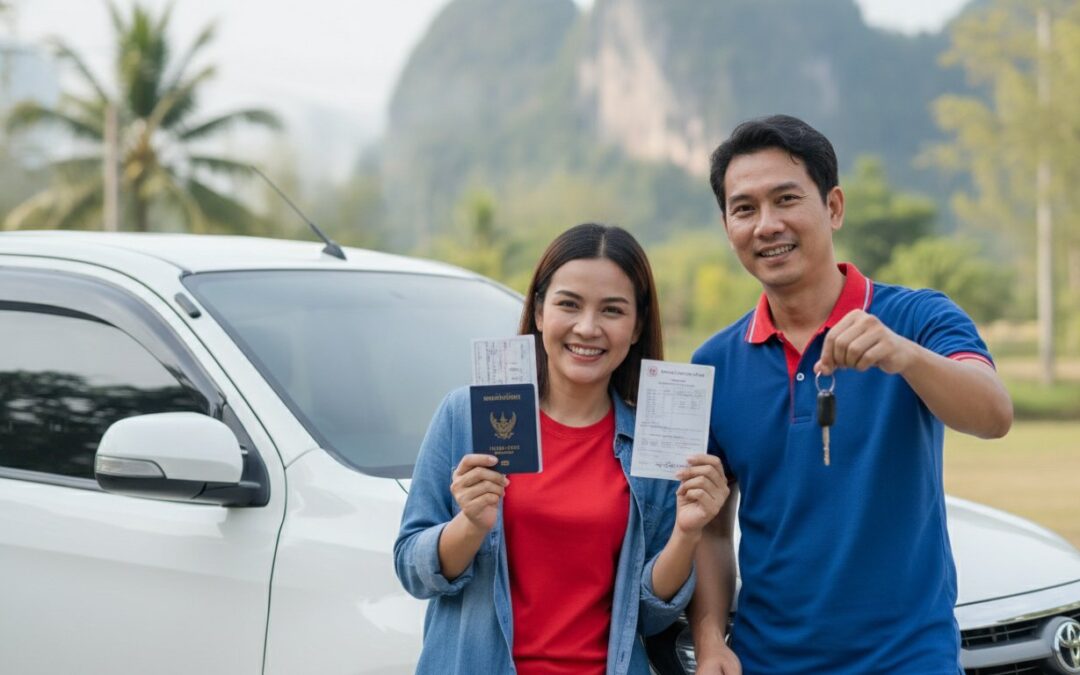
A single missing piece of paper could turn your dream Thai road trip into a ฿2,000 roadside fine and a voided insurance policy. At SPS Car Hire, we understand the anxiety that comes with navigating foreign traffic laws, especially when trying to figure out the exact documents needed for car rental Thailand amidst the stricter enforcement measures introduced in April 2026. You shouldn’t have to worry about police checkpoints or hidden fees when you’re supposed to be enjoying the limestone cliffs or vibrant city streets.
This guide from SPS Car Hire ensures you stay legal and stress-free by providing a definitive checklist and expert rental tips. As your savvy local guide, we’ve compiled everything you need to know, from which International Driving Permit version is actually valid to how you can guarantee the best price on a reliable vehicle. You’ll gain total confidence at the rental counter as we walk you through the essential paperwork, explain the 90-day entry rules, and share professional inspection tips so you can drive away with absolute peace of mind.
Key Takeaways
- Learn exactly which documents needed for car rental Thailand to avoid ฿2,000 fines and ensure your insurance remains fully valid at every police checkpoint.
- Discover why a budget truck is often the savviest choice for navigating varied terrain while keeping your rental costs low.
- Understand the standard security deposit amounts and accepted payment methods to ensure a smooth, transparent transaction at the rental counter.
- Decode “First-Class Insurance” to protect yourself from high excess fees and gain total confidence before you hit the road.
- Learn the essential mental triggers for driving on the left and how to navigate local checkpoints like a seasoned expat.
Mastering the Paperwork: Documents Needed for Car Rental in Thailand
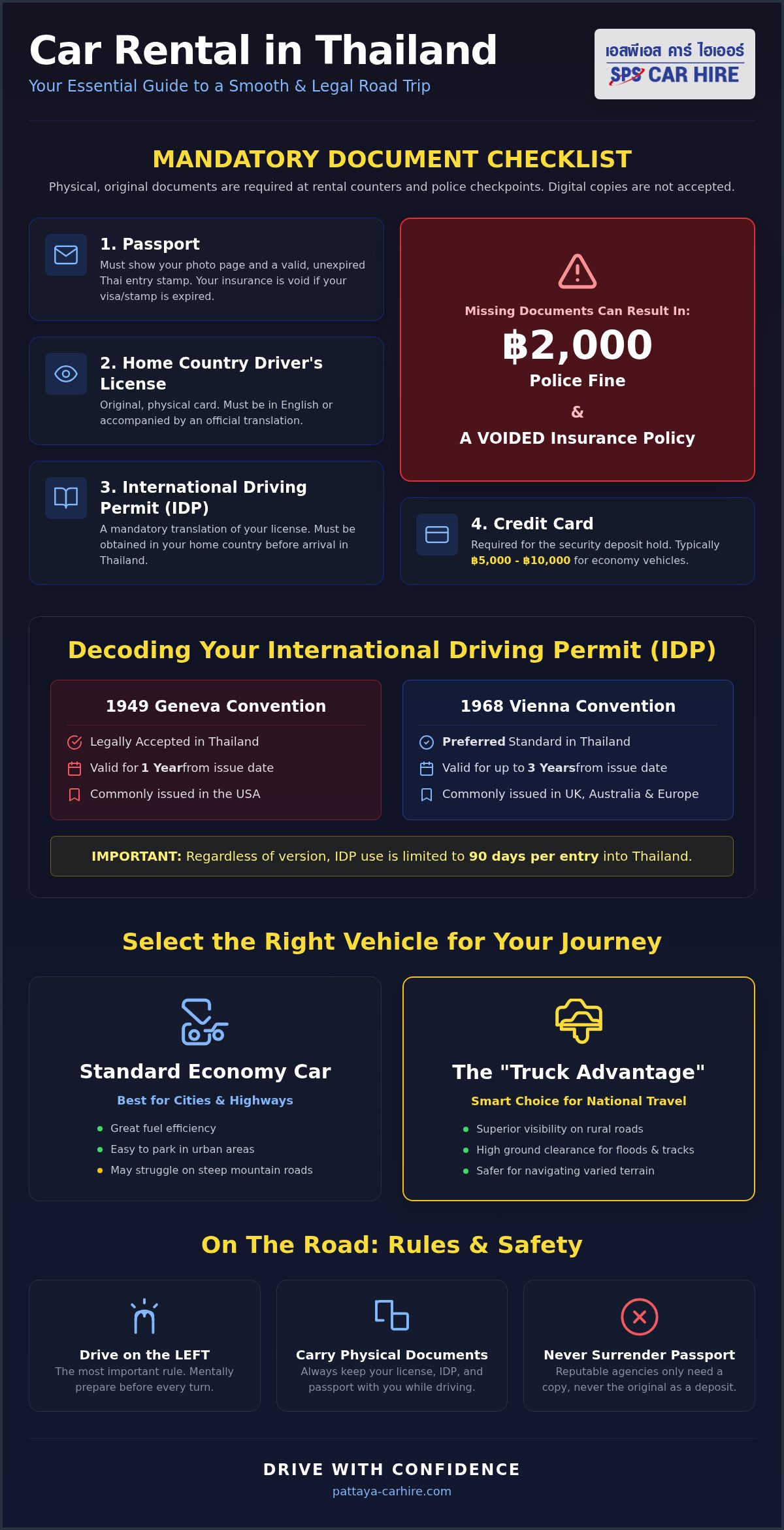
Getting your paperwork in order isn’t just a formality; it’s your shield against unnecessary legal headaches. When gathering the documents needed for car rental Thailand, you’ll find that local agencies and police officers are far more interested in physical originals than digital scans. While a photo on your phone might feel convenient, it won’t satisfy a traffic officer at a checkpoint. You need your actual, physical passport, your original home country license, and your International Driving Permit (IDP) ready to show at a moment’s notice. Having these items ready allows you to breeze through the rental process and get on the road faster.
Your home license must be in English or accompanied by a formal translation. For a deeper look at the legal framework, the Driving licence in Thailand overview highlights why these regulations exist. Most agencies also require a credit card for the security deposit. While some local providers offer alternatives, a credit card remains the smoothest way to handle the ฿5,000 to ฿10,000 hold typically required for economy vehicles. Ensuring you have the correct documents needed for car rental Thailand before you arrive at the counter will save you from being turned away or facing delays.
The IDP Nuance: 1949 vs. 1968 Conventions
One of the biggest points of confusion we see is the difference between IDP versions. Thailand recognized the 1968 Vienna Convention in 2021, and by 2026, this version has become the preferred standard because it’s valid for up to three years. However, the 1949 Geneva Convention version is still legally accepted for a one-year period. An IDP is a mandatory translation of your home license that must be obtained in your country of residence before you arrive. You should check which treaty your home country follows; for example, the UK and Australia often issue the 1968 version, while the US typically issues the 1949 version. Regardless of the version, Thailand limits their use to 90 days per entry.
Passport and Visa Compliance
Your passport is more than just an ID; it’s a record of your legal entry. Rental agencies must take a copy of your photo page and your current entry stamp to ensure your visa is valid for the duration of the contract. If your entry stamp has expired, your car insurance becomes completely void, leaving you liable for every satang in an accident. Remember that self drive car rental requires you to keep these documents on your person whenever you’re behind the wheel. Never leave your physical passport as a deposit with any agency. A reputable provider will only ever ask for a copy and will never suggest holding your original travel document as collateral.
Selecting Your Ride: Vehicle Types for Thailand’s National Roads
Picking the right car is just as critical as preparing the documents needed for car rental Thailand. Most travelers default to a compact hatchback because it’s easy to park in bustling urban centers. While economy cars are excellent for fuel efficiency on major national highways, they might struggle if your itinerary includes the steep, winding roads of elevated or mountainous regions. We recommend choosing a vehicle based on your specific route rather than just the daily rate. A well-maintained budget vehicle that fits your group comfortably will always beat an expensive luxury rental that leaves you feeling cramped on a six-hour drive.
Automatic transmissions are the standard in the Thai rental market. You’ll rarely find a manual car unless you specifically request a base-model pickup truck. When you arrive at the counter with the documents needed for car rental Thailand, take a moment to ensure the vehicle’s condition matches the inspection report. Focusing on mechanical reliability and ice-cold air conditioning is far savvier than paying a premium for a brand-new model. Reliability is our priority because nothing ruins a trip faster than a breakdown in a remote province.
The “Truck Advantage” for National Travel
If you’re planning to explore beyond the most frequented tourist areas, a budget truck is often the smartest choice. Pickups provide significantly better visibility, which is a major safety advantage when navigating rural roads shared with slow-moving farm machinery. During the tropical rainy season, the higher ground clearance of a truck becomes a lifesaver when encountering localized flooding or muddy tracks. You can check our best price car rental guide to see how budget trucks compare to standard sedans for long-distance utility. If you want a vehicle that handles extra luggage and varied terrain without breaking the bank, consider a budget truck rental for your next journey.
Fuel Types and Efficiency
Understanding local fuel labels is essential to avoid a costly engine flush. Most rental cars run on Gasohol 91 or 95, which are blends of gasoline and ethanol. You’ll see these clearly marked at stations like PTT or Shell. If you’ve opted for a truck, it will likely require Diesel. This comprehensive guide to car rental provides more context on operational costs you should expect. Choosing a vehicle size that matches your group size helps optimize your fuel spend; a larger engine might cost more at the pump, but it won’t struggle and burn excess fuel when fully loaded with four passengers and their bags.
You’ve picked your vehicle and mapped your route. Now, let’s talk about the money. Transparency is our priority, and understanding the financial side of your rental is just as important as knowing the road rules. Providing the correct documents needed for car rental Thailand is the first step, but choosing the right payment method is what actually secures your booking. Most agencies require a credit card for the security deposit, which typically ranges from ฿5,000 to ฿10,000 for a standard economy car. This isn’t a direct charge, but a pre-authorization hold. Once you return the vehicle in good condition, the hold is released. While you organize the documents needed for car rental Thailand, make sure your credit card has a sufficient limit to cover this hold without affecting your holiday spending.
Security deposits are a standard reality across the industry. While some local agencies might offer a rare cash deposit option, we generally advise against it for your own security. Credit cards offer the smoothest transaction and the fastest refund process. Debit cards are sometimes accepted, but they usually involve an actual debit of the funds, which can take several weeks to return to your bank account. We aren’t afraid to compare our rates to the big names. SPS Car Hire’s local roots give us the inside track on keeping costs low, allowing us to offer a Best Price Guarantee on budget vehicle rentals. Dealing directly with a savvy local provider ensures you get the actual “best price” without the middleman markups found on third-party aggregator sites.
Avoiding the “Airport Tax”
Picking up your car at the airport terminal is convenient, but you’ll pay for that luxury. Airport locations often include a surcharge that can inflate your daily rate by 15-20%. We recommend looking at off-airport rental locations to find much better value. This is a core part of an all inclusive car rental strategy. By taking a short taxi ride to a local agency office, you can save enough to cover your fuel for an entire week. These savings allow you to upgrade your vehicle or extend your trip without blowing your budget.
Long-Stay Savings for Expats
For those living in Thailand on extended visas, renting long-term is often smarter than buying. When you factor in insurance, maintenance, and the steep depreciation of new cars, our monthly packages offer incredible value. You get a reliable, well-maintained vehicle without the long-term commitment or the hassle of vehicle ownership. Our Best Price Guarantees apply to these extended hire periods too. The longer you drive, the lower your daily rate becomes. This makes long-term rental the most cost-effective way to navigate the kingdom while maintaining your financial flexibility.
Safety and Protection: Understanding Thai Insurance and Inspection Rules
“First-Class Insurance” is a term you’ll hear frequently in the Thai rental market. It sounds like a total safety net, and while it is the premium standard for commercial vehicles, you shouldn’t assume it covers every satang with zero liability. Under Thai law, this level of protection typically includes third-party property damage, personal injury, and coverage for the rental vehicle itself. However, most policies include an “Excess,” which is the maximum amount you’re required to pay if you’re at fault in an accident or if no other party is involved. This amount usually mirrors your security deposit, often ranging from ฿5,000 to ฿10,000. Even if you’ve prepared all the documents needed for car rental Thailand, your insurance is technically void if you’re caught driving without a valid IDP or if you’ve violated the terms of your visa.
We advocate for absolute transparency before you drive away. A rigorous 5-minute walkaround is your best defense against unfair damage claims. Don’t just focus on the exterior; check the interior upholstery for stains and ensure the air conditioning is blowing ice-cold. In the Thai climate, a failing AC system isn’t just an inconvenience; it’s a safety risk that causes driver fatigue. If you’re looking for a vehicle where the mechanical condition is as reliable as the pricing, explore our Best Price Car and Truck Rental offerings to start your journey with confidence.
The Ultimate Inspection Checklist
Don’t rely on the rental agent’s eyes alone. Follow these steps to protect your deposit:
- Step 1: Record a slow, time-stamped video walkaround of the entire vehicle, including the roof and wheels.
- Step 2: Inspect high-risk areas like the underside of the front bumper for curb scrapes and check that tire tread depth looks safe for wet roads.
- Step 3: Open the trunk to ensure the spare tire, jack, and lug wrench are present and functional.
- Step 4: Verify the fuel gauge matches the “Full-to-Full” policy stated on your contract before you leave the lot.
Insurance Jargon Simplified
Understanding the difference between CDW (Collision Damage Waiver) and “Super CDW” can save you thousands of Baht. Standard CDW lowers your liability but still leaves you responsible for the Excess. Super CDW, or Zero Excess, removes that liability entirely for a small daily fee. While third-party liability is the bare minimum required by law, we always recommend opting for the highest coverage available. It’s also a savvy move to keep a physical copy of your rental agreement and the insurance company’s emergency contact details in the glovebox. Having these alongside the other documents needed for car rental Thailand ensures you’re prepared for any roadside scenario.
Driving and Compliance: Navigating Checkpoints and Returning Your Rental
Hitting the highway with your rental is where the real adventure begins. However, having the documents needed for car rental Thailand tucked in your glovebox is only half the battle; you need to know how to use them when you encounter local law enforcement. In 2026, traffic enforcement has become significantly stricter, with on-the-spot fines for driving without a valid IDP ranging from ฿500 to ฿2,000. If you’re stopped, don’t panic. Most checkpoints are routine inspections designed to verify license and registration. By staying calm and having your physical paperwork ready, you’ll likely be back on your way in less than two minutes.
Adjusting to driving on the left can be a challenge if you’re from a right-hand drive country. A savvy local trick is to remember that the driver should always be positioned towards the center of the road, not the curb. When you need to refuel, look for major stations like PTT, Shell, or Bangchak. These are more than just gas stations; they’re community hubs with clean restrooms and excellent coffee. Always double-check your fuel type. Most budget cars use Gasohol 95 or 91, while trucks require Diesel. Getting this wrong is an expensive mistake that insurance won’t cover.
Checkpoint Protocol for Foreigners
When you see the orange cones and flashing lights of a checkpoint, slow down and roll down your window. Officers appreciate politeness and a smile. Hand over your original home country license and your IDP immediately. It’s vital that you carry the physical versions of these documents needed for car rental Thailand at all times. Digital photos or scans on your smartphone are rarely accepted by highway police and could result in a fine even if you technically possess the right credentials. Once the officer sees you’re legally compliant and respectful, they’ll usually wave you through with a “Chok Dee” (good luck).
Hassle-Free Vehicle Returns
The final step of your journey is the return process. To ensure your security deposit, which we mentioned is typically ฿5,000 to ฿10,000, is refunded without delay, return the car in a clean state. Excessive sand or mud can trigger “valeting fees” that eat into your refund. Follow the “Full-to-Full” fuel policy strictly by topping up at a station within 5 kilometers of the drop-off point. This is the most transparent way to handle fuel and prevents the agency from charging you inflated per-liter rates. Finally, always ask for a signed clearance or a “returned in good condition” note. This simple piece of paper is your final protection against any future damage claims, ensuring your journey ends as smoothly as it started.
Hit the Open Road with Absolute Confidence
Navigating the kingdom’s national highways is one of the most rewarding ways to experience Thailand. You now understand how to navigate the 1968 IDP convention nuances and why a systematic vehicle inspection protects your hard-earned deposit. Armed with the right knowledge about insurance excess and local fuel types, you’re no longer just a tourist; you’re a savvy traveler ready for any route. Ensuring you have the correct documents needed for car rental Thailand is the final hurdle before you can enjoy the total freedom of your own set of wheels.
We believe in straightforward service and local expertise. Our 2026 Best Price Guarantee ensures you get the most value for your Baht, while our no hidden fees policy means the price you see is the price you pay. Whether you’re here for a quick holiday or need one of our dedicated long-term expat packages, we’ve got the reliable vehicle you need. Book your budget-friendly car or truck with our Best Price Guarantee and start your journey today. Thailand is waiting for you, so grab your maps and get driving!
Frequently Asked Questions
Do I really need an International Driving Permit to rent a car in Thailand?
Yes, an IDP is mandatory for all non-ASEAN license holders. You must present it alongside your original home country license at the rental counter and during police inspections. Without this permit, you risk on-the-spot fines of up to ฿2,000 at checkpoints. It’s one of the most critical documents needed for car rental Thailand because driving without it can also void your insurance coverage entirely.
What is the best way to find a cheap car rental without hidden fees?
Booking directly with an independent local agency is the most reliable way to avoid hidden fees and aggregator markups. Local providers often offer a best price guarantee and transparent “Full-to-Full” fuel policies. This direct approach ensures the price you see on the contract is the final amount you pay. You’ll avoid the surprise surcharges that often hide in the fine print of third-party booking sites.
Can I rent a car in Thailand with a cash deposit instead of a credit card?
While most agencies require a credit card for the security deposit, some local independent providers may offer cash alternatives. However, credit cards remain the standard and safest method for handling the ฿5,000 to ฿10,000 hold. If you choose a cash deposit, always ensure you receive a signed receipt and a clear “clearance” note upon returning the vehicle. This documentation is vital to secure your refund.
Is it safe for foreigners to drive a rental car themselves nationally?
Yes, driving nationally is safe as long as you remain alert and follow local traffic patterns. Thailand’s national highways are well-maintained, but you should be cautious of motorbikes and slower farm vehicles in rural areas. Having the correct documents needed for car rental Thailand ready for checkpoints will keep your journey smooth. Driving yourself offers the freedom to explore remote provinces that tours simply don’t reach.
What happens if I have an accident in my rental car?
You must contact the rental agency and their insurance provider immediately if an accident occurs. Don’t move the vehicle until the insurance surveyor arrives, as they need to document the scene for the claim. You’ll likely be responsible for the “Excess” fee specified in your contract. This amount typically ranges from ฿5,000 to ฿10,000 depending on your specific coverage level and the vehicle type.
Which fuel should I put in my rental car or truck?
Check the sticker inside the fuel filler flap to identify the correct fuel type, which is usually Gasohol 91, 95, or Diesel. Most economy cars run on Gasohol blends, while pickup trucks almost exclusively use Diesel. Filling up with the wrong fuel can cause severe engine damage that isn’t covered by standard insurance policies. Always double-check the label at the pump before you start fueling.
Can I take my rental car to another province or city?
Most rental agreements allow you to drive nationwide, but you should always confirm this with your agency first. Some providers have specific geographic limits or require notification if you plan to travel to border provinces. Taking your car across provincial lines is generally expected and encouraged. This is especially true if you’ve opted for a budget truck designed for long-distance national travel and varied terrain.
What should I do if the police stop me while driving a rental?
Stay calm, pull over safely, and present your physical passport, home license, and IDP when requested. Officers are usually conducting routine checks for valid documentation and vehicle registration. Avoid showing digital photos of your papers, as physical documents are legally required at checkpoints. A polite attitude and clear paperwork will usually result in a quick wave-through, allowing you to continue your journey without any stress.
 -
- -
- -
- -
- -
- -
- -
-