


What if the ‘all-inclusive’ price you just booked is actually the start of a very expensive headache at the rental desk? Many travelers arrive in Thailand expecting a simple transaction, only to face a barrage of surprise charges for ‘mandatory’ add-ons they thought were already covered. If you’ve ever felt confused by the difference between basic coverage and first-class insurance, you aren’t alone. It’s frustrating to start a holiday feeling like you’ve been misled by clever marketing. Finding a genuine all inclusive car rental Pattaya shouldn’t feel like a gamble with your hard-earned vacation budget.
I’m here to show you exactly how to verify a rental agreement so you can drive away with zero surprise costs and total peace of mind. You’ll learn how to identify genuine protection and avoid the common traps that catch even seasoned visitors off guard. This guide provides a clear 2026 checklist to verify any agreement, incorporating the mandatory digitalization of insurance that began in January 2026 and the latest Bank of Thailand fair-treatment rules from June 2026. We’ll cut through the fluff to make sure your journey is smooth, safe, and strictly within the price you were promised.
Key Takeaways
- Learn why a true all-inclusive rate must bundle insurance, taxes, and mandatory fees into one transparent price to ensure a stress-free journey.
- Discover why “First-Class Insurance” is the non-negotiable foundation of any genuine all inclusive car rental Pattaya and how to identify zero-excess options.
- Uncover the common “airport surcharge” traps and fuel policy tricks that national chains often use to inflate your final bill at the rental desk.
- Master a simple two-step pre-contract verification process to lock in your price and avoid unexpected “out of hours” or hidden location surcharges.
- Understand the unique benefits of booking with local independent agencies who prioritize direct accountability and transparent, reputation-based pricing.
Defining All-Inclusive Car Rental: What It Means in 2026
Booking a vehicle in a foreign city can feel like walking through a minefield of fine print. In the national Thai market, an all-inclusive car rental is a package where the final price you see is exactly what you pay, covering the vehicle, comprehensive insurance, and all government-mandated taxes without any hidden surcharges added at the desk. This is the gold standard for travelers who want to enjoy the coast without worrying about their bank balance being drained by ‘mandatory’ extras. While what car rental agencies do varies globally, here in Thailand, the term is often used loosely as a marketing hook. You’ll see low daily rates that suddenly double once you add insurance and VAT at the counter. A true all inclusive car rental Pattaya deal removes that stress entirely. It shifts the risk from your pocket to the provider, ensuring that a small scratch in a parking lot doesn’t turn into a massive unexpected bill.
The Core Components of an All-Inclusive Deal
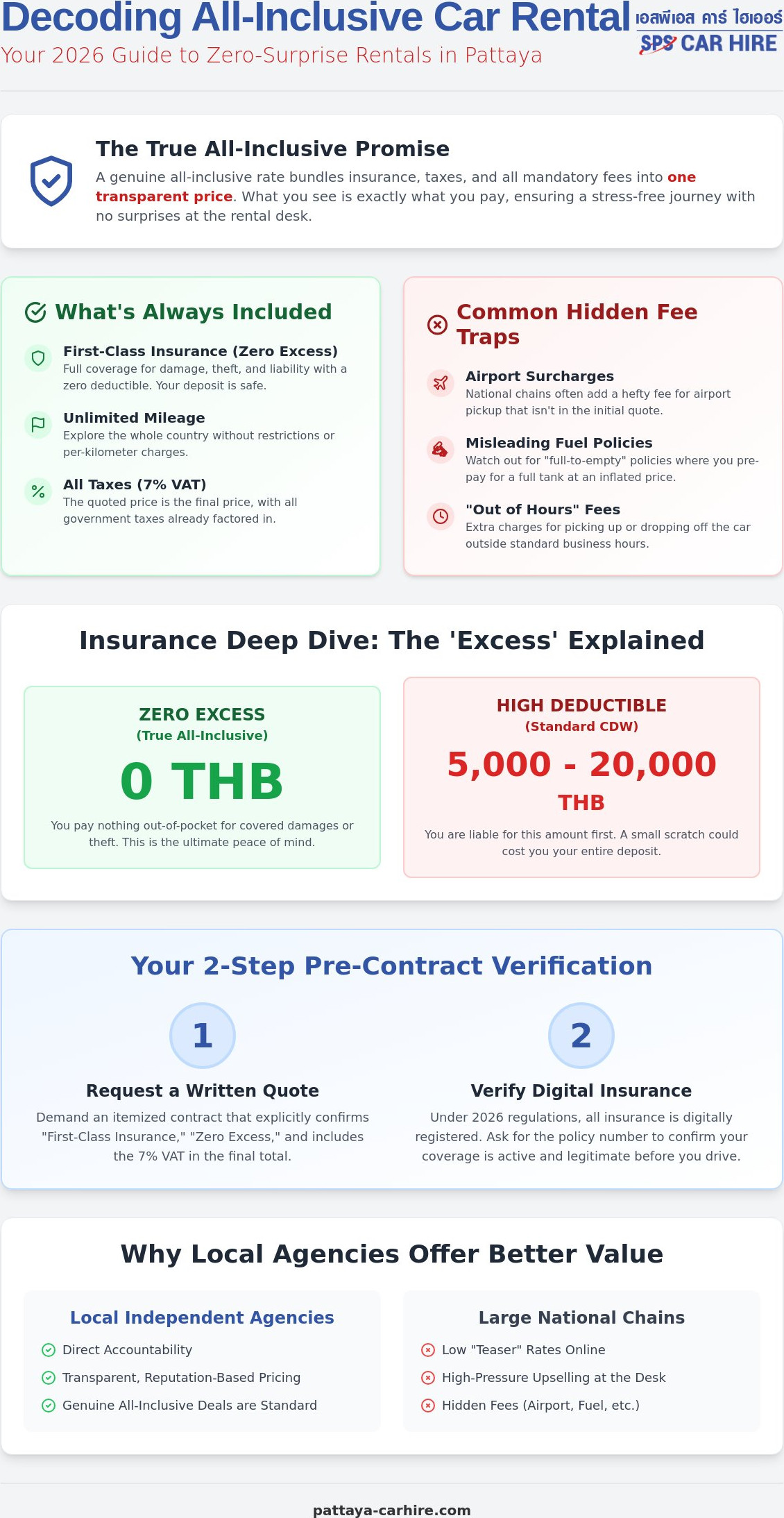
To qualify as a genuine all-inclusive deal in 2026, the agreement must be bulletproof. First, look for unlimited mileage. Some agencies restrict you to the local province, but a proper package lets you explore the whole country without counting kilometers. Second, it must include ‘First-Class Insurance’ with a zero or very low excess. Basic Collision Damage Waiver (CDW) usually carries a high deductible that you’re responsible for if things go wrong. Finally, the price must include the 7% Value Added Tax (VAT). If a company waits until you’re holding the keys to mention tax, it isn’t all-inclusive.
Why All-Inclusive is Better for Long-Term Stays
If you’re an expat or visiting for a few months, predictability is your best friend. All-inclusive packages allow for precise monthly budgeting because there are no surprise charges at the end of the term. You’re protected against the minor dings and scratches that are almost inevitable in busy traffic. When you’re comparing rental cars to taxis for a long-term stay, the freedom of having your own vehicle with total coverage usually wins on both cost and convenience. It’s about buying peace of mind so you can focus on the road, not the potential repair costs. You get the keys, you get the protection, and you get a fixed price that doesn’t budge.
The Essential All-Inclusive Insurance Checklist
First-Class Insurance is the non-negotiable foundation of any genuine all inclusive car rental Pattaya package. While basic policies meet the bare legal minimum, they often leave you exposed to massive financial risks if a serious accident occurs. In Thailand, the compulsory insurance (Por Ror Bor) only covers medical expenses up to 80,000 THB and death up to 500,000 THB. A first-class policy goes much further, covering property damage and providing significantly higher liability limits for national roads. If a rental agency doesn’t explicitly confirm first-class coverage, you aren’t looking at an all-inclusive deal. You’re looking at a potential liability.
You also need to distinguish between a standard Collision Damage Waiver (CDW) and Super CDW, often called Zero Excess. A standard CDW limits your financial responsibility but still requires you to pay a set amount, the excess, for any damage. Super CDW removes this entirely, meaning you pay nothing for covered repairs. Many travelers find that common hidden fees often stem from these waivers being sold as high-priced add-ons at the desk. A true all-inclusive package bundles Super CDW and Theft Protection (TP) from the start, ensuring you aren’t held responsible if the vehicle is stolen or damaged while parked.
Understanding the ‘Excess’ or Deductible
The ‘Zero Excess’ advantage is the ultimate peace of mind for visitors. In a standard contract, you might be liable for the first 5,000 to 20,000 THB of any claim. By choosing an all-inclusive rate, you trade a slightly higher daily cost for the certainty that your deposit is safe. Don’t rely solely on credit card insurance. Many cards exclude Thailand or require you to pay the rental company upfront and fight for a reimbursement later, which is a massive hassle during a holiday.
Bail Bond Coverage: A Unique Local Requirement
Bail bond coverage is a critical, yet often overlooked, part of a comprehensive Thai rental policy. If an accident results in serious injury or legal proceedings, the driver can be detained by authorities. This coverage ensures the insurance company provides the necessary funds for your release while the case is investigated. If this is missing from your deal, you’re taking a risk that no amount of savings can justify. Tip: Always check the fine print for bail bond limits; a reliable policy should offer at least 200,000 THB in coverage to be effective.
Securing a vehicle with these protections doesn’t have to be complicated or overpriced. You can find high-quality, transparent options by choosing a budget car and truck rental specialist that includes these essentials in every quote.
Common Hidden Fees in the National Rental Market
You think you’ve found a bargain until you reach the rental counter; then the “convenience fees” start piling up. The most common trap in the Thai market is the hidden airport surcharge. Many national agencies advertise a low base rate but fail to mention the 10% to 15% location fee they tack on for pick-ups at major hubs. When you book a genuine all inclusive car rental Pattaya, these location-specific costs should already be baked into the quote. If they aren’t, the agency is simply using a low-price hook to get you in the door before hitting your wallet with the reality of their operating costs. I’ve seen travelers lose their entire lunch budget just because they didn’t account for these “premium location” add-ons.
Credit card processing fees and additional driver charges are other ways agencies quietly inflate the bill. Some providers charge a 3% fee just for the “privilege” of using your card; others will demand a daily fee for every person who might touch the steering wheel. As noted in the FTC guide to car rental fees, these types of charges are standard industry tactics to boost profit margins. A transparent provider includes at least one additional driver in the base rate and doesn’t penalize you for using standard payment methods. It’s about being straightforward from the start, not finding new ways to squeeze a few extra Baht out of a visitor. Before committing to any provider, it’s worth reviewing a Thailand budget car rental 2026 comparison guide to benchmark what a genuinely fair best price car rental Pattaya should look like across the market.
The Fuel Policy Pitfall
Don’t ever agree to “pre-paid fuel” unless you plan on coasting into the lot on literal fumes. Agencies sell this as a convenience, letting you return the car empty, but they charge a premium for the service and you never get a refund for the gas left in the tank. It’s a hidden profit center for them. A savvy local guide always recommends the “Full-to-Full” approach. You get a full tank, you top it off at a local station before returning, and you only pay the actual market price for what you used. It’s the only truly transparent way to handle fuel.
Late Return and Cleaning Fees
The “grace period” is largely a myth in the modern rental world. Returning a car even 30 minutes late can trigger a full day’s rental charge at many national chains. Similarly, watch out for “mandatory” cleaning fees. While you should return the car in good condition, some companies use a few grains of sand as an excuse for a professional detailing surcharge. If you’re looking for business-specific advice on avoiding these traps with larger vehicles, check out our guide for long term truck rentals. It covers how to handle vehicle returns when dealing with the dust and wear of extended hire.
Your Pre-Contract Checklist: How to Guarantee No Hidden Costs
Securing a true all inclusive car rental Pattaya deal requires more than just clicking a button on a website. You need a systematic approach to ensure the price you’re quoted is the price you’ll actually pay. Start by requesting a written quote that explicitly states “All Taxes and Insurance Included.” Don’t settle for a verbal promise; having this in writing protects you from sudden “misunderstandings” at the desk. Next, check for “Out of Hours” surcharges. If your flight lands at 2:00 AM, some agencies will hit you with a hefty fee for being there to meet you, even if they claim to be all-inclusive. Third, verify the exact security deposit amount and the refund timeline. Current industry data for 2026 shows deposits typically range from $300 to $800 USD, so knowing how long your funds will be tied up is vital for your holiday budget.
The fourth step is non-negotiable: inspect the vehicle thoroughly and document its condition. Walk around the car with your phone and record a high-definition video of every panel, wheel, and interior surface. This documentation is your best defense against false damage claims when you return the keys. Finally, confirm the roadside assistance number is active and included in your package. You don’t want to find out that help costs extra when you’re stuck on a highway at midnight. These steps transform a vague marketing promise into a legally binding, stress-free agreement. If you’re planning to explore beyond the city and want to understand the full scope of your rights and responsibilities behind the wheel, our ultimate guide to self drive car rental in Thailand covers everything from permit requirements to the latest 2026 digital insurance mandates.
Auditing the Fine Print
Before you sign, scan the contract for red-flag keywords like “Exclusions,” “Administrative fees,” or “Processing charges.” These are where companies bury the costs they didn’t want to show you earlier. Ask the provider directly: “Is this the final price with absolutely no other charges?” It’s a simple question that forces transparency. I always recommend documenting the “All-Inclusive” promise via email before you even arrive in the country. It creates a digital paper trail that is very hard for an agency to argue against once you’re standing in their office.
The Security Deposit Reality Check
Even the best all-inclusive deals usually require a credit card pre-authorization. It’s important to distinguish between a “fee” and a “refundable deposit.” A fee is money you lose; a deposit is simply a hold on your credit limit that should be released immediately upon the safe return of the car. To ensure a fast release, ask for a signed return receipt that confirms the vehicle was returned in its original condition. This document is your proof if you ever need to dispute a charge with your bank later.
If you’re tired of the games and want a straightforward experience, book your next trip with a provider that offers a best price car and truck rental guarantee with zero hidden surprises.
Why Local Independent Agencies Offer the Best All-Inclusive Value
Aggregators and global chains might look convenient on a search results page, but they often act as middle-men who add layers of cost and confusion to your booking. When you choose a local independent agency for your all inclusive car rental Pattaya, you’re opting for direct accountability. You won’t find yourself trapped in a loop with an offshore call center or a chatbot if you need to adjust your plans. Instead, you talk directly to the people who maintain the vehicles and manage the contracts. This direct connection ensures that the “no hidden fees” promise isn’t just a marketing slogan; it’s a personal commitment from a business owner whose reputation depends on your satisfaction—a philosophy shared by other family-owned providers like PDA Limo who offer luxury car services with the same focus on transparency.
Local operators thrive on repeat business and word-of-mouth recommendations within the community. They don’t have the massive marketing budgets of international franchises, so they compete by offering superior value and transparent pricing. This often includes a “Best Price Guarantee” that aggregators simply can’t match because they have to bake their own commissions into the final rate. Whether you need a daily runabout or one of our long-term car rental packages, dealing locally means you get a price that hasn’t been inflated by corporate overhead or franchise fees.
The Benefit of Local Savvy
Working with a local expert gives you access to the “inside track” on navigating the region. We provide real-world advice on national driving conditions, the best routes to avoid seasonal traffic, and even tips on where to find the most reliable fuel stations. This “savvy local guide” approach means we’re protective of your experience. We want you to enjoy the roads, not worry about the logistics. Because we’re independent, we have the flexibility to customize deals without the red tape that restricts larger corporations, making it much easier to arrange specific requirements for extended stays.
Supporting the Local Economy
Choosing a locally owned and operated agency does more than just save you money; it keeps your travel budget within the community you’re visiting. Local businesses are naturally more transparent about their terms because they’re your neighbors during your stay. They understand the local legal environment and the 2026 insurance regulations better than anyone else. This expertise ensures your contract is fully compliant with Thai law, providing you with genuine protection and total peace of mind. Stop gambling with aggregator sites and check out our low-cost, all-inclusive rental options today!
Drive With Confidence on the Gulf of Thailand
Finding a genuine all inclusive car rental Pattaya shouldn’t be a source of stress. By insisting on first-class insurance and following our pre-contract checklist, you protect your holiday from the hidden fees that often plague the national rental market. You now have the tools to identify real value, from verifying zero-excess policies to documenting vehicle condition before you leave the lot. Remember that direct accountability is your greatest asset; talking to a local owner is always more reliable than dealing with a distant call center.
At SPS Car Hire, we take pride in being an independent, locally owned agency that puts transparency first. We offer a Best Price Guarantee on all rentals and have specialized long-term rental packages available for those planning an extended stay. Don’t leave your journey to chance with big aggregators who hide their true costs in the fine print. Book your budget-friendly, all-inclusive car rental with SPS Car Hire and experience the difference that local expertise makes. We’re ready to help you hit the road with total peace of mind and a price that won’t change.
Frequently Asked Questions
Is insurance really included in all-inclusive car rentals?
True all-inclusive deals bundle first-class insurance directly into the daily rate. This coverage includes Collision Damage Waiver (CDW) and Theft Protection (TP) as standard components. Since the mandatory digitalization of insurance in January 2026, you should receive your electronic policy confirmation immediately upon booking. Always confirm that “first-class” is explicitly mentioned, as basic legal coverage leaves you with high financial deductibles.
Can I rent a car without a credit card for an all-inclusive deal?
Yes, many local independent agencies in Pattaya provide more flexibility than national chains by accepting cash deposits or bank transfers. While global aggregators usually demand a credit card for pre-authorization, local operators often cater to travelers who prefer not to tie up their credit limits. This has become a growing trend in 2026 for visitors seeking a more straightforward, “no-plastic” rental experience.
How much is the average security deposit for a budget rental?
Security deposits for vehicles in Thailand typically range from $300 to $800 USD. The exact amount depends on the vehicle class and the length of your stay. This isn’t a fee; it’s a refundable hold that is released once the car is returned in its original condition. Always ask for a signed return receipt to ensure your funds are released promptly by your bank without delays.
What happens if I have an accident in an all-inclusive rental car?
Your first-class insurance coverage activates immediately to handle property damage and third-party liability. If you booked a zero-excess all inclusive car rental Pattaya, you won’t be responsible for the cost of covered repairs. You must contact the rental agency and the insurance provider right away to file a report. Since June 2026, new Bank of Thailand regulations ensure fairer and more transparent treatment for customers during the claims process.
Is roadside assistance included in the all-inclusive price?
Yes, 24-hour roadside assistance is a standard feature of any reputable all-inclusive package. This covers mechanical breakdowns, flat tires, or battery issues anywhere in the country. Before you drive away, verify that the emergency contact number is clearly printed on your rental agreement. Having this professional support ensures you aren’t left stranded on a national highway without a clear plan for recovery.
Do I need an International Driving Permit for an all-inclusive rental?
Non-ASEAN visitors must have a valid International Driving Permit (IDP) accompanied by their home country’s driver’s license. This is a mandatory legal requirement for renting and driving in Thailand. If you’re involved in an accident without an IDP, your insurance coverage could be voided by the provider. It’s a simple document that prevents massive legal and financial headaches during your trip.
Are there any mileage limits on all-inclusive car hire packages?
Most all-inclusive deals offer unlimited mileage, allowing you to explore beyond the city limits without extra charges. However, some smaller agencies might restrict travel to specific provinces or set a daily cap for very short rentals. Always check the “Geographic Restrictions” section of your contract. A transparent provider will clearly state if you’re allowed to drive the vehicle across the whole country without penalties.
What is the fuel policy for most all-inclusive rentals?
The “Full-to-Full” policy is the industry standard for transparent, all-inclusive rentals. You receive the vehicle with a full tank and return it the same way. This ensures you only pay for the fuel you actually use at local pump prices. Avoid “Pre-paid fuel” options, as these are almost always designed to generate extra profit for the agency rather than saving the traveler money.
 -
- -
- -
- -
- -
- -
- -
-