

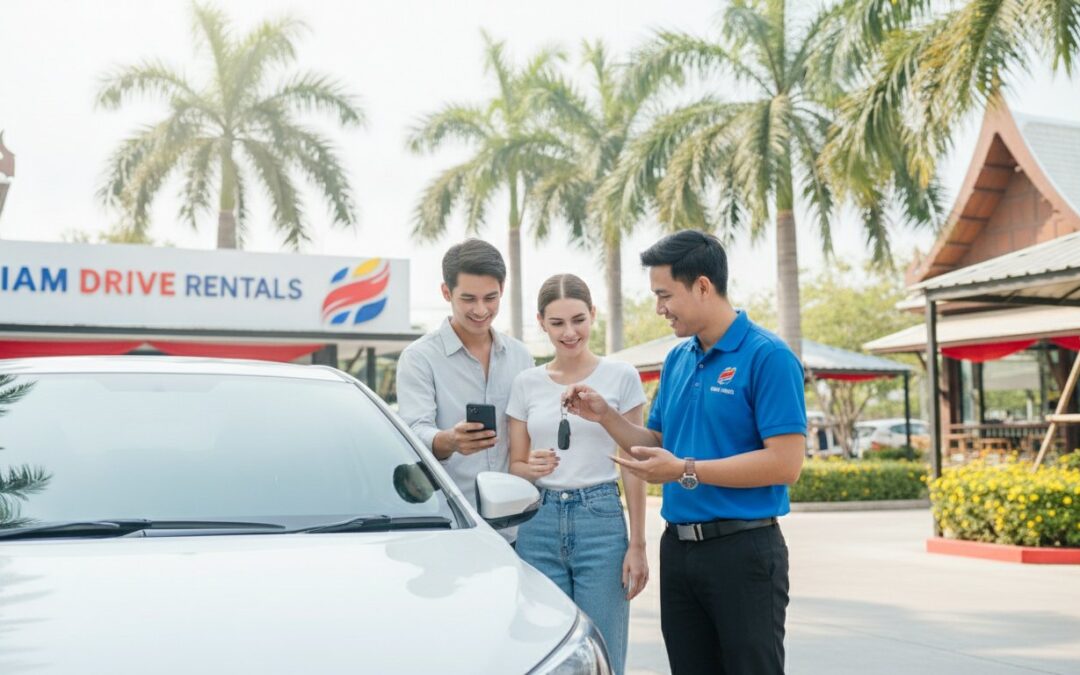
Did you know that car rental complaints in Thailand rose by 15 percent leading into 2026, mostly due to hidden fees and insurance confusion? It’s a frustrating reality that can turn a dream road trip into a headache, but avoiding car rental scams in Thailand is much easier when you have the right local knowledge. You’re right to feel cautious about handing over your passport as a deposit or worrying about being charged for a scratch that was already there when you picked up the keys.
This guide is designed to give you the inside track on safety, ensuring you have the confidence to choose a reputable provider without the fear of being ripped off. We’ll walk you through a foolproof vehicle inspection checklist, explain what a legal 2026 rental contract actually looks like, and demystify Thai insurance terms so you can stay protected on the road. By the end of this article, you’ll know exactly how to spot a “passport hostage” situation before it happens and how to leverage the Tourist Police if things go sideways. Let’s make sure your journey is defined by the scenery, not the scams.
Key Takeaways
- Learn the specific 5-minute vehicle inspection protocol that protects your deposit from being drained by pre-existing scratches or dents.
- Identify the critical red flags during the booking process, including why avoiding car rental scams in Thailand starts with rejecting any request for untraceable payments.
- Discover what “First Class Insurance” actually covers in the Thai market so you aren’t left paying for expensive repairs out of pocket.
- Clarify the 2026 legal requirements for International Driving Permits and digital insurance to ensure your rental remains valid and legal.
- Find out why a locally owned agency can offer more reliability and transparency than larger, less personal operators.
Common Car Rental Scams in Thailand and How to Spot Them
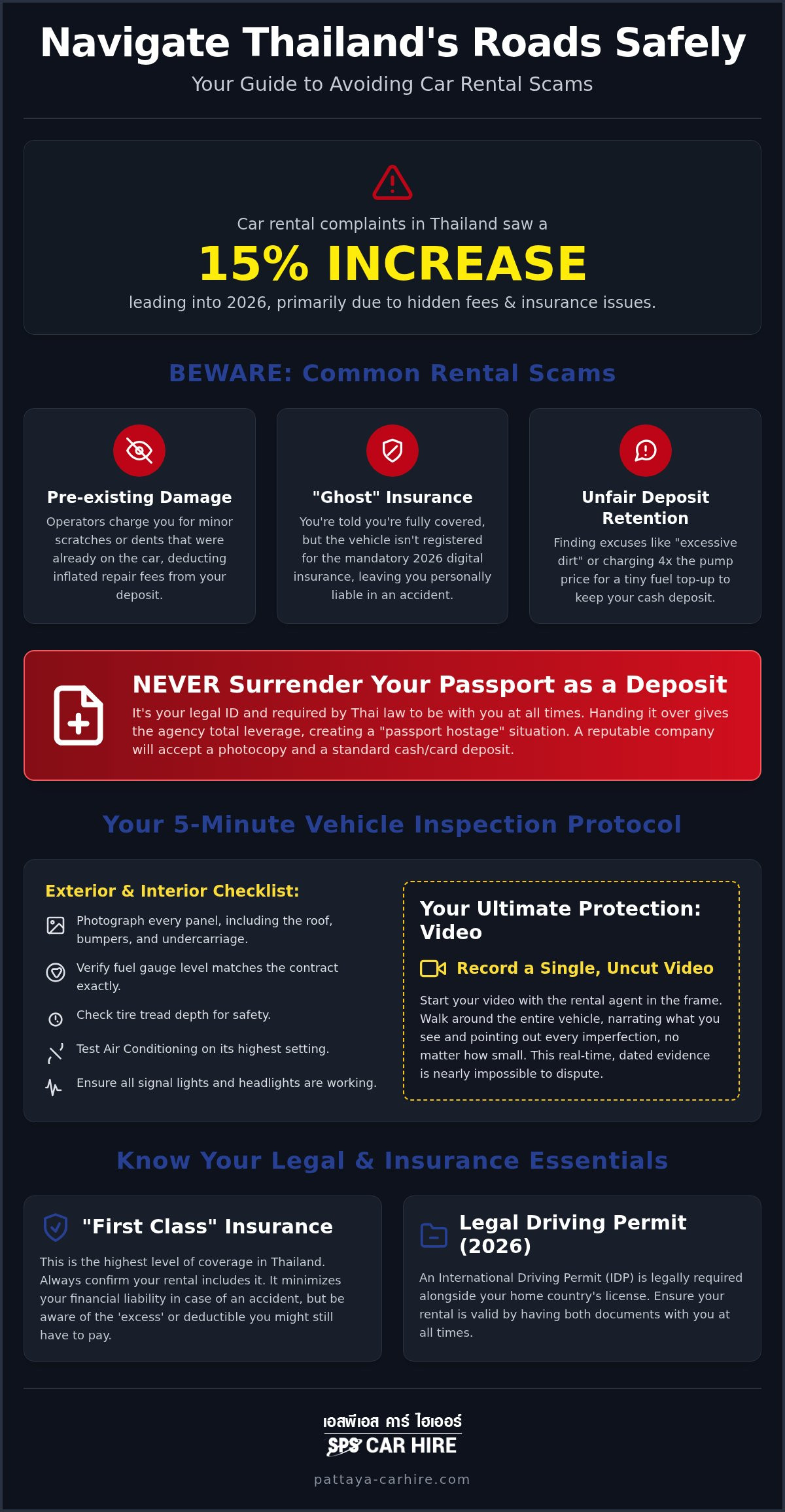
The first step in avoiding car rental scams in Thailand is recognizing that scammers rely on your desire for a bargain and your lack of local knowledge. The most frequent trap is the ‘Pre-existing Damage’ scam. This happens when an operator points out a tiny scratch or a dent upon the vehicle’s return and insists you caused it. Without proof, they’ll deduct an inflated repair fee from your deposit. Another serious issue is ‘Ghost Insurance.’ Some unethical providers will tell you that you’re fully covered, but they haven’t actually registered the vehicle for the mandatory digital insurance required by 2026 laws. If you’re in an accident, you’ll find yourself personally liable for every baht of damage.
Unfair deposit retention is another common headache. Scammers often look for any excuse to keep your cash security deposit. They might claim the car is “excessively dirty” or that you’ve returned it with slightly less fuel than you started with, charging four times the pump price to top it off. These tactics are designed to frustrate you into giving up and walking away without your money.
The Psychology of the ‘Too-Good-To-Be-True’ Price
Ultra-low daily rates are almost always bait. If a price is significantly lower than the market average, the operator is likely planning to make their profit through hidden fees or damage claims later. These “cowboy operators” often lack a physical office or a legitimate fleet, operating out of a backpack or a temporary stall. They use high-pressure tactics to rush you through the contract signing, often distracting you with friendly small talk while you skip over the fine print. Don’t let them rush you. A legitimate provider will encourage you to read every line and ask questions about the terms.
Passport Safety and Legal Collateral
One of the biggest red flags is an agency demanding your original passport as collateral. You should never, under any circumstances, hand over your physical passport. It is your only legal form of identification, and you’re required to keep it with you at all times according to Thai driving regulations. If an agency has your passport, they have total leverage over you. They can refuse to return it until you pay for “damages” you didn’t cause, effectively holding you hostage. Honest agencies will accept a high-quality photocopy and a standard cash or credit card deposit. If they insist on the original, it’s time to find a different provider who values your safety and follows the law.
The Essential Handover Protocol: Documenting Your Rental
Spend five minutes now to save hundreds later. That’s the mantra every savvy traveler should follow when picking up a vehicle. When you take possession of the car, the rental representative might seem like they’re in a hurry to get back to the office. Don’t let their pace dictate yours. A proper handover is your primary defense in avoiding car rental scams in Thailand. If you don’t have a signed vehicle condition report that accurately reflects the car’s state, you’re essentially handing a dishonest operator a blank check to charge you for whatever they like.
Your smartphone is the best witness you could ask for during this process. High-quality digital evidence is nearly impossible for a scammer to argue against. The Government of Canada’s travel advice specifically highlights this, recommending that travelers document every inch of their rental to avoid fraudulent damage claims. If you feel pressured to sign quickly, just remember that a reputable budget car and truck rental agency will always wait for you to be satisfied with the inspection before asking for a signature.
Step-by-Step Vehicle Inspection Guide
You must take high-resolution photos of every single panel of the car to ensure you have a clear record of its condition from every possible angle. Look beyond the obvious doors and bumpers. Check the roof for hail damage or scratches from low-hanging branches, and crouch down to inspect the undercarriage and bumpers for scrapes. Verify the tire tread depth is safe for Thai roads. Inside the cabin, turn on the air conditioning to its highest setting, check all signal lights, and make sure the fuel gauge accurately reflects what is written on your contract before you drive away.
Video Documentation Best Practices
A single, uncut video is your ultimate insurance policy. Start the recording with the rental representative in the shot to prove they were present during the walk-around. As you move around the vehicle, narrate what you see, pointing out even the smallest imperfections. This creates a real-time record that is much harder to manipulate than individual photos. Store this footage in the cloud immediately so it’s safe if your phone gets damaged or lost. Having this digital paper trail is the most effective way of avoiding car rental scams in Thailand when it’s time to return the keys and get your deposit back.
Understanding Thai Rental Insurance and Legal Requirements
Insurance is often where the most expensive surprises hide. In Thailand, every vehicle must have mandatory government insurance, known as Por Ror Bor. As of January 1, 2026, this must be in a digital format. However, you need to understand that this basic coverage only handles medical expenses for bodily injury or death. It doesn’t cover a single baht of damage to the car or any property you might hit. Truly avoiding car rental scams in Thailand means looking past the “insured” sticker and verifying that the agency provides comprehensive commercial coverage.
You’ll often hear the term “First Class Insurance” in the Thai rental market. This is the gold standard, but it doesn’t mean you pay nothing in an accident. Most policies include an “excess” or deductible, which typically ranges from ฿5,000 to ฿10,000 for standard vehicles. If you want to walk away with zero liability, ask for a Super Collision Damage Waiver (SCDW). This usually costs an extra ฿200 to ฿500 per day. Without this, a dishonest operator might try to claim your entire security deposit for a minor bumper scuff by citing a high insurance excess that they never actually intend to claim from the insurer.
Your insurance is only as good as your paperwork. If you don’t have a valid International Driving Permit (IDP) alongside your original home license, your insurance policy is effectively void. Thai law became even stricter on this in April 2026. Driving without an IDP can result in an on-the-spot fine of up to ฿2,000, but the real danger is that the insurance company will legally refuse to pay for any damages if you’re involved in a collision.
Collision Damage Waiver (CDW) vs. Full Coverage
Basic CDW is often included in “budget” rates, but it’s full of holes. It usually only covers the vehicle itself and often leaves you with a massive deductible, sometimes as high as ฿30,000 for third-party policies. The most critical part of your policy is actually third-party liability, which protects you from astronomical costs if you damage someone else’s property or vehicle. Always ask the agent to show you the digital e-policy to verify that the insurance is currently active and specifically registered for rental use.
Legal Driving Requirements for Foreigners in 2026
You must carry your original driver’s license and your IDP at all times. If your home license isn’t from an ASEAN nation, the IDP is a non-negotiable legal requirement. Also, ensure your license covers the specific category of vehicle you’re renting. A standard car license doesn’t legally allow you to operate heavy trucks or certain motorbikes. If you’re looking for two-wheeled flexibility instead, check out our guide on budget scooter rental Pattaya to ensure you’re following the specific licensing rules for bikes.
Red Flags to Watch for During the Booking Process
Your safety starts the moment you open a booking page. While many travelers focus on the car itself, the most effective way of avoiding car rental scams in Thailand is to scrutinize the business behind the vehicle. If an agency refuses to provide a written contract or tries to push you toward untraceable payment methods like Western Union or cryptocurrency, walk away immediately. Legitimate operators use transparent banking systems and credit card processors that offer you buyer protection. A lack of a physical office address or a 24/7 emergency contact number is another massive warning sign. If you break down on a remote road in Isan or at 2:00 AM in Pattaya, you need to know exactly who is coming to help you.
Fuel policies are a favorite playground for dishonest operators. Always look for a “full-to-full” policy. This ensures you only pay for the fuel you actually use at standard pump prices. Vague terms like “full-to-empty” or “pay for a tank upfront” are designed to overcharge you for fuel you’ll never burn. If you want to skip the stress of these hidden traps, it’s best to book a best price car and truck rental through a verified local provider who puts everything in writing before you even land.
Analyzing the Rental Agreement
Read the fine print for “cleaning fees” and late return penalties. While a ฿500 fee for a car full of beach sand is standard, some contracts hide excessive charges for minor dust. Be wary of “unlimited mileage” claims. Some agencies include geographic restrictions in the fine print that void your insurance if you leave a specific province. Ensure the contract explicitly lists the vehicle’s make, model, and plate number. If these details are missing, an operator could swap your booked car for an older, less safe model at the last minute.
The ‘Airport Pickup’ Scam
Airports are prime hunting grounds for “freelance” drivers who pretend to represent major agencies. They often hang around the terminal exits with generic signs, hoping to intercept tired travelers. These individuals rarely have proper commercial insurance or a legitimate business license. Always verify the identity of the person handing over the keys by asking for their staff ID and comparing it to your booking confirmation. Booking through a verified website rather than “on the curb” ensures you have a digital paper trail and a legal entity to hold accountable if things go wrong. Your journey is too important to leave to a stranger with a set of keys and a smile.
Choosing a Reputable Partner: Why SPS Car Hire is Different
Choosing a rental partner shouldn’t feel like a gamble. While previous sections of this guide have highlighted the many pitfalls of the industry, finding a reliable provider is the final step in truly avoiding car rental scams in Thailand. As a locally owned, independent agency, we operate with deep roots in the community. We don’t have the detached coldness of a global corporation; instead, we offer a direct, honest conversation about your needs. Whether you are a tourist here for a week or an expat seeking long-term car rental packages, our focus remains on providing a friction-free journey. We know the local landscape better than anyone, and we use that expertise to keep you safe.
Transparency is our core value because we believe trust is built on straightforward deals. You’ll find that our best price car and truck rental options don’t come with the “too-good-to-be-true” baggage of cowboy operators. We’ve seen the damage that hidden fees and surprise charges do to a traveler’s budget and peace of mind. That’s why we explicitly outline every cost upfront. Our best price guarantee is a promise of value, not a sign that we’ve sacrificed vehicle maintenance or insurance quality. From budget car and truck rental to best price motorbike rental, every vehicle in our fleet is a high-value choice that refuses to compromise on your safety.
Our Commitment to Transparent Rentals
We’ve designed our rental agreement and handover process to be the antidote to the scams we’ve warned you about. When you pick up your vehicle, we walk you through a detailed condition report together, ensuring every existing mark is documented so there are no disputes later. We handle deposits with full transparency, using clear, traceable methods that protect your funds. Our 2026 commitment ensures every client receives a rigorously well-maintained budget vehicle that meets the latest safety and digital insurance standards. We take pride in our local roots and work hard to remain a one-stop solution that visitors can rely on year after year.
Ready to Explore Thailand Safely?
Enjoy the absolute peace of mind that comes from working with a professional, savvy local guide. By following the advice in this guide, you’ve already done the hard work of learning how to spot red flags and protect your identity. Now, it’s time to focus on the road ahead and the incredible sights Thailand has to offer. We make the booking process for your car, truck, or motorbike fast and simple so you can get moving without delay. Take the first step toward a stress-free adventure and book your secure budget rental with SPS Car Hire today.
Drive Into Your Next Thai Adventure Securely
You now have the inside track on avoiding car rental scams in Thailand. By mastering the five minute inspection protocol and verifying your 2026 digital insurance and IDP requirements, you’ve removed the biggest obstacles to a stress free trip across the kingdom. Real safety comes from knowing how to spot red flags before you ever sign a contract. Remember that a reputable provider will never hold your physical passport hostage or rush you through a handover. Instead, look for a partner that values transparency and honesty as much as you do.
We take pride in being that reliable local fixture for travelers. At SPS Car Hire, we combine our independent local expertise with a Best Price Guarantee for 2026 to ensure you get the most value for your money. You’ll always find full transparency on insurance and deposits when you book with us. Secure your low-cost, scam-free rental with SPS Car Hire and start exploring the Land of Smiles today. Your journey should be about the incredible destinations you discover, not the fine print you missed. We look forward to seeing you on the road!
Frequently Asked Questions
Is it safe to rent a car from a local agency in Thailand?
Yes, renting from a local agency is safe and often preferable because they provide personalized service and local expertise that large corporations lack. Reputable local companies focus on transparency and long-term community reputation rather than high-volume turnover. Choosing a provider like SPS Car Hire is a smart strategy for avoiding car rental scams in Thailand because we prioritize clear contracts and fixed pricing over hidden bargain traps.
What should I do if a rental company asks for my original passport?
You should never hand over your original passport to a rental company under any circumstances. Your passport is your primary legal identification in Thailand and the law requires you to keep it on your person at all times. A legitimate agency will only require a high-quality photocopy and a standard deposit. If a company insists on the original, it is a major red flag for a potential passport hostage scam.
Does my home country’s car insurance cover me in Thailand?
Most home country car insurance policies do not provide any coverage in Thailand. While some premium credit cards offer rental protection, they often exclude specific vehicle types or have complicated claim processes in foreign jurisdictions. You must ensure your rental includes First Class Insurance and the mandatory digital Por Ror Bor. This ensures you aren’t personally liable for property damage or third-party medical costs while driving.
How much is a typical car rental deposit in Thailand for 2026?
A typical car rental deposit in 2026 ranges from ฿5,000 to ฿20,000 depending on the vehicle class. This is usually held on a credit card or paid in cash if the agency allows. Be wary of any company asking for a deposit that exceeds the value of the insurance excess stated in your contract. Always get a signed receipt for any cash deposit to ensure a smooth return process when you drop off the keys.
What happens if I have an accident in a rental car in Thailand?
If you have an accident, your first call should be to the rental company’s emergency line and then the Tourist Police at 1155. Do not move the vehicle until the police or an insurance surveyor arrives, as this can complicate the insurance claim. Taking immediate photos of the scene and all involved vehicles is essential for avoiding car rental scams in Thailand that involve inflated damage reports or false liability claims during the settlement.
Can I rent a car in Thailand with just my digital driver’s license?
No, you cannot rent a car with just a digital driver’s license in Thailand as of 2026. You are legally required to present your original physical license from your home country along with a physical International Driving Permit (IDP). Thai authorities have increased enforcement of these physical document requirements recently. Driving without them can void your insurance and lead to on-the-spot fines of up to ฿2,000 if you are stopped at a checkpoint.
What are the most common hidden fees in Thai car rentals?
The most common hidden fees include inflated fuel refill charges, excessive cleaning fees for minor interior dirt, and airport surcharges. Some agencies also charge after-hours fees if you return the car outside of their standard business window without prior agreement. To avoid these, look for a full-to-full fuel policy and read the cleaning clauses in your contract carefully. A transparent agency will disclose these potential costs during the initial booking process.
How do I verify if a rental company is legitimate?
Verify a company’s legitimacy by checking for a registered physical office address and reading recent customer reviews on independent platforms. A legitimate provider will always offer a formal written contract and will have a professional website with clear terms of service. You can also check if they are recognized by local tourism boards or the Tourist Police. Avoid freelance operators who only communicate through messaging apps and don’t have a verifiable business presence.
 -
- -
- -
- -
- -
- -
- -
-