

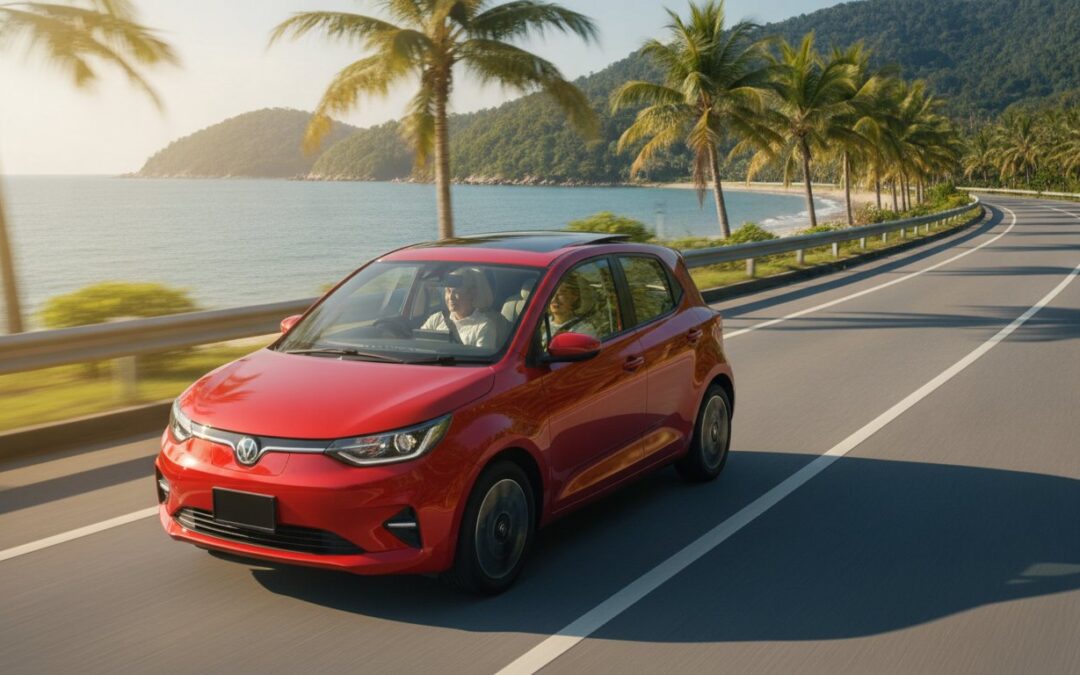
You might think a valid home license and a sense of adventure are all you need to explore the Land of Smiles, but that assumption is the quickest way to end up with a heavy fine at a roadside checkpoint. One of the most common questions we hear is: can a tourist drive in Thailand legally without running into trouble or getting overwhelmed by the flow of traffic? Between the confusion over which International Driving Permit (IDP) is actually required for 2026 and the nerves that come with driving on the left side of the road, many travelers hesitate to take the wheel.
We know you want the freedom of the open road without the stress of a triple-check failure involving your license, permit, and insurance. This guide provides total clarity on the specific documents you need to stay legal and the practical tips required to navigate Thai traffic like a seasoned local. You’ll learn exactly how to secure a reliable, insured rental vehicle so you can trade crowded tour buses for the liberty of your own itinerary. By the time you finish reading, you’ll have the confidence to handle any checkpoint and every turn with ease.
Key Takeaways
- Learn that while the answer to can a tourist drive in Thailand is yes, you’ll need both your home license and the correct International Driving Permit to avoid roadside fines.
- Understand the local “right of way” reality where vehicle size often dictates priority, giving you the edge you need to stay safe in busy traffic.
- Follow our foolproof rental checklist to ensure your vehicle is fully insured and legally sound before you even leave the lot.
- Discover how partnering with a locally owned agency secures the best price guarantee and provides the expert support you’ll need for a stress-free trip.
Understanding the Legal Requirements for Tourists in 2026
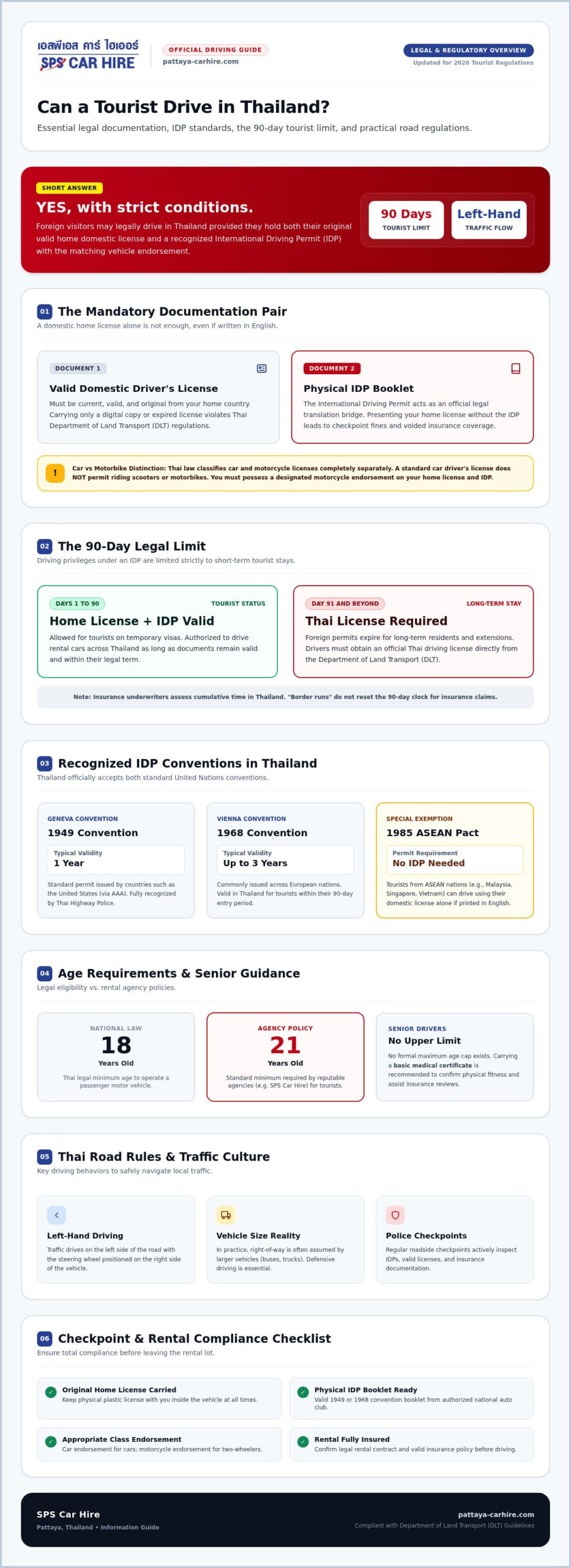
You absolutely can drive across Thailand, but doing it legally requires more than just a sense of direction and a valid home license. The Department of Land Transport (DLT) is the governing body that sets the rules for foreign drivers, and they’ve become increasingly strict about documentation. If you’re wondering can a tourist drive in Thailand without a local license, the answer is yes, provided you have the right supplementary paperwork. A standard domestic license from your home country is rarely enough to pass a police checkpoint, even if it’s printed in English. To stay 100% legal and insured, you must carry your original license along with a valid International Driving Permit (IDP).
It’s also vital to understand the legal distinction between vehicle types. Thai law treats car and motorbike licenses as entirely separate entities. If your home license only authorizes you to drive a car, your IDP will reflect that. Attempting to ride a scooter or motorbike without a specific motorcycle endorsement on your license is illegal. Police regularly set up checkpoints to verify these endorsements, and getting caught without the correct one leads to immediate fines and can completely void your travel insurance coverage in the event of an accident.
The 90-Day Rule for Tourists
Under current regulations, you can drive using your home license and IDP for up to 90 days after you enter the country. This period is designed for short-term visitors on tourist visas. If you decide to extend your stay or switch to a long-term visa, you’re legally required to obtain a Thai driving license from the DLT. Don’t rely on “border runs” to reset this clock. While a new entry stamp might refresh your visa, insurance companies often look at your total time in the country when assessing claims. If you’ve been in Thailand for more than 90 days cumulatively without a local license, you’re in a legal gray area that could cost you dearly if things go wrong.
Age Requirements and Restrictions
While Thai national law allows individuals to drive a car at 18, the rules for tourists are often dictated by rental agency policies. Most reputable providers, including our team at SPS Car Hire, require drivers to be at least 21 years old. This extra maturity helps when navigating the unique flow of Thai traffic. For senior drivers, there’s no hard upper age limit for driving, but we always suggest carrying a basic medical certificate. This simple document proves you’re fit to be behind the wheel and acts as an extra layer of transparency if you’re ever questioned by authorities or involved in an insurance assessment.
The International Driving Permit (IDP) Explained
Think of the International Driving Permit as a vital translation tool rather than a standalone license. It doesn’t replace your home country’s documentation; instead, it acts as a legal bridge that allows Thai authorities to verify your credentials. If you’re asking can a tourist drive in Thailand without one, the answer is technically no if you want to remain legal and insured. You must carry both your original, valid domestic license and the physical IDP booklet at all times. Presenting one without the other is a common mistake that leads to fines at checkpoints or, worse, a rejected insurance claim after an accident.
Thailand officially recognizes both the 1949 Geneva Convention and the 1968 Vienna Convention. This is a crucial detail many guides miss. According to the Tourism Authority of Thailand driving guidelines, having the correct format ensures you won’t face issues with the Highway Police. Before you book your budget car rental, double-check that your IDP is current and matches the vehicle class you intend to drive. Carrying an expired permit is legally equivalent to having no permit at all, which can lead to your vehicle being impounded on the spot.
Which IDP Version Do You Need?
The 1949 Convention permit is usually valid for one year, while the 1968 version can last for up to three years. While Thailand now accepts both, your home country might only issue one specific type. For example, the US typically issues the 1949 version. If you’re from an ASEAN nation, such as Malaysia, Singapore, or Vietnam, you’re in luck. Under the 1985 Agreement on the Recognition of Domestic Driving Licences, tourists from these countries can drive in Thailand using their domestic license alone, provided it’s in English. For everyone else, apply through your national automobile association, like AAA or AA, at least a few weeks before your flight.
Common IDP Scams and Misconceptions
We see far too many travelers falling for “International Driver’s Licenses” sold by unauthorized websites. These are often nothing more than expensive printouts that hold zero legal weight. A legitimate IDP must be issued by a recognized national body. Don’t expect a digital copy or a photo on your phone to suffice either. Thai police almost always demand the physical booklet. Don’t believe the myth that a rental shop not asking for your IDP means you don’t need it. Shops might overlook it to close a deal, but the police and insurance companies certainly won’t. Staying legal is your responsibility, not the rental desk’s.
Thai Road Rules and Driving Culture: What to Expect
Once you’ve secured your documents, the next hurdle is the “unwritten code” of the streets. If you’re still wondering can a tourist drive in Thailand safely, the answer depends on your ability to adapt quickly. Thailand drives on the left, which can be disorienting if you’re from a right-hand drive country. A savvy trick is to keep your eyes on the vehicle ahead and adjust your mirrors to focus more on your right side. This helps you monitor the faster traffic flow and avoid the common mistake of drifting toward the center line during your first few hours behind the wheel.
The “Right of Way” in Thailand is often a matter of physics rather than legislation. While the law has clear rules, the practical reality is that larger vehicles like buses and trucks often take priority. It’s best to be cautious and yield to bigger traffic. According to the GOV.UK road travel safety advice for Thailand, road hazards are frequent, so maintaining a defensive stance is essential. Speed limits in 2026 are generally set at 50 km/h in urban areas, 90 km/h on open highways, and up to 120 km/h on designated motorways. Stick to these, as speed cameras are now common across the national network.
Authorities have introduced zero-tolerance updates for 2026 regarding safety. Drink-driving laws are strictly enforced with heavy fines and potential jail time for offenders. Similarly, using a mobile phone without a hands-free kit is a guaranteed way to get pulled over. We always tell our clients that being a guest on Thai roads means being twice as vigilant as you are back home. Transparency is key here; the police are active, and the rules are there to protect everyone.
Navigating Thai Intersections and U-Turns
Intersections have their own rhythm. You’ll often see a “Left Turn on Red” sign, which allows you to turn left after a brief stop, provided there’s no oncoming traffic. However, only do this if a sign explicitly permits it. Major highways rely heavily on U-turn slots rather than traditional overpasses. These require careful timing; always check your mirrors twice before merging back into fast-moving traffic. Also, pay attention to flashing headlights. In many Western countries, this means “after you.” In Thailand, it’s a bold warning that means “I’m coming through, don’t pull out!”
Motorbike Awareness and Safety
Motorbikes are the most unpredictable element of Thai traffic. Riders often filter between lanes of stationary or slow-moving cars. You must check your blind spots constantly, especially before turning or changing lanes. By law, both the driver and the passenger must wear a helmet. While you’ll see locals ignoring this, tourists are a primary target for police enforcement. Keep your helmet buckled to avoid unnecessary fines and stay safe while navigating the flow.
How to Rent a Vehicle Safely as a Foreigner
Securing your vehicle is the final step in turning your travel plans into a reality. If you’re still asking can a tourist drive in Thailand without a hitch, the secret lies in the paperwork and the initial inspection. You’ll need your passport, your original driver’s license, a valid IDP, and a credit card for the security deposit. Always use a reputable agency that prioritizes transparency. A major warning sign is any shop asking to keep your original passport as a deposit. This is a massive security risk and often a tactic used by less scrupulous operators. Give them a high-quality photocopy instead; a professional business will never insist on holding your primary travel document.
Before you sign the rental agreement, perform a meticulous walk-around of the vehicle. Use your phone to record a high-definition video of the entire exterior, including the roof and wheels. This visual evidence is your best defense against unfair damage claims when you return the car. Finally, read the fine print regarding mileage limits and fuel. Most top-tier rentals operate on a “full-to-full” basis, meaning you receive a full tank and must return it the same way. This avoids the inflated refueling fees that many tourists accidentally trigger.
Insurance: Protecting Your Liability
Thai law requires Compulsory Third Party Liability (CTPL), but this only covers basic medical expenses for others. It doesn’t cover your rental vehicle or your own injuries. This is why we always recommend first-class insurance for total peace of mind. You can find a detailed breakdown of What First-Class Insurance Actually Covers on our site. Remember that your personal travel insurance might be void if you’re found driving without the correct IDP, leaving you with a massive bill. We ensure our clients understand these risks before they hit the road.
Choosing Between a Car, Truck, or Motorbike
Your itinerary should dictate your ride. If you’re planning to explore national parks or mountainous regions, a sturdy truck provides the necessary power and ground clearance. For navigating busy city centers, a compact car is much easier to maneuver and park. Some travelers prefer a budget scooter rental for short, local hops, but be aware of the increased safety risks. If you’re still undecided on the best way to get around, compare the costs and benefits in our Car Rental vs Taxi guide. Ready to start your journey? Book your Best Price Car and Truck Rental today and drive with total confidence.
Choosing a Reliable Rental Partner for Your Thai Adventure
Selecting the right agency is just as important as having the correct paperwork. While massive international chains have a presence here, they often lack the “inside track” that a locally owned, independent agency provides. If you’re still wondering can a tourist drive in Thailand without getting caught in a web of hidden fees, the answer lies in finding a partner that values transparency over corporate quotas. Local operators like SPS Car Hire understand the national road conditions and the specific nuances of Thai traffic better than anyone. We act as your savvy local guide, ensuring you aren’t just another booking number, but a traveler equipped for success.
One major benefit of choosing a local expert is our “Best Price Guarantee.” This ensures you aren’t paying a “tourist tax” simply because you’re booking from abroad. We prioritize value, offering budget-friendly cars and trucks that are meticulously maintained. When assessing a fleet, maintenance records and the actual condition of the vehicle matter much more than the brand name on the keys. For digital nomads and expats planning an extended stay, our long term car hire packages provide a cost-effective way to maintain your freedom without the commitment of purchasing a vehicle.
The SPS Car Hire Advantage
Our commitment to your safety starts long before you turn the ignition. We provide a straightforward, honest service that removes the friction from your journey. We don’t just hand over the keys; we help our customers understand the local driving laws and ensure their permits are in order. Whether you need a compact car for city driving or a rugged truck for rural exploration, our nationwide fleet is selected for reliability and ease of use. You’ll find no hidden surcharges or surprise “insurance upgrades” when you arrive at our office.
Booking Your Self-Drive Vehicle
The booking process is designed to be fast and direct. Once you’ve selected your vehicle, prepare for your pickup by bringing your original passport, domestic license, and that all-important IDP we discussed earlier. We walk you through the contract clearly, so you know exactly what is covered. This methodical approach ensures that when you leave our lot, your only focus is the road ahead. We take pride in being a reliable, long-standing fixture of the community, dedicated to protecting your experience from start to finish. Ready to explore? Check our best-price rental packages today and see why can a tourist drive in Thailand is a question we answer with a confident “yes” every single day.
Hit the Road with Confidence in 2026
Exploring Thailand by road offers a level of freedom you simply won’t find on a crowded tour bus. As we’ve established, the answer to can a tourist drive in Thailand is a resounding yes, provided you respect the legal requirements. By securing your International Driving Permit and choosing a vehicle backed by first-class insurance, you eliminate the anxiety of police checkpoints and focus on the scenery. Successful navigation comes down to respecting local road etiquette and maintaining the “inside track” on traffic culture.
At SPS Car Hire, we provide the locally owned expertise you need to navigate these roads like a seasoned pro. We offer a Best Price Guarantee on our entire fleet, ensuring you get high-quality service without the inflated corporate costs. Don’t let paperwork or traffic nerves hold you back from the ultimate adventure. Browse Our Budget Car and Truck Rental Packages today and experience the transparency and reliability that only a true local partner can provide. Your journey across the Kingdom is waiting; we’re here to make sure it’s smooth and stress-free.
Frequently Asked Questions
Can I drive in Thailand with a UK/US/Australian license?
You can drive with a UK, US, or Australian license, but it’s only legally recognized when paired with a valid International Driving Permit. If you’re asking can a tourist drive in Thailand without one, the answer is no. While your home license proves you’re qualified, the IDP provides the legal authorization required by Thai law. Carrying both ensures you pass police checks and remain covered by your rental insurance policy.
What is the fine for driving without an International Driving Permit in Thailand?
If you’re caught driving without an IDP, the standard fine usually ranges from 500 to 2,000 Thai Baht. However, the financial penalty is only part of the risk. Police may impound your vehicle on the spot; more importantly, your insurance coverage will likely be voided. This means you’d be personally liable for all damages in an accident, which could cost significantly more than the initial roadside fine.
Is it difficult for foreigners to drive in Thailand?
Driving in Thailand can be challenging for foreigners due to the left-hand traffic and unique local driving culture. You’ll need to adjust to heavy motorbike traffic and the “size-priority” rule where larger vehicles often take the right of way. However, with a defensive driving mindset and a reliable car or truck rental, most visitors adapt quickly. Staying alert and following the flow of local traffic helps build confidence on the road.
Do I need a special license to rent a motorbike in Thailand?
You must have a specific motorcycle endorsement on your domestic license and your International Driving Permit to legally ride a motorbike. Many tourists mistakenly believe a standard car license is enough for scooters, but this is a legal error. Without the correct motorcycle classification, you face fines at checkpoints and lose all insurance protection. Always verify that your permit explicitly lists the category for two-wheeled vehicles before you rent your bike.
What happens if I get into an accident without an IDP?
Getting into an accident without an IDP is a serious legal and financial risk. Even if you have first-class insurance, the provider will likely deny your claim because you were driving illegally under Thai law. This leaves you responsible for medical bills, vehicle repairs, and property damage for all parties involved. It’s essential to have the correct paperwork to ensure your insurance remains valid and your personal liability is protected.
Can I use a digital version of my IDP at police checkpoints?
No, Thai police officers almost always require the physical IDP booklet during roadside inspections. Digital copies or photos on your smartphone aren’t accepted as valid legal documentation. To avoid unnecessary delays and fines, keep the original physical permit and your home country license in the vehicle at all times. This transparency helps you clear checkpoints quickly and continue your journey without any legal friction, unnecessary stress, or complications.
Does Thailand recognize the 1949 or 1968 IDP?
Thailand recognizes both the 1949 Geneva Convention and the 1968 Vienna Convention formats for International Driving Permits. When wondering can a tourist drive in Thailand, the version you carry usually depends on which convention your home country follows. Most travelers from the US or UK carry the 1949 version, which is valid for one year. Ensure your permit is still within its validity period before you arrive at the rental office.
Is it safe to rent a car for a long-distance road trip in Thailand?
It’s very safe to rent a car for long-distance travel, provided you choose a well-maintained vehicle from a reliable national agency. Thailand’s major highways are generally in excellent condition and well-signposted in English. Choosing a budget-friendly car or truck for a national road trip gives you the freedom to explore at your own pace. Just remember to plan your route, stick to the speed limits, and avoid driving late at night.
 -
- -
- -
- -
- -
- -
- -
-