


Monthly car rentals have emerged as a practical solution for travelers, expatriates, and locals who need extended vehicle access without the long-term commitment of leasing or purchasing. Whether you're visiting Pattaya for an extended business trip, relocating temporarily, or simply want to avoid the hassles of vehicle ownership, understanding the economics and logistics of monthly rentals can save you significant money while maximizing convenience. This comprehensive guide explores everything you need to know about securing, managing, and optimizing monthly car rentals in 2026.
Understanding Monthly Car Rental Economics
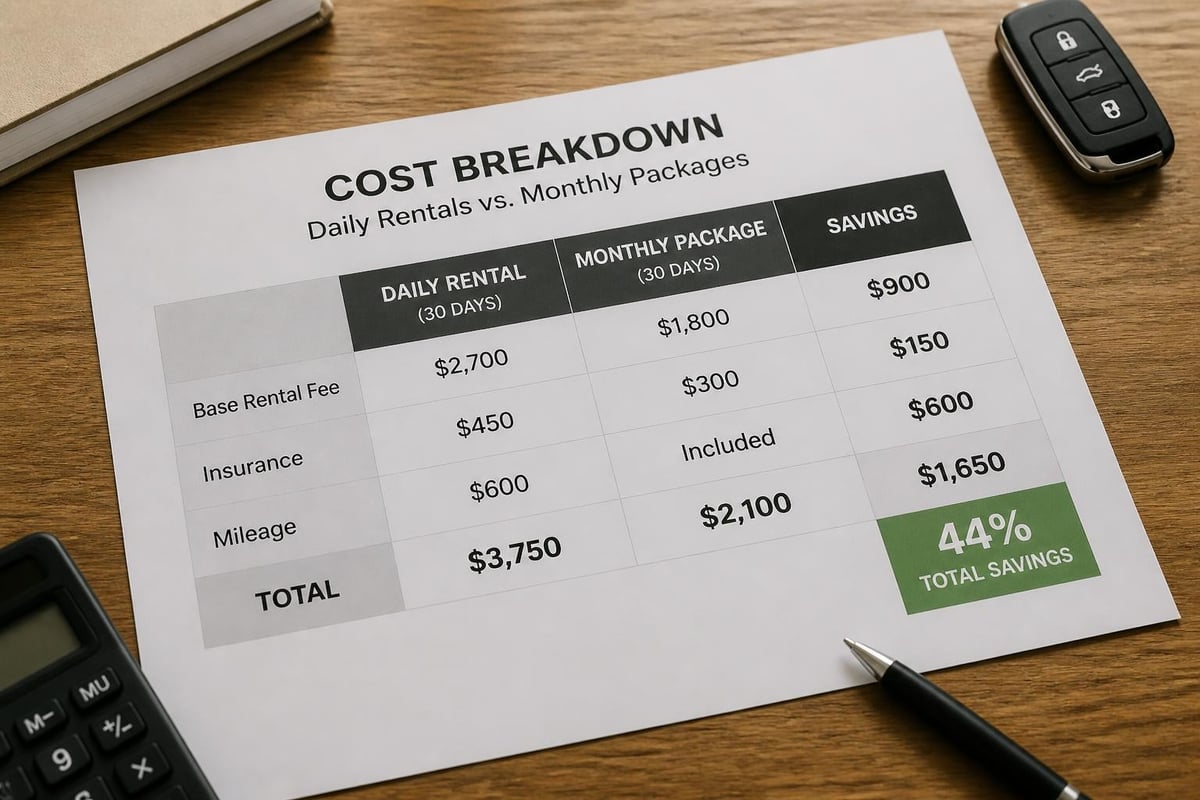
The financial appeal of monthly car rentals becomes clear when you compare daily rates with extended-term pricing structures. Rental companies typically offer substantial discounts for customers committing to 28 days or longer.
Daily rentals often range from $40 to $80 per day for economy vehicles, which would total $1,200 to $2,400 for a 30-day period. In contrast, monthly car rentals frequently drop to $600 to $1,200 for the same vehicle class, representing savings of 40 to 60 percent.
Breaking Down the Cost Structure
Monthly rental agreements bundle several cost components that would otherwise be charged separately:
- Base rental fee (typically 30-50% lower than daily rate × 30)
- Comprehensive insurance coverage
- Unlimited or high-allowance mileage (often 2,000-3,000 km per month)
- 24/7 roadside assistance
- Regular maintenance and servicing
The Bureau of Transportation Statistics tracks rental industry data showing that monthly rental customers save an average of 47% compared to booking daily rates for equivalent periods. This pricing advantage stems from predictable revenue for rental companies and reduced administrative overhead per rental day.
Tax Considerations for Business Rentals
If you're renting for business purposes, the tax treatment differs from short-term rentals. The IRS guidance on travel and car expenses explains that leases of 30 days or more may require lease inclusion calculations.
Under federal tax regulations for leased property, monthly car rentals exceeding certain vehicle values trigger inclusion amounts that slightly reduce your deduction. For 2026, this typically affects luxury vehicles valued above $62,000. Consult your tax advisor to ensure proper reporting of your monthly rental expenses.
Choosing the Right Monthly Rental Package
Not all monthly car rentals offer identical terms. Understanding package variations helps you select the option that aligns with your specific needs and budget constraints.
Standard vs. Premium Monthly Plans
| Feature | Standard Package | Premium Package |
|---|---|---|
| Vehicle Class | Economy, Compact | Mid-size, SUV, Luxury |
| Monthly Mileage | 1,500-2,000 km | 3,000-5,000 km or unlimited |
| Insurance | Third-party liability | Full comprehensive + CDW |
| Additional Driver | Extra fee ($50-100/month) | Often included |
| Delivery/Pickup | Self-service | Complimentary within service area |
| Vehicle Swap | Not permitted | 1-2 swaps allowed |
Premium packages typically cost 30 to 80 percent more than standard options but deliver significantly enhanced flexibility. If you drive extensively or need the assurance of comprehensive coverage, the additional investment proves worthwhile.
Specialized Monthly Rental Categories
Beyond standard passenger vehicles, monthly rental markets have expanded to serve niche requirements:
Long-term tourist rentals cater to visitors staying one to six months, bundling GPS navigation, toll transponders, and multi-language support. Corporate monthly programs offer fleet management tools, consolidated billing, and vehicle rotation for companies housing temporary staff.
Motorcycle and scooter monthly rentals provide economical urban mobility, particularly popular in destinations like Pattaya where traffic congestion makes two-wheelers practical. For those exploring car, truck and motorcycle rental options in Pattaya, comprehensive monthly packages with first-class insurance and free delivery ensure both convenience and peace of mind throughout your extended stay.

Essential Terms and Conditions to Review
Monthly car rentals involve binding contracts that extend beyond simple daily agreements. Scrutinizing key clauses prevents unexpected charges and ensures you understand your obligations.
Mileage Allowances and Overage Fees
While many monthly rentals advertise "unlimited mileage," read the fine print carefully. Some contracts impose monthly caps (commonly 2,500 to 3,500 km) with overage charges of $0.15 to $0.30 per additional kilometer.
Calculate your anticipated monthly driving distance before signing. For business travelers making regional trips, AAA’s guidance on vehicle leasing suggests tracking one week of typical driving and multiplying by 4.3 to estimate monthly needs accurately.
Insurance Coverage Levels
Monthly rental insurance typically includes several protection tiers:
- Third-party liability (minimum legal requirement)
- Collision Damage Waiver (CDW) reducing your liability for vehicle damage
- Theft Protection covering vehicle loss
- Personal Accident Insurance for driver and passenger medical costs
- Supplemental Liability increasing third-party coverage limits
Verify whether your personal auto insurance or credit card benefits extend to monthly car rentals. Many credit card rental protections exclude rentals exceeding 15 or 31 consecutive days, leaving you exposed without the rental company's coverage.
Early Termination and Extension Policies
Life circumstances change, and you may need to end your rental early or extend beyond the initial term. Most monthly agreements include specific provisions:
Early termination often triggers recalculation of your rate to daily pricing for the actual rental period, potentially eliminating your monthly discount entirely. Some companies charge an early termination fee equivalent to 10 to 20 percent of the remaining contract value.
Extensions are generally straightforward if arranged with 7 to 14 days notice, maintaining your monthly rate. Last-minute extensions may default to higher weekly rates for the additional period.

Optimizing Your Monthly Rental Experience
Extracting maximum value from monthly car rentals requires proactive management throughout your rental period, not just careful selection at the outset.
Vehicle Inspection and Documentation
When accepting your monthly rental, conduct a comprehensive inspection:
- Photograph all exterior surfaces from multiple angles
- Document existing scratches, dents, or paint chips
- Check tire tread depth and condition
- Test all lights, signals, and controls
- Review fluid levels (oil, coolant, brake, washer)
- Verify spare tire, jack, and emergency equipment presence
Email these photographs to the rental company, establishing a timestamped record of the vehicle's pre-rental condition. This documentation proves invaluable if disputes arise about damage responsibility when returning the vehicle.
Maintenance Responsibilities and Scheduling
Monthly rental agreements typically allocate maintenance duties between renter and company. Understanding your obligations prevents service disruptions and penalty charges.
Renter responsibilities usually include:
- Regular fuel filling (returning with the same fuel level as pickup)
- Routine fluid top-offs (washer fluid, coolant checks)
- Tire pressure monitoring and adjustment
- Interior cleaning and reasonable care
- Reporting warning lights or mechanical issues immediately
Company responsibilities cover scheduled maintenance, tire replacement due to normal wear, and mechanical repairs unrelated to renter negligence. Most agreements specify that you should report issues within 24 hours and schedule service through approved facilities.
The NHTSA guidance on rental procedures addresses how recall notifications and required service bulletins should be handled during extended rentals, ensuring your rental company maintains safety compliance.
Monthly Rentals vs. Alternative Vehicle Access Models
Contextualizing monthly car rentals within the broader spectrum of vehicle access options helps you determine whether this model truly serves your situation best.
Comparative Cost Analysis
| Duration | Daily Rental | Monthly Rental | Short-term Lease | Vehicle Purchase |
|---|---|---|---|---|
| 1 Month | $1,500-2,400 | $600-1,200 | Not available | Not practical |
| 3 Months | $4,500-7,200 | $1,600-3,200 | $2,800-4,500 | $500-800/mo payment |
| 6 Months | $9,000-14,400 | $3,000-6,000 | $5,000-8,000 | $500-800/mo payment |
| 12 Months | $18,000-28,800 | $5,500-11,000 | $8,500-14,000 | $500-800/mo + insurance |
Monthly car rentals occupy a sweet spot for commitments between one and six months. Beyond six months, short-term leases or vehicle subscriptions frequently offer better economics, while periods under four weeks often work out cheaper with weekly rentals.
Flexibility and Commitment Comparison
Monthly rentals excel in flexibility, allowing you to walk away with 30 days notice and no long-term obligation. You're not responsible for depreciation, resale value, or major repairs.
Leases lock you into 12 to 36 month terms with early termination penalties often totaling thousands of dollars. However, they provide newer vehicles and lower monthly costs for multi-year commitments.
Vehicle subscriptions (emerging in 2026) offer middle-ground flexibility with 3 to 12 month terms, vehicle swapping privileges, and all-inclusive pricing covering insurance, maintenance, and registration. Monthly fees typically run 20 to 40 percent higher than basic monthly rentals but eliminate separate insurance procurement.
Special Considerations for International Rentals
When securing monthly car rentals abroad, additional factors come into play that domestic renters may overlook.
Documentation and Licensing Requirements
Most countries accept valid driver's licenses from major nations for tourist rentals up to 90 days. For monthly car rentals extending beyond three months, verify whether you need:
- International Driving Permit (IDP) supplementing your home license
- Local driver's license conversion or testing
- Residence permit or visa documentation proving legal stay duration
- Additional insurance certificates meeting host country minimums
Thailand, for example, technically requires an IDP for rentals even though many short-term rental companies waive this requirement. For monthly commitments, particularly those renewable beyond 90 days, securing proper documentation protects you from police fines and insurance claim denials.
Currency, Payment, and Deposit Structures
International monthly rentals typically require:
- Security deposit (usually $500-1,500) held on credit card
- Upfront monthly payment for the first period
- Payment method accepting international credit cards without foreign transaction fees
Some rental companies offer local bank transfers at better exchange rates than credit card processing. For multi-month stays, this can save 2 to 4 percent on total rental costs. Verify whether deposits are returned in the original payment currency or local currency at potentially unfavorable exchange rates.
Consumer Reports’ guidance on rental vehicle safety includes practical advice on cleaning and maintaining rented vehicles during extended use, particularly relevant for monthly rentals where you may drive the same vehicle for weeks or months.
Geographic Variations in Monthly Rental Markets
Monthly car rental availability, pricing, and terms vary significantly by location, influenced by local market conditions, regulations, and customer demographics.
Tourist vs. Business Destination Pricing
Tourist-heavy markets like Pattaya, Bali, or Cancún often feature competitive monthly rental pricing because companies compete for extended-stay visitors. Seasonal pricing fluctuations can be dramatic, with low-season monthly rates dropping 30 to 50 percent below peak-season pricing.
Business centers like Singapore, Dubai, or Hong Kong maintain more stable year-round pricing but offer corporate-focused packages with features like airport fast-track pickup, executive vehicle classes, and integrated expense reporting.
Regulatory Environment Impact
State and local regulations substantially affect monthly rental costs and terms. Florida’s sales tax treatment of vehicle rentals demonstrates how tax rules vary by jurisdiction, with some states assessing sales tax on the full rental amount while others exempt long-term rentals exceeding certain thresholds.
Insurance minimum requirements also differ dramatically. Some regions mandate only basic third-party liability ($25,000-50,000), while others require comprehensive coverage exceeding $100,000. These regulatory differences directly impact base monthly rental prices.
Emerging Trends in Monthly Vehicle Access
The monthly car rental market continues evolving rapidly as new business models and technologies reshape how consumers access vehicles for extended periods.
Electric Vehicle Monthly Rentals
Electric vehicles (EVs) have entered monthly rental fleets across major markets in 2026. Monthly EV rentals typically cost 10 to 25 percent more than comparable gasoline vehicles but deliver fuel savings of $150 to $300 monthly depending on driving patterns and local electricity costs.
Key considerations for monthly EV rentals include:
- Charging infrastructure access (home charging, public network availability)
- Range anxiety mitigation for longer trips
- Battery condition documentation (recording battery health percentage at rental start)
- Charging cost allocation (whether included or billed separately)
Some rental companies now offer hybrid monthly packages allowing one vehicle swap between EV and conventional powertrains, accommodating customers who want EV efficiency for daily driving but need extended range for occasional road trips.
Peer-to-Peer Monthly Rentals
Platform marketplaces connecting private vehicle owners with monthly renters have gained traction in 2026, offering 20 to 40 percent discounts compared to traditional rental companies. However, peer-to-peer monthly car rentals involve additional considerations:
Insurance coverage may be less comprehensive, dispute resolution processes are less established, and vehicle consistency varies widely. These platforms work best for cost-conscious renters willing to accept more risk and less standardization in exchange for significant savings.
Maximizing Value from Your Monthly Rental
Strategic approaches to securing and managing monthly car rentals can deliver hundreds of dollars in additional savings beyond simply comparing advertised rates.
Negotiation Tactics and Discount Stacking
Monthly rental rates are often negotiable, particularly when:
- Booking during off-peak periods (avoiding holidays and peak travel seasons)
- Committing to multiple consecutive months upfront
- Renting multiple vehicles for family or team members
- Leveraging corporate accounts or membership programs
Stackable discounts may include:
- AAA or automobile club membership discounts (5-15%)
- Corporate rate codes (10-25% off retail pricing)
- Extended-stay loyalty programs (earning free days or upgrades)
- Promotional codes for specific destinations or vehicle classes
Always ask the rental agent whether any additional discounts apply before finalizing your booking. Many companies grant discretionary discounts of 5 to 10 percent to customers who simply request better pricing, particularly for commitments exceeding 60 days.
Strategic Add-On Selection
Rental companies offer numerous optional add-ons with monthly agreements. Evaluating which actually deliver value prevents unnecessary expenses:
High-value add-ons for monthly rentals:
- Additional driver authorization (essential if sharing driving duties)
- GPS navigation in unfamiliar regions (monthly cost often less than purchasing device)
- Toll transponders in regions with extensive toll roads
Low-value add-ons to typically decline:
- Supplemental insurance if you have adequate coverage elsewhere
- Pre-paid fuel (you'll pay premium pricing above market rates)
- Satellite radio (streaming via smartphone provides better value)
For those exploring vehicle rental options in the Pattaya area, understanding which services add genuine convenience versus unnecessary cost helps optimize your monthly rental investment.
Risk Management and Problem Resolution
Despite careful planning, issues occasionally arise during monthly car rentals. Knowing how to handle common problems minimizes stress and financial impact.
Accident and Damage Protocol
If you're involved in an accident during your monthly rental:
- Ensure safety and call emergency services if anyone is injured
- Document the scene with photos before vehicles are moved
- Exchange information with other parties (license, insurance, contact details)
- Notify the rental company within the timeframe specified in your agreement (usually 24 hours)
- File a police report for significant damage or injuries
- Complete rental company incident forms accurately and thoroughly
Your insurance coverage (whether through the rental company or personal policy) determines your financial responsibility. Comprehensive coverage with zero deductible eliminates out-of-pocket costs, while basic coverage may leave you liable for damage amounts.
Dispute Resolution Strategies
Disagreements about damage charges, mileage calculations, or contract interpretation occasionally occur. Effective resolution typically involves:
Documentation review: Present your initial vehicle condition photos and any maintenance records showing you fulfilled your obligations. Paper trails almost always prevail in disputes.
Escalation hierarchy: Start with the local rental office manager, then escalate to regional customer service, and finally to corporate headquarters if necessary. Many disputes resolve at the regional level when customers present clear evidence.
Credit card dispute protection: If charged unfairly despite clear evidence, your credit card company may reverse charges through their dispute process. This works best within 60 days of the charge and when you can provide detailed documentation.

Monthly car rentals deliver exceptional value for extended stays when you understand the economics, carefully review terms, and actively manage your rental throughout its duration. Whether you need reliable transportation for a multi-week business project, an extended vacation, or temporary relocation, the flexibility and cost savings of monthly commitments outperform daily or weekly alternatives. SPS Car Hire offers Pattaya's most competitive monthly rental rates with comprehensive first-class insurance coverage and complimentary delivery throughout the city, ensuring you get reliable, affordable transportation exactly when and where you need it.
 -
- -
- -
- -
- -
- -
- -
-