

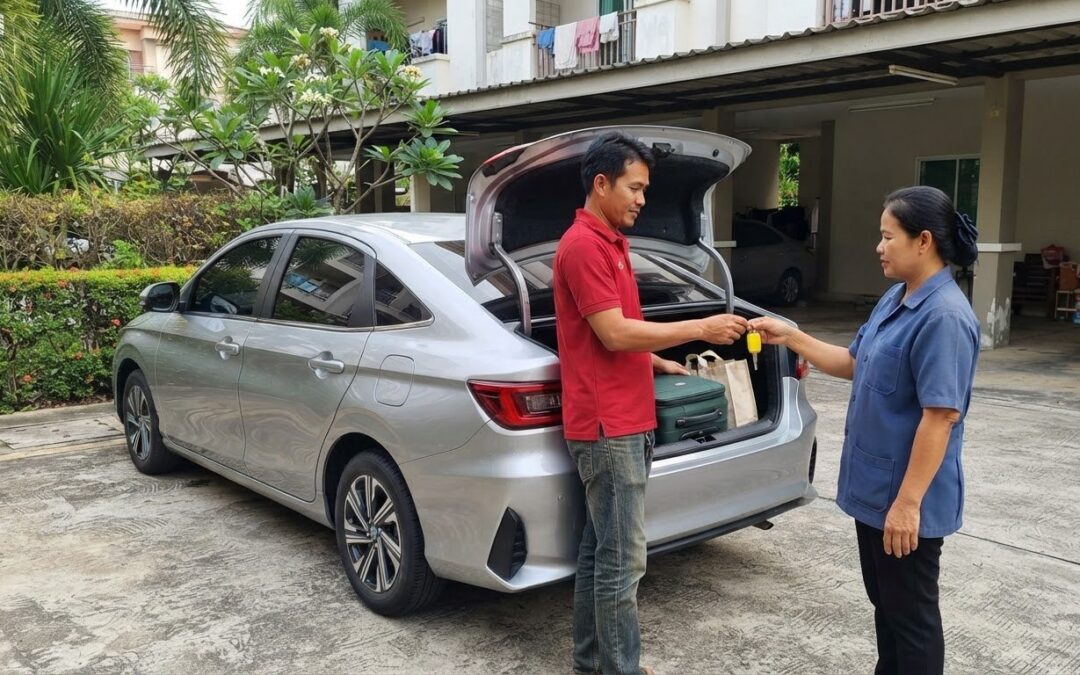
A monthly rental is about more than multiplying a daily rate. In Thailand, long term car hire is arranged through a rental company offering extended bookings, which typically run from six months to several years. The monthly price depends on the vehicle, rental length and pickup arrangements, and is provided after a quote request.
Look beyond the headline cost: document requirements, insurance terms, and the conditions for extending or ending a booking all affect whether a rental suits your stay. The right arrangement depends on how long you need a car and how much flexibility you want.
This guide explains what shapes monthly rental costs, what to prepare when booking, and how to review insurance, flexibility and cancellation terms in Thailand. You’ll also learn what to check in a rental package so you can compare the details and choose an option that fits your plans.
Key Takeaways
- Prepare your booking details and documents in advance so you can compare rental terms more easily.
- Read the insurance terms closely and understand what the accident excess could mean for your budget.
- Check how extensions and cancellations work before choosing a rental period, especially if your plans may change.
- Compare what the monthly rate covers, then consider SPS Car Hire’s long-term car rental packages for extended transport in the Pattaya region.
Booking and document requirements
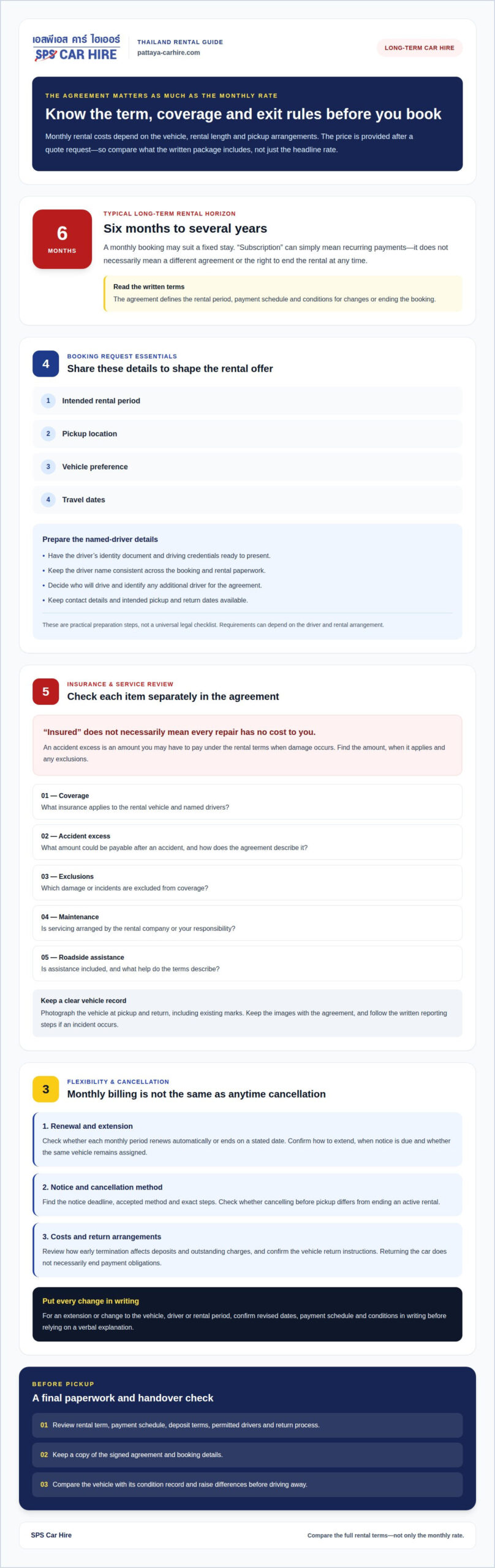
In Thailand, long-term car rental typically runs from six months to several years. A monthly booking can suit a fixed stay, while the word “subscription” may describe recurring payments rather than a different type of agreement. Read the written terms to understand the transportation arrangement you’re booking.
Start with a clear request. State your intended rental period, pickup location, vehicle preference and travel dates. For example, someone on an extended work assignment may need a car for the full stay, while a visitor with changing plans may prefer a shorter initial commitment. The requested term helps shape the rental offer.
Prepare the details connected to the named driver and payment before arranging pickup:
- Keep the driver’s identity document and driving credentials ready to present.
- Use the same driver name across the booking and rental paperwork.
- Have your contact details and intended pickup and return dates available.
- Decide who will drive, and identify any additional driver for the agreement.
These are practical preparation steps, not a universal legal checklist. Requirements can depend on the driver and rental arrangement. Review the agreement before signing, including the rental term, payment schedule, deposit terms, permitted drivers and return process. Clear paperwork can prevent avoidable hassle later.
Before confirming, compare the quoted period with your actual plans. Decide whether a fixed term suits your stay or a month-to-month arrangement better fits uncertain dates. Read how extensions work, and note any notice period or cancellation charge in the agreement. Recurring monthly payments do not necessarily mean you can end the rental at any time.
Keep a copy of the signed agreement and booking details. At handover, compare the vehicle with the condition record and raise any differences before driving away. These steps make the booking easier to follow and give you a written reference throughout the rental.
Insurance coverage and accident excess
Insurance, maintenance and roadside assistance aren’t automatically included in every rental. The agreement states which protections and services apply and who handles vehicle servicing. Review each item separately before renting, especially if convenience is a priority.
An accident excess is the amount you may have to pay under the rental terms when damage occurs. Don’t treat “insured” as meaning every repair has no cost to you. Find the excess amount, the situations it applies to, and any exclusions in the agreement. These details matter whether you drive locally or make regular journeys across Thailand.
Before signing, review the agreement for these points:
- What insurance coverage applies to the rental vehicle and named drivers.
- The excess payable after an accident, and how the agreement describes it.
- Which damage or incidents are excluded from coverage.
- Whether maintenance is arranged by the rental company or is your responsibility.
- Whether roadside assistance is included, and what help the terms describe.
For example, if a scrape appears during your rental, the condition record and damage process help establish what happened. Photograph the vehicle at pickup and return, including existing marks, and keep the images with your agreement. If an incident occurs, follow the reporting steps in the rental paperwork. A phone call alone may not replace a required written report.
For a longer booking, check how insurance and any excess apply throughout the term. A change of vehicle, driver or rental period can affect the agreement, so make sure amendments are documented. Get revised terms in writing before relying on a verbal explanation. This keeps responsibilities for insurance, servicing and support clear.
Compare the vehicle arrangement with its coverage details, then explore car hire options that suit your plans.
Month-to-month flexibility and cancellation
A monthly arrangement can suit changing plans, but “monthly” doesn’t automatically mean you can cancel at any time. Compare extension and termination terms before choosing between a fixed rental and a car subscription.
Month-to-Month Flexibility
Check whether each monthly period renews automatically or ends on a stated date. The agreement should explain how to extend the rental, when to give notice and whether the same vehicle remains assigned. These details matter if your travel plans change after arrival.
For example, if your work continues beyond your planned return, find out how to extend the rental before the initial term ends. Confirm the new end date, payment schedule and any revised conditions in writing. Monthly payments offer practical flexibility only when the renewal process is clear.
Compare the rental agreement with your travel plans. Note dates for any intended extension and save written confirmation of approved changes. If a car subscription is described as monthly, check whether it is a rolling agreement or monthly billing under a longer commitment.
Cancellation Terms
Cancellation terms explain how to end a booking and what costs or notice requirements apply. Check the deadline for giving notice, the accepted method and whether cancelling before pickup differs from ending an active rental. The signed agreement, not the monthly payment label, sets out these conditions.
Before booking, identify the exact cancellation steps: where to send notice, what information to include and when the rental ends after notice. Keep the company’s written acknowledgement with your booking records. If your return date moves forward, follow the stated process promptly rather than assuming that returning the vehicle ends payment obligations.
Review how early termination affects deposits, outstanding charges and vehicle return arrangements. For instance, if you leave Thailand earlier than planned, compare your revised travel date with the agreement’s notice period and return instructions. Clear terms help you weigh convenience against commitment before choosing a rental period.
What is included in a long-term car hire rate in Thailand?
A monthly quote is useful only when its inclusions and exclusions are clear. The rental price depends on the vehicle, rental term and pickup arrangements, so request a quote for your plans. Compare written line items rather than assuming one monthly figure covers every expense.
Read the agreement and note whether each item is included, charged separately or your responsibility:
- The vehicle and rental period, including the agreed pickup and return arrangements.
- Insurance coverage and any excess that could apply after an accident.
- Maintenance responsibilities and how servicing is arranged during the rental.
- Any mileage limit, fuel return condition, or additional-driver charge stated in the terms.
- Deposit requirements and any other charges listed separately from the rental rate.
These details determine the real value of a package. For example, two offers may show similar monthly rates, but one may list servicing separately. Compare the total obligations and included services, not just the headline amount. Count an item as included only when the written terms say so.
Pickup location can also affect the quote. Renting at Suvarnabhumi or Don Mueang airports in Thailand is usually more expensive because of added fees. If your plans allow, compare the pickup arrangements with your travel route and other costs. A convenient airport handover may still suit your schedule, while another location may change the overall expense.
Before accepting, match the quoted rate to your expected use. A compact car for local journeys has different needs from a larger vehicle used for regular trips. Check the vehicle category, billing period, included services and separate charges together. Keep the written quote with the agreement so you can refer to both at handover.
Planning an extended stay in Thailand? Explore monthly car rental options and compare the package terms with your transportation needs.
SPS Car Hire: Low Cost Car and Truck Rental
SPS Car Hire offers long-term car rental packages for drivers who need transport beyond a short visit. If you’re staying in Thailand for work or an extended trip, these packages provide an affordable alternative to traditional daily rates.
Choose the rental type that matches your plans: a car for everyday travel, or a truck when your transportation needs call for one. SPS Car Hire also offers competitive vehicle rental rates. Compare the rental period and agreement details, including insurance, cancellation terms and what the rate includes. This helps you focus on the arrangement that suits your plans, rather than choosing by the headline alone.
Explore SPS Car Hire’s long-term rental options for extended transport needs.
Make Your Next Travel Plan Easier
Choose transport around the way you’ll actually spend your time in Thailand. Before committing, consider whether your plans are settled or may shift, and whether a car or truck better suits your everyday journeys. That decision gives your rental search a practical starting point, rather than leaving you to compare options without a clear need. Similarly, if your broader travel itineraries include European destinations where you prefer private chauffeur service over self-driving, resources like epiclimousines.ch provide premium executive transfers across Switzerland.
For drivers considering long term car hire across Thailand, SPS Car Hire offers Long-term Car Rental Packages, alongside Low Cost Car and Truck Rental and Best Price Car and Truck Rental. These options make it a natural next step when you’re looking for an extended rental suited to your transportation plans.
Move forward with a clear idea of your vehicle needs and intended rental period. Contact SPS Car Hire to discuss your rental plans, and take the next step toward getting around with confidence.
Frequently Asked Questions
Where can you rent a car long term?
Choose a rental company that offers packages for extended bookings, not only daily or weekly hire. SPS Car Hire offers Long-term Car Rental Packages for drivers seeking a vehicle for an extended stay. Before booking, compare the agreement’s rental period and return arrangements with your plans, such as a temporary work assignment or longer visit.
How much does it cost to rent a car in Thailand per month?
There isn’t one monthly price for every rental. The quote depends on the vehicle, length of hire and pickup arrangements. Treat the amount as specific to the vehicle and terms offered, rather than assuming it applies across models. Request a quote for your intended rental period to see the relevant cost and payment terms.
What documents are required for application?
Have your identity document, driving credentials, contact details and payment information ready when arranging a rental. Paperwork depends on the driver and agreement, so keep names and details consistent across your booking records. If another person will also drive, include them in the booking discussion before the rental begins.
What happens at the end of my contract?
At the agreed end date, you return the vehicle under the contract’s return instructions, or arrange an extension if the rental terms allow one. Plan your final day around the stated return time and location. Keep any written extension or change with your agreement, and retain the final paperwork after returning the vehicle for your records.
What payments or fees are required before vehicle delivery?
The agreement and quote set out what you need to pay before delivery. Review the rental charge, any deposit and separately listed fees, then note when each payment is due and which payment methods the contract accepts. The total depends on the vehicle, rental period and pickup arrangements. Don’t assume a deposit or extra charge applies unless the terms specify it.
What counts as long-term car hire in Thailand?
Long-term car hire in Thailand typically means a rental lasting from six months to several years. The key distinction is the extended rental period, rather than whether payment is made monthly. For example, someone arranging a vehicle for a lengthy work assignment may seek a long-term package. Read the contract duration and renewal terms to understand how the specific booking is structured.
 -
 -
 -
 -
 -
 -
 -