


Yes, foreigners can rent a car in Thailand if they have the required documents. A foreigner renting a car will generally need a valid driver’s licence and passport, and rental companies typically set a minimum age between 21 and 25. An International Driving Permit isn’t always mandatory for the rental, but it’s strongly recommended for driving in Thailand.
It’s understandable to want the paperwork and rental terms clear before planning your trip. Choose a rental period that matches how long you need a vehicle, and review the documents and agreement so the handover goes smoothly.
This guide covers rental periods, the documents to prepare, and the steps for arranging a car. It also explains how to inspect the vehicle and review the rental terms, helping you make a more confident decision before setting off.
Key Takeaways
- Foreign visitors can rent a car with the required documents; rental companies typically set a minimum age between 21 and 25.
- Prepare your valid home-country driving licence and passport, and consider an International Driving Permit for driving in Thailand.
- Choose a rental period that fits your stay, and plan ahead, especially during peak season.
- Before driving away, review the rental agreement and document the car’s condition, including any existing damage.
Can Foreigners Rent a Car in Thailand?
Yes, foreign tourists can rent cars in Thailand with the proper documents. Drivers keep left, overtake on the right, and all passengers must wear seat belts.
Foreign Licences and International Permits
A foreign driver needs a valid home-country driving licence. An International Driving Permit (IDP) is an internationally recognised translation of the licence, and travellers should obtain it before arriving in Thailand. An IDP isn’t always mandatory for a rental, but rental companies strongly recommend carrying one. Keep it with your original licence: the permit supports the licence, it doesn’t replace it. For an extended stay, visitors can consider exchanging their licence or applying for a Thai licence.
Rental Age and Young-Driver Fees
Rental companies typically set minimum ages between 21 and 25, so age can affect eligibility before vehicle choice. The exact threshold depends on the company. Check the written quote and rental agreement for any young-driver fee before signing. Reading the terms alongside the age requirement helps you understand what applies to your rental, rather than assuming the same rule covers every company.
Documents for Driving
Bring your passport, valid home-country driving licence, and IDP. Your passport should remain valid for at least six months beyond the intended rental period. Keep the rental agreement with you as a record of the agreed terms. Before driving, compare it with your booking and keep these documents accessible in case you need to present them.
Scenic drives offer another reason to plan carefully. Doi Inthanon, Thailand’s highest mountain, reaches 2,565 metres. In January, temperatures can fall below zero, frost may appear, and thousands of Thai visitors go there. For trips between Thai provinces, follow the vehicle’s permitted-use terms in the rental agreement. Treat an international border crossing as a separate permission; a Thai rental alone doesn’t grant it. A car rental with a driver is a different arrangement; these licence rules concern the person driving.
Short-term, long-term and corporate rentals
Match the rental period to your Thailand itinerary. A short-term rental suits a brief visit, while monthly or long-term rentals may offer lower rates than daily rentals. Businesses arranging ongoing transport can compare a longer rental with repeated short bookings.
Book ahead, especially during peak season, when advance booking can help with availability and potentially better rates. Before accepting, compare the agreement’s dates, vehicle category, pickup and return details, and stated charges with your booking. For a business rental, review how the agreement handles authorised drivers and business use.
Choose a pickup point that fits your arrival and route. Airport collection may suit a traveller picking up a car after landing; another location may work better if your stay is already underway. Check the pickup and return arrangements in your booking, then allow time to inspect the car before setting off.
Basic insurance is typically included in Thailand rental agreements. The agreement sets out the coverage terms, excess, and any deposit, so read those clauses before signing. Check what the coverage applies to and which costs could remain your responsibility. Don’t assume “basic” means every situation is covered.
To reduce disputes over damage or extra charges, inspect the car at pickup and photograph any existing marks. Compare its condition with the rental paperwork and keep a copy of the signed agreement. Before returning the car, review the return terms and document its condition again. These records can help resolve questions later.
Choose a vehicle based on passenger numbers, luggage, and planned roads. Compare the quoted total for your rental period, and check how extending or shortening the booking affects charges. Monthly rentals may cost less than equivalent daily bookings, while booking ahead during peak season can affect availability and rates.
Before setting off, save the rental company’s contact details and local emergency-service contacts. Keep them accessible during the trip, especially on longer drives between destinations. A clear agreement, photos documenting the car’s condition, and saved contact details give you practical references if a problem arises.
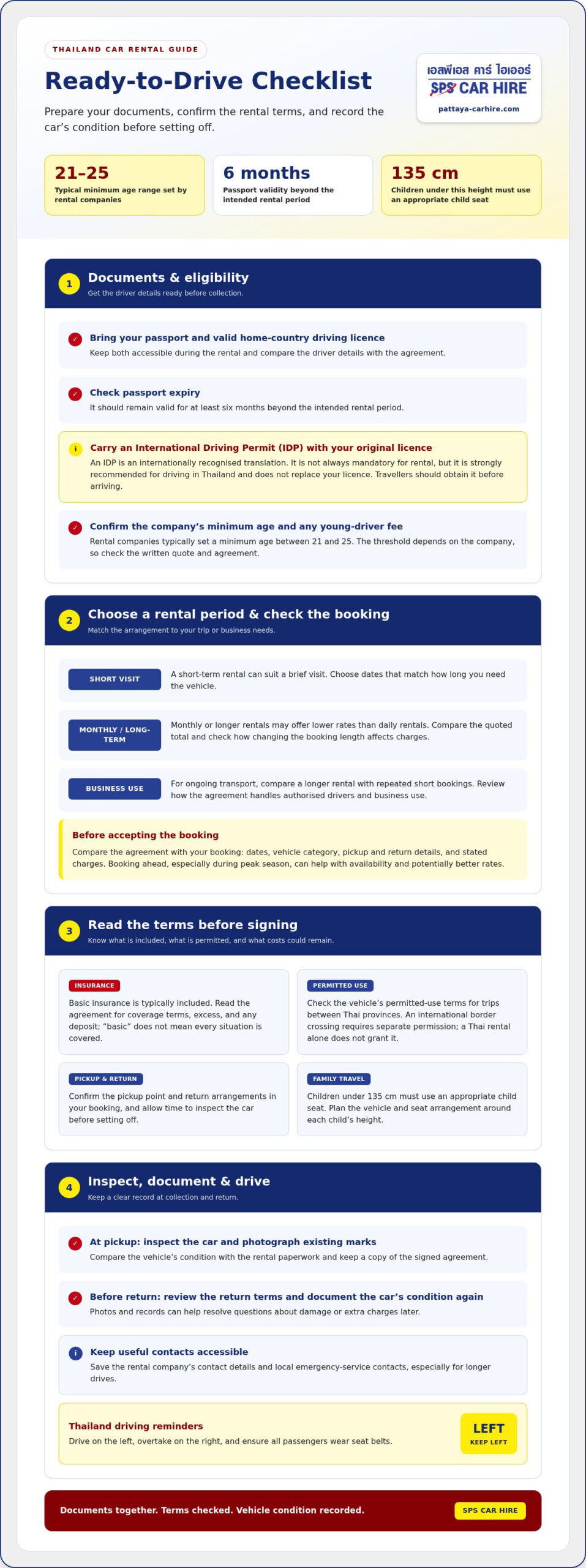
Documents required to rent a car in Thailand
Prepare your driving documents and rental agreement before collecting a car in Thailand. A short checklist can help you spot missing details before setting off from Bangkok or another arrival point.
Rental Document Checklist
Bring your valid passport and home-country driving licence. An International Driving Permit (IDP) is an internationally recognised translation of your licence, and travellers should obtain it before arriving in Thailand. Keep it with your original licence: it translates the licence rather than replacing it. Read the rental agreement’s terms and conditions, then check that the driver and rental details match your booking.
Passport Validity Requirements
Your passport should be valid for at least six months beyond the intended rental period. Compare its expiry date with your planned return date before arranging the car. If your stay or rental dates change, check the passport’s validity against the new rental end date. Keep it with your driving documents so you can present them together during the rental process.
Travelling with children adds one key preparation step. Children under 135 cm must use an appropriate child seat in Thailand. Consider the height of each child when planning the vehicle and seat arrangement. Before setting out from Bangkok, make sure the appropriate seat is available for every child who needs one. This requirement concerns the child’s height, so don’t rely on age alone when preparing.
Before signing, lay out your passport, licence, and IDP, then compare the driver details with the rental agreement. Confirm the agreement’s dates and terms before accepting the car. Keep the documents accessible during the rental instead of packing them in luggage. For a family journey, plan for any child seats before departure as well.
Renting a car as a foreigner
For a foreigner renting a car, the agreement and vehicle handover deserve close attention. Before leaving the pickup point, compare the car with the paperwork and photograph any existing damage. Capture visible scratches or dents, and keep the images until the rental ends. They give you a record to refer to if questions about the vehicle’s condition arise.
Read the insurance terms rather than making assumptions. Basic insurance is typically included in Thailand rental agreements, but the agreement explains its coverage and your responsibilities. Check whether your health insurance covers you as a driver, and understand how your car insurance relates to the rental vehicle. Keep relevant policy details accessible during your trip.
Save the rental company’s contact details and local emergency-service contacts somewhere easy to reach. Don’t rely on information stored only inside the rental car. If a problem occurs on the road, having both contacts ready helps you follow the agreement’s instructions and get appropriate assistance.
At return, follow the agreed process and return the vehicle in the condition you received it. Compare the car with your pickup photos and keep the rental paperwork. These records are useful if questions arise about damage or the vehicle’s condition.
Before signing, compare the written quote with the rental agreement. Check that the dates and vehicle category match, then read the insurance terms and stated charges. Ask for unclear wording to be explained before accepting. This helps you understand the arrangement in writing rather than relying on a verbal summary.
Plan your transport around the places you intend to visit and the driving conditions you’re comfortable with. Discuss your car rental plans and choose an arrangement that fits your journey.
Common risks include disputes over existing damage, misunderstandings about insurance coverage or driver responsibilities, and unclear charges or terms. Compare the written quote with the agreement, document the car’s condition, and clarify confusing wording before signing.
SPS Car Hire: Low Cost Car and Truck Rental
SPS Car Hire offers low-cost car and truck rentals for visitors who need their own transport in Thailand. Choose budget car or truck rental, best-price car or truck rental, or a long-term car rental package for an extended stay. The right option depends on how long you need a vehicle and whether a car or truck suits your plans.
For local travel or transport over a longer period, consider which rental option best fits your plans. Review your dates and vehicle needs, then request a booking with SPS Car Hire.
Visit pattaya-carhire.com to learn more about rental options.
Plan a Thailand trip that fits your pace
Your rental decision can shape how much of Thailand fits comfortably into each day. Before committing, sketch out the places you want to visit, the time you plan to spend at each stop, and how much flexibility you need. A realistic route helps you choose an arrangement that supports your trip instead of letting transport dictate it.
For a foreigner renting a car, confidence also means matching your plans to your driving comfort. Consider whether busy city traffic, unfamiliar road signs, and longer journeys will feel manageable. Leave room to pause, change pace, or explore another way when driving doesn’t suit the day.
Once you know the shape of your trip, turn that plan into a rental enquiry. Share your travel needs with SPS Car Hire and discuss an arrangement that suits your plans. Talk through your rental plans with SPS Car Hire. Start with a clear plan, and enjoy Thailand at a pace that feels right.
Frequently Asked Questions
What documents do foreigners need to rent a car in Thailand?
Bring your passport, valid home-country driving licence, and rental agreement. An International Driving Permit is also recommended for driving. For example, keep the original licence and permit together, then compare the name on your documents with the driver details in the agreement. If travelling with a child under 135 cm, plan for an appropriate child seat before setting off.
Is an international driving permit required to rent and drive in Thailand?
An International Driving Permit isn’t always mandatory for a rental, but rental companies strongly recommend carrying one. For driving, bring both a valid home-country licence and the permit. The permit translates your licence; it doesn’t replace it. Obtain it before travelling and carry both documents together, rather than relying on a digital copy or the permit alone.
What is the minimum age and driving experience required to rent a car in Thailand?
The minimum rental age typically ranges from 21 to 25, depending on the rental company. Check the age condition in the agreement before booking, especially if a younger traveller will drive. There isn’t one universal driving-experience period to rely on, so review the rental terms for any experience condition that applies to the named driver.
How much does a rental car cost in Thailand, including insurance and fees?
The total depends on the vehicle category, rental period, and agreement terms. Monthly rentals may offer lower rates than daily rentals. Basic insurance is typically included, but the agreement sets out the coverage terms and any excess or deposit. Compare the quoted total with the written terms, including stated charges, before accepting the car.
Can foreigners rent a car at Bangkok airport or other Thai airports?
Airport collection depends on the rental company’s pickup arrangements and your booking terms. Check the exact collection point, whether it is at the terminal or elsewhere, and the specified return location. If your flight is late or your arrival plans change, keep the rental company’s contact details accessible and follow the pickup instructions in your agreement.
What should renters check before signing and collecting a rental car in Thailand?
Read the agreement for rental dates, permitted use, insurance terms, and stated charges. At collection, inspect the car’s exterior and interior, then photograph any existing damage before driving away. Compare the photos with the handover record and keep the agreement. These records give you a clear reference if the vehicle’s condition is questioned at return.
 -
 -
 -
 -
 -
 -
 -