

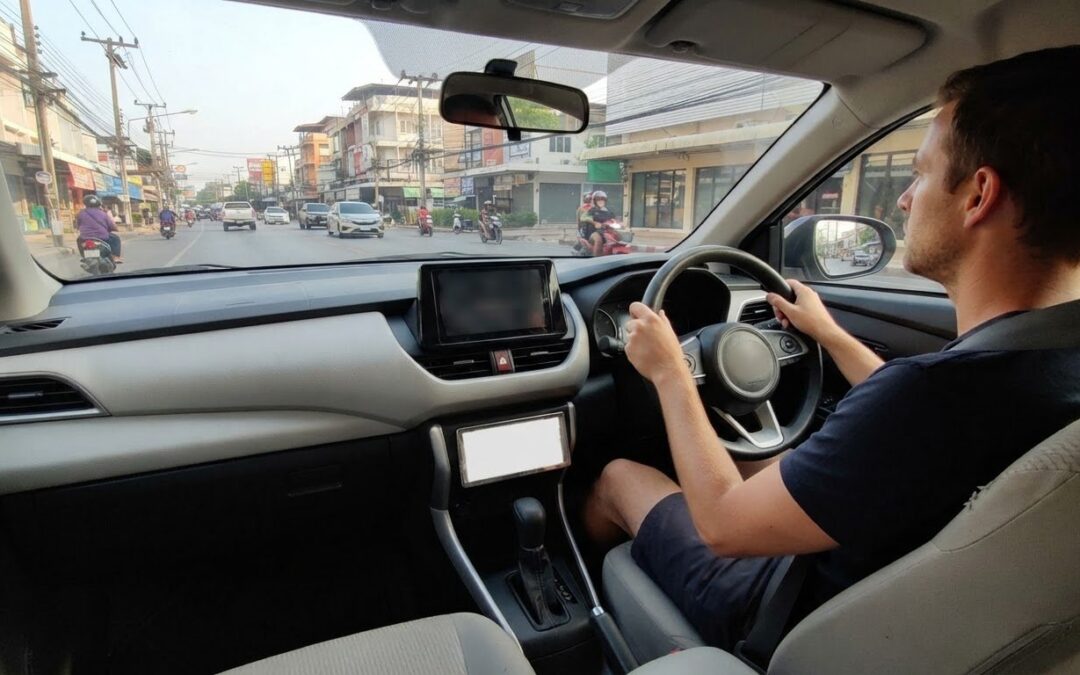
The three-month mark can change what you need to drive legally. The rules for driving in Pattaya as a foreigner depend on how long you plan to stay: an International Driving Permit issued under the 1949 Geneva Convention may be sufficient for tourists staying up to three months, while longer stays require a Thai licence.
It’s easy to assume your home-country licence covers every trip, but the documents you need depend on how long you’ll stay and what you plan to drive. Cars and motorcycles require separate licences, so check the distinction before setting off.
This guide explains when you need a Thai licence, how an International Driving Permit applies, and how to approach a licence application in Thailand. It also covers road conditions, breakdowns, accidents, and drink-driving penalties. Use these points to plan your journey with SPS Car Hire and understand your next steps.
Key Takeaways
- Match your licence to your stay: tourists may use an eligible International Driving Permit for a limited period, while longer stays call for a Thai licence.
- Check that your licence covers the vehicle you plan to drive, as cars and motorcycles require separate licences.
- Prepare for the Thai licence process by understanding the required documents, tests and possible practical-test exemption.
- Learn how to respond to road incidents and why Thailand’s drink-driving limits and penalties deserve serious attention.
Accidents and vehicle breakdowns
In Pattaya, traffic conditions and vehicle type affect the risks you may face. Understand the rental insurance terms and know what to do after a collision or breakdown.
Rental Vehicle Insurance Coverage
For a rental car or motorbike, check the agreement for applicable insurance, limits and exclusions. Don’t assume damage, theft, third-party liability or personal injury are covered; the terms determine what protection applies. An incident could leave you responsible for costs outside the stated coverage. Read the terms before driving or riding, and keep the rental agreement accessible during your trip.
Motorbike risks deserve particular attention: most traffic accidents and fatalities in Thailand involve motorcycles. For safe riding, wear a properly fitted helmet and suitable protective clothing, including gloves and covered footwear. Cars and motorcycles require separate licences, so make sure your licence covers the vehicle you’re using. Before turning or changing lanes, check side and rear-view mirrors for motorcycles beside you or approaching to pass.
Responding to Accidents and Breakdowns
After a collision, stop in a safe place if possible, check for injuries, and contact emergency services when needed. Exchange details with the other driver and photograph the scene, vehicle positions and visible damage. Notify the rental company promptly and follow the incident process in your agreement. Avoid admitting liability at the roadside; instead, record clearly what happened.
If your vehicle breaks down, move away from traffic where possible, switch on the hazard lights and stay clear of moving vehicles. Contact the rental company using the details in your agreement, then explain your location and the problem. Give a precise landmark, as a GPS address may not identify one specific location in Pattaya.
Thailand’s main rainy season runs from June through September, and potholes may remain a concern during and just after it. Slow down on wet or damaged roads, leave extra space, and use motorways or toll roads when they make your route safer and faster. These precautions help you respond calmly as road conditions change.
Drink-driving limits and penalties
Thailand’s drink-driving limits depend on the driver’s licence history. The standard blood-alcohol limit is 0.5 grams per liter of blood. Drivers who have held a licence for less than five years face a lower limit of 0.2 grams per liter of blood. If you’re unsure which limit applies, don’t drink before driving.
Penalties can be severe. Under Thai law, a drink-driving offence can bring a fine of up to ฿200,000 and up to 10 years in jail. At a Pattaya checkpoint, police may use breathalyzer equipment. A driver who tests above the applicable limit may be jailed until they can be taken to court. A checkpoint can therefore turn a short drive after drinking into a serious legal matter.
Plan your return before drinking, and don’t try to estimate your blood-alcohol level. Alcohol’s effects and test results can’t be judged safely by counting drinks. If you’ve been drinking, leave the vehicle parked and arrange another way back. This is especially important if you’ve held your licence for less than five years, because a lower limit applies.
Follow the speed limit shown on signs, as there isn’t one limit for every Pattaya road. Major roads and highways in Thailand have signs in Thai and English. At intersections, signals may hang over the road or sit across the junction rather than beside the stopping point. Watch the signal itself, not just the traffic ahead.
At signals without a yellow light, flashing green means red is approaching. If a junction has green turn arrows, turn only when the matching arrow shows green. Motorcycles may approach from unexpected directions, so check your mirrors before turning or changing lanes. Traffic laws may be enforced selectively, and police checkpoints are common on streets and highways. Follow the signs and signals even when nearby drivers don’t.
Driving with an International Driving Permit
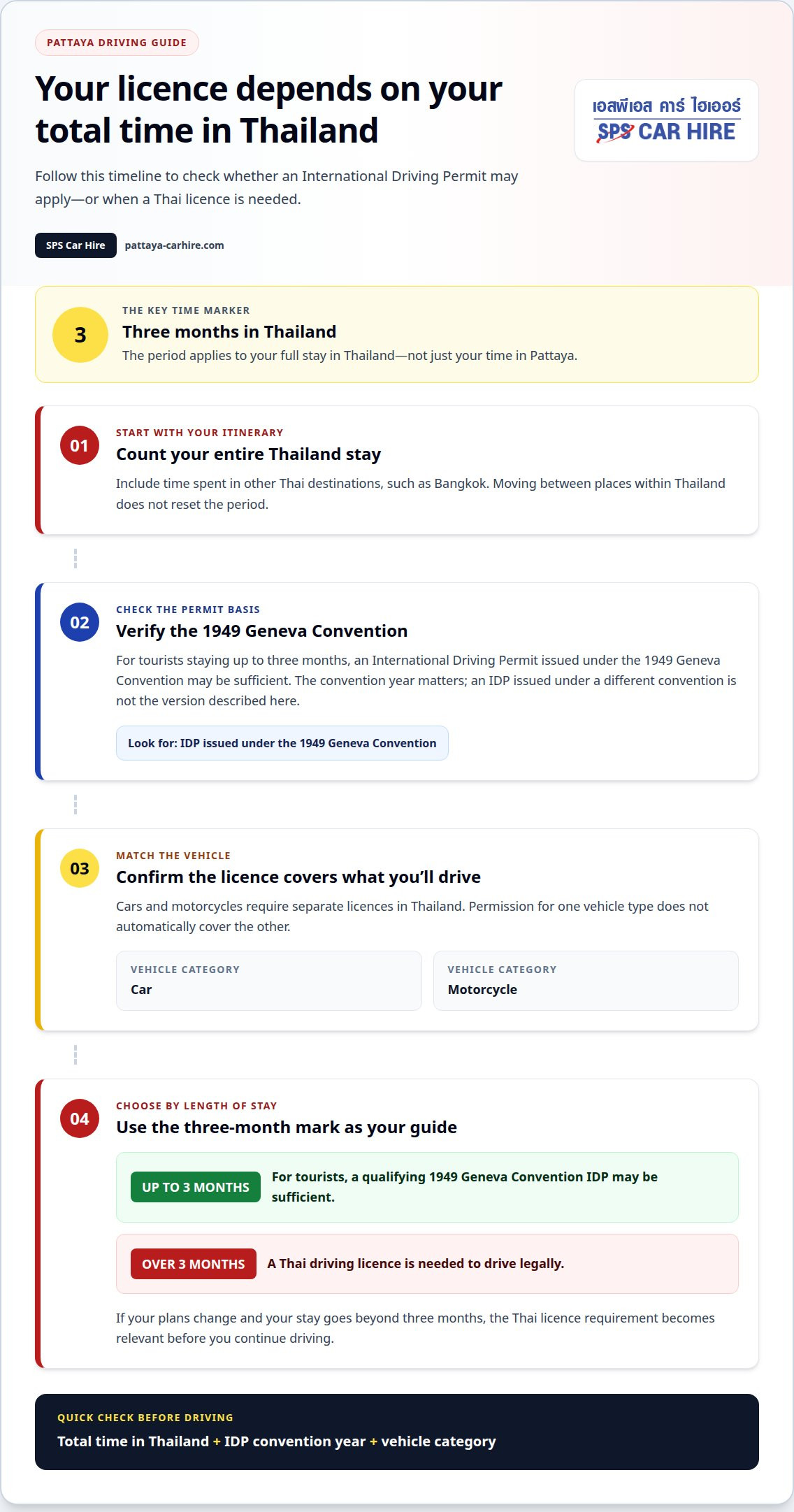
For tourists staying in Thailand for up to 3 months, an International Driving Permit may be sufficient for driving in Pattaya. The permit must be issued under the 1949 Geneva Convention for this permission to apply. The convention year matters, so identify the basis of your permit before relying on it. An IDP issued under a different convention is not the version described here.
Think of the 3-month period as applying to your stay in Thailand, not only your time in Pattaya. For example, time spent visiting Bangkok or another Thai destination is still part of the overall stay. A change of itinerary within Thailand doesn’t reset the period. If you plan to stay longer than three months, a Thai driving licence is needed to drive legally.
Use these points to plan your documents before setting out:
- Match your expected Thailand stay to the up-to-3-month tourist period.
- Check that your International Driving Permit was issued under the 1949 Geneva Convention.
- Plan for a Thai driving licence if your stay will exceed three months.
The vehicle you choose matters, too. Cars and motorcycles require separate driving licences in Thailand, so don’t assume permission to drive one type automatically covers the other. If you’re considering a motorbike rather than a car, confirm that your documents cover that vehicle category before riding. This distinction matters when arranging transport for different parts of your Pattaya trip.
An International Driving Permit is therefore a short-stay option, not a substitute for planning around a longer stay. Set your document choice against your full Thailand itinerary, the 1949 convention requirement, and the vehicle you’ll use. If your plans change and take you beyond three months, the Thai licence requirement becomes relevant before you continue driving.
When foreigners need a Thai driving licence
If you’ll stay in Thailand for longer than three months, you need a Thai driving licence to drive legally. The key factor is your total stay, not just the time spent in Pattaya.
Converting a Foreign Licence
To convert a foreign licence, apply for a Thai licence using your existing driving credentials. Applicants need a passport with a valid visa, a residence certificate or work permit, and a medical certificate. If your home-country licence isn’t in English, obtain a translation from your embassy. A valid international or home-country licence may exempt you from the practical test, but written and vision tests remain necessary.
Unlicensed or Uninsured Driving Risks
Driving without a valid licence can expose you to penalties and complicate matters after an accident. Without applicable insurance, you may also face costs that a policy would otherwise cover. Check that your licence matches your vehicle: Thailand requires separate licences for cars and motorcycles. A car entitlement does not cover a motorbike.
First-time Thai licence applicants receive a 2-year licence. After it expires, drivers can upgrade to a 5-year Thai driving licence. Applicants without a driving licence must complete full training and testing at Pattaya DLT or a local driving school. Foreigners can apply for car and motorcycle licences during the same visa period.
Traffic and road conditions call for close attention in Pattaya. Motorcycles may travel against traffic, emerge from side roads or pass within a car’s turning space. Check your mirrors before turning or changing lanes. Thailand’s main rainy season runs from June through September, and potholes may be a concern during and just after it. Follow posted signs and avoid stopping where parking is restricted.
For transport while you settle into the licence process, explore car rental options suited to your Pattaya plans.
SPS Car Hire
SPS Car Hire offers car and truck rentals for visitors who need transport around Pattaya, with options for short stays and longer-term travel. Once you’ve matched your licence to your stay and intended vehicle, choosing a suitable rental is the next practical step. Budget-friendly options can help you plan local journeys, while long-term car rental packages suit extended stays.
Choose transport that fits your plans and the licence you hold. Cars and motorcycles require separate licences in Thailand, so make sure your documents cover the vehicle you intend to use. For car or truck rental options in Pattaya, contact SPS Car Hire.
Plan your Pattaya travel with confidence
Shape your transport around the trip you want, rather than choosing a vehicle by habit. Think about how often you’ll travel between neighbourhoods, whether you’ll carry shopping or luggage, and how much flexibility you want each day. A practical choice can make daily plans easier to adjust, especially when you’re settling into unfamiliar streets. Leave time to learn your regular routes before planning a packed itinerary.
For driving in Pattaya as a foreigner, choose a transport plan that fits your stay and expected journeys. SPS Car Hire offers low-cost car and truck rentals, along with long-term car rental packages for extended transport needs.
To discuss a rental suited to your plans, contact SPS Car Hire. Start your Pattaya trip prepared and make each journey count.
Frequently Asked Questions
Why Do Foreigners Need a Thai Driving License?
Foreigners planning to live in Thailand for more than three months need a Thai driving licence to drive legally. It provides the appropriate local licence for a longer stay, rather than relying on short-stay documents. The vehicle category matters, too: a car licence doesn’t cover a motorcycle. If you expect to stay beyond the tourist period, include the licence application in your transport plans.
Can foreigners legally drive in Pattaya with a foreign driving licence?
Foreign visitors may drive with an eligible International Driving Permit, but a home-country licence alone isn’t the short-stay document described for Thailand. The permit must be issued under the 1949 Geneva Convention and may be sufficient for tourists staying up to three months. For a longer stay, a Thai licence is needed. Make sure your licence category matches the vehicle, especially before choosing a motorbike.
Is an International Driving Permit required to drive in Thailand?
An International Driving Permit may be sufficient for tourists staying in Thailand up to three months, provided it was issued under the 1949 Geneva Convention. The available rule describes it as a permitted option, not a requirement for every driver. For example, a visitor planning a longer stay should plan around the Thai licence requirement instead. Cars and motorcycles also require separate licence categories.
How much does it cost to rent a car or motorbike in Pattaya?
Rental cost depends on the vehicle type and how long you need it; the amount is provided after a quote request. A short visit and an extended stay may call for different rental arrangements, so include your intended rental period when requesting a quote. SPS Car Hire offers car and truck rentals, as well as long-term car rental packages. No rental price is quoted here.
What should a foreign driver do after a traffic accident in Pattaya?
Focus first on immediate safety and injuries, then record the incident clearly. Photograph vehicle positions, visible damage and number plates, and note the time and a nearby landmark. Share your location and a concise account with the rental company using the contact details in your agreement. Keep relevant photographs and rental documents together so you can refer to them consistently.
 -
 -
 -
 -
 -
 -
 -