


The lowest headline rate isn’t always the lowest-cost rental. If you’re searching for car rental no hidden fees in Thailand, the real question is what you’ll pay by the time you pick up and return the car. A low daily rate may cover only the rental itself, while the final amount can also depend on your booking choices and the rental terms.
To compare offers fairly, look beyond the headline price. Check what the quote includes, which costs are optional, and what conditions could lead to an additional charge. Fuel, extra drivers, tolls, optional protection, and late returns are examples of items to review, not fees that apply to every rental.
This guide shows you how to compare quotes on matching terms, identify costs that are easy to overlook, and check which conditions matter for your trip. SPS Car Hire offers budget-friendly self-drive rentals, so use these practical steps to assess the full terms before booking.
Key Takeaways
- A car rental no hidden fees starts with understanding the full quoted amount and the terms that apply to your booking, not just the advertised rate.
- Compare quotes using the same vehicle category, dates, rental duration, and pickup and return conditions.
- Review insurance, excess, deposit, fuel, and late-return terms in the rental agreement instead of assuming what’s included.
- Keep booking records, inspect the car at pickup, and document its condition again when you return it.
- Compare the full stated terms of budget rentals, including SPS Car Hire’s self-drive options in Thailand.
What Does Car Rental with No Hidden Fees Actually Mean?
“Car rental no hidden fees” means the rental price and the terms that could affect what you pay are made clear before you commit. It doesn’t mean every renter pays the same amount or that additional charges can never arise. Costs may depend on your choices or what happens during the rental. The key is knowing the relevant charges and conditions in advance, rather than discovering them as a surprise.
A clear rental quote gives the price for the booking you selected and explains applicable terms before you agree. Transparency helps you understand the commitment; it isn’t a promise that no additional charge can ever apply.
When comparing self-drive rentals in Thailand, check that the offers use the same vehicle category, rental period, options, and agreement terms. One quote may show only the basic rental charge, while another may itemise more of the booking. Neither a “low cost” label nor a prominent advertised rate tells you, by itself, what applies to your chosen rental.
The car rental industry overview describes a range of rental business models and conditions. For a practical comparison, focus on the offer in front of you: what the quoted amount covers, which terms could change what you pay, and what you’re agreeing to in the rental document.
Headline rate versus the amount you agree to pay
A headline rate is a starting point, not the complete booking cost. The selected vehicle, rental period, and options can affect the quote. Pickup and return times can also determine which rental terms apply. For example, changing the dates or length of a booking may change the quoted amount. Compare the quote generated for your exact plans with the agreement you’re asked to accept. If they differ, pause and get the difference explained in writing before committing.
What transparency should look like before booking
A useful quote separates the rental charge from applicable additional items and makes clear which are optional, conditional, or part of the agreement. Look for terms covering deposits, insurance and excess, fuel, and return timing. These are not handled identically in every rental, so check the stated conditions. The deposit terms explain what may be held, insurance terms describe the stated protection and excess, and fuel or return rules may affect what you owe at the end.
Before booking, make sure each amount or condition relates to the rental you selected. Don’t assume the terms match another provider or a previous trip. You should be able to understand what could change the final amount and the circumstances in which it could happen before signing.
Which Car Rental Charges and Terms Should You Check?
A quote is only part of the picture. The agreement sets out which charges and conditions apply to your booking, so read it before accepting the car. Check the rental dates and times, insurance and excess, any deposit, fuel arrangements, return requirements, and optional extras. Terms vary by provider, vehicle, and booking, so don’t assume a particular charge or inclusion is universal.
The rental agreement defines which charges apply to your specific rental and the conditions under which they may be charged. Keep it with your quote so you can spot differences before pickup or return.
Insurance, deposits, and excess: read the actual terms
An excess is the amount you may be responsible for paying in certain situations under the agreement. It’s separate from the rental price and shouldn’t be confused with a deposit, which may be held according to the stated terms. Check what the agreement says about coverage, exclusions, driver responsibilities, and how any deposit is handled. For more context, see this guide to car rental insurance terms.
Fuel, timing, and optional extras
Match the fuel policy to your return plan. If the agreement requires a particular fuel level at return, note what it specifies and what may happen if you return the vehicle differently. Check the exact pickup and return times, any stated grace period, and the consequences of a late return. Those consequences depend on the agreement, so don’t assume a short delay is treated the same way in every rental.
- Rental period: Check the dates, pickup time, return deadline, and how the agreement treats a late return.
- Insurance and excess: Read what protection applies, what is excluded, and what responsibility remains with you.
- Deposit: Look for the stated amount, how it is handled, and the conditions for its release.
- Fuel and return condition: Follow the written fuel policy and other return requirements.
- Optional extras: Review each selected item separately, including its cost and any conditions.
For a car rental no hidden fees experience, make sure every option you selected appears correctly in the booking details and that the agreement reflects the terms you expect. If the wording is unclear or documents conflict, get the explanation in writing before accepting the rental. Keep that record with your booking documents.
When comparing budget self-drive rentals, include SPS Car Hire’s self-drive car rentals and review the applicable terms alongside the price.
How to Compare Car Rental Quotes on a Like-for-Like Basis
A fair comparison starts with matching the booking details, not scanning for the smallest number. Use the same vehicle category, rental dates, duration, and pickup and return conditions for each offer. If one quote covers different times or a different vehicle class, the prices don’t describe the same rental. Compare the stated total and the terms alongside it.
A simple checklist for comparing two offers
Set up one row per rental offer and record what the quote actually says. Keep confirmed charges separate from conditional charges and optional choices. If a term is unclear, mark it as unclear rather than treating it as included. This makes differences between offers easier to spot before you decide.
| What to compare | What to record |
|---|---|
| Quoted rate | The stated amount for your dates, duration, and selected vehicle category |
| Stated inclusions | Items the quote or agreement explicitly says are included |
| Optional items | Extras you may choose, listed separately from the rental charge |
| Deposit terms | What the agreement states about the deposit and its handling |
| Fuel policy | The required fuel level or other stated fuel-return conditions |
Before comparing totals, confirm that each offer uses the same pickup and return times and conditions. Then note whether insurance, fuel, or extras are confirmed, conditional, or optional. A blank or vague entry doesn’t prove that an item is included. Treat it as a point to clarify in writing before booking.
How to judge value without relying on the headline rate
The lowest headline figure isn’t automatically the best-value offer. A quote may cover different terms or leave selected options outside its displayed rate. Compare what you’re agreeing to pay for your chosen booking, then consider conditional charges that could apply based on your plans or actions. Don’t add every available extra by default; decide whether each one suits your trip.
For example, if two offers have different fuel policies, compare them against your return plans. If one lists an optional item and the other doesn’t, compare the terms with and without that item. This keeps the decision grounded in your needs rather than assuming that more inclusions always mean better value. For a broader transport decision, compare rental arrangements with car rental versus taxi costs in light of your itinerary—just as travelers weighing regional ground transport might compare self-drive costs against professional services like Airport Transfer Atlanta.
A car rental no hidden fees comparison is really a comparison of clear, matching terms. SPS Car Hire offers budget self-drive car rentals in Thailand, which you can assess using the same checklist. Review the stated terms as well as the headline rate.
Use this framework to compare SPS Car Hire self-drive rentals with your trip requirements and the terms in the booking.
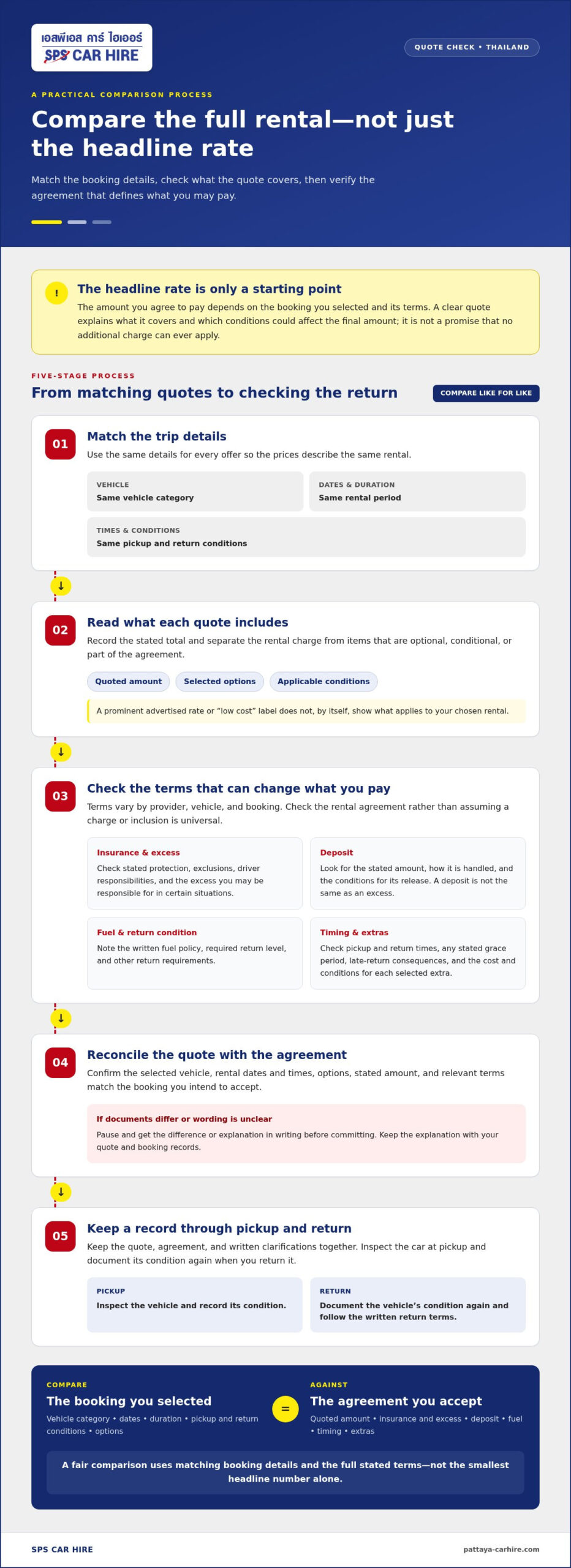
What to Check Before Booking, Pickup, and Return
A clear process helps keep the quote, agreement, and vehicle handover aligned. Save records as you go, and resolve differences before you drive away. Use this sequence for a self-drive rental in Thailand:
- Review the quote. Check the renter’s name, dates, vehicle details, rental period, stated total, and selected options. Make sure the booking reflects the trip you intend to take.
- Read the agreement. Compare its terms with the quote, paying attention to payment, deposit, fuel, insurance, and return conditions. If a figure or condition differs, get a written explanation before confirming.
- Save your records. Keep copies of the quote, booking details, agreement, and written clarifications. These give you a reference if you need to review what was agreed later.
- Inspect the vehicle. Before driving away, look over the exterior and interior, noting visible marks, damage, and the vehicle’s general condition.
- Document the return. Follow the agreed return time and fuel instructions, and keep any handover or return records provided through the rental process.
Before confirming the reservation
Check that the booking information identifies the correct renter, rental dates, vehicle details, and stated total. Read the agreement itself rather than relying only on a summary or advertisement. If the quote and agreement don’t match, or a condition is hard to understand, get it clarified in writing before confirming. For questions about the meaning of coverage terms, this car rental insurance guide offers related context.
Save a copy of the version you reviewed. If booking details change, keep the updated quote and agreement too, so you can refer to the terms that apply to the final reservation. This gives you a record to check at pickup and return.
At the vehicle handover and return
At pickup, take clear, dated photos or video of the vehicle before setting off. Capture existing marks from more than one angle and include enough of the vehicle in the frame to show where each mark is. If the handover process includes a condition record, compare it with what you see and use the agreed process to note any difference. Keep a copy or record of what you submitted.
Before returning the vehicle, check the agreed time and fuel instructions. At handover, retain relevant records and document the vehicle’s condition again. If anything has changed, note it through the agreed process rather than relying on memory. These steps support a car rental no hidden fees experience by keeping the booking terms and vehicle condition documented.
Explore budget self-drive car rentals and review the booking terms before confirming.
Choosing a Budget Car Rental with Clear Terms
A budget-friendly rental is good value when its terms fit your plans and you understand what you’re agreeing to pay. Don’t choose on the headline rate alone. Compare the stated terms for your selected vehicle and booking, including applicable charges, optional items, deposit arrangements, fuel policy, and return conditions. This lets you judge the offer on more than price without assuming every rental includes the same things.
Keep two questions separate: does the rental suit your budget and trip, and are its terms clear enough for you to make an informed choice? A value proposition can help you identify an option to consider, but it isn’t a promise that no extra charge can ever arise. Charges may depend on the specific agreement and circumstances, so understand the terms that apply before confirming.
When SPS Car Hire may suit your rental plans
SPS Car Hire is an independent rental agency offering budget self-drive cars in Thailand. If you want to drive yourself and are comparing budget options, assess its stated rental offer using the same quote-and-agreement checklist as any other booking. SPS Car Hire also offers long-term car rental packages for extended transportation needs.
SPS Car Hire offers best-price guarantees for vehicle rentals. This is a value proposition, not a claim that every possible charge is covered or that additional costs can never apply. The quoted amount and agreement remain the practical reference for your chosen booking. Read them together to understand the specific terms behind the offer.
Make your next booking decision with confidence
Before settling on a rental, return to the details that shape your actual commitment. Match the quote to the booking, read the agreement, and review insurance, fuel, deposit, optional-item, and return terms. At pickup and return, keep the relevant records and document the vehicle’s condition through the agreed process. These steps help you compare offers consistently and keep track of what was agreed.
For a car rental no hidden fees decision, look for clarity rather than an absolute promise. The stated terms should let you understand the quoted amount and the conditions that might affect it. If you’re considering a budget self-drive rental, compare SPS Car Hire’s self-drive car rental options with your travel needs and the applicable terms.
Review the quote and agreement before you book. Choosing with the full terms in view is a straightforward way to seek value while reducing the chance of surprises during your rental.
Make Your Next Rental Choice with Confidence
A rental booking is part of your travel plan, not just a vehicle choice. Give yourself time to consider whether the terms fit the way you’ll travel—and remember that clear, upfront pricing principles apply across all travel logistics, whether hiring a budget vehicle abroad or reserving private ground transportation with LA Confidential Car Service in California. That pause can help you choose based on what works for your trip, rather than feeling pressured by a headline rate or booking deadline.
For a car rental no hidden fees experience, prioritise clarity: understand the offer before you commit. SPS Car Hire’s best-price guarantee is a stated value proposition, while the applicable rental terms explain what it means for a particular booking. Read those terms alongside your booking details, then decide at your own pace.
Ready to take the next step? Explore SPS Car Hire’s self-drive car rental options and compare the applicable terms with your plans.
Frequently Asked Questions
What counts as a hidden fee in a car rental?
A hidden fee is a charge or condition that wasn’t made clear before you committed to the rental. For example, an optional item selected during booking may appear in the payment details even though you thought you were viewing the base rate. A charge disclosed in the agreement isn’t necessarily hidden, but it can still catch you off guard if you haven’t read the terms. Check what each amount relates to and when it may apply.
Can a car rental company add charges after I book?
Charges may arise after booking if the agreement allows them and a relevant condition occurs, or if you choose an extra later. For example, returning a vehicle outside the agreed conditions could have consequences set out in the rental terms. That’s different from a new, unexplained charge. Keep your booking confirmation, note any changes you approve, and compare any later charge with the documents and circumstances of your rental.
Is insurance included in a car rental quote?
Not necessarily. A quote may describe insurance differently from another, and the rental agreement determines what protection applies to your booking. Look for the coverage description, exclusions, excess, and any conditions on who may drive. Don’t assume that personal or payment-card coverage automatically changes the rental company’s terms. If you’re unsure what a term means, get an explanation before agreeing so you can make an informed choice.
How much is the deposit for a rental car?
There isn’t one deposit amount that applies to every rental. The amount and how it is handled depend on the provider’s terms and your specific agreement. Check whether the document describes a deposit, when it may be collected or held, and what conditions apply to its release. A deposit is not the same as the rental charge, so account for it separately when planning the funds available for your trip.
What happens if I return a rental car late?
The result depends on the return-time terms in your agreement. It may explain how extra time is treated, whether a grace period applies, and what charges or other conditions could follow a late return. Don’t rely on another company’s policy or assume a short delay is harmless. If your plans change, use the rental provider’s stated process to communicate the revised timing and keep a record of the response.
Can I avoid unexpected car rental charges?
You can reduce the risk, though no checklist can rule out every charge tied to an agreement or event during a rental. Before confirming, save the quote and booking terms, and note which extras you chose. At pickup and return, follow the stated instructions and keep relevant records. These habits support a car rental no hidden fees experience by helping you understand the conditions and explain what happened if a charge needs review.
 -
- -
- -
- -
- -
- -
- -
-