


A low rental rate doesn’t tell you what you may owe if plans change or the vehicle is damaged. The agreement does. With car rental terms and conditions explained in plain English, you can understand how the clauses affect your costs, responsibilities, and choices before signing.
It’s tempting to skim the paperwork when you’re ready to get on the road, especially when terms such as “excess” and “security deposit” are unclear. But checking the details first helps you compare offers fairly and spot potential surprises about damage, extra charges, approved drivers, permitted use, and the return process.
This guide explains the main terms to review, what to confirm with the rental company, and how to match the agreement to your plans in Thailand. Whether you’re considering a self-drive car, truck, or motorbike, reading the terms carefully can help you choose an option that suits your needs. SPS Car Hire offers self-drive rentals, including long-term car and truck packages, so it’s useful to understand the agreement before choosing.
Key Takeaways
- Understand what a rental agreement covers and why the signed documents set the terms for your rental.
- Check that the rental period, approved drivers, permitted use, and return requirements fit your plans.
- With car rental terms and conditions explained, compare deposits, excess, damage charges, and optional protection more confidently.
- Use a pre-signing checklist to clarify key details and compare offers beyond the headline rate.
- Match the vehicle and rental period to your needs, then check that you can meet the agreement’s stated obligations.
Car Rental Terms and Conditions: What the Agreement Actually Covers
Think of the rental agreement as the rulebook for your booking. It explains how you may use the vehicle, what you must pay, who is responsible for particular obligations, and how to return it. This guide to car rental terms and conditions is general information, not a substitute for the documents that apply to your specific rental.
A booking confirmation records the reservation; the rental agreement sets out the terms you accept for the rental. Compare the two and check that the details match. Read any documents referred to in the agreement before signing. The general Car rental overview offers background, but actual policies vary by company. Requirements may also depend on applicable rules and your circumstances, so ask the rental company to explain anything unclear rather than relying on general descriptions.
What documents make up a rental agreement?
Start with the rental agreement and compare it with your booking confirmation. Depending on the rental, other relevant documents may include a vehicle condition record or policy documents covering matters such as damage, payment, and permitted use. Don’t assume a separate document is unimportant. If the agreement refers to it, ask to read it before accepting the terms.
Verbal assurances can be useful, but they may be difficult to rely on if the written terms say something different. If someone confirms an important detail, such as who may drive or how the vehicle must be returned, ask for it in writing or have it added to the agreement. Keep copies of the documents and confirmations you receive.
Which basic terms should you identify first?
Before reading every clause in detail, find the information that defines your rental:
- Rental period: Check the collection and return dates and times. Make sure they match your schedule.
- Drivers: Confirm who may drive, whether each driver must be named, and what requirements apply.
- Vehicle category: Check that the category suits your needs. It may describe a type of vehicle rather than guarantee a particular make or model, so ask if the exact model matters.
- Collection and return: Find the instructions, location details, and return requirements in the paperwork.
These details can vary between companies and bookings. Don’t guess what an unclear clause means or assume another rental company’s practice applies. Ask for an explanation before signing, then check that the written agreement reflects the answer. This makes it easier to compare offers on their actual terms.
Rental Period, Drivers, Vehicle Use, and Return Rules Explained
Dates, driver permissions, and return conditions determine how you can use the vehicle and what you need to do at the end of the rental. Check that the collection and return dates, times, and locations match your plans. If you may return later than the time shown, ask what the agreement requires. Don’t assume a grace period applies.
The named renter remains responsible for following the agreement throughout the rental. That includes ensuring only accepted drivers use the vehicle and observing any limits on where or how it may be driven. These clauses can affect what happens if something goes wrong, so read them carefully and check how permitted use relates to any cover described in the agreement.
Who may drive the rental vehicle?
Check how the agreement defines the main renter and whether it allows additional authorised drivers. Don’t assume a friend or family member may drive simply because they’re travelling with you. Ask the rental company what documents and eligibility conditions apply to each driver. Requirements vary by company and booking, so confirm the current details directly instead of relying on a general age or licence rule.
What do mileage, use, and return clauses mean?
Look for any mileage allowance or limit, territorial restrictions, and prohibited uses. Don’t assume you can take a vehicle across borders, use it for every type of journey, or drive without a distance limit unless the agreement says so. If your route or intended use may not fit the wording, ask the rental company before accepting the terms.
Return clauses may also set expectations for fuel or charging, vehicle condition, and the time and place of drop-off. Check the instructions in your agreement rather than relying on what another company allowed. Find out how to report a change, damage, or delay, and keep written confirmation of any agreed adjustment.
Use car rental terms and conditions explained as a practical checklist: compare each clause with your plans and get unclear answers in writing. This helps you choose a self-drive car, truck, or motorbike rental whose stated terms suit your needs.
Deposits, Damage, Insurance, and Extra Charges: Compare the Fine Print
A low headline rate doesn’t show the full financial picture. Compare what each agreement says about money held upfront, your potential responsibility if the vehicle is damaged, and any optional protection. These terms are related but not interchangeable. Read how they work together instead of assuming that a particular charge or protection applies to every rental.
| Term | What it means | What to check |
|---|---|---|
| Deposit | Money held or collected under the agreement, often as security while the rental is active. | How and when it may be released, and what circumstances could lead to a deduction. |
| Excess or deductible | An amount the renter may have to pay toward a covered loss, subject to the policy and agreement. | When it applies, whether it differs by incident, and what exclusions may affect it. |
| Damage charge | A charge that may follow an assessment of damage or another contract-defined loss. | How the vehicle is inspected, how costs are documented, and how to dispute a charge. |
| Optional protection | An additional product or cover that may change certain financial responsibilities. | Exactly what it covers, what it excludes, and whether it changes the excess. |
How are deposits, excess, and damage charges different?
A deposit is not automatically a fee, and it doesn’t necessarily set the renter’s maximum liability. It may be held temporarily. An excess describes potential responsibility under specified cover, while a damage charge may be assessed after an incident. The agreement explains how these terms interact. Ask how the vehicle will be inspected at collection and return, when a deposit may be released, and how to challenge a disputed assessment. Get the answers in writing rather than assuming a particular amount or release time.
What should you check in insurance wording?
Read beyond the name of any protection option. Check what cover is included, which events or parts are excluded, how the excess works, which drivers are authorised, and what steps you must take to report an incident or make a claim. A label such as “protection” doesn’t explain what damage or events are covered. Ask the rental company to clarify unclear wording before taking the vehicle.
The consumer guidance on protecting yourself when renting a car highlights contract details such as damage waivers and fuel options. Use it for general comparison ideas, not as a statement of Thai requirements. For a rental in Thailand, rely on the specific policy and agreement provided for your booking.
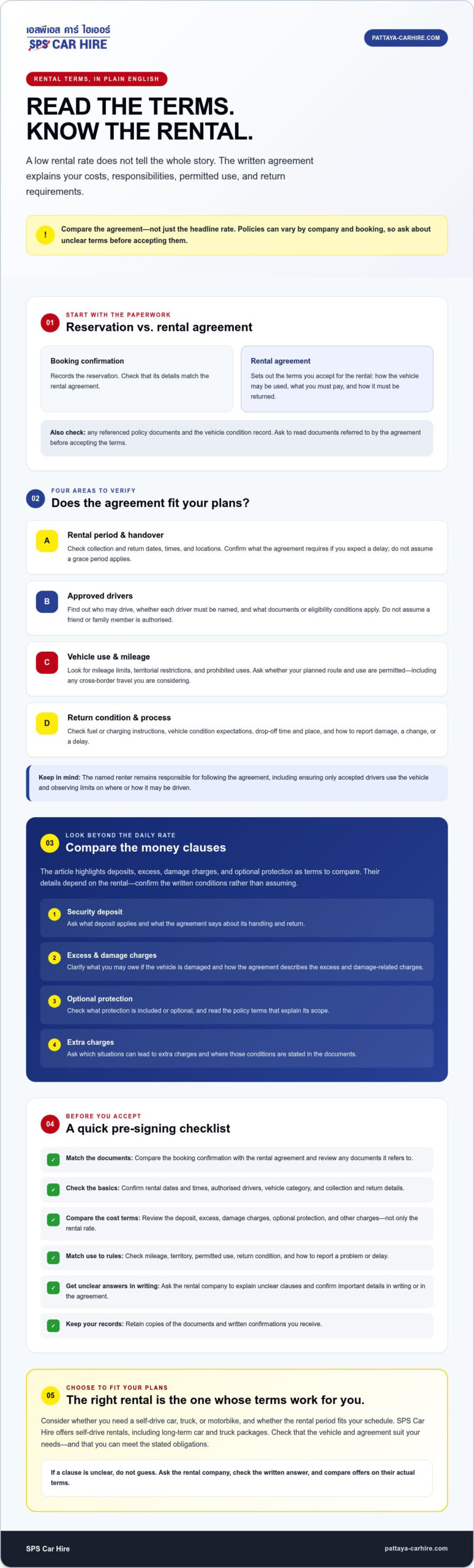
How to Review Car Rental Terms Before You Sign
A structured review can help you decide whether an offer fits your plans and what obligations come with it. Use this checklist for short-term or longer-term rentals. Compare like with like: the same rental period, vehicle category, driver arrangements, payment conditions, deposit terms, and return requirements. A lower headline rate may not be the better fit if the written terms don’t suit your needs.
- 1. Match the booking details. Check the rental dates and times, vehicle category, collection arrangements, and return instructions against your plans.
- 2. Check who can drive. Confirm the main renter and any authorised drivers, including the stated eligibility and document requirements.
- 3. Review payment and deposit terms. Check how payment is handled, whether a deposit applies, what may be deducted, and how the agreement describes its release.
- 4. Ask about possible charges. Find out what charges may apply, what could trigger each one, and how the company assesses or documents them.
- 5. Compare protection wording. Check what is included, what is excluded, any excess, and what steps you must take if there’s damage or another incident.
- 6. Check use and return conditions. Confirm any mileage or permitted-use limits, fuel or charging expectations, return timing, and vehicle-condition requirements.
- 7. Resolve unclear wording. Ask the rental company to explain any clause you don’t understand. Request written clarification for a promise or exception that isn’t shown in the agreement.
Resolve unclear terms before accepting the vehicle. A verbal explanation may not match the written agreement, so keep written confirmation of important answers or agreed changes. This matters for a longer rental, too: check that the terms remain workable throughout the full period, not only on collection day.
At collection, follow the company’s inspection process and make sure existing damage or other condition concerns are recorded. Keep a copy of the condition record with the signed agreement and relevant messages. At return, follow the stated procedure and ask how the handover or completion will be confirmed. Save that confirmation with your rental records.
Once you’ve completed the checklist, compare rental options by their written conditions as well as their rates. That gives you a clearer basis for choosing terms that fit your plans.
Choose a Rental That Fits Your Plans and Understand the Next Steps
The right rental is one whose vehicle, rental period, permitted use, and return process fit your plans. A car may suit everyday travel, while a truck may better match a practical transport need. A motorbike is another self-drive option to compare. Before deciding, check that the agreement supports your intended use and that you can meet its return requirements.
To judge whether a rental fits your budget, look beyond the headline rate. Compare the stated obligations, including payment terms, deposits, possible charges, and conditions that could affect your plans. The point of having car rental terms and conditions explained is to understand what you’re agreeing to pay and do, then decide whether those terms work for you.
Which agreement details matter for different rental plans?
For a shorter rental, focus on collection timing, authorised drivers, permitted use, and return conditions. Check that the handover and return arrangements fit your schedule, and ask what the agreement says if your plans change.
For transport during an extended stay, review the terms for the full period, not just the initial booking. Confirm the rental duration, how renewals or extensions are handled, who is responsible for maintenance, and what return conditions apply. If you’re considering extended vehicle hire, this long-term truck rental guide to extended vehicle hire may help you identify questions to ask.
For business or other practical needs, check that the vehicle category is suitable and that the agreement permits your intended use. Don’t assume a category guarantees a particular make or model, or that every use is allowed. Similarly, for drivers planning specialised travel centered on high-performance exotic vehicles—such as curated road trips featured on supercarholidays.com—confirming vehicle specifications, security deposits, and excess terms beforehand is essential for a smooth experience.
What to do when a rental term is unclear
Ask the rental company to explain the clause in plain language before committing. Compare the explanation with the agreement and any policy documents it refers to. If a promise or exception matters, request written confirmation and check that it doesn’t conflict with the terms you’re accepting.
Once your requirements are clear, compare options on both conditions and rates. SPS Car Hire offers self-drive car, truck, and motorbike rentals, with long-term packages available for cars and trucks. Explore SPS Car Hire self-drive rentals and review the terms for the option that suits your plans.
Review the Details, Then Choose with Confidence
A rental agreement is more than paperwork. It sets expectations for who can drive, how the vehicle may be used, what charges or responsibilities may apply, and how the rental must end. With car rental terms and conditions explained, you can compare written obligations alongside the headline rate and ask questions before signing.
Check that the rental period, vehicle category, permitted use, and return process match your plans. Pay particular attention to the agreement’s wording about deposits, damage, and insurance, as these terms can affect your responsibilities. If a clause is unclear, request a plain-language explanation and written confirmation before accepting the vehicle.
SPS Car Hire offers self-drive car, truck, and motorbike rentals, with long-term rental packages for cars and trucks. Explore SPS Car Hire’s self-drive rental options and review the terms that apply to your plans.
A careful read can help you make a value-conscious choice and feel prepared for the road ahead.
Frequently Asked Questions
What should I check before signing a car rental agreement?
Before signing, check that the rental dates, vehicle category, approved drivers, payment terms, deposit conditions, permitted use, and return instructions match your plans. Read any policy documents referred to in the agreement, and ask what charges may apply and how they’re assessed. Clear car rental terms and conditions help you compare written obligations, not just the booking rate, and resolve uncertainties before accepting the vehicle.
Are car rental terms and conditions the same with every company?
No. Rental terms can differ by company, booking, vehicle, and rental period. One agreement may have different driver conditions, mileage limits, damage procedures, or return requirements from another. Some requirements may also depend on applicable rules and the renter’s circumstances. Don’t assume a term from a previous rental applies to your current booking. Compare the agreement and referenced documents, then ask the rental company to confirm any condition that affects your plans.
What is the difference between a rental deposit and an insurance excess?
A deposit is money the rental company may hold or collect as security under the agreement. An insurance excess is the amount you may be responsible for paying toward a covered loss, subject to the policy and contract. They serve different purposes, and a deposit isn’t automatically a fee or the limit of your liability. Check when a deposit may be released, what could be deducted, and how the excess applies to different incidents.
Can someone else drive a rental car if they are not named on the agreement?
Don’t assume they can. Only drivers accepted under the agreement should drive the vehicle, and the contract may require additional drivers to be named or approved in advance. Ask the rental company which eligibility conditions and documents apply to each driver. If someone else may need to drive, get the arrangement confirmed in writing before the rental begins. Driving outside the agreement’s conditions could affect responsibilities or cover, depending on the specific terms.
What happens if I return a rental car late or with existing damage?
The agreement determines what happens if the vehicle is returned late or damage is found. It may specify return deadlines, how delays are handled, how condition is inspected, and how charges or disputes are assessed. Before driving away, follow the company’s inspection process and make sure existing damage is recorded. At return, follow the stated handover procedure and keep the condition record and confirmation of return. If your plans change, contact the rental company promptly.
Does rental car insurance cover every type of damage?
No. Don’t assume every type of damage or event is covered. The policy and agreement define the scope of cover, exclusions, excess, authorised-driver conditions, and steps for reporting an incident. A protection label alone doesn’t explain what applies. Read the policy wording and ask the rental company to clarify unclear exclusions or claim duties before taking the vehicle. Keep a record of the answer, especially if it affects how you plan to use the car.
Can I extend a car rental after signing the agreement?
Possibly, but an extension isn’t automatic. Contact the rental company before the agreed return time to ask whether the rental can be extended, how the revised period will be charged, and whether any terms will change. Get approval and the revised dates in writing before keeping the vehicle longer. Check whether the extension affects payment, permitted drivers, return arrangements, or other conditions, and keep the revised agreement or confirmation with your rental documents.
 -
- -
- -
- -
- -
- -
- -
-