


A rental handover isn’t complete just because you’ve walked around the car. The car rental inspection checklist Thailand drivers need should create a clear record of the vehicle’s condition and the terms agreed before departure. It’s reasonable to worry that an old scratch could later be blamed on you, especially if the handover feels rushed.
This practical checklist covers the exterior and interior, timestamped photos or video, and essentials such as tyres, lights, seatbelts, the odometer, and fuel gauge. It also explains how to get existing damage recorded before you accept the keys. Before driving away, clarify what the agreement and insurance cover, what excess may apply, and how fuel and the security deposit are handled. Follow the steps in order to complete a repeatable inspection, keep clear handover evidence, and resolve questions before setting off.
Key Takeaways
- Use a consistent walk-around route so you check every panel, tyre, light, mirror, and window before leaving.
- Compare the car’s condition with the handover record, including the odometer and fuel level.
- Photograph each mark in context and close up, then ask the rental company to record it.
- Check the agreement for insurance limits, excess, fuel terms, and damage-reporting instructions.
- If a safety issue or damage discrepancy remains unresolved, pause the handover and ask for a clear resolution before driving away.
Why a car rental inspection checklist matters in Thailand
A car rental inspection checklist Thailand renters can use combines a repeatable vehicle check with a written record of its condition before they accept the keys. The handover record captures what the car looked like and which details were confirmed at collection. Its purpose is to make the starting condition clear to both you and the rental company.
A clear record can help prevent misunderstandings at return. If a bumper already has a scrape, for example, a dated photo and a matching note on the handover form help show that the mark was present before your rental began. A checklist supports clear communication, but it doesn’t change the rental agreement or confirm what insurance covers. Read the terms and ask the company to explain any unclear coverage, excess, or reporting requirements before you drive.
What should you confirm before inspecting the car?
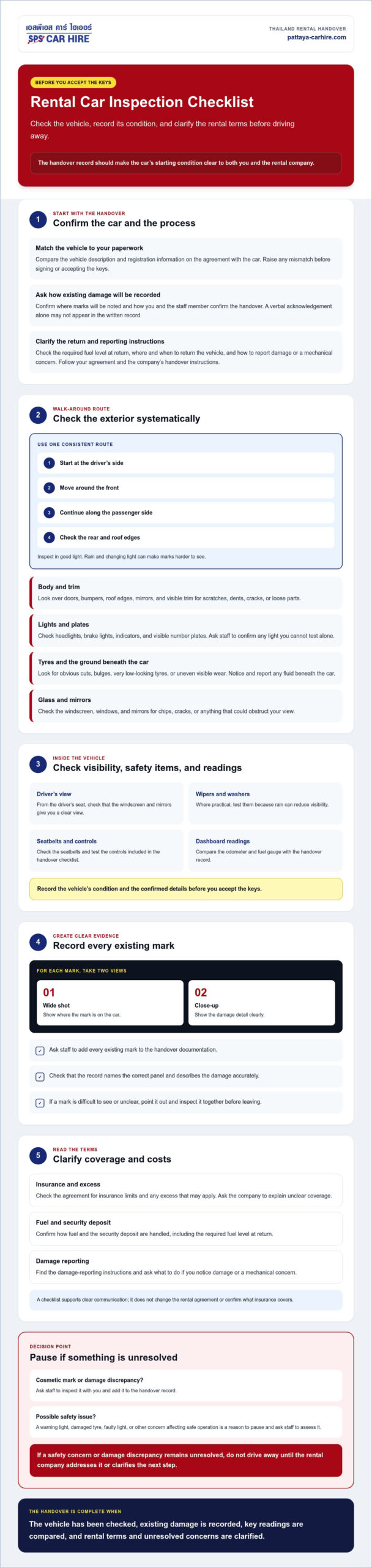
First, check that the vehicle matches your booking and rental agreement. Compare the vehicle description and registration information shown on the paperwork with the car, and raise any mismatch before signing or accepting the keys. Ask who will record existing damage, where it will be noted, and how you and the staff member confirm the handover. A verbal acknowledgement alone may not appear in the written record.
Next, clarify the instructions for your rental. Confirm the required fuel level at return, where and when to return the vehicle, and how to report damage or a mechanical concern. Don’t assume the process is the same for every rental. Follow the details in your agreement and the company’s handover instructions.
Why document condition before driving in Thailand?
Thailand’s weather and driving conditions can affect what you notice. Rain can obscure marks or reduce visibility, while changing light may make small dents and scratches harder to see. Take your time at collection and inspect the vehicle in a consistent route, even if you’re eager to set off. A general vehicle inspection procedure also covers lights, tyres, brakes, and fluids, useful reminders that a handover check should look beyond the paintwork.
Separate cosmetic marks, such as a scratch or chipped trim, from concerns that could affect safe operation, such as a warning light, damaged tyre, or faulty light. Record both, but treat a possible safety issue as a reason to pause. If a mark is unclear, ask staff to inspect it with you and add it to the handover record. If a safety concern remains unresolved, don’t drive away until the rental company has addressed it or clarified the next step.
Thailand car rental inspection checklist: exterior, tyres, and glass
Make the walk-around systematic: start at the driver’s side, move around the front, continue along the passenger side, then check the rear and roof edges. This route helps you cover every panel instead of focusing only on the most visible scratches. The car rental inspection checklist Thailand renters follow should note damage and anything that could affect visibility or safe operation.
Inspect each area in good light. Thailand’s road conditions make a careful safety check worthwhile, and the World Health Organization describes the country’s road traffic death rate as one of the highest in Asia. A walk-around can’t predict every issue, but it can help you spot concerns and raise them before setting off.
Which exterior damage and equipment should you check?
- Body and trim: Check doors, bumpers, roof edges, mirrors, and visible trim for scratches, dents, cracks, or loose parts.
- Lights and plates: Look for damage to headlights, brake lights, indicators, and visible number plates. Ask staff to confirm any light you can’t test alone.
- Tyres and ground: Look for obvious cuts, bulges, very low-looking tyres, or uneven visible wear. Notice any fluid beneath the car and report it.
- Glass and mirrors: Check the windscreen, windows, and mirrors for chips, cracks, or anything that could obstruct your view.
Photograph each mark clearly. Take one wider shot showing its location on the car and one close-up of the detail. Ask staff to add every existing mark to the handover documentation, then check that the record names the correct panel and describes the damage accurately. If a detail is difficult to see, point it out together before leaving.
How should you check tyres and windscreen visibility?
Look across each visible tyre surface for obvious damage or differences in wear. This is a visual check, not a mechanical diagnosis. Don’t try to determine the cause of a bulge, leak, or unusual mark by appearance alone. Ask rental staff to assess anything that concerns you and explain whether the car is safe to take.
From the driver’s seat, check that the windscreen and mirrors give you a clear view. Where practical, test the wipers and washers, which matter when rain reduces visibility. If a crack, chip, damaged mirror, or ineffective wiper interferes with your view, raise it before departure. Ask staff to record cosmetic damage, and get a clear answer about any visibility or tyre concern before driving.
Before accepting the keys, confirm the vehicle’s condition, ask how concerns will be recorded, and make sure you understand the rental details.
Inside the rental car: test controls, safety items, and documents
The cabin check helps confirm that key controls work and that the vehicle details match the handover record. Add each result to your notes or the rental company’s form. This part of a car rental inspection checklist Thailand renters can repeat is especially useful when comparing the car’s starting condition with the agreement at return.
What should you test inside the car before setting off?
Ask the provider before starting the engine or operating unfamiliar controls. Check that seat belts fasten, doors open and close, mirrors adjust, and windows and air conditioning respond. Make sure you can identify the gear selector and parking brake. If permitted, start the car and note any warning lights that remain displayed. Ask staff to demonstrate any controls you’re unsure about.
| Item | Check and record |
|---|---|
| Cabin and safety | Seat belt condition, door operation, mirror adjustment, and any visible interior damage. |
| Controls | Window switches, air conditioning, gear selector, parking brake, lights, and indicators. |
| Dashboard | Any warning lights shown after starting, if the provider permits you to start the car. |
| Odometer and fuel | Displayed mileage and fuel level, using the rental company’s stated handover method. |
Compare the odometer and fuel reading with the handover form or agreement before leaving. If either differs, ask staff to correct the record or explain the discrepancy. Keep your own note or a permitted photo as supporting evidence, and follow the provider’s instructions for recording vehicle details.
Which documents and handover details should you compare?
Check that the vehicle or registration details on the rental paperwork correspond with the car. Ask about any mismatch before accepting it. Confirm which documents the provider requires from you and which rental or insurance documents you should keep. Depending on your circumstances, ask whether a passport, driving licence, or International Driving Permit is needed. GOV.UK provides information on driving abroad, but confirm requirements directly with the rental company and relevant authorities.
Confirm contract details and insurance coverage with the provider. Read the terms and ask what the policy excludes, what excess may apply, and how to report damage or an incident. Don’t rely on a verbal summary if the written agreement says something different. Ask for clarification before signing or driving away, and keep the documents and contact instructions accessible during the rental.
How to record existing damage and clarify rental insurance
A clear damage record connects what you see at collection with what the rental company has documented. Follow the same steps for every rental and complete them before driving away. This part of a car rental inspection checklist Thailand renters can rely on helps you raise discrepancies while staff are available to review them.
How do you create a useful damage record?
- Photograph: Take images of each side, the corners, wheels, glass, and interior. For every mark, capture one photo showing its position on the vehicle and another close enough to show its size and detail. Keep the original files, including the date and time where available, and avoid edits that could obscure the condition.
- Describe: Note the location and appearance of each mark, such as “small scrape on the left rear bumper.” Describe what you can see rather than guessing how or when the damage happened.
- Report: Point out each finding to the rental staff member. Ask them to add any unlisted damage to the agreement or the company’s approved inspection record.
- Confirm: Check that the written entry matches the mark and identifies the correct part of the car. If the record is vague or incomplete, request written clarification or a corrected entry before accepting the handover.
- Retain: Keep the signed or approved record, original photos, and relevant messages together in a secure place you can access during the rental and after returning the car.
A photo supports your account, but it doesn’t automatically amend the agreement. Make sure staff have acknowledged the issue in the handover documentation. If a discrepancy remains unresolved, ask for written clarification before leaving with the vehicle.
What should you clarify about insurance and responsibility?
Ask the rental company to explain the specific policy attached to your booking. Confirm what it covers, what it excludes, whether an excess applies, and what steps you must follow if the car is damaged or involved in an incident. Find out whom to contact and what information or documents they’ll expect. Don’t assume that a photograph, verbal assurance, or separate note changes the written rental terms.
For detailed coverage questions, ask the provider to explain the insurance terms in your agreement and how they apply to your rental. If a defect or insurance detail remains uncertain, request written clarification before driving.
SPS Car Hire offers budget-friendly self-drive car and truck rentals. Review the terms and documentation process directly with the provider when comparing rental options.
Final handover steps before driving your Thailand rental car
Before setting off, pause to check that the handover record matches the car and the agreement. This final review brings your car rental inspection checklist Thailand process to a clear finish.
- Condition recorded: Existing marks and concerns are noted in the rental company’s handover record.
- Controls understood: You know how to operate the essential controls and have raised any warning lights or safety concerns.
- Documents reviewed: You’ve checked the agreement, insurance terms, fuel instructions, and contact details for reporting an incident.
- Questions answered: Any mismatch, unclear damage note, or uncertainty about the handover has been addressed.
Keep the rental agreement, inspection record, and original photos together and accessible throughout the rental, then retain them through the return process. At drop-off, compare the vehicle’s condition with your collection evidence and follow the provider’s return procedure. Keeping a consistent record at both ends gives you useful documentation if there’s a disagreement about when a mark appeared.
What should you do if something is wrong at collection?
Pause the handover and explain the issue clearly to the rental representative. For an unrecorded scratch, ask for the inspection record to be corrected. For a concern that could affect safe operation, ask the provider to assess it and explain the remedy before you accept the car for the trip. Don’t drive away while a safety concern remains unresolved. If staff can’t resolve the discrepancy, request written clarification and ask what alternative next step the provider can offer.
How can you make the rental choice with confidence?
Look beyond the vehicle itself. Consider whether it suits your journey, whether the rental terms are clear, how the provider explains insurance, and whether staff communicate the handover process in a way you understand. When planning, weigh the convenience of self-drive travel against other transport options for your itinerary, schedule, and needs.
Compare available self-drive car and truck rental options, and review the terms with the provider to decide what fits your plans and comfort level.
Make Your Handover Clear Before You Set Off
A careful handover gives you a clear record of the car’s starting condition and a better sense of what to expect at return. Use a repeatable car rental inspection checklist Thailand renters can follow: walk around the vehicle, check the cabin and essential controls, compare the odometer and fuel level with the paperwork, and make sure existing damage is recorded.
Keep your original photos, inspection record, and rental agreement together throughout the trip. Before accepting the keys, ask the provider to clarify any unresolved safety concern, damage discrepancy, or insurance term. A checklist helps you communicate clearly, but the written agreement and provider’s explanation remain essential.
If you’re choosing a vehicle, SPS Car Hire offers budget-friendly self-drive car and truck rentals, with long-term rental packages available for cars and trucks. Explore SPS Car Hire self-drive rental options and review the rental terms directly with the provider. A few careful checks can help you begin your Thailand drive with greater confidence.
Frequently Asked Questions
What should I check before taking a rental car in Thailand?
Check the exterior, tyres, glass, cabin, seat belts, lights, controls, dashboard warnings, fuel level, and odometer before accepting the keys. Compare the car and its details with your booking and agreement. Photograph visible damage and ask staff to include it in the handover record. This car rental inspection checklist Thailand renters can use helps record the starting condition and identify questions to resolve before driving.
Should I take photos of a rental car before driving away?
Yes. Take photos before departure, including wide shots showing each side and close-ups of scratches, dents, chips, or other marks. Photograph the cabin, odometer, and fuel display too, where the provider allows it. Keep the original files with date and time information if available, and avoid edits that could obscure details. Photos support the written handover record, but don’t assume they replace it.
What happens if I find damage that is not listed on the rental agreement?
Point it out to the rental representative before leaving and ask for the agreement or approved inspection record to be updated. Describe the mark by its location and appearance, then check that the written entry matches what you see. Take clear photos as supporting evidence. If staff can’t confirm the damage has been recorded, ask for written clarification and resolve the discrepancy before accepting the car.
Do I need to check the tyres and windscreen on a rental car?
Yes. Look for obvious tyre damage, very low-looking tyres, or uneven visible wear, and check the windscreen and mirrors for cracks, chips, or anything blocking your view. Where practical, test the wipers and washers, especially if rain may affect visibility. These visual checks don’t diagnose a mechanical fault. Raise anything unusual with rental staff, and don’t drive until a safety concern has been addressed or clearly resolved.
What should I check about rental car insurance before signing?
Ask the rental company what the selected policy covers, what it excludes, whether an excess applies, and what steps to follow if the car is damaged or involved in an incident. Confirm whom to contact and whether any reporting deadlines or documentation requirements apply. Read the written terms, not just a verbal explanation. If an answer is unclear or conflicts with the agreement, ask for clarification before signing.
Should I check the fuel level and odometer at pickup?
Yes. Note the displayed fuel level and odometer reading, then compare both with the handover record or agreement. Ask staff to correct any mismatch before you leave, and follow the provider’s stated method for documenting readings. Confirm the required fuel level at return so you know what the rental terms expect. Keep a permitted photo or written note with your handover documents for reference.
Can I refuse a rental car if I find a safety problem?
If you spot a problem that could affect safe operation, pause the handover and tell the rental representative clearly. Ask them to assess it and explain a suitable remedy or next step. Don’t drive the vehicle while the concern remains unresolved. If the issue can’t be resolved at collection, ask the provider about your options and check the agreement before deciding how to proceed.
 -
- -
- -
- -
- -
- -
- -
-