


What if the fuel gauge, not the rental agreement, becomes the source of a surprise charge? Before booking a car, it’s natural to wonder whether you must return it full or match the level you received. The car rental fuel policy Thailand renters agree to should be clear in the written terms, not left to guesswork at pickup.
This guide explains common options, including full-to-full, same-to-same, and prepaid fuel. Compare the return requirements, then check what to record at handover, whether to keep refuelling receipts, and how to confirm the right fuel type for the vehicle.
A few clear questions can make pickup and return easier. If you’re considering a rental from SPS Car Hire, confirm the fuel rule for your specific vehicle and agreement before booking. Read on for practical steps to avoid misunderstandings and return the car with confidence.
Key Takeaways
- The car rental fuel policy Thailand renters agree to depends on the specific rental terms, so check the written rule before booking.
- Compare full-to-full, same-to-same, and prepaid fuel requirements to understand what you’ll need to do at return.
- Verify the vehicle’s approved fuel type instead of guessing from labels such as Gasohol 91, Gasohol 95, E20, or diesel.
- At pickup and return, record the fuel gauge, odometer, and visible vehicle condition to keep the handover clear.
- Ask SPS Car Hire to confirm the vehicle’s pickup and return fuel levels, permitted fuel, and refuelling process for your agreement.
Car Rental Fuel Policy in Thailand: Why the Written Rule Matters
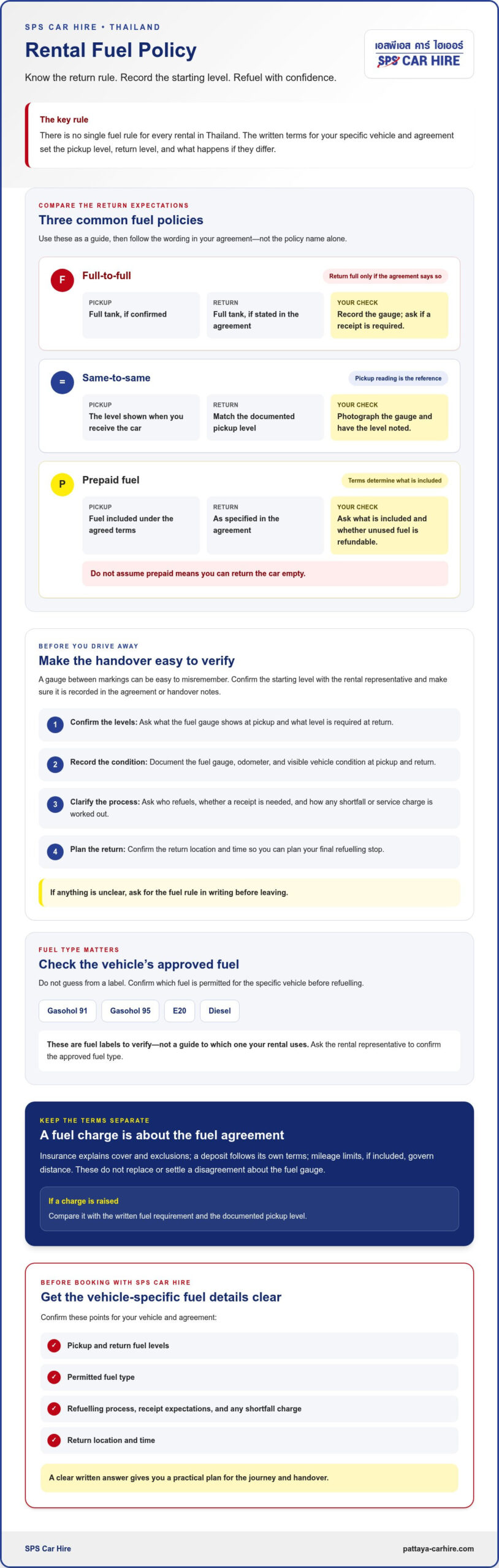
A fuel policy sets the agreed fuel level and refuelling process for your rental car at pickup and return. It explains what level the vehicle should have when you receive it, what level it must have when you hand it back, and what happens if the levels differ. There isn’t one rule for every rental in Thailand, so check the terms for your specific vehicle and agreement.
This detail affects more than your last stop at a fuel station. It helps you plan when to refuel, know whether to keep a receipt, and understand whether a shortfall could lead to a refuelling charge or service fee. As road travel forms an important part of transportation in Thailand, settle the return process before setting off.
Keep fuel obligations separate from other rental conditions. Insurance explains cover and exclusions, a deposit is handled under its own terms, and mileage limits, if included, govern the distance you can drive. Don’t assume that insurance or a deposit settles a disagreement about the fuel gauge. Follow the car rental fuel policy Thailand recorded in your specific rental terms.
What does a rental fuel policy usually specify?
Look for the required fuel level at pickup and return. Check whether the agreement requires a full tank or asks you to match the level received. Confirm who is responsible for refuelling and how any service charge is calculated if the car comes back below the agreed level. Also check the return location and time so you can plan your final refuelling stop.
Why should you confirm the policy before driving away?
A gauge reading can be easy to misremember, especially when it sits between marked levels. Confirm the starting level with the rental representative and make sure it’s recorded in the agreement or handover notes. If the explanation is unclear, ask for the rule in writing before leaving.
Clear terms also help you understand what a later charge relates to. If a charge is raised, compare it with the written fuel requirement rather than confusing it with insurance, deposit, or mileage terms. Before driving away, check that you understand:
- The fuel level shown at pickup and the required level at return.
- Who must refuel and how any shortfall or service charge is worked out.
- Where and when the vehicle must be returned.
For an SPS Car Hire rental, confirm these details for your specific vehicle and agreement. Ask about the pickup and return fuel levels, permitted fuel type, and any refuelling process. A clear written answer gives you a practical plan for the journey and handover.
Compare Fuel Policies: Full-to-Full, Same-to-Same, Prepaid
Fuel arrangements can sound similar but create different return expectations. Use the comparison below as a guide, then check the wording in your own agreement. The car rental fuel policy Thailand you follow is set by that agreement, not by a rule you can assume applies to every rental.
| Policy | Starting level | Return level | Your action |
|---|---|---|---|
| Full-to-full | Full tank, if confirmed | Full tank, if stated in the agreement | Record the pickup gauge, refuel as required, and check whether a receipt is requested. |
| Same-to-same | The level shown at pickup | Match the documented pickup level | Photograph the gauge and make sure the starting level is noted. |
| Prepaid fuel | Fuel included under the agreed terms | As specified in the agreement | Confirm what’s included and whether unused fuel is refundable. |
How does full-to-full work for a rental car?
Full-to-full means returning the vehicle with a full tank only when your agreement says so. At pickup, check that the gauge shows full and record it in a photo or handover form. Before driving, confirm whether the rental company wants a refuelling receipt. If you’re unsure whether a fuel station is available near the return point, ask what to do. Don’t rely on the policy name alone.
When do same-to-same and prepaid policies need extra clarification?
With same-to-same, the pickup reading is your reference point. Photograph the gauge and have its level recorded, especially if it sits between markings. For prepaid fuel, ask exactly how much fuel is included, what level to return, and whether unused fuel is refundable. Don’t assume prepaid means you can return the car empty.
Which option is convenient depends on the written conditions and your plans. Refuelling yourself may suit a trip where you can stop before returning. A prepaid arrangement may reduce that task, but its terms determine whether leftover fuel has value to you. For broader trip preparation, the Tourism Authority of Thailand’s official driving guidelines for Thailand cover driving considerations beyond fuel.
If you’re considering a rental from SPS Car Hire, ask the team to confirm the specific vehicle’s pickup and return fuel requirements in writing before booking. Check the agreement instead of assuming one of these options applies.
Thailand Fuel Labels and Rental Cars: Choose the Correct Fuel
Thailand’s fuel labels can be unfamiliar, but the safe choice isn’t a matter of picking the grade you recognize. The correct fuel depends on the specific rental vehicle and its instructions. Gasohol 91, Gasohol 95, E20, and diesel are labels to check against the vehicle’s guidance, not interchangeable options. A fuel that suits one car may not be approved for another.
Before leaving, look at the label inside the fuel door and check any vehicle information or rental documents. Ask the rental provider to identify the permitted fuel in plain language, especially if the label uses unfamiliar terms. The UK government travel advice for Thailand offers broader road-travel guidance, but the vehicle’s own instructions and the rental provider should guide your fuel choice.
How can you confirm the right fuel type in Thailand?
Use more than one check where possible. Read the fuel-door label, review the vehicle information supplied at handover, and confirm the permitted fuel with the rental provider before refuelling. If those sources appear to conflict, pause and ask for clarification. Don’t infer approval from the car model, a previous rental, or another driver’s experience. A written answer or a clear note in the rental documents gives you a useful reference later.
- Check the fuel-door label and rental documents before visiting a pump.
- Ask the provider which exact fuel label is permitted for that vehicle.
- If the instructions disagree or remain unclear, wait to refuel until you’ve confirmed.
What should you do if you are unsure at the pump?
Stop before choosing a nozzle. Don’t select Gasohol 91, Gasohol 95, E20, or diesel based only on what another vehicle uses or what seems familiar. Contact the rental provider through the support channel agreed in your rental terms and describe the vehicle and the labels you can see. A brief confirmation is better than guessing.
Once the provider confirms the correct fuel, keep the receipt and note the station and time after refuelling. That record can help clarify when and where the vehicle was filled if a question comes up at return. These steps support the wider car rental fuel policy Thailand checklist: understand the return rule, document the gauge, and use only the fuel confirmed for your specific vehicle. If you’re renting from SPS Car Hire, confirm the permitted fuel directly before filling up.
Pickup and Return Checklist: Document the Fuel Level
Good handover records give you a clear timeline if a question comes up after the trip. Keep your photos, receipts, and agreement together, and make sure each record is clear enough to identify the vehicle and when it was taken.
- 1. Review the agreement. Check the required pickup and return fuel levels, permitted fuel type, and the provider’s stated return procedure.
- 2. Record the pickup condition. Photograph the dashboard, fuel gauge, odometer, and any visible marks or damage before leaving.
- 3. Confirm the handover notes. Ask staff to record the starting fuel level and visible condition on the handover form. Raise any mismatch before driving away.
- 4. Save return evidence. Follow the agreed refuelling process, keep the receipt, and photograph the gauge and odometer at return.
What should you record at pickup?
Take clear photos while the vehicle is stationary and the dashboard readings are visible. Check that the handover form reflects the actual fuel level and note any condition details that matter. If the gauge sits between markings or the written record doesn’t match what you see, ask staff to clarify before you set off. A brief written correction is more useful than relying on memory later.
How do you make the return smoother?
Plan your final refuelling stop around the requirement in your agreement, not an assumed standard. Keep the receipt and take a return photo of the gauge, odometer, and visible condition. If traffic, station hours, or another issue could affect your timing, contact the provider promptly through the agreed channel and keep a record of the response.
Fuel requirements and insurance coverage are separate rental terms. Review your agreement for each, and consult a reliable guide to car rental insurance terms if you need help understanding coverage. For an SPS Car Hire rental, confirm the fuel and return procedure for your specific vehicle before booking.
Before Booking in Thailand, Confirm the Fuel Terms with SPS
A clear fuel agreement lets you plan refuelling and return with fewer uncertainties. Ask SPS Car Hire about the specific vehicle and rental period you’re considering, then check that the answer matches the written agreement before confirming.
The car rental fuel policy Thailand you need to follow should explain the pickup level, required return level, permitted fuel type, and any refuelling process. If a service or related charge may apply, ask how it works and request the terms in writing. That gives you a practical basis for planning your trip and comparing rental arrangements.
What questions should you ask the rental provider?
Keep your questions direct and specific to the assigned vehicle. Ask what fuel level it should have at pickup and return, which fuel type is approved, who is responsible for refuelling, and whether any refuelling service or related charge applies. If you may not be able to refuel as planned before returning, ask what procedure to follow. Request written answers you can refer to later.
How can you book with fewer fuel-policy surprises?
Review the fuel terms alongside the selected vehicle’s details, insurance conditions, and any mileage limits. These are separate parts of the rental arrangement, so check each one rather than assuming one term covers another. Keep a copy of the agreement and your handover evidence, including fuel-level and vehicle-condition records, until the rental is complete.
If you’re comparing rental options with other ways to travel, weigh the arrangements against your itinerary and the flexibility you need. SPS Car Hire offers budget-friendly self-drive cars and trucks, as well as long-term car and truck rental packages. Ask about your rental requirements and request the fuel terms for your specific vehicle and rental period before confirming.
Make Your Rental Handover Clear Before You Go
A smooth rental starts with fuel terms you understand before booking. Check the written agreement for the pickup and return levels, confirm the fuel type approved for your specific vehicle, and keep clear photos and receipts to support the handover. These practical steps make the car rental fuel policy Thailand easier to follow without guessing what the gauge should show.
SPS Car Hire provides self-drive car and truck rentals, with long-term rental packages for customers who need a vehicle for an extended period. Fuel requirements and other rental terms can vary, so confirm the details for your chosen vehicle and agreement.
Before confirming, ask about the fuel rule, any refuelling process, and the relevant return procedure. Ask SPS Car Hire about your rental requirements and get the details in writing. With a clear plan and your handover records ready, you can set off prepared and return the vehicle with confidence.
Frequently Asked Questions
What does full-to-full mean for a rental car in Thailand?
Full-to-full generally means the car is supplied with a full tank and should be returned full. Check that this exact policy appears in your rental agreement rather than relying on the label alone. At pickup, confirm the gauge reading and have it recorded. Keep your refuelling receipt in case it’s requested. Any charge for returning with less fuel depends on the terms of your agreement.
Do I have to return a rental car with a full tank in Thailand?
Not necessarily. Your return requirement depends on the rental agreement, which may specify full-to-full, same-to-same, or another arrangement. Before driving, ask what level is required and make sure the pickup reading is recorded in the handover documents. If the terms aren’t clear, request written clarification before you leave. Don’t assume a full tank is required because you’ve heard that rule elsewhere.
What fuel should I put in a rental car in Thailand?
Use only the fuel type approved for your specific vehicle. Check the fuel-door label and rental documents, then ask the provider if anything is unclear. Thai stations may display Gasohol 91, Gasohol 95, E20, and diesel, but those labels aren’t suitable for every vehicle. The car rental fuel policy Thailand terms may explain the return requirement, but confirm fuel compatibility separately before filling up.
Can I return a rental car without refuelling?
That depends on the fuel policy you accepted. A prepaid arrangement or a documented same-level return may have different requirements from full-to-full, but don’t infer the return rule from the policy name. Check the agreement for the required fuel level, any refuelling process, and how a shortfall is handled. If you’re unsure, contact the provider before returning the car and keep a record of the instructions.
What happens if I return a rental car with less fuel than required?
The provider may follow the process stated in your rental agreement, which could include a refuelling charge or another specified remedy. The terms and calculation can vary, so don’t assume there’s a standard fee. Photograph the fuel gauge at return and keep relevant receipts. If a charge appears, ask the provider to explain how it relates to the written fuel policy and the recorded return level.
Should I keep fuel receipts when renting a car in Thailand?
Yes. A receipt is useful evidence, particularly if your agreement requires you to refuel before returning the vehicle. It can show when and where you bought fuel, while a gauge photo records the car’s fuel level. Follow the provider’s handover instructions and keep your receipt, rental agreement, and return documentation together until any final questions about the rental have been resolved.
Is prepaid fuel always the easiest rental option?
No. Prepaid fuel may reduce the need to find a station before returning the car, but whether it suits your trip depends on its written terms. Ask what fuel amount is included, whether unused fuel is refundable, and whether the vehicle must be returned at a particular level. Compare those conditions with your itinerary instead of assuming prepaid fuel is automatically more convenient or better value.
 -
- -
- -
- -
- -
- -
- -
-