


What if the cheapest headline rate isn’t the best-value budget car rental for your trip? A low starting price is only one part of the decision. The vehicle needs to suit your passengers, luggage, and plans, and the rental terms should be clear before you commit. Comparing those details helps you focus on the option that works for the whole trip, not just the first figure you see.
It’s sensible to want a clear total before you book. This guide explains how to compare rental options beyond the daily rate, including the terms and charges that can affect your overall cost. You’ll also learn how to choose between a car, truck, or motorbike based on what you need to carry and how you plan to travel.
We’ll walk through the key steps of arranging a self-drive rental, from comparing options to preparing for collection and return. SPS Car Hire offers budget-friendly self-drive car and truck rentals, motorbike hire, and long-term car rental packages for extended transportation needs. The goal is to choose a practical fit and understand the booking commitment before setting off.
Key Takeaways
- Judge value by whether the vehicle and booking terms suit your plans, not by the headline rate alone.
- Compare the same vehicle category and rental period to assess budget car rental options fairly.
- Match your transport choice to the task, from everyday travel to carrying items or getting around on two wheels.
- Set your dates, rental period, and vehicle category before comparing booking options.
- SPS Car Hire offers self-drive cars, trucks, and motorbikes, plus long-term car rental packages for extended transport needs.
What Makes a Budget Car Rental Good Value, not Just Cheap?
Good value means selecting a suitable vehicle and understanding the rental terms, rather than choosing solely by the lowest advertised rate. The practical comparison brings together your intended use, how long you need the vehicle, and what the booking terms say. A clear match between those details can matter more than a low starting figure for a vehicle that doesn’t fit your plans.
To compare budget car rental options, start with the same rental period and vehicle category. Then review the information side by side: what the quoted amount covers, which charges or extras are listed separately, and how collection and return are arranged. The history and overview of car rental offers useful background on the service, but the details of the booking are what matter for your decision.
How is budget car rental different from simply choosing the cheapest rate?
The advertised starting rate is one part of the decision, not the full picture. The total commitment depends on the rental period and the terms stated for the booking. Review the complete information rather than assuming that the headline rate tells you everything. A low rate doesn’t automatically indicate poor service or vehicle condition. It simply needs to be considered alongside the practical details.
Vehicle suitability also affects value. A car that works for everyday travel may not be the right fit for carrying bulky items. A category that looks economical at first may be less useful if it doesn’t suit the job. Rental duration matters, too. Compare bookings for the same period so that a shorter rental isn’t mistaken for a better deal just because its total is lower.
Which trip details should shape your rental decision?
Before comparing rates, picture the actual journeys and tasks. How many people need to travel? How much luggage or equipment will you carry? Is the vehicle for everyday transport, moving items, business use, or two-wheel travel? Answering these questions helps you narrow down the vehicle category first, making the price comparison more relevant.
For everyday travel, consider how many passengers and bags need to fit. For moving or work-related transport, think about what you need to carry and whether a truck better suits the task. If you need two-wheel transport, compare motorbike options for that purpose rather than treating them as substitutes for a car. These are useful starting points, not claims about the capacity or features of a particular vehicle.
Quick value check:
- Low price: Focuses mainly on the advertised starting rate.
- Practical value: Matches the vehicle category to passengers, luggage, or the task.
- Clear commitment: Compares the same rental period and reviews the stated booking terms.
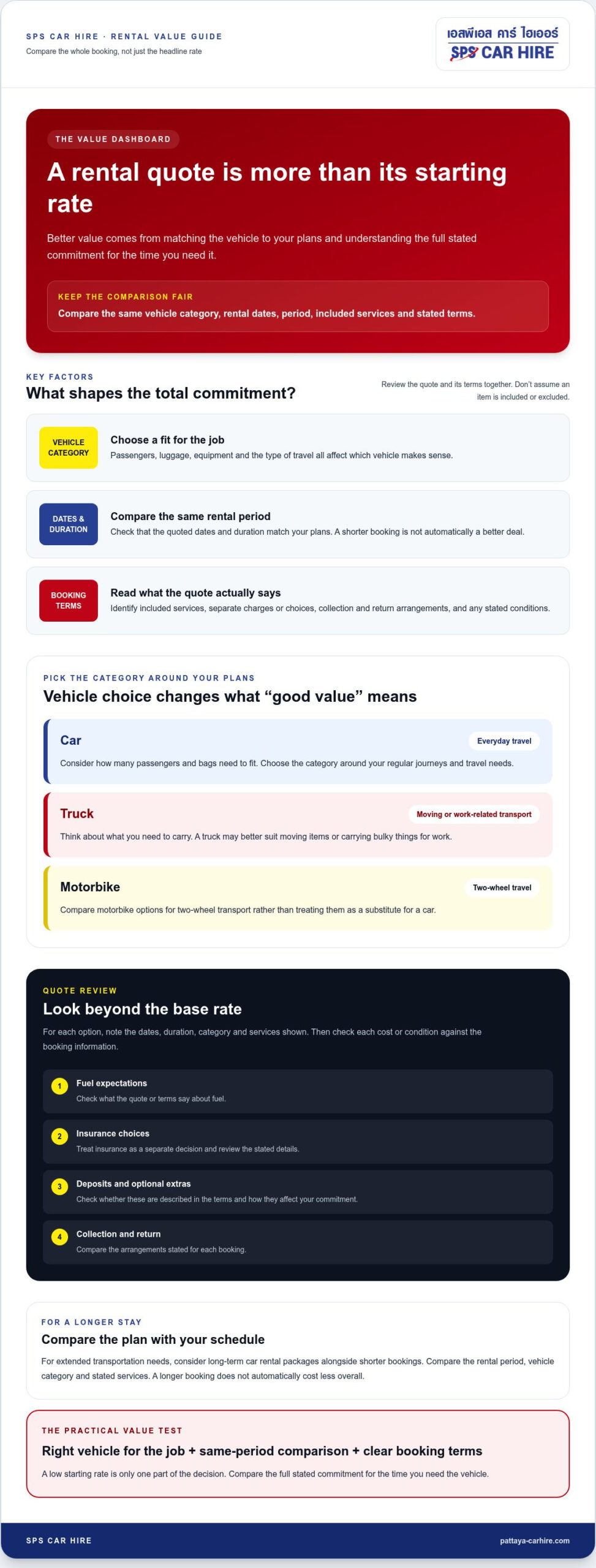
Budget rental value means choosing a vehicle that fits the job and comparing the full stated commitment for the time you need it. Keep that definition in view as you weigh your options. First choose the right category, then compare bookings on equal terms.
What Shapes the Total Commitment of a Budget Car Rental?
The amount you commit to a rental depends on more than the vehicle’s starting rate. Vehicle category, rental duration, and booking terms all shape the comparison. Fuel expectations, insurance choices, deposits, and optional extras may also affect what you need to plan for. Read the quote and its terms together rather than treating the base rate as the whole picture.
Keep the comparison like for like. A short booking for one vehicle category can’t be judged fairly against a longer rental for another. For each option, note the dates, duration, vehicle category, and services shown in the quote. Then identify what is included, what is a separate choice, and what the booking terms say about each item. This gives you a clearer comparison without relying on assumptions about a particular rental.
Which booking details can change the overall rental value?
Check that the quoted dates and rental period match your plans, then compare the same vehicle category across options. Review the services stated in each quote, along with fuel expectations and any deposit arrangements described in the terms. Treat each item according to the booking information, rather than assuming it is included or excluded.
Consider insurance choices and optional extras as separate decisions, not automatic parts of the base rate. Think about what you need, what each choice costs if a price is stated, and how it affects the total commitment. For general preparation ideas, AAA car rental savings tips can provide additional context, though booking terms can vary.
Quotes are only comparable when the vehicle, rental dates, included services, and stated terms match. This helps you see whether a difference in the total reflects a genuine price difference or a different rental setup. It also keeps optional choices from being mistaken for required parts of the rental.
When can a longer rental period make more sense?
A short hire may suit a specific errand or brief trip, while an extended stay calls for a longer-term plan. Consider how consistently you’ll need transport, whether your dates are settled, and which vehicle category will work throughout the period. Compare the total commitment for the time you need the vehicle. Don’t assume a longer booking automatically costs less overall.
For extended transportation needs, long-term car rental packages are another option to consider alongside shorter bookings. Compare the package terms with your expected schedule, including the rental period, vehicle category, and stated services. If your plans may change, factor that uncertainty into the decision instead of focusing only on the initial rate.
Review insurance separately because the options and terms can affect your responsibilities. Read the applicable insurance details and consider how the described coverage fits your needs. Use the insurance information in the booking terms as part of your comparison before deciding.
Once your dates and vehicle needs are clear, compare SPS Car Hire’s self-drive car and truck rental options by looking at the full commitment. Focus on what you’ll use, how long you’ll need it, and the terms that apply. This makes it easier to choose an arrangement that suits your plans without relying on the headline rate alone.
How to Match a Budget Rental Vehicle to Your Plans
The right vehicle category depends on the job, who’s travelling, and how long you’ll need transport. Start with the journeys and tasks you expect, then choose a category suited to the need that comes up most often during the rental period. This gives you a more useful basis for comparing a budget car rental than choosing by vehicle name or starting rate alone.
| Use case | Vehicle category to consider | Planning question |
|---|---|---|
| Everyday self-drive travel | Car | How many passengers and how much luggage will travel on a typical day? |
| Moving items or work-related transport | Truck | What items or equipment do you need to carry, and how often? |
| Two-wheel transport | Motorbike | Will a motorbike suit the journeys you plan to make? |
Should you rent a car, truck, or motorbike?
A car is a category to consider for general self-drive transport, especially when your plans involve passengers or luggage. A truck may be a better choice to compare when you need to carry items or handle work-related transport. For two-wheel travel, SPS Car Hire offers motorbike hire. Rather than choosing the biggest or smallest option by default, identify the vehicle type that suits the actual trip.
Be specific about your usual load. Travelling with several passengers and bags differs from carrying items for a work task. Two-wheel transport may suit some plans, but it won’t serve the same purpose as a car or truck. Think through a typical day, not just the easiest or most unusual part of your itinerary.
How should rental duration influence your vehicle choice?
Map your planned journeys across the full rental period. Note routine trips as well as occasional tasks, such as carrying supplies or travelling with extra passengers. A category that works for one isolated journey may be inconvenient for the rest of the rental. Choose around the need that comes up repeatedly, while also accounting for any important one-off trip.
For example, if you need everyday transport and also expect to move items for work, consider how often each use will occur before choosing between a car and a truck. If two-wheel travel is your main requirement, explore motorbike hire and the related budget scooter rental explainer for more context. The rental period matters because the best fit is the category you can use practically throughout the time you need transport.
Before comparing options, write down your passenger needs, luggage or items to carry, planned use, and rental dates. This short list makes it easier to spot a mismatch early and compare suitable vehicle categories on equal terms. SPS Car Hire’s self-drive car, truck, and motorbike rentals offer options for these different practical needs.
How to Prepare for a Budget Car Rental Booking
A little preparation makes it easier to compare options and choose one that suits your trip. Before looking at rates, settle on your intended rental dates, approximate duration, and vehicle category. Whether you need a car for everyday travel, a truck for practical transport, or a motorbike for two-wheel journeys, start with the main job the vehicle needs to do.
What should you have ready before reserving?
Gather the basic details of your plan first. You don’t need to predict every journey, but a realistic outline helps you avoid comparing options that don’t match your intended use. Keep the booking information together and read the applicable rental terms rather than relying on assumptions about what a reservation includes.
- Set your dates. Choose your planned collection and return dates, allowing for the timing of your trip.
- Estimate the rental period. Decide how long you expect to need transport. For an extended stay, consider whether a long-term car rental package suits your plans.
- Choose a vehicle category. Consider passengers, luggage, items to carry, and whether a car, truck, or motorbike best suits your use.
- Compare suitable options. Review choices for the same dates, rental duration, and vehicle category to make the comparison meaningful.
- Read the booking terms. Review the information provided for collection, return, fuel, insurance, and any stated inclusions or optional extras.
Review the booking information about documents and eligibility as part of your preparation. Have the information requested during the reservation process ready, and make sure the details you enter match your travel plan. Keeping these details organised helps the process run smoothly without relying on assumptions about requirements.
What should you review before accepting a booking?
Before completing the reservation, compare the booking details with your plan. Check the dates, vehicle category, and rental duration, then review what the terms say about collection, return, and fuel. Separate optional extras from the base rate so you can see which choices affect your commitment.
- Confirm the dates and rental period reflect how long you need the vehicle.
- Check that the selected category suits your passengers and intended use.
- Read the stated collection, return, and fuel arrangements.
- Review applicable insurance choices and the terms describing them.
Give insurance a careful review. Consider the choices presented for the booking and read the applicable terms before deciding. Use the insurance details in the booking information to understand the options and make a considered choice.
A confident booking is one where the dates, vehicle, rental period, and stated terms all match your plan. Review each detail before accepting. When you’re ready, explore SPS Car Hire’s self-drive rental options with your trip details in hand.
Arrange a Budget Self-Drive Rental with SPS Car Hire
A good rental starts with a vehicle that suits the way you’ll travel. SPS Car Hire offers self-drive cars, trucks, and motorbikes, giving you different categories to consider for everyday journeys, carrying items, or two-wheel transport. For an extended transportation need, long-term car rental packages are another option.
Which SPS Car Hire option fits your rental plans?
Think about your main task before choosing a category. A car may suit general self-drive travel, while a truck is worth considering for carrying items or work-related needs. Motorbike hire is an option for two-wheel transport. If you need transport over a longer period, consider a long-term car rental package and compare its stated terms with the time you expect to need a vehicle.
Keep the decision grounded in your plans. Consider who will travel with you, what you need to carry, and how you’ll use the vehicle throughout the rental period. The best fit isn’t automatically the largest or lowest-priced category. It’s the one that makes sense for your regular journeys and practical tasks.
SPS Car Hire offers best-price guarantees for vehicle rentals and motorbike hire. Compare the rental option with your needs and review the booking terms as you decide which vehicle and rental period suit your plans.
What is the next step to reserve a rental?
Before exploring rental options, have your intended dates, approximate rental duration, and preferred vehicle category in mind. It’s also useful to be clear about your main use, whether that means general travel, carrying items, or two-wheel transport. These details help you focus on options that align with the trip rather than browsing categories without a clear purpose.
As you review the booking information, compare the details with your plans. Make sure the dates and rental period reflect how long you need transport, and read the stated terms for the chosen category. If you need transport for an extended period, include long-term car rental packages in your comparison. A deliberate review helps you make a better-informed decision.
With those basics ready, you can take the next step with confidence. SPS Car Hire offers self-drive car, truck, and motorbike rentals, together with long-term car rental packages, so you can explore the category that fits your practical needs. Explore SPS Car Hire’s rental options and start your booking with your dates, duration, and vehicle category in mind.
Make Your Next Rental Decision with Confidence
A budget car rental is most useful when it supports the way you plan to travel. Before reserving, turn your priorities into a clear choice: what kind of transport will make the trip easier, and which booking details do you need to understand before committing? Getting clear on those points helps you make a more confident decision.
Your plans may call for everyday transport, a vehicle for a specific task, or a rental that supports a longer stay. Choose an option that suits the journey instead of letting the headline rate make the decision for you. SPS Car Hire offers self-drive rental options for different travel needs.
Explore self-drive rental options with SPS Car Hire and take the next step with your plans in mind. Compare the category, rental period, and booking terms to find an arrangement that fits what you need to do.
Frequently Asked Questions
Is the cheapest car rental always the best budget option?
Not necessarily. A low starting rate may not show the full rental commitment or tell you whether the vehicle suits your plans. For example, a smaller category might appear less costly but leave too little room for the luggage you expect to bring. Compare the same vehicle category and rental period, then review the stated terms, insurance choices, fuel arrangements, and optional extras before deciding which budget car rental is the best fit.
How much does a budget car rental cost?
There isn’t one rate that applies to every rental. The amount depends on details such as the vehicle category, rental dates, duration, and the terms or options selected. First define your dates and likely use, then compare quotes based on those details. General online averages may not reflect your particular booking, so focus on the quote for your rental and review what contributes to its total.
Can I rent a truck instead of a car for a budget trip?
Yes. SPS Car Hire offers self-drive truck rentals as well as car rentals. A truck may suit plans that involve carrying work materials, supplies, or other items that make a car less practical. Think through what you’ll transport and how often, then compare the relevant vehicle category and stated rental terms. Choosing for the actual task can help you avoid booking a vehicle that doesn’t suit your plans.
Is a long-term car rental a good option for an extended stay?
It can be practical if you expect to need transport regularly throughout an extended stay. A longer arrangement may simplify planning compared with organising repeated short rentals, though the right choice depends on your dates, routine, and applicable terms. SPS Car Hire offers long-term car rental packages. Consider how consistently you’ll use a vehicle and whether the package’s stated period aligns with your transportation needs.
What should I check before booking a budget car rental?
Review the reservation details against your travel plan, including the rental dates, duration, and selected vehicle category. Check the booking information for collection and return arrangements, fuel expectations, insurance choices, and optional extras. For example, if your return schedule is tight, make sure the stated return arrangements fit your itinerary. Reading the terms before accepting the booking helps you understand what you’re agreeing to and reduces last-minute uncertainty.
Does budget car rental mean I have to compromise on convenience?
Not automatically. Convenience depends on whether the vehicle and booking arrangements work for your plans, not just on the rental’s price positioning. If you expect to make several different kinds of journeys, think about which vehicle category will suit most of them. Then compare the stated terms and arrangements with your schedule. A well-matched rental can be budget-conscious and practical without treating the lowest advertised rate as the only measure.
 -
- -
- -
- -
- -
- -
- -
-