

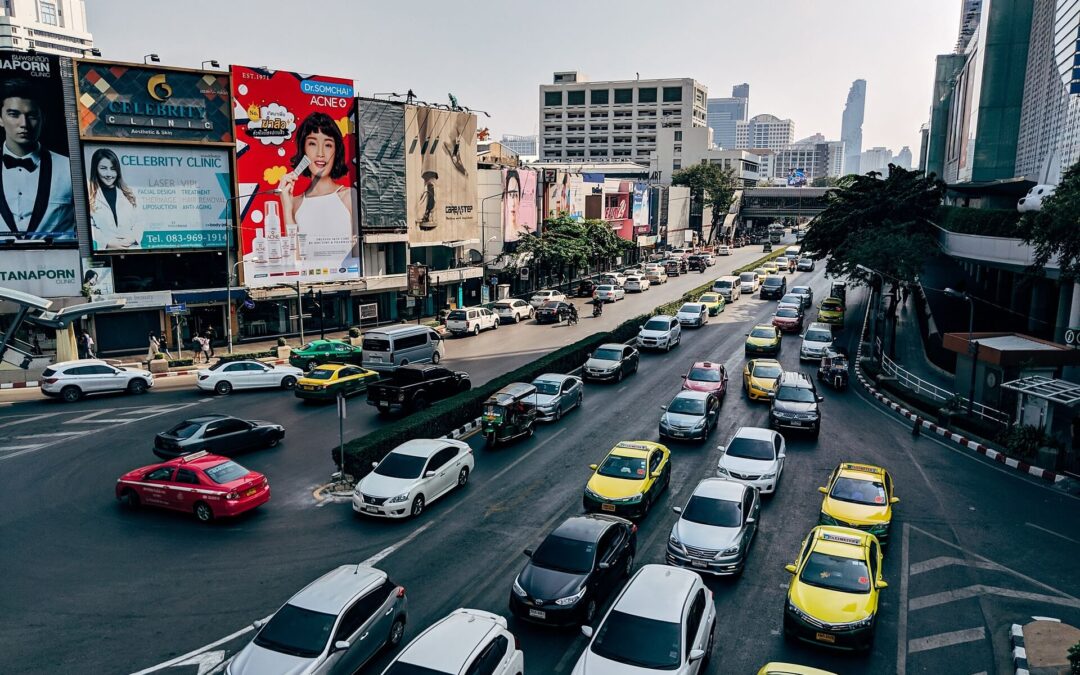
Driving in Thailand offers a unique blend of excitement and challenge, especially for expats or tourists in 2024. Many find the bustling streets, scenic countryside roads, and vibrant cities appealing yet daunting due to different traffic rules and conditions from what they are used to.
A significant fact about driving in Thailand is that traffic moves on the left side of the road, a rule inherited from their British Commonwealth ties which might be unfamiliar territory for those coming from countries practising right-hand driving.
Our blog aims to guide you through the essentials of safely manoeuvring your vehicle amidst Thai roads’ peculiarities. From understanding local driving requirements like age restrictions and necessary documents to navigating road hazards and emergencies effectively – we’ve got you covered.
With practical tips for dealing with heavy traffic, motorbikes zipping by, or even soi dogs darting into the street, this article promises to enhance your self-driving experience in Thailand whether you’re exploring Chiangmai’s mountainous routes or the bustling streets of Bangkok.
Read on for a smoother ride!
Driving Requirements in Thailand
To drive in Thailand, individuals must comply with age restrictions and possess the necessary documents. Obtaining a Thai driver’s license or exchanging a foreign driver’s license are essential steps for driving legally in the country.
Age restrictions
For driving in Thailand, the law sets minimum age limits. You must be at least 18 years old to drive a car. Motorcyclists also need to be 18 before they can ride on Thai roads. These rules apply equally to both locals and foreigners aiming for road safety in Thailand.
Authorities enforce these age restrictions strictly. Young drivers need to prove their age through official documents before they can proceed with obtaining a Thai driver’s license or exchanging a foreign one.
This ensures that all drivers meet the basic requirements for safe driving tips in Thailand, contributing significantly to road safety for expats and tourists alike.
Necessary documents
Before obtaining a Thai driver’s license, expats must ensure they have the necessary documents in place. When applying for a Thai driver’s license, foreign nationals will need to present their valid passport with a non-immigrant visa, work permit or certificate of residence, and proof of address in Thailand.
These documents are essential when exchanging or obtaining a Thai driver’s license as per the regulations by the Department of Land Transport in Thailand.
Remember that these requirements may vary depending on individual circumstances, so it is important to verify specific document needs from the Department of Land Transport or an official embassy before proceeding with further applications related to driving requirements and regulations.
Obtaining a Thai driver’s licence
To obtain a Thai driver’s licence, you must first ensure that you have all the necessary documents in place. These typically include your passport, non-immigrant visa, and work permit or certificate of residence.
Once you have these documents, you can apply for a Thai driver’s licence at the Department of Land Transport office. Be prepared to undergo a written and practical driving test to demonstrate your knowledge of road rules and driving skills.
It will be an advantage if you are already familiar with driving on the left side of the road and are well-versed with local traffic laws. Be sure to check specific requirements based on your nationality as regulations may vary for different foreign nationals seeking a Thai driver’s licence.
Exchanging a foreign driver’s licence
To exchange a foreign driver’s licence in Thailand, applicants need to visit their local Department of Land Transport office. They must submit their valid passport, non-immigrant visa, and work permit or certificate of residence.
Additionally, they will need to provide their original driver’s licence along with a photocopy, which will be certified by the embassy or consulate of the applicant’s home country.
Upon submission, an eye test and possibly a written and practical driving exam may be required. Once approved, the applicant will receive a Thai driver’s licence.
Rules of the Road
Driving on the left side, using indicators properly, and adhering to speed limits are crucial aspects of safe driving in Thailand. To learn more about navigating the roads in Thailand, continue reading.
Driving on the left side
In Thailand, driving is on the left side of the road. This means that when overtaking or turning, you should give way to traffic coming from your right-hand side. It’s important to be mindful of this rule and stay in the left lane unless overtaking another vehicle.
Road users must also pay attention to pedestrian crossings and yield to pedestrians at designated areas.
Understanding and adhering to the rule of driving on the left side is crucial for safe navigation on Thai roads. Following this regulation helps ensure smooth traffic flow and reduces the risk of accidents, contributing to overall road safety in Thailand.
Lane changes
When transitioning from driving on the left side to lane changes, it’s essential to use your indicators correctly. Always check your mirrors and blind spots before changing lanes. Adhering to the speed limits while overtaking is crucial for safety on the road.
Be mindful of other vehicles around you and adjust your speed accordingly.
Understanding the importance of using indicators when making a lane change ensures safer navigation through traffic. Checking your surroundings and maintaining an appropriate speed are fundamental aspects of executing successful lane changes in Thailand’s traffic conditions.
Use of indicators
Using indicators is vital for signaling your intentions to other road users. When changing lanes or making turns, use your indicators to communicate your next move clearly. This helps prevent confusion and promotes safer driving on the roads in Thailand.
Parking regulations
Parking regulations in Thailand are strictly enforced to ensure orderly and safe parking. It is important to abide by designated parking areas, such as marked bays or lots, and avoid obstructing traffic flow.
Additionally, be mindful of any posted signs indicating restricted parking zones or time limits. Failure to comply with these regulations may result in fines or the vehicle being towed away.
When parking on the roadside, it is crucial to be aware of local restrictions and not block access points for emergency vehicles or impede pedestrian walkways. Following these rules helps maintain road safety and contributes towards a smooth traffic flow, benefiting both residents and visitors navigating through Thai streets.
Road signs and signals
Road signs and signals in Thailand play a crucial role in ensuring road safety. Drivers should familiarise themselves with the various traffic signs, including speed limits, no overtaking zones, pedestrian crossings, and warnings for hazards ahead.
It is essential to pay attention to traffic lights which signify when to stop or proceed at intersections, contributing to smooth traffic flow. Understanding and adhering to these road signs and signals are vital for driving safely and legally in Thailand.
Observing and obeying these road signs and signals can prevent accidents and promote a safer driving experience for everyone on the road. Additionally, being aware of these indicators will contribute to a seamless navigation through diverse terrains across the country while upholding responsible driving practices.
Speed limits
Speed limits in Thailand vary depending on the type of road. In urban areas, the speed limit is generally 60 kilometres per hour (kph) or as indicated by road signs. On motorways and rural roads, the speed limit can range from 80 to 90 kph, also specified by signage.
It’s crucial for drivers to adhere to these posted limits at all times while maintaining a safe distance from other vehicles.
It’s recommended that foreign drivers familiarise themselves with local regulations before hitting the road, ensuring a smoother and safer driving experience throughout their time in Thailand.
Driving under the influence
Driving under the influence of alcohol or drugs is strictly prohibited in Thailand. Law enforcement authorities conduct random sobriety checks and impose severe penalties for those found to be driving while intoxicated.
Offenders can face fines, licence suspension, and even imprisonment if caught breaking this law. It’s critical for all drivers to adhere to this regulation to ensure the safety of themselves and others on the road.
Moving ahead – Road Hazards and Emergencies

Road Hazards and Emergencies
Road hazards and emergencies in Thailand require vigilance and quick thinking. Drivers should be prepared to handle road accidents, vehicle breakdowns, and unexpected traffic situations with composure and attentiveness.
Road accidents
Road accidents pose a significant risk on Thai roads, making it crucial for drivers to exercise vigilance and caution. Adhering to the speed limit, staying aware of other road users, and maintaining a safe distance from vehicles are paramount in preventing accidents.
It’s imperative for drivers to stay attentive and alert at all times while on the road in order to respond effectively to unexpected situations or hazards that may arise. Understanding local driving habits and being mindful of potential dangers can greatly minimise the likelihood of being involved in an accident.
Moving onto “Vehicle breakdowns” let’s explore how drivers can handle this situation with ease.
Vehicle breakdowns
Vehicle breakdowns can happen unexpectedly, so it’s essential to be prepared. If you encounter a breakdown in Thailand, move your vehicle to the side of the road if possible and turn on your hazard lights to alert other drivers.
It is important to have an emergency kit with essential items such as a first aid kit, torch, reflective triangle, and drinking water. In case of a breakdown, contact your hire company or insurance provider for assistance.
Keep calm and stay safe while waiting for help.
Traffic information
Stay updated with traffic information by tuning into local radio channels for live traffic updates. Consider using GPS navigation services that provide real-time traffic data to help you avoid congested routes or road closures.
Additionally, checking online maps or mobile apps can equip you with alternative route options and estimated travel times based on current traffic conditions.
In case of emergencies, access the Thai Traffic Information Centre hotline for instant assistance. Stay informed about potential road hazards, accidents, or construction zones by staying connected to reliable sources through your smartphone while driving.
Dealing with drivers with disabilities
As you navigate the roads in Thailand, be prepared to encounter drivers with disabilities. Stay aware of their presence and exercise patience and understanding as they navigate the road alongside other drivers.
Be mindful of any special needs or accommodations these drivers may require and offer assistance when necessary. Always respect their right to travel safely and independently, ensuring an inclusive and supportive driving environment for all.
Encountering drivers with disabilities on the road is a common occurrence, so it’s important to approach these situations with empathy and consideration for their unique needs. Understanding and accommodating these drivers contributes to a safer and more inclusive driving experience for everyone on the road.
Helpful Tips for Navigating the Roads in Thailand
When driving in Thailand, it’s essential to pay attention to other drivers and be mindful of crosswalks. Using lanes as guidelines and congregating at stoplights can help navigate the busy roads efficiently.
It is advisable to wear a helmet when riding a motorcycle and observe proper road etiquette for a safe driving experience in Thailand. For more information, refer to the resources provided.
Pay attention to other drivers
Observe the driving behaviour of other motorists and anticipate their actions to avoid potential hazards on the road. Keep a safe distance from surrounding vehicles and constantly check your mirrors for any approaching traffic from behind.
Stay vigilant at junctions, roundabouts, and when changing lanes as drivers in Thailand may not always adhere to traffic signals or give way. Stay focused and maintain situational awareness while driving to react promptly to any unexpected manoeuvres by other drivers.
Be aware of crosswalks
Always stop for pedestrians at zebra crossings. Look out for zebra crossings on the road, as they indicate pedestrian crossing points. Keep an eye out for traffic signals and signs that designate where zebra crossings are located.
Pay close attention to pedestrian movements, especially in busy areas or near schools and markets. Initially focusing on these cues will help you navigate the roads safely.
Use lanes as guidelines
Stay within your lane as it serves as a visual guide for both you and other drivers. Keep to the left or right lanes based on your intended direction, whether passing or turning. Adhering to lane discipline helps maintain traffic flow and ensures everyone’s safety while on the road.
Congregate at stoplights
When waiting at traffic lights, drivers should position their vehicles close together to maximise space and improve traffic flow. This practice helps reduce congestion and ensures that more vehicles can safely proceed through the junction during the green light phase.
It’s important for drivers to remain alert and responsive while congregating at traffic lights, as it allows for efficient movement once the signal changes. Additionally, it promotes a smoother driving experience for all motorists on the road.
Wear a helmet when riding a motorcycle
Ensure your safety by wearing a helmet whenever you ride a motorcycle in Thailand. It is a legal requirement and crucial for protecting yourself in the event of an accident. Wearing a helmet significantly reduces the risk of head injuries and can save lives, making it an essential practice for all motorcyclists on Thailand’s roads.
Observing proper road etiquette
Observe proper road etiquette by adhering to the traffic laws and regulations, including using indicators when changing lanes or turning. Yield to pedestrians at crosswalks and avoid aggressive driving behaviors.
Additionally, respect other drivers on the road by giving them plenty of space and being patient in traffic jams or congested areas. Safe driving practices contribute to a more enjoyable experience for all road users.
Resources for further information
To learn more about driving regulations and road safety in Thailand, visit the official website of the Department of Land Transport. It provides comprehensive information on traffic laws, licensing requirements, and road conditions.
Additionally, take advantage of reliable travel guides and forums focused on self-drive travel in Thailand for practical tips from experienced drivers.
For detailed information on road signs and signals specific to Thailand, refer to the digital library of the Thai Traffic Police. Also, consider reaching out to local car rental companies for insight into navigating Thai traffic and road etiquette.
Driving in Thailand
Driving in Thailand requires understanding the driving requirements, road rules, and potential hazards. By being aware of age restrictions, necessary documents, and obtaining a Thai driver’s licence, one can drive legally and confidently.
Understanding the unique rules of the road in Thailand such as driving on the left side, using indicators effectively, and adhering to speed limits is essential for safe navigation.
When it comes to road hazards and emergencies, being prepared for accidents or breakdowns is crucial. Additionally, helpful tips for navigating the roads including paying attention to other drivers and being observant of zebra crossings can enhance driving safety.
Remembering these practical tips will help you navigate with ease while exploring the beautiful roads of Thailand. At SPS Car Hire Pattaya, we have a great choice of vehincles from rental cars to motorbikes. Drop us a line when you need to rental car in Thailand or click on the button below.
 -
- -
- -
- -
- -
- -
- -
-