

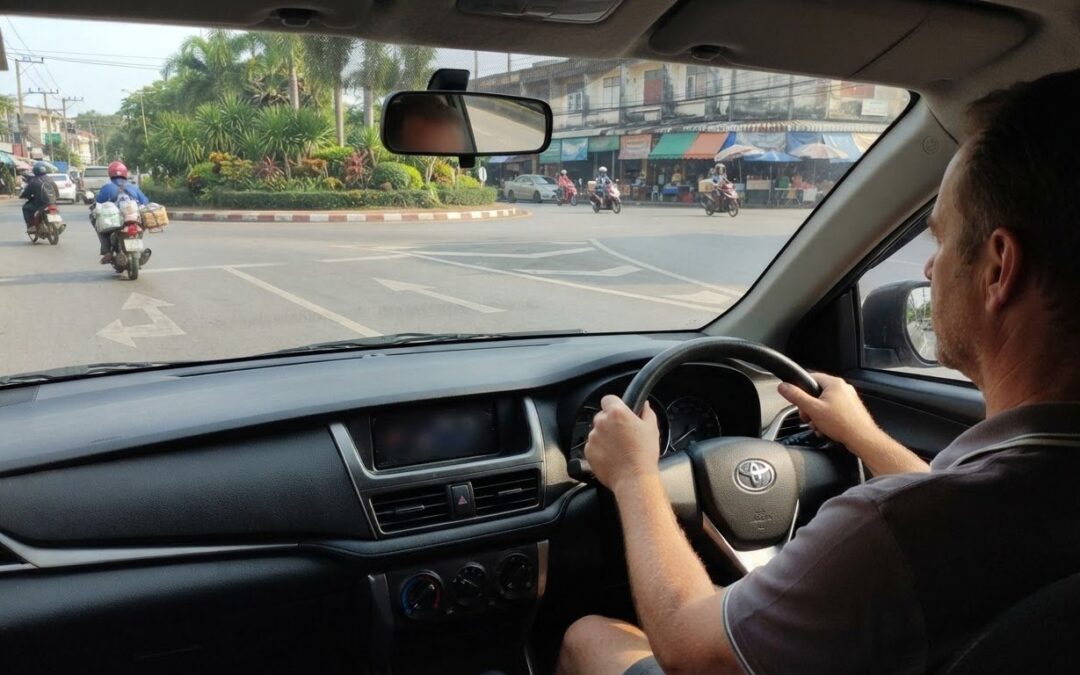
A rental car can open up Thailand, but the safest plan is to expect traffic to move differently from home. The most useful tips for driving a rental car in Thailand start with two basics: traffic keeps left, and foreign drivers generally need a full home-country licence with a corresponding 1968 International Driving Permit. Rental age rules vary, though the minimum is 21 at most locations and some allow drivers from 18.
It’s understandable to wonder whether driving in Thailand feels safe. Busy traffic, motorbikes and unfamiliar road habits call for patience and close attention, especially as you adjust to the car and the local flow of traffic.
This guide explains what to expect on Thai roads, how to prepare for common traffic patterns and how to choose a vehicle size that suits your trip. It also covers rental age requirements, documents to bring and checks to make before driving away, helping you decide whether a rental car fits your plans.
Key Takeaways
- Allow extra time for busy city traffic, and plan your route around highway U-turns before setting off.
- Choose a vehicle that suits your route and passengers, not just the number of people travelling.
- Before leaving the pickup point, photograph existing damage and make sure everyone is buckled up.
- Review the rental terms and have your travel and driving documents ready to make pickup smoother.
1. A Guide to Driving in Thailand as a Foreigner: Is it Safe?
Driving in Thailand can be manageable when you prepare for busy roads and unfamiliar traffic. Safety still requires close attention: motorbikes are involved in 84% of road fatalities in Thailand. Wear a seatbelt, avoid alcohol, and don’t use a mobile phone while driving. Take time to get comfortable with the rental car before entering fast-moving traffic.
Yes, an International Driving Permit is legally required to drive a rental car in Thailand for most foreign visitors. Bring your full home-country driving licence and a corresponding 1968 International Driving Permit. Drivers with a licence from an ASEAN member country can drive in Thailand for up to 90 days without an IDP. Carry the original documents, rather than relying on digital copies.
Age rules have two parts. Thailand’s legal minimum driving age is 18, but the minimum rental age at most locations is 21. Some agencies allow drivers aged 18 and above to rent a car. Some rental companies may charge additional fees for drivers younger than 21 or older than 65. Check the rental terms for the age rule that applies to your booking.
At pickup, have your passport and visa ready. Rental companies may use these documents to identify drivers and confirm the duration of their stay. A credit card may also be used for a deposit hold, which is returned after the car is returned. Keep your licence and IDP together so you can present both promptly.
Before accepting the car, walk around it and photograph every existing mark, dent, crack or scrape. Take clear photos of each side, the wheels, windscreen and interior, then make sure any damage is recorded on the inspection form. Compare the recorded condition with your photos before leaving. This creates a record if damage from a previous rental is questioned later.
2. Traffic, roundabouts, and highway U-turns
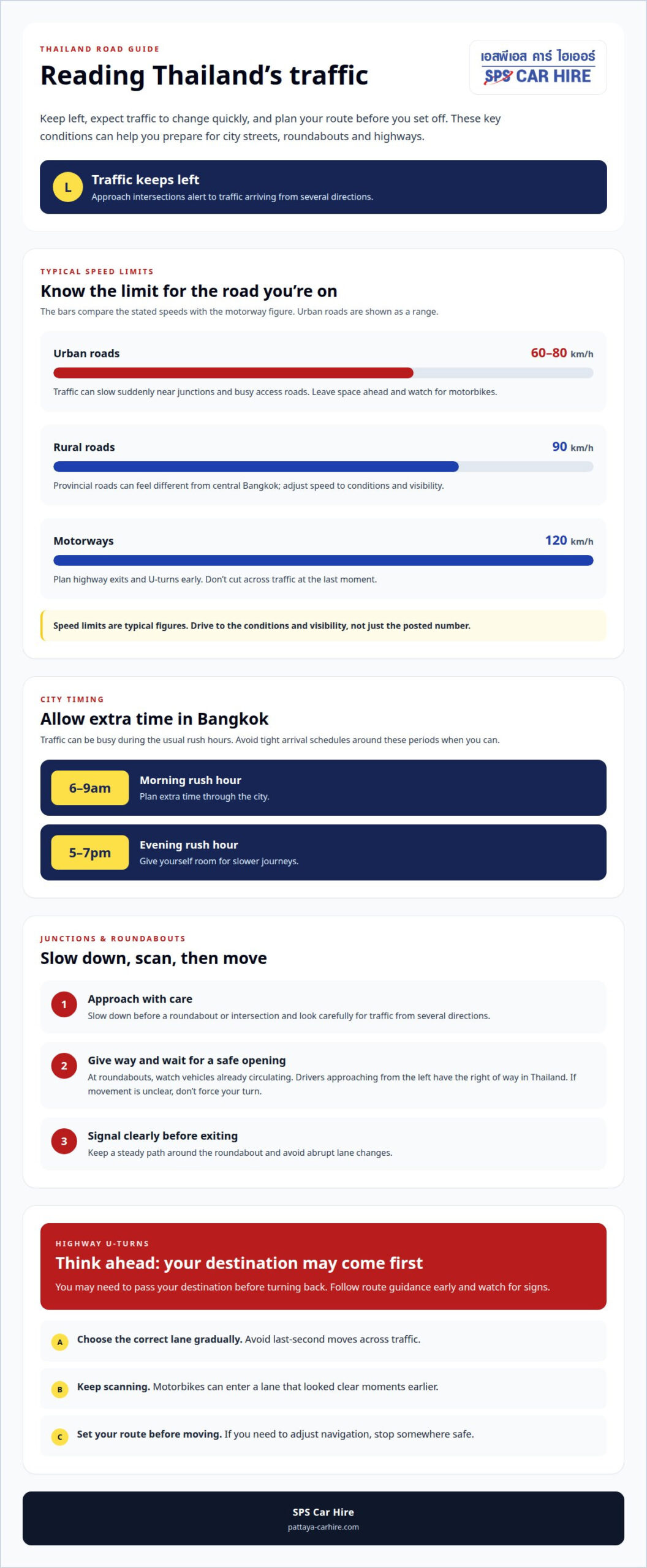
Thailand drives on the left, so keep left and approach intersections expecting traffic from several directions. In Bangkok, traffic can be busy, especially during the usual rush hours of 6-9am and 5-7pm. Use these tips for driving a rental car in Thailand to plan extra time through the city and avoid tight arrival schedules during those periods. Provincial roads and highways offer a different pace from central Bangkok.
At roundabouts, slow down as you approach and watch vehicles already circulating. Keep a steady path, signal clearly before exiting and avoid abrupt lane changes. Drivers approaching from the left have the right of way in Thailand, so scan carefully before entering an intersection. If another vehicle’s movement is unclear, wait for a safe opening rather than forcing your turn.
Highway U-turns can require advance planning because you may need to pass your destination before turning back. Follow route guidance early, watch for signs, and move into the correct lane gradually. Don’t cut across traffic at the last moment. A typical motorway speed limit is 120 km/h, while rural roads typically have a 90 km/h limit. Adjust your speed to conditions and visibility.
Urban speed limits are typically 60-80 km/h. Leave space between your car and the vehicle ahead, since traffic can slow suddenly near junctions and busy access roads. Use your left indicator to signal an overtaking vehicle when it’s safe. Keep your attention on motorbikes and don’t assume a clear lane will stay clear. These tips for driving a rental car in Thailand are especially useful when traffic changes quickly.
Set your route before moving and choose a safe place to stop if you need to adjust navigation. A petrol station can serve as a practical break point on a longer journey. If you’re arranging a rental for a road trip, car rental for a road trip can make local travel easier to plan.
3. Choosing a vehicle size
Start with your route, passenger count and luggage rather than choosing the largest vehicle available. A compact car can be easier to position on busy streets and in parking spaces, while a larger vehicle offers more room for passengers and bags. If Bangkok is a major stop, consider how often you’ll park or navigate crowded roads. On a provincial road trip with several passengers, cabin space may matter more.
Count the people travelling and the bags they’ll bring. A group with several large suitcases may need more luggage space than a group carrying small day bags, even with the same number of passengers. Think about where each bag will go and whether everyone can sit comfortably without luggage taking up seats. A practical choice leaves enough room for both people and belongings.
Match vehicle size to the most demanding part of your itinerary. If the trip includes Bangkok streets and a longer drive outside the city, weigh easier manoeuvring against passenger comfort on the road. An SUV was used for an 8-day Thailand rental in one trip example, but that doesn’t make it the right fit for every itinerary. Your route, group, and luggage determine the useful size.
Before choosing a vehicle, picture three everyday moments: loading bags, parking at your accommodation and driving through a busy junction. If these seem difficult with a larger model, a smaller option may suit the trip better. If a smaller car leaves passengers cramped or bags without a secure space, consider moving up a size. There’s no single best vehicle for every journey in Thailand.
Use this quick check before booking:
- Passengers: Count every traveller and consider comfort on longer drives.
- Luggage: Estimate the number and size of bags, not just passenger seats.
- Route: Balance Bangkok parking and traffic with provincial travel needs.
- Handling: Choose a vehicle size you can manage confidently in unfamiliar surroundings.
4. Minimum rental age and pickup documents
Separate Thailand’s legal driving age from a rental company’s minimum age. The legal minimum is 18, while the minimum rental age at most locations is 21. Some agencies rent to drivers aged 18 and above, so eligibility can depend on the company’s policy. Meeting the legal minimum doesn’t automatically qualify you to rent. Confirm that the person named as the renter meets the applicable age requirement.
Age can affect rental terms, too. Some companies may charge additional fees for drivers younger than 21 or older than 65. If a travelling companion will also drive, consider their age as well and make sure they meet the rental requirements. Don’t assume one driver’s eligibility applies to everyone who might take the wheel. Keep the driver details consistent across the booking and pickup documents.
Prepare documents used to identify you and establish your stay in Thailand. Check with the rental company which documents you need to provide for identification and to confirm your stay in Thailand. Keep them accessible alongside your driving documents at pickup, rather than buried in checked luggage or packed bags. The name on the reservation should match the renter’s documents, helping the handover proceed without avoidable confusion.
Most foreign drivers need a full home-country licence and a corresponding 1968 International Driving Permit. Drivers with a licence from an ASEAN member country can drive in Thailand for up to 90 days without an IDP. Keep original documents together so you can present them during the rental process, rather than relying only on phone photographs.
Before leaving, compare the pickup paperwork with your booking. Confirm the rental period, vehicle details and named driver information. If the main driver changes, make sure the booking reflects the person actually renting and driving. This check keeps the handover focused on the vehicle and helps avoid confusion about who is authorised to drive.
Planning a rental? Arrange your car rental with your driver and travel documents ready.
SPS Car Hire
SPS Car Hire offers budget-friendly car and truck rentals to help match your transport to your plans. Once you’ve considered your route, passenger space, driving documents and rental age requirements, choose an option that suits your trip. Low-cost rentals can help visitors manage travel spending, while long-term car rental packages suit extended stays in Thailand.
Think about how long you’ll need a vehicle and what you’ll carry before arranging your rental. A city-focused visit may call for different space and handling priorities than a longer stay with regular travel. Having your intended rental period and travel needs ready makes it easier to choose a suitable option.
Contact SPS Car Hire to discuss a rental that fits your Thailand trip.
Make your Thailand travel plans your own
Use these tips for driving a rental car in Thailand as a starting point for planning around the places you want to visit. Decide which journeys matter most, how much flexibility you want between stops and whether you need transport for a short visit or an extended stay. These choices help turn general preparation into a rental plan that fits the way you intend to travel.
SPS Car Hire offers low-cost car and truck rentals, best-price car and truck rentals, and long-term car rental packages. If renting a car is the next step, share your intended rental period and travel needs when you get in touch.
Contact SPS Car Hire to discuss your rental plans, then get ready to explore Thailand at your own pace.
Frequently Asked Questions
Is driving in Thailand safe for a foreigner?
Driving can be manageable for prepared visitors, but staying alert matters more than confidence alone. Give yourself time to adjust to local traffic, watch the vehicles around you and avoid driving while tired or distracted. On your first day, choose a short, familiar route before attempting a long journey. Let your comfort with the car and ability to focus guide how far you drive.
Do you need rental insurance?
SPS Car Hire includes full first-class insurance with car rentals. The insurance wording alone doesn’t explain every covered event, exclusion or claim step, so read the rental paperwork before driving. Keep any incident instructions with your rental documents. Knowing what to do can make it easier to respond calmly if the car is damaged or involved in an incident.
Should you rent a car in Thailand or not?
Renting suits plans with several stops, flexible departure times or destinations that are awkward to connect in one itinerary. A car may add friction to a visit focused on central Bangkok, where congestion and parking can complicate short journeys. List your intended destinations first, then consider how often you’ll need a car compared with the time spent navigating and parking.
What licenses do you need to rent a car?
Most foreign visitors need a full home-country licence and a corresponding 1968 International Driving Permit. Drivers with an ASEAN member country licence can drive in Thailand for up to 90 days without an IDP. Keep the original documents together with your travel identification, and have them ready under the renter’s name at pickup.
What are the roads like in Thailand?
Road conditions and driving pace vary by setting. Bangkok traffic can be busy, while provincial roads and highways are often smooth and scenic. For longer drives, plan rest stops and set your route before setting off. Follow road signs as well as navigation directions, especially near exits and junctions where a missed turn could change your route.
What is parking like in Thailand?
Parking depends on your destination, so include it in your route planning rather than treating it as an afterthought. Before driving to a busy area, identify a suitable place to leave the car and allow time to reach your destination on foot. At your accommodation, follow its parking directions and avoid blocking entrances, driveways, or moving traffic.
 -
 -
 -
 -
 -
 -
 -