

Insurance deserves as much attention as the keys. Before driving in Thailand, establish whether your licence is valid for your situation and whether you need an International Driving Permit; rental approval alone doesn’t prove your documents meet local requirements. The advantages and drawbacks of renting a car depend on getting that paperwork right, how long you’ll stay, and what protection your rental agreement provides across the country.
It’s reasonable to want the freedom of a car without taking on unnecessary cost or risk. Whether you arrange a vehicle through SPS Car Hire for a coastal trip or nationwide travel, this guide explains what to consider about an International Driving Permit, how your length of stay affects whether renting makes sense, and which insurance details to understand. You’ll have a clearer view of the pros and cons of renting a car in Pattaya before choosing an arrangement for your time in Thailand.
Key Takeaways
- Make sure your driving documents suit your situation in Thailand; rental approval alone doesn’t establish that you can legally drive.
- Match the rental period to your stay, since short visits and extended stays can make different transport choices more practical.
- Look beyond the word “insurance” and understand what protection applies to rental use, the vehicle, and damage to others.
- Before booking, understand which costs the rental terms include and how deposits, mileage, and delivery may affect the total.
Driving licence and International Driving Permit requirements
Whether you need an International Driving Permit (IDP) depends on your licence and the rules that apply to it in Thailand. Carry your original driving licence and treat an IDP as a supporting document, not a replacement. A rental company’s willingness to hand over the keys doesn’t establish that your documents meet local driving requirements.
Before travelling, confirm the requirements for your licence’s issuing country and vehicle category. Make sure the documents you present match the vehicle you intend to drive. For example, a car booking and a motorbike licence involve different vehicle categories, so don’t assume one covers the other.
Driving in a busy Thai town can feel demanding, especially for tourists. Crowded streets and limited parking can make manoeuvring more difficult. Allow extra time to find a legal parking space, and avoid stopping where signs or road markings prohibit it.
In urban areas of Thailand, the general speed limit is 60 km/h. Follow posted signs, leave room for other road users, and take particular care at junctions and when changing lanes. Congestion and unpredictable movement can make a short drive more challenging than its distance suggests.
Rental collection at an airport or hotel depends on the provider’s arrangements. Confirm the exact collection location, time, and return point in your booking terms; don’t assume a hotel or airport handover is automatic.
Read the contract for clear terms on damage, insurance, deposits, mileage, and returns. A vague damage charge or unclear insurance exclusion can cause problems later. If you feel pressured to sign before understanding a clause, pause and ask for clarification.
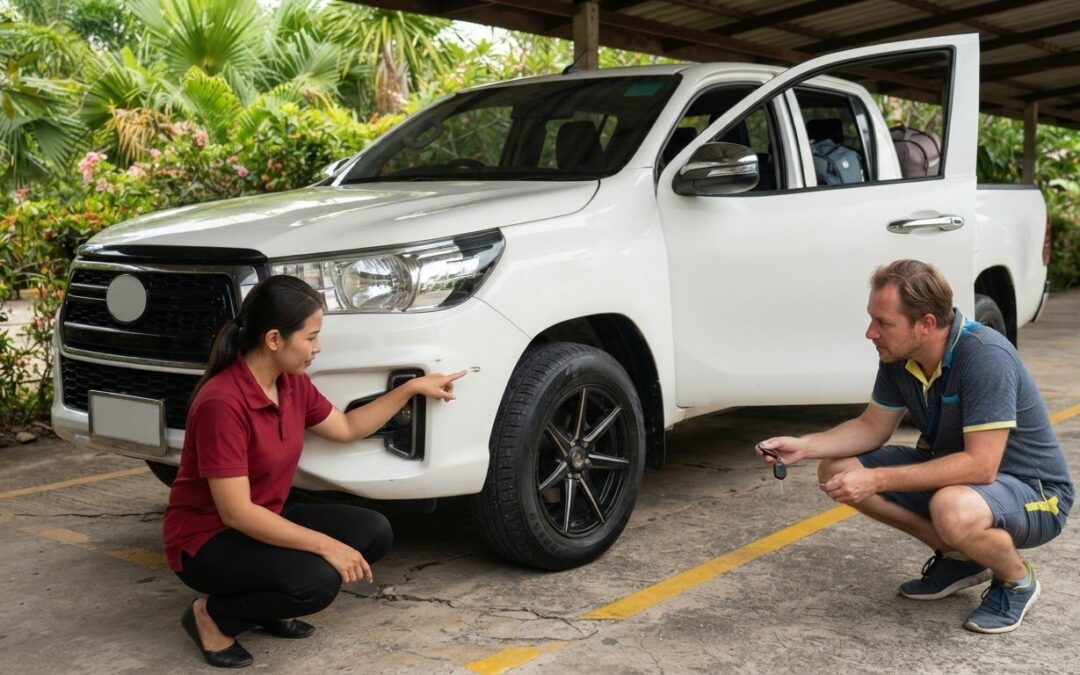
At pickup, inspect the car inside and out, note existing marks, and photograph or video the vehicle. Repeat this at return, and keep the agreement and handover records. A clear record can help resolve a damage dispute.
Choosing based on length of stay
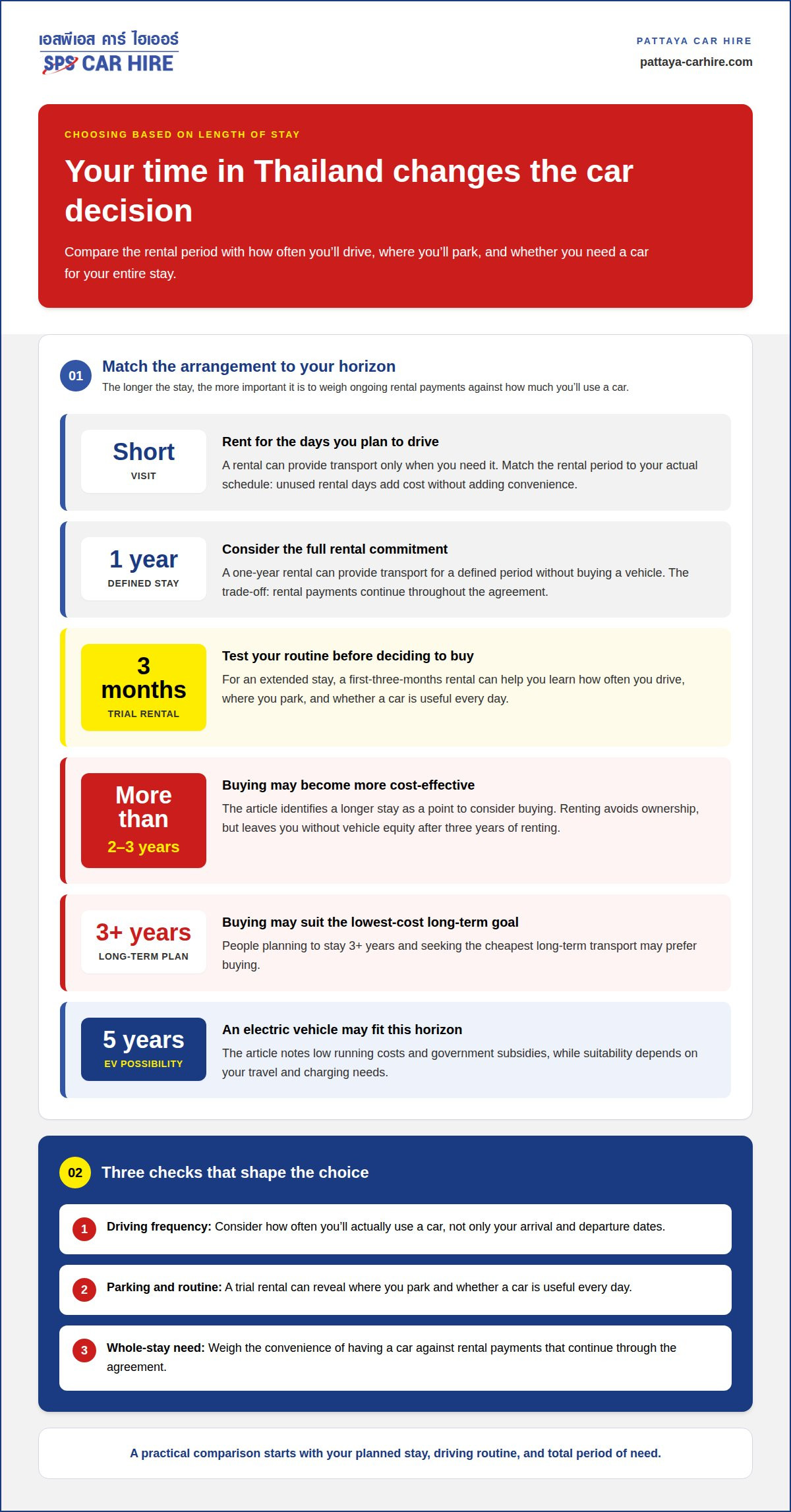
Your time in Thailand changes what makes a car rental practical. For a short visit, renting can provide transport only for the days you need it, without tying you to a longer arrangement. If your plans include regular trips around Pattaya, compare the rental period with your actual schedule, not just your arrival and departure dates. Unused rental days add cost without adding convenience.
A longer stay calls for a different calculation. Renting for a year can provide transport for a defined period without buying a vehicle. The trade-off is that rental payments continue throughout the agreement, so consider how often you’ll drive and whether you need a car for your entire stay.
For an extended stay, renting for the first three months before deciding whether to buy can help you understand your routine. You can see how often you drive, where you park, and whether a car is useful every day. This trial period can make a later decision more grounded than buying immediately after arriving.
Buying may become more cost-effective for people staying in Thailand for more than 2-3 years. People planning to stay for 3+ years and seeking the cheapest long-term transport may prefer buying. Renting avoids ownership, but leaves you without vehicle equity after three years of renting. An electric vehicle may suit a five-year plan because of low running costs and government subsidies, though its suitability depends on your travel and charging needs.
- Short visit: Rent for the period that matches your planned driving.
- Defined stay: Compare a one-year rental arrangement with your transport needs.
- Longer stay: Consider a trial rental before deciding whether to buy.
For a flexible start in Pattaya, explore car rental options that fit your planned stay.
Insurance when renting
A rental quote may include First Class insurance, but the label alone doesn’t explain the protection. In Thailand, check whether the policy specifically covers rental use, and read the agreement for exclusions, excess amounts, and damage responsibilities. A policy for private use may not provide the protection you expect when renting a car.
Compulsory government insurance provides some medical cover, but it doesn’t cover damage to the rental car or third-party damage. That distinction is easy to miss: medical protection for an injured person is not the same as cover for vehicle repairs or another person’s property.
Use the agreement to understand how the protection works in practice. Check, for example, whether damage to the windscreen, tyres, or underside is excluded, and whether the policy applies if an unauthorised driver uses the car. These details can affect what you pay after an incident, even when insurance is included in the rental price.
- Rental use: Confirm the First Class policy specifically covers a rental vehicle.
- Damage: Identify exclusions and your responsibility for repairs or loss.
- Drivers: Check who is permitted to drive under the agreement.
- Incident steps: Find the required reporting process and documents.
Keep the rental agreement and insurance details accessible while driving in Thailand. If a collision occurs, follow the contract’s reporting instructions and record the incident details. Don’t assume compulsory cover will pay for damage to the rented vehicle or another person’s property.
Is renting a car better than using taxis, songthaews, or ride-hailing apps in Thailand? It depends on your itinerary. A rental can suit multiple stops and independent travel, while other transport may work better for occasional trips without the need to drive or park. Include insurance terms in the comparison, not just convenience.
For a family travelling between several destinations, clear protection for rental use can make the arrangement easier to assess. For short local journeys, compare your need for a vehicle with the flexibility of other transport. The right choice depends on your routes, how often you travel, and the protection attached to each option.
What extra fees do Pattaya car rentals charge for insurance, deposits, mileage, and delivery?
The advertised rental rate may not be the full amount due. The total depends on the agreement’s insurance terms, deposit, mileage allowance, and delivery arrangements. Review each item separately, then compare the total for your planned rental period.
Premium First Class insurance is almost always included in rental prices, but inclusion doesn’t explain its limits. Ask to see that the policy specifically covers rental use, and read the excess and exclusions. A low headline rate can be less useful if the agreement leaves important damage costs with you.
A deposit is money held under the rental terms, not necessarily a fee. Check the amount, payment method, conditions for deductions, and release process. Clarify how the company records fuel level, vehicle damage, or late return, and what evidence supports a deduction.
Mileage terms determine whether your driving distance is included or charged separately. Check whether the agreement has a mileage allowance, how excess distance is calculated, and whether the allowance suits your itinerary. A Pattaya-only stay differs from a plan involving repeated longer drives, so estimate your routes before comparing offers.
Delivery can also affect the total if the vehicle is brought to a location rather than collected at the rental office. Confirm the agreed pickup and return points, and whether either arrangement carries a separate charge. Airport and hotel delivery are not interchangeable assumptions; the written booking terms should identify the actual handover.
- Insurance: Review rental-use coverage, excess, and exclusions.
- Deposit: Understand deductions and release conditions.
- Mileage: Match the included distance to your planned routes.
- Delivery: Confirm handover locations and related charges.
The price depends on your rental needs and is provided after a quote request; vehicle type, rental period, mileage, insurance terms, and delivery arrangements affect the total. Request a rental quote with your dates and planned use to understand the terms before booking.
SPS Car Hire
SPS Car Hire offers car and truck rentals for independent travel. If your plans involve regular driving, a budget-friendly rental may suit your needs. For a longer stay, consider the company’s long-term car rental packages alongside your travel plans.
To decide what matters most, focus on suitable driving documents, a rental period that fits your stay, and clear insurance and agreement terms. Use these priorities to choose an arrangement that suits your plans instead of focusing on the daily rate alone.
If you’re considering a car or truck rental in Pattaya, contact SPS Car Hire to discuss your needs.
Choose the Rental That Fits Your Plans
Turn your travel plans into a clear rental brief. Think about where you’ll drive, how often you’ll need a vehicle, and whether your stay calls for short-term or longer-term transport. This practical picture will help you weigh the pros and cons of renting a car in Pattaya for your own trip rather than relying on a general rule.
SPS Car Hire offers low-cost car and truck rentals, competitive prices, and long-term car rental packages. Car rentals include full first-class insurance, and free delivery is available anywhere in the Pattaya or Jomtien area. Share your rental period and vehicle needs with SPS Car Hire to discuss a booking.
Contact SPS Car Hire to discuss a rental that suits your plans. A little preparation now can help you set out around Pattaya with confidence.
Frequently Asked Questions
Do I need an International Driving Permit to rent a car in Pattaya?
Whether you need an International Driving Permit (IDP) depends on your licence and the rules for its issuing country in Thailand. Bring your original driving licence and carry an IDP when required. An IDP supports your original document; it doesn’t replace it. Make sure your licence also covers the vehicle category you intend to drive.
How far in advance should you book a rental car in Pattaya?
Book once your travel dates and vehicle needs are settled, particularly if you need a specific vehicle or collection arrangement. Booking ahead gives you time to review the rental terms and coordinate pickup with your itinerary. For flexible plans, decide how many rental days you genuinely need, then ensure the start and return dates match.
Should I get insurance when renting a car in Pattaya?
Yes. Understand the protection attached to the rental before driving. A policy name alone doesn’t explain what it covers, which exclusions apply, or what costs remain your responsibility after damage. Check whether the cover applies to rental use and whether an excess applies. These details matter even when insurance is included in the rental price.
What insurance should a rental car in Thailand have?
Look for First Class insurance that specifically covers rental use. Compulsory government insurance provides some medical cover, but it doesn’t cover damage to the rental car or third-party damage. These protections are different, so don’t treat compulsory cover as a substitute for rental-vehicle and liability protection. Read the policy terms to understand exclusions and your responsibilities.
What documents and driving license are required to rent and drive a car in Thailand?
Have your original driving licence ready, along with an International Driving Permit if required for your licence in Thailand. Your licence must cover the vehicle category you plan to drive. Read the rental paperwork before collection to understand the documents needed for booking and handover, and keep your driving documents available while using the car.
What insurance coverage is included in Pattaya car rentals, and what excess applies?
First Class insurance is almost always included in rental prices, but the included protection and excess depend on the policy and rental agreement. Check which damage is covered, what exclusions apply, and the amount you may need to pay toward a claim. The phrase “full insurance” doesn’t explain those terms by itself, so use the policy wording to understand your responsibility.
 -
 -
 -
 -
 -
 -
 -