

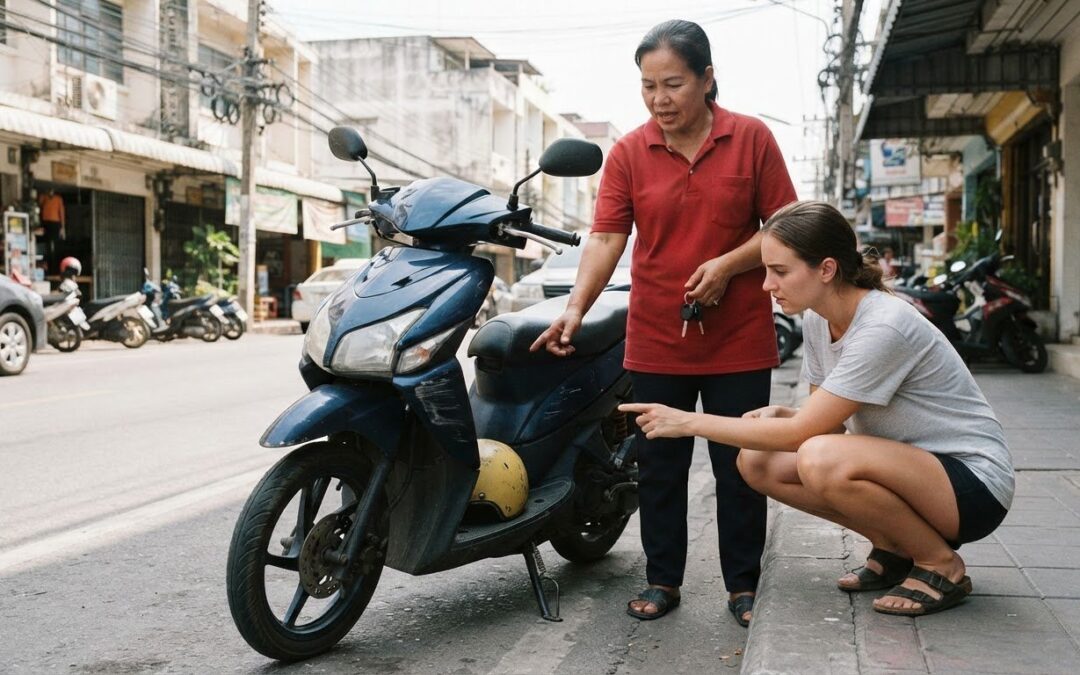
A scooter rental should never begin with your passport held as collateral. To understand how to avoid scooter scams in Pattaya, keep your passport with you, record the scooter’s condition before riding, and get the rental terms in writing.
It’s reasonable to want the freedom of a scooter without risking a dispute over old damage, a missing bike, or a demand for money from someone claiming to be police. A careful handover gives you useful evidence if questions arise later, and knowing what to do at a checkpoint can help you stay calm and make informed choices.
This guide covers a practical walkaround inspection, the details to capture in photos and video, ways to reduce the risk of spare-key theft, and signs of a fake-police shakedown. You’ll also learn how to handle passport and deposit requests, so you can decide whether a rental feels transparent before taking the keys.
Key Takeaways
- Keep your passport with you and understand the rental terms before handing over a deposit or signing an agreement.
- A careful walkaround record can help distinguish existing damage from problems that happen during your rental.
- Learn how spare keys could be misused and take sensible steps to reduce the risk of a theft dispute.
- Know how to respond calmly at checkpoints and where to turn if someone claiming to be police pressures you for payment.
1. Checking a scooter for existing damage before renting
Daily and weekly scooter rental costs vary by model, rental period, and terms. Get the full rate and deposit written into the agreement before accepting the keys, but don’t judge a rental operator by the quoted price alone. To assess a business, read recent reviews and look for comments about damage disputes, deposits, and fair treatment. A clear agreement and a documented handover give you a better basis for deciding.
Before riding, inspect the whole scooter in good light. Check the front and rear panels, mirrors, lights, indicators, seat, exhaust, and both sides of the body. Look underneath too: scratches or cracks below the footboard can be easy to miss if you only inspect at eye level. Note loose parts, bent levers, and missing pieces. If the operator points out damage, make sure you record the same mark before leaving.
Photograph each side, then take close-ups of every scratch, dent, crack, and scuffed panel. Include the scooter’s plate or another identifying detail in the wider shots, so the photos clearly relate to that bike. Record a 60-90 second walkaround video, slowly capturing the body, controls, and visible damage. Ask the rental operator to acknowledge the existing marks in writing, and keep your photos, video, agreement, and deposit slip together in case a return dispute arises.
Check both tires before starting the engine. Look for cuts, embedded objects, low pressure, or a visible puncture; a small hole may cause a flat after you’ve ridden away. If anything looks questionable, point it out and ask for another scooter rather than accepting verbal reassurance. A quick tire check at a nearby gas station can add another practical check before setting off. Careful inspection and clear records are central to how to avoid scooter scams in Pattaya.
2. Inspecting and documenting a scooter before rental
Before signing, read every rental term covering damage, liability, insurance, deposits, and refunds. Ask how the operator records existing damage and what evidence supports any later claim. Keep a copy of the agreement and deposit receipt. A transparent rental process makes these terms clear before you hand over money or take the scooter.
Protect your passport. Don’t leave the original with a rental vendor as collateral; offer a passport copy instead, and keep the original secure. Some shops request cash deposits, and the amount can depend on engine size. For 150-160cc scooters, such as a Yamaha NMAX or Honda PCX 160, deposits are listed at ฿2,000-฿5,000. For big bikes of 300cc or larger, the range is ฿5,000-฿20,000.
Before the handover, take a 60-90 second walkaround video and save it with your photos, signed agreement, and deposit slip. Make sure the video shows the scooter’s identifying details, all sides, and any damage. Ask the operator to acknowledge existing marks in writing. If a return dispute arises, these records help connect the bike’s condition at pickup with the signed terms.
Tourists in Thailand can contact the Tourist Police by dialing 1155, according to the Tourist Police Bureau. Travel insurance coverage depends on the policy, so read its scooter and licensing exclusions before riding.
Keep the agreement and deposit evidence accessible during the rental, not just in a phone gallery you can’t open. For an alternative to two wheels, Pattaya car rental may suit trips where carrying documents and valuables securely matters more.
3. Bike theft using a second key
A second-key scam can turn a routine stop into a costly rental dispute. In this reported scheme, a rental operator keeps a spare key, takes the bike while it’s parked outside a tourist site, then claims it was stolen. The renter returns expecting to find the scooter and may instead face a demand for its replacement cost. The key risk is losing control of the bike while it’s away from you.
That figure describes the alleged replacement demand, not a standard rental charge or proof of what a renter owes. A disappearance can be difficult to contest if the rental terms leave theft responsibility unclear or you can’t explain where the scooter was parked.
Reduce that risk with practical choices during your trip. Park in a visible, supervised place rather than a remote lot, especially near tourist attractions. Keep the rental key with you, lock the scooter, and don’t leave valuables beneath the seat. For a longer stop, choose parking where you can keep an eye on the bike or return to it easily.
Before accepting the scooter, read the agreement’s theft and liability terms. Ask the operator to explain what happens if the bike disappears, how a claim is assessed, and whether the agreement identifies the scooter and its keys. Keep the signed terms and deposit receipt accessible. If the wording makes you responsible for an unexplained theft, pause before signing and request clarification in writing.
If the scooter is missing, don’t agree to an immediate replacement demand based only on a verbal claim. Record where and when you last saw it, preserve messages and rental documents, and report the incident to police. Contact the rental operator through its usual channel and keep communication factual. A written timeline can help distinguish a genuine theft from a disputed claim and support a clear account of events.
4. Fake-police shakedowns and checkpoints
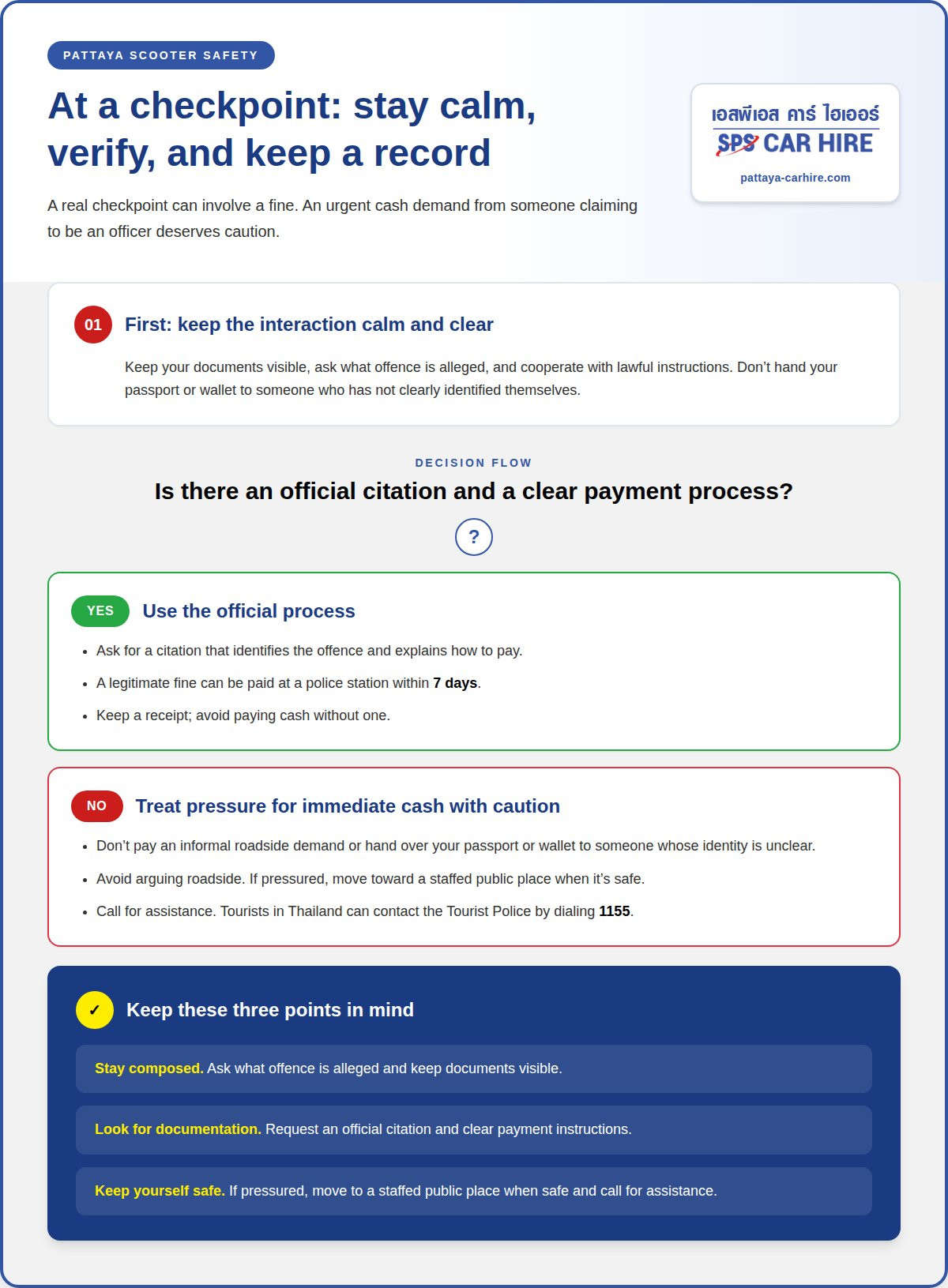
A real checkpoint can involve a fine, but an urgent demand for cash from someone claiming to be an officer deserves caution. Stay calm, keep your documents visible, and ask what the alleged offence is. You can refuse an informal payment while cooperating with lawful instructions. Don’t hand over your passport or wallet to someone who hasn’t clearly identified themselves.
A legitimate fine can be paid at a police station within 7 days. Ask for an official citation that identifies the offence and explains the payment process. Avoid arguing roadside or paying cash without a receipt. If the person pressures you to pay immediately, move toward a staffed public place when it’s safe and call for assistance.
Use the official emergency channel if you feel threatened or unsure. The Royal Thai Police can be contacted by dialing 191. Explain your location, what the person said, and whether they showed identification or issued a citation. If language creates confusion, contact the Tourist Police at 1155, as noted earlier. Keep the scooter rental agreement and your identification accessible, but don’t surrender original documents as leverage.
Preparation helps you distinguish a formal checkpoint from a shakedown. Carry your Thai or International driving license, wear a helmet, and keep your phone charged. If stopped, note the location and time, the officer’s identifying details, and any citation number. Don’t sign a document you can’t understand; ask for clarification before agreeing. A genuine traffic issue should be handled through a clear, documented process, not a secret roadside payment.
If repeated scooter stops make your Pattaya plans uncomfortable, explore another transport option before setting out. Staying composed, recording key details, and using official phone numbers gives you a practical response without escalating a tense encounter.
SPS Car Hire
SPS Car Hire offers a practical alternative if you’d rather avoid the risks and responsibilities of renting a two-wheeler during your travels. Low Cost Car and Truck Rental, Best Price Car and Truck Rental, and Budget Car and Truck Rental options can suit different travel needs, while Long-term Car Rental Packages are available for extended stays. Choosing a car or truck may make sense if you need to carry luggage, travel with companions, or prefer not to ride a motorbike.
Use the checks in this guide to make an informed transport decision: keep rental terms clear, understand your responsibilities, and choose a vehicle that fits your itinerary. For a longer visit, consider whether a long-term package suits your transportation needs. To discuss a rental with SPS Car Hire, get in touch.
Choose the transport that suits your Pattaya plans
Your next step is to match your transport choice to the way you’ll travel. If you’re deciding how to avoid scooter scams in Pattaya, consider whether riding suits your routes, luggage, and confidence on the road. A car or truck may better fit plans involving extra bags, companions, or longer stays, while a motorbike remains an option when it suits your needs.
SPS Car Hire offers Low Cost Car and Truck Rental, Best Price Car and Truck Rental, and Long-term Car Rental Packages. These choices give you another way to plan transport around your stay. For help with motorbike rental, contact SPS Car Hire about your rental needs. Choose the option that lets you focus on enjoying Pattaya, with a clear plan for getting around.
Frequently Asked Questions
How do you rent a scooter in Thailand without giving up your passport?
Keep your original passport and offer a copy alongside the agreed cash deposit. Before paying, make sure the rental agreement records the deposit amount, refund conditions, scooter identification, and damage responsibilities. Photograph the signed paperwork and deposit receipt, then store copies separately from your passport. If an operator insists on keeping your original passport, choose another arrangement rather than surrendering an essential travel document.
How does the spare-key “stolen bike” scam work?
A rental operator may retain a second key, take the scooter while it’s parked, then claim it was stolen and demand replacement money. If your scooter disappears, preserve your rental agreement and messages, write down where you last parked, and report the loss. Don’t agree to a verbal replacement demand before documenting the incident.
Should I leave my passport as a deposit for a Thai motorbike rental?
No. Keep your original passport with you and use a passport copy with the agreed cash deposit instead. Make sure the agreement explains how the deposit will be handled and returned, and keep its receipt. A passport can be difficult to replace during a trip, so don’t treat it as ordinary security for a rental. If the operator insists on holding it, decline that arrangement.
What are the most common Thailand motorbike rental scams in 2026?
Reported problems include claims for existing or fabricated damage, a tire puncture that becomes a flat after riding, spare-key theft, and rental-rate disputes. Get the total rate and return terms in writing. A sudden demand unsupported by the agreement deserves careful review before you pay.
What does a fake-police shakedown look like vs a real Thai checkpoint?
A request for an unexplained roadside cash payment, without a clear offence or citation, should prompt caution. Ask what rule you allegedly broke and how to pay through official channels. Call the Royal Thai Police on 191 if you feel threatened.
What should I film during the pre-ride video walkaround?
Capture one continuous view of the scooter’s identifying details, then move slowly around its front, sides, rear, and underside. Include close views of existing scratches, cracked panels, mirrors, lights, controls, and tires. Keep the rental shop or handover setting visible at the start where practical. Save the original video with your agreement and deposit receipt, so the date and rental context remain easy to explain.
 -
 -
 -
 -
 -
 -
 -