

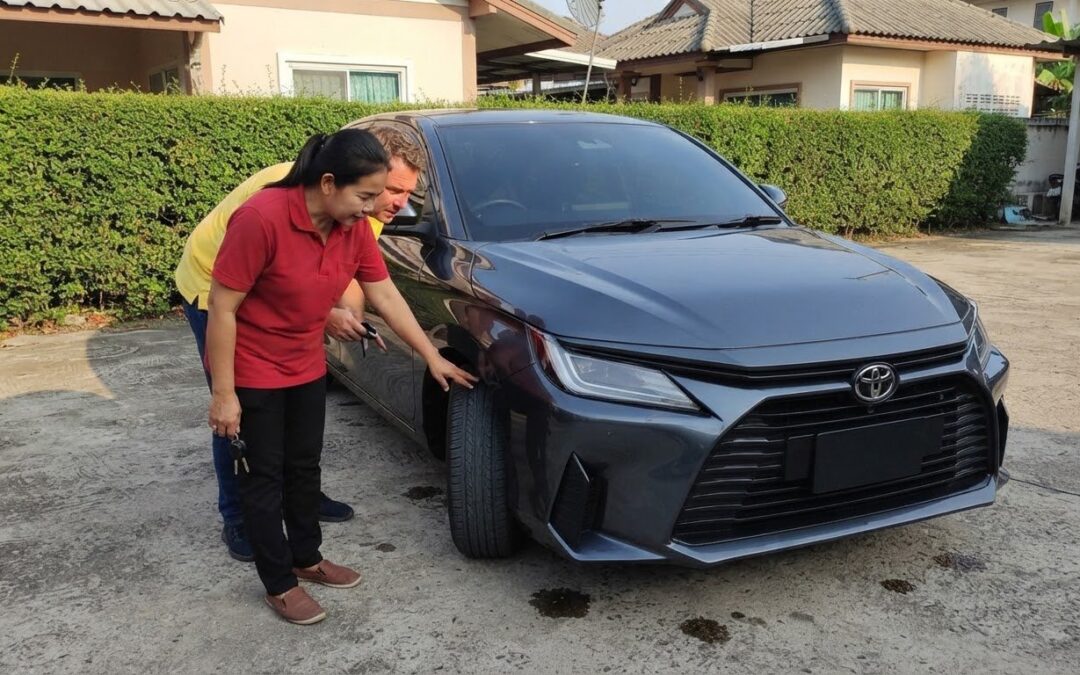
Book ahead for a foreigner friendly car rental in Thailand, especially during peak tourist seasons. No single booking window suits every trip, but waiting until the last minute can limit your choices. Compare the full rental terms, not just the daily rate.
It’s easy to focus on price when planning a drive. The right deal also depends on whether your documents meet the rental requirements, what mileage is included, and how the insurance excess could affect you if the car is damaged.
This guide explains how to compare rental prices and deals, how permits and insurance affect your booking, and why mileage limits and excess matter. You’ll also find practical tips for choosing a rental period that suits your plans, whether you need a car for a short visit or a longer stay.
Key Takeaways
- Prepare your valid home-country driving licence and passport, and plan to carry an International Driving Permit for a smoother rental process.
- Match the mileage allowance to your itinerary, especially if you expect to drive beyond Pattaya or rent for an extended stay.
- Look beyond basic insurance: understand what extra cover changes and how the excess could affect your costs after an incident.
- Compare the total deal across vehicle types and travel dates, and book ahead during peak tourist seasons to improve your choice of options.
International Driver’s Permit recommendations
For self-drive rentals in Thailand, prepare your valid home-country driver’s licence, passport, and International Driving Permit (IDP). Foreign visitors are advised to carry the IDP alongside their home licence. Some rental companies accept a valid home-country licence, but requirements differ. Keep the documents together so the rental desk can review them alongside your booking details.
A foreigner friendly rental company clearly explains which international licences it accepts and what documents foreign drivers must present. Compare the written requirements rather than relying on a general “foreigner friendly” label.
With a self-drive booking, you drive the vehicle and present the required documents. A chauffeur-driven rental is different because a hired driver operates the vehicle. This guide focuses on self-drive document requirements. If another person will drive, have them named in the agreement and check the eligibility rules and any additional-driver fee before signing.
Rental companies set minimum driver ages and any underage fees in their terms. Read the age requirement for your chosen vehicle and make sure every intended driver meets it. Don’t assume that meeting the minimum age for one vehicle class automatically qualifies you for another.
The rental agreement sets out the terms and conditions. Before signing, read the sections on permitted drivers, mileage, insurance, excess, fuel, and vehicle return. During the inspection, record existing marks and damage in the handover documents, and take clear photos of the vehicle’s condition.
Rental companies may require a credit card for the security deposit. The deposit amount and accepted payment methods depend on the rental terms. Confirm the deposit and payment details in writing before paying, and keep the receipt and booking correspondence.
To reduce the risk of hidden fees or scams, use the company’s stated booking and payment process, check that the agreement matches your booking, and get any extra charges documented before signing. If the paperwork doesn’t explain a fee or deposit, wait until the terms are clear before signing.
Mileage limits and customized long-distance packages
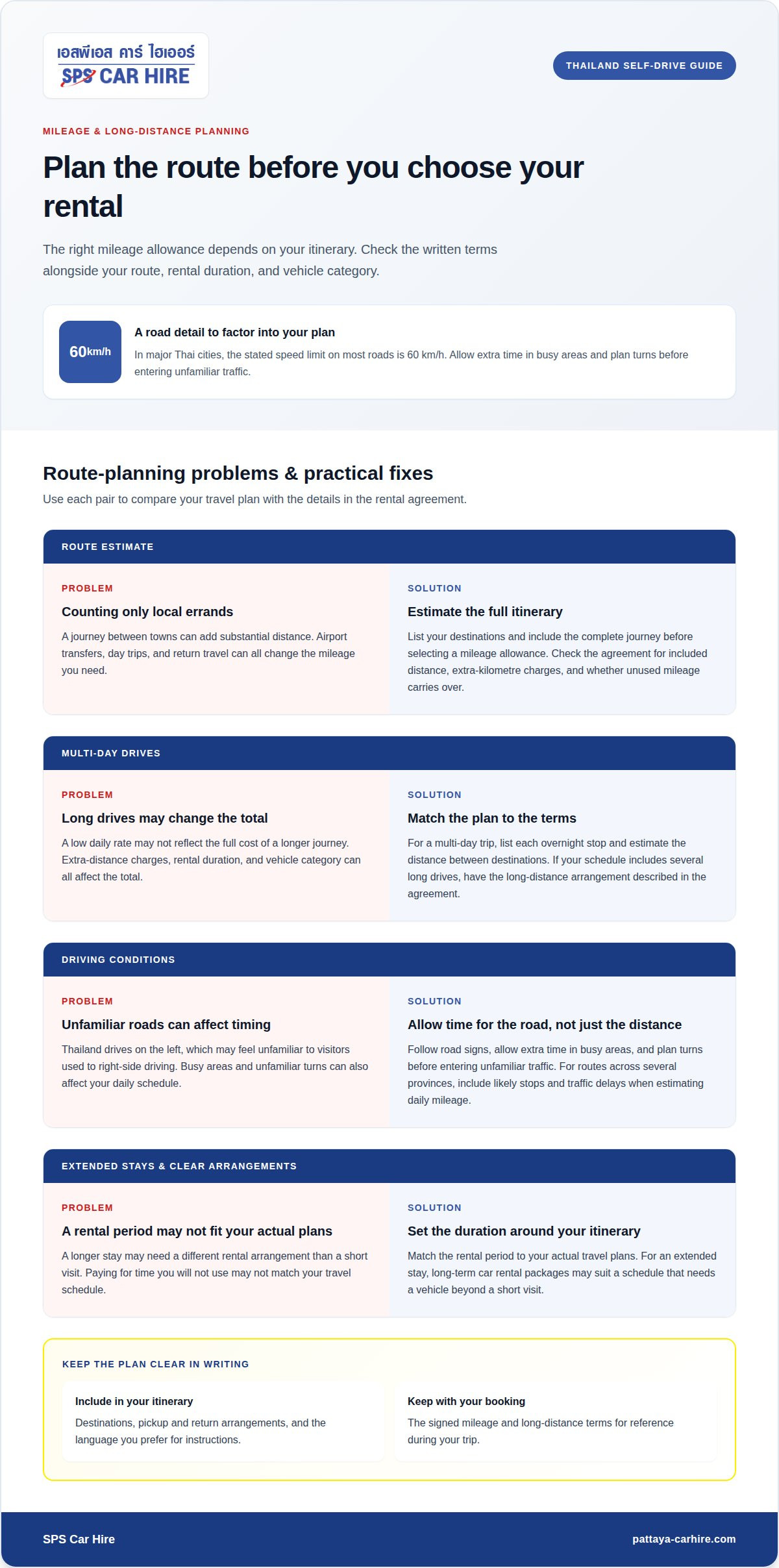
Plan your route before choosing a rental duration. A journey between towns can add substantial distance beyond local errands, so estimate your full itinerary before selecting a mileage allowance. Include airport transfers, day trips, and return travel. Check that the agreement states the included distance, the charge for extra kilometres, and whether unused mileage carries over. These terms can determine whether a low daily rate works for a longer journey.
For a multi-day trip, list each overnight stop and estimate the driving distance between destinations. Compare the plan with the rental’s mileage terms. If your schedule includes several long drives, have the long-distance arrangement described in the agreement. Extra-distance charges, rental duration, and vehicle category can all affect the total cost. Keep the signed terms with your booking details for reference.
Thailand drives on the left, which may feel unfamiliar to visitors used to right-side driving. In major Thai cities, the stated speed limit on most roads is 60 km/h. Allow extra time in busy areas, follow road signs, and plan turns before entering unfamiliar traffic. For a route that crosses several provinces, include likely stops and traffic delays when estimating your daily mileage.
For English- and Thai-language customer service, keep important trip details clear in writing. A short itinerary can list destinations, pickup and return arrangements, mileage terms, and the language you prefer for instructions. This helps reduce confusion about a long-distance plan. For an extended stay, long-term car rental packages may suit a schedule that needs a vehicle beyond a short visit. Match the rental period to your actual travel plans, rather than paying for time you won’t use.
Optional insurance coverages and excess
In Thailand, basic insurance is typically included in car rental agreements, and additional coverage is recommended. “Included” doesn’t mean every type of damage or situation is covered. The rental agreement explains the protection, exclusions, and amount you may have to pay after an incident. Read these details before choosing a rental.
The excess is the amount you may be responsible for under the agreement when a covered incident occurs. A lower excess may require an additional coverage option, while exclusions can still limit what the policy covers. Compare the excess, exclusions, and any extra charge together. A low daily rate alone won’t show your potential out-of-pocket cost.
Before signing, look for clear answers to these points in the insurance terms:
- Who is covered: Confirm that each person listed to drive is included under the agreement.
- What is covered: Identify the events and vehicle damage included, plus exclusions.
- What you pay: Find the excess for each relevant type of claim and whether it can be reduced.
- What to do after an incident: Follow the agreement’s reporting and documentation steps.
Treat this as a specific example, not a standard excess across Thailand. Rental terms can differ by company, vehicle, and selected cover, so use the amount in your own agreement to assess your potential costs.
Keep your passport and rental paperwork accessible, but don’t assume a passport or credit card replaces insurance. They serve different purposes in the rental process. When comparing cover, make sure the applicable excess and any optional charge are clear in the written terms. Keep a copy with your booking details so you can refer to the same conditions at pickup or when reporting damage.
Pattaya rental car prices and deals
Compare the full rental total, not just the advertised daily rate. The price depends on the vehicle, rental dates, term, mileage allowance, and selected cover. A short booking and a long-term rental can have different overall costs, so compare quotes using the same dates, vehicle type, and included services.
Season affects availability and deal value in Pattaya. September is the cheapest month to hire a car, while December is the most expensive. Booking ahead is especially useful during peak tourist seasons, when demand can narrow your choices. If your dates are flexible, compare nearby travel dates and calculate the total for your planned rental period instead of judging a deal by one day’s rate.
Pickup is another part of the comparison. Rental companies’ arrangements for hotels, central Pattaya, or U-Tapao are company-specific, so the booking terms should identify the handover point. U-Tapao-Rayong-Pattaya International Airport is around 31.2 km from Pattaya. Include the pickup location in your plans, since a convenient handover can matter as much as a small difference in the advertised rate.
Before accepting a deal, compare these details side by side:
- Vehicle and dates: Match the vehicle category and pickup and return times.
- Included mileage: Check the allowance against your intended route.
- Cover and excess: Compare protection and potential out-of-pocket responsibility.
- Rental term: Review the total for the full period, especially for longer bookings.
For example, a lower daily rate may not be the better value if it comes with a tighter mileage allowance or a less convenient pickup. Compare the total terms first, then choose the option that fits your itinerary. To see what suits your dates and vehicle needs, request a Pattaya car rental quote.
SPS Car Hire
SPS Car Hire offers budget car and truck rentals for travelers across Thailand. Once you’ve compared documents, mileage, cover, and rental terms, choose a vehicle and rental period that fit your trip. Options include low-cost and budget car and truck rentals, best-price car and truck rentals, and long-term car rental packages.
For a short stay, focus on a vehicle and terms suited to your local journeys. For an extended visit, a long-term package may better fit your plans. Share your dates, intended use, and rental period with SPS Car Hire to discuss your vehicle rental needs.
Set Up Your Pattaya Rental Plan
Make your next step practical: turn your travel plans into a clear rental request. Decide which dates and vehicle type suit your stay, and whether you need a short rental or transport for longer. A focused request helps you identify an arrangement that fits your plans and intended use.
For a foreigner friendly car rental in Pattaya, SPS Car Hire offers low-cost car and truck rentals, best-price car and truck rentals, and long-term car rental packages. Share your intended rental period and vehicle needs to take the next step with a clear idea of what you’re looking for.
Choose the option that fits your trip, then get in touch to discuss your rental needs. Contact SPS Car Hire and move ahead with your Pattaya plans.
Frequently Asked Questions
How far in advance should you book car hire in Pattaya?
Book once your travel dates are set, and reserve earlier for peak tourist seasons. This gives you more time to choose a vehicle and plan pickup around your arrival. If you land late, for example, arrange pickup timing before finalizing your travel schedule. Include your return time in the booking plan so returning the vehicle fits around your departure.
What is the cheapest car hire company in Pattaya?
No single company is cheapest for every Pattaya rental. The lowest total depends on vehicle category, dates, rental period, mileage terms, and insurance arrangements. Compare quotes for the same vehicle type and dates, then consider the complete terms rather than the daily rate alone. A lower advertised rate may not offer the best overall value for your itinerary.
What documents do foreigners need to rent a car in Pattaya?
Foreign renters should have a valid home-country driving licence and passport, and be ready to present both when renting. An International Driving Permit is also recommended. Rental companies may require a credit card for the security deposit. Keep your booking information accessible, and make sure the driver details in the agreement match the person collecting and driving the vehicle.
Do foreign visitors need an international driving permit to rent and drive in Thailand?
Foreign visitors are advised to carry an International Driving Permit alongside a valid home-country licence. Some rental companies accept a valid licence from the renter’s home country, so requirements differ. Carrying both documents helps meet requirements where an IDP is requested. The permit accompanies the home licence; it doesn’t replace it.
What are typical daily and weekly car rental prices in Pattaya?
Daily and weekly totals vary by vehicle class, travel dates, rental length, and included terms. A weekly booking doesn’t automatically cost the daily rate multiplied by seven, so compare the quoted total for your exact dates. Also account for mileage, insurance, excess, and pickup arrangements. These details show whether a deal suits your trip, not just how its advertised rate looks.
How do insurance coverage, excess fees, and damage deposits compare among Pattaya car rentals?
Insurance describes the protection in the agreement, excess is the amount you could owe for a covered claim, and a damage deposit is security held during the rental. Compare each separately, including exclusions and deposit payment terms. A bank can take up to two weeks to release the unused portion of a rental hold after the vehicle is returned, so allow time for the release.
 -
 -
 -
 -
 -
 -
 -