

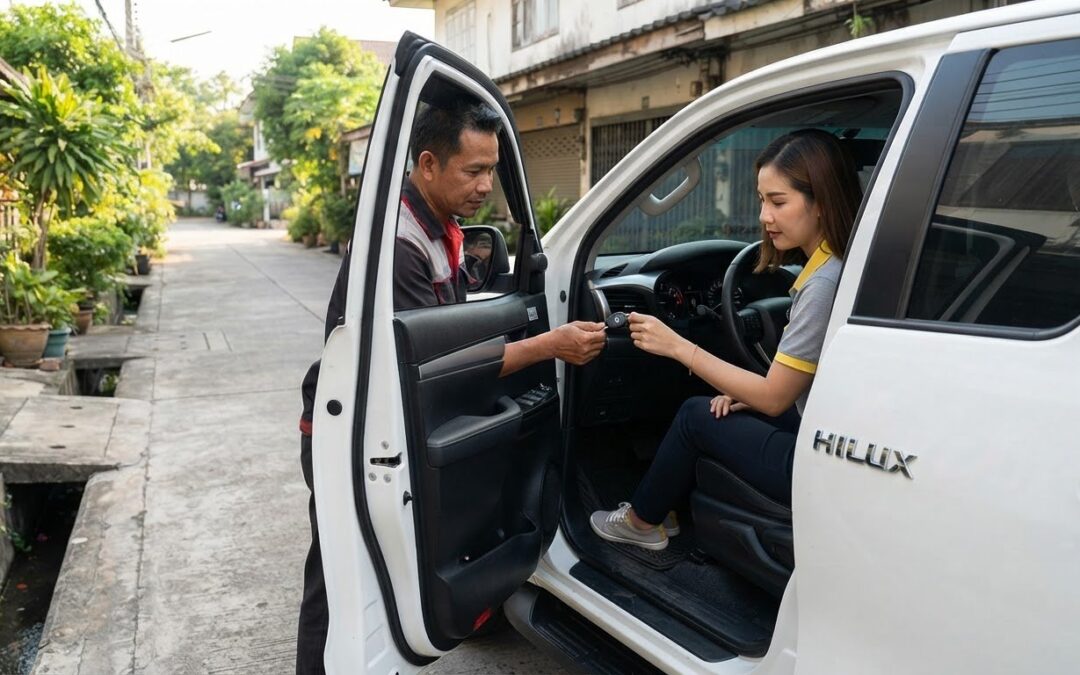
The cost to rent a pickup truck for a day depends on the rental details, and the price is provided after a quote request. Insurance premiums, the coverage you choose and its deductible can all affect the total, alongside the truck’s fuel type and your estimated mileage.
When comparing rates, check what is included as well as the daily price. SPS Car Hire includes full first-class insurance with car and truck rentals, so review the rental agreement for the terms that apply to your booking.
This guide explains how to compare a pickup’s daily rate, rental period, fuel arrangements, and insurance terms. You’ll also find practical steps for estimating your trip needs and checking the vehicle at collection and return, so you can choose a truck that suits your plans in Thailand.
Key Takeaways
- See how insurance options can change the total daily rental cost, beyond the base rate.
- Estimate how fuel type and planned mileage may affect the cost of your trip.
- Learn which details to compare when judging whether a daily rental price offers good value.
- Understand how coverage and the deductible shape your financial responsibility if the truck is damaged.
Insurance options and daily premiums
Insurance changes the daily rental total by changing what protection applies and what you pay after damage. Compare the premium with the coverage limits, exclusions, and deductible, not just the headline rate. A lower premium can leave more repair costs with the renter, while broader coverage may reduce that exposure.
Pickup truck rental costs also vary by size, cab type, and transmission. A larger cab or different transmission can change the vehicle category and its rental rate. Match the truck to your passengers and load: the Toyota Hilux Revo GR Sport, for example, has a listed 2,800 cc engine, but engine size alone doesn’t determine the full rental cost.
Insurance and the vehicle are only part of the quote. Fuel type affects the running-cost calculation, while estimated mileage helps show how much driving the rental covers. The exact price depends on your selected pickup, insurance options, fuel type, and expected distance; a case-specific quote gives the figure.
Before booking, read the deposit and payment conditions in the rental terms. Check the amount held, how it is paid, and when it is released, as well as which payment methods are accepted. Understanding these details helps you plan the total cost and avoid surprises.
Review the rental requirements for the driver’s age, licence, and documents before booking. Make sure the named driver and submitted details match the booking, so the rental agreement can be completed smoothly.
Before collection, follow a simple inspection: photograph existing marks, check the fuel level, and record the mileage shown. Confirm the pickup’s condition against the rental paperwork, including its mirrors, lights, and tires. These steps create a clear record for both collection and return.
When returning the truck, follow the agreed time and location. Record its condition, fuel level, and mileage again, and keep the return details with the rental agreement. Matching the collection and return records helps clarify any fuel or distance adjustments.
Fuel type and estimated mileage
Fuel type and planned mileage help you estimate the running costs for a trip. Check the pickup’s fuel information and map your expected route before estimating the distance. A Toyota Revo is one pickup model to consider, but its name alone does not determine how much fuel your journey will use. The vehicle configuration, load, traffic, and driving conditions all matter.
Estimated mileage distinguishes a short local errand from a longer journey. For example, a day driving around Bangkok may involve different conditions from a route between Bangkok and Pattaya. Congestion, stops, and detours affect both distance and fuel use, so estimate from your actual route rather than the straight-line distance between destinations.
- Identify the fuel type: Use the fuel information for the specific pickup model assigned to your rental.
- Map the travel: List the places you plan to visit, including return travel and likely stops.
- Allow for route changes: Consider traffic, errands, and detours when estimating mileage.
- Review the fuel terms: Understand the rental company’s return expectations and how fuel is handled.
Compare pickups by how well they suit your journey, not only by their daily rate. A truck that works for a longer trip may be less practical for repeated short journeys through busy streets. If you’ll carry a heavier load, include that in your plans because it can affect fuel consumption.
Fuel type also affects refuelling plans. Check the vehicle’s fuel information and plan where to refuel along your route. Before collection, read the rental terms about the fuel level expected at return and account for it in your trip budget.
For a practical comparison, write down your route, expected mileage, passenger and cargo needs, and the pickup model. Then assess the overall trip cost, not just the fuel line. Explore pickup truck rental options that fit your travel plans.
Good-deal daily price
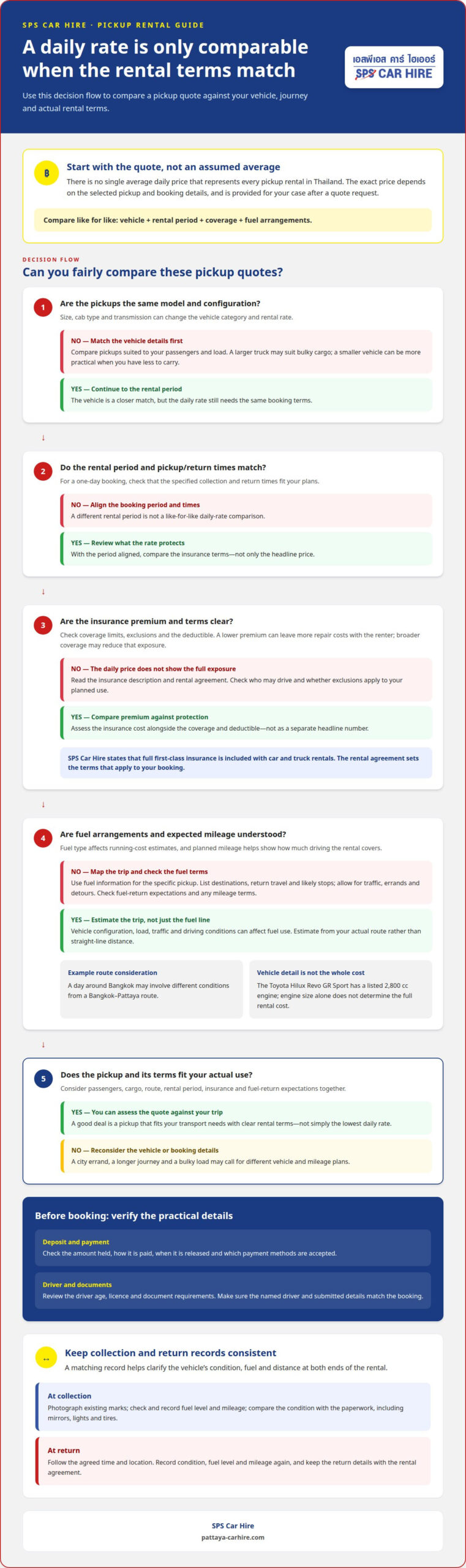
In Thailand, a daily pickup quote varies with the vehicle and rental terms. The cost to rent a pickup truck for a day depends on the model, rental period, coverage, and fuel arrangements.
Average One-Day Rental Cost
There isn’t one average that represents every pickup rental in Thailand. A Toyota Hilux Revo 2×4 and a larger or differently equipped pickup are not identical comparisons. The exact figure depends on the vehicle selected and the booking details, and is provided for your case after a quote request. Compare the same rental period and terms for a useful view.
Assessing a Good Daily Deal
A good deal is a pickup that fits your transport needs with clear rental terms. Compare the vehicle, rental period, included insurance, and fuel-return expectations. A Bangkok city errand and a longer journey may call for different vehicle and mileage plans, so assess the rate against your actual use.
Use the same checklist when comparing pickup options: match the truck’s space to your passengers and cargo, then review the written rental terms. A larger truck may suit bulky loads, while a smaller vehicle can be more practical when you have less to carry.
Weigh convenience against the complete rental terms, not just the daily rate. For a planned journey between Bangkok and Pattaya, consider the route, cargo, and return schedule together. A quote is easiest to assess when the vehicle, insurance, fuel arrangements, and rental period suit your intended use.
Insurance coverage and deductible
Coverage and the deductible determine what protection applies to the vehicle and what costs may remain your responsibility. Read the rental agreement before booking, because insurance features and exclusions depend on its wording. A daily rate alone won’t show whether damage to the pickup, another vehicle, or property is covered.
Start by reading the insurance description and rental terms. Check who is permitted to drive and whether any stated exclusions apply to your planned use. If someone else will drive the pickup, make sure the rental agreement addresses that driver.
The deductible is the amount you may need to pay toward an eligible claim. Compare the deductible with the coverage details, then look for conditions that could affect whether protection applies. The agreement should explain how damage is reported, what evidence is needed, and how the deductible is handled.
- Coverage scope: Note what damage or incidents the policy covers.
- Named drivers: Confirm which drivers are covered under the booking.
- Exclusions: Read restrictions on vehicle use and locations.
- Deductible: Record your potential contribution after a covered claim.
- Claim steps: Understand whom to notify and what details to provide.
Use your planned trip to review the rental terms. If the pickup will carry tools between work locations, check that this use fits the agreement. If another person may drive, make sure the driver arrangements are covered in the booking. These checks can help prevent surprises if damage occurs.
Keep the rental agreement and collection record together. At pickup, document any existing damage and note the vehicle’s condition. If an incident occurs, follow the agreement’s reporting steps and keep relevant details about what happened.
Choose coverage with the deductible and exclusions in view, not the premium alone. Review your pickup booking options and choose a rental vehicle that suits your plans.
SPS Car Hire: Low Cost Car and Truck Rental
SPS Car Hire offers Low Cost Car and Truck Rental for travelers who need practical transport in Thailand. After comparing daily rates, insurance terms, fuel arrangements, and mileage, consider whether a pickup suits your passengers, cargo, and planned route.
For a short trip, focus on the vehicle and rental terms that fit your plans. If you need transport for longer, SPS Car Hire also offers long-term car and truck rental packages. The right option depends on how long you need a vehicle and how you’ll use it.
Share your preferred dates, route, and pickup needs when arranging your rental. Contact SPS Car Hire to discuss the available vehicle and rental terms.
Plan the pickup around your next trip
The cost to rent a pickup truck for a day depends on your vehicle choice and rental details; your exact figure is provided after a quote request. If your plans extend beyond a short hire, SPS Car Hire also offers Best Price Car and Truck Rental and Long-term Car Rental Packages.
Before arranging your rental, note your preferred dates, route, and passenger or cargo needs. A clear outline makes it easier to choose a suitable vehicle and review the practical details.
Contact SPS Car Hire to discuss your pickup rental and travel needs. Start planning with confidence and choose the option that works for your trip.
Frequently Asked Questions
What are daily pickup truck rental prices in Bangkok and other major Thai cities?
There isn’t one fixed daily rate across Bangkok and other Thai cities. The quote depends on the pickup model, rental dates, rental period, and terms attached to the booking. For a useful comparison, match the same vehicle type and rental period, then consider what the quoted rate includes. A different truck category or booking arrangement can change the total.
Does the rental price include insurance, and what coverage or excess applies?
Insurance inclusion and excess depend on the rental terms. SPS Car Hire includes full first-class insurance with car rentals. The phrase alone doesn’t describe every coverage condition or excess, so use the rental agreement to understand how the policy applies to your booking. For example, if another driver will use the vehicle, check that the agreement addresses that driver.
How much does it cost to rent a pickup from major rental companies and local agencies in Thailand?
There’s no single price that applies to every rental company or local agency in Thailand. The amount depends on the pickup model, dates, rental duration, insurance arrangements, and other booking terms. A quote for a specific vehicle and trip gives the relevant figure. Compare equivalent rental periods and truck categories so differences in vehicle size don’t distort your assessment.
What is the cheapest way to rent a pickup truck for a day in Thailand?
Choose a pickup that fits your passenger and cargo needs rather than paying for space you won’t use. When arranging a rental, share your dates and intended use, then consider the full terms alongside the daily rate. If you need a vehicle for longer than a day, compare the available rental periods to find an arrangement that fits your plans.
 -
 -
 -
 -
 -
 -
 -