


Vehicle monthly rental has emerged as one of the most flexible and cost-effective transportation solutions for both travelers and locals in 2026. This rental model bridges the gap between traditional daily rentals and long-term leases, offering a sweet spot that serves extended travelers, digital nomads, business professionals, and anyone needing temporary wheels without the commitment of ownership. Understanding how monthly rentals work, their advantages, and what to expect can help you make an informed decision for your transportation needs.
Understanding Vehicle Monthly Rental Models
Vehicle monthly rental operates on a straightforward premise: customers rent a car, motorcycle, or truck for 30 days or longer at a discounted rate compared to daily rental prices. This arrangement differs significantly from traditional car ownership, leasing, and even daily rentals in several key ways.
The model has gained substantial traction globally, with the vehicle subscription and monthly rental market showing impressive growth through 2026. Unlike leases that typically lock you into multi-year commitments, monthly rentals offer rolling contracts that can be extended or terminated with minimal notice.
How Monthly Rental Differs from Other Options
Monthly rentals occupy a unique position in the transportation spectrum. When you compare this option against buying, leasing, or daily rentals, distinct advantages emerge for specific use cases.
| Option | Commitment Length | Maintenance Responsibility | Insurance Included | Upfront Costs |
|---|---|---|---|---|
| Monthly Rental | 30 days minimum | Rental company | Usually yes | Minimal deposit |
| Daily Rental | 1-29 days | Rental company | Usually yes | Credit card hold |
| Leasing | 2-4 years | Lessee | Additional cost | Down payment required |
| Purchase | Indefinite | Owner | Additional cost | Significant down payment |
Understanding these distinctions helps clarify when a vehicle monthly rental makes the most financial and practical sense. The flexibility factor alone attracts many customers who need reliable transportation without the burden of ownership or long-term financial obligations.

Key Benefits of Monthly Vehicle Rentals
Choosing a monthly rental delivers multiple advantages that traditional options simply cannot match. Cost savings represent the most immediate benefit, but the value extends far beyond simple dollars and cents.
Significant Cost Savings
Monthly rates typically offer 30-50% savings compared to daily rental rates extended over the same period. For example, a vehicle that costs $40 per day would total $1,200 for 30 days at the daily rate. The same vehicle on a vehicle monthly rental plan might cost just $700-850 per month.
Additional cost benefits include:
- No depreciation concerns
- Predictable monthly budgeting
- Reduced insurance premiums compared to ownership
- No maintenance or repair expenses
- No registration or licensing fees
These savings compound over time, making monthly rentals especially attractive for stays of one to twelve months. The pricing structure rewards commitment while maintaining flexibility that leases cannot offer.
Complete Flexibility and Convenience
Monthly rentals excel in providing freedom that other options restrict. You can extend your rental period, switch vehicles, or terminate the agreement with relatively short notice. This flexibility proves invaluable for professionals on temporary assignments, extended travelers exploring a region, or anyone in transitional life circumstances.
The convenience factor extends to maintenance and support. When mechanical issues arise, the rental company handles repairs and often provides a replacement vehicle. This contrasts sharply with ownership, where every breakdown becomes your problem and expense.
For visitors to destinations like Pattaya, comprehensive car rental services that include first-class insurance and free delivery eliminate the typical hassles associated with securing reliable transportation. This convenience allows you to focus on your work, travel, or personal matters rather than vehicle logistics.
Who Benefits Most from Monthly Rentals
Vehicle monthly rental serves diverse customer segments, each with unique needs and priorities. Identifying whether you fall into one of these categories helps determine if this rental model suits your situation.
Extended Travelers and Digital Nomads
Remote workers and long-term travelers represent a growing demographic perfectly suited for monthly rentals. These individuals often spend one to six months in a location before moving on, making ownership impractical and daily rentals prohibitively expensive.
Monthly rentals offer these travelers:
- Cost-effective transportation throughout their stay
- Ability to explore the region thoroughly
- Professional reliability for work commitments
- Simple arrangement and termination processes
- No concerns about reselling a vehicle when departing
Destinations with strong tourism infrastructure, similar to what visitors find in Maine’s coastal regions, often feature competitive monthly rental markets that cater specifically to extended-stay travelers seeking reliable transportation to explore beaches, attractions, and cultural sites.
Business Professionals on Assignment
Corporate employees on temporary assignments lasting several months find monthly rentals ideal for maintaining professional mobility. Companies often prefer this option because it simplifies expense accounting, eliminates vehicle disposal concerns, and provides predictable costs.

People in Transition
Life transitions-relocating for a new job, rebuilding after selling a vehicle, waiting for a custom order, or recovering from an accident-create temporary transportation needs. Monthly rentals fill this gap perfectly without forcing you into hasty purchasing decisions or expensive daily rates.
What to Look for in a Monthly Rental Agreement
Not all vehicle monthly rental agreements offer equal value or terms. Understanding the critical components helps you secure the best deal and avoid unexpected costs or restrictions.
Insurance Coverage and Requirements
Insurance represents one of the most important yet often misunderstood aspects of monthly rentals. Most reputable providers include comprehensive coverage in their monthly rates, but the specifics vary considerably. According to Consumer Reports guidance on rental insurance, understanding what coverage is included versus optional can save significant money and prevent gaps in protection.
Essential insurance questions to ask:
- Is first-class insurance included in the monthly rate?
- What is the deductible for damages or theft?
- Are additional drivers covered automatically?
- Does coverage extend outside primary rental areas?
- What personal liability protection is provided?
Quality rental companies include comprehensive insurance as standard, eliminating the need for expensive daily insurance add-ons that can double your effective rental cost.
Mileage Policies and Restrictions
Mileage limitations can significantly impact the value and usability of your rental. Some providers impose daily or monthly mileage caps with per-kilometer fees for overages, while others offer unlimited mileage.
For extended stays where you plan significant exploration-whether commuting to work, weekend trips, or thorough regional touring-unlimited mileage becomes essential. Calculate your expected monthly driving to ensure any mileage-limited agreement provides adequate allowance with reasonable overage fees.
Maintenance and Roadside Assistance
Clarify who handles routine maintenance, emergency repairs, and roadside assistance. Premium monthly rental agreements include these services, ensuring you're never stranded or responsible for oil changes, tire rotations, or unexpected mechanical failures.
| Service | Ideal Provider Responsibility | Questions to Ask |
|---|---|---|
| Routine maintenance | Provider handles and covers | Who schedules and pays for oil changes? |
| Breakdown repairs | Provider covers parts/labor | How quickly is a replacement provided? |
| Roadside assistance | Included 24/7 | What number do I call for help? |
| Tire damage | Provider responsibility | Are tire repairs/replacements covered? |
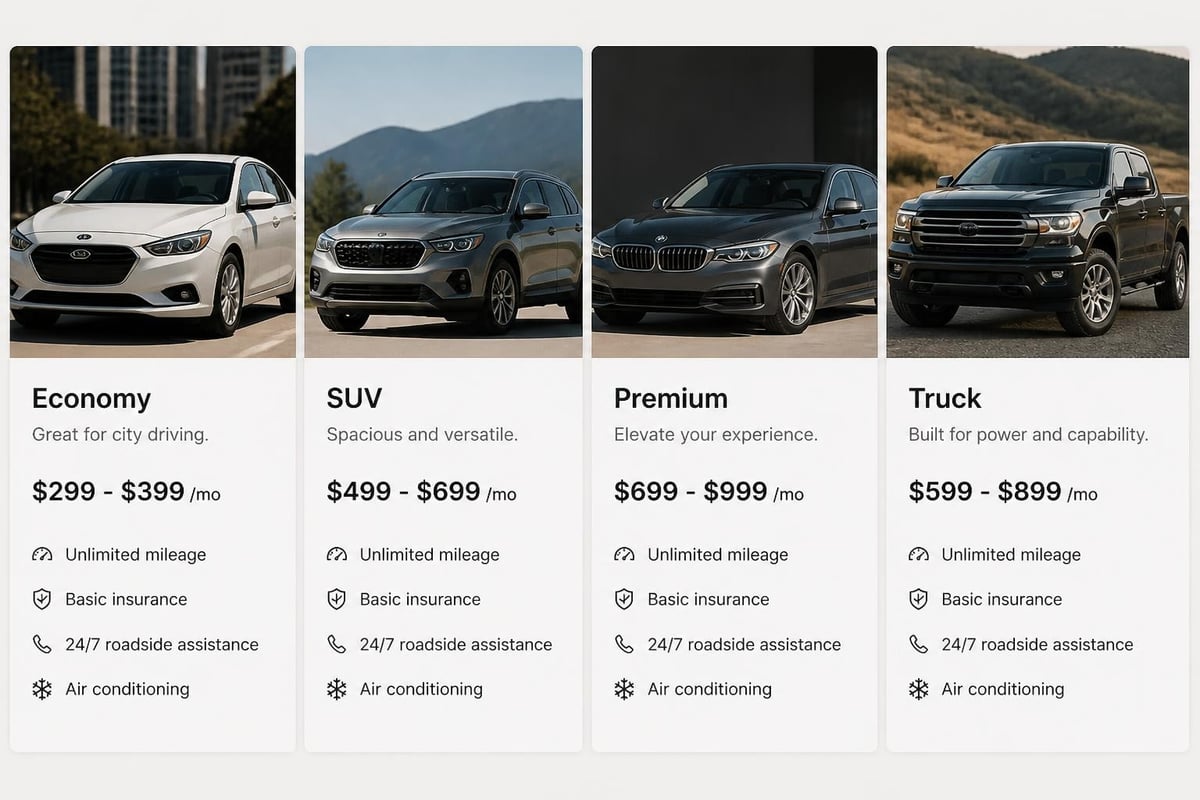
Comparing Monthly Rental Costs Across Vehicle Types
Vehicle monthly rental pricing varies significantly based on vehicle class, features, and market conditions. Understanding these price ranges helps set realistic budget expectations.
Economy and Compact Vehicles
Smaller vehicles offer the most affordable monthly rental rates, typically ranging from $500 to $900 per month in competitive markets. These vehicles deliver excellent fuel economy and maneuverability, making them ideal for urban environments and solo travelers.
Popular economy options include models similar to the Nissan March, which combines reliability with low operating costs. These vehicles suit budget-conscious renters who prioritize savings over space or luxury features.
Mid-Size Sedans and Family Cars
Mid-size sedans provide additional comfort and features while maintaining reasonable rental costs, generally between $700 and $1,200 monthly. These vehicles accommodate families or professionals who need more space and refinement.
Popular mid-size options include:
- Compact sedans like the Honda City
- Reliable options such as the Toyota Vios
- Versatile choices including the Toyota Yaris
- Efficient models like the Mazda 2
These vehicles strike an excellent balance between economy and comfort for monthly renters.
Trucks and Specialized Vehicles
Pickup trucks and larger vehicles command premium monthly rates, typically $1,000 to $1,800 or more. However, they provide essential capability for construction professionals, outdoor enthusiasts, or anyone needing cargo capacity and rugged performance.
Options like the Toyota Vigo deliver the durability and capacity required for demanding uses while maintaining the flexibility of monthly rental terms. These vehicles prove especially valuable for temporary projects or seasonal needs.
Monthly Rental Versus Leasing: Making the Right Choice
The decision between vehicle monthly rental and traditional leasing depends on your specific timeline, financial situation, and flexibility requirements. While both avoid the capital commitment of purchasing, they serve different needs. The Consumer Financial Protection Bureau’s guidance on leasing versus buying provides authoritative consumer information about lease terms and financial obligations.
Timeline Considerations
Leases typically require two to four-year commitments with significant early termination penalties. Monthly rentals offer rolling 30-day terms with minimal exit costs. If your need extends beyond 12-18 months with certainty, leasing may offer lower monthly payments. For shorter or uncertain timelines, monthly rentals provide superior flexibility.
Choose monthly rental when:
- Your timeline is uncertain or less than 18 months
- You may need to relocate or change vehicles
- You want to avoid long-term financial commitments
- You prefer all-inclusive pricing with maintenance
- You value the ability to walk away with minimal penalties
Consider leasing when:
- You're certain of a 2-4 year timeline
- You want the lowest possible monthly payment
- You're comfortable with mileage restrictions
- You don't mind maintenance responsibilities
- Early termination is highly unlikely
Financial Implications
Monthly rentals typically cost more per month than lease payments for equivalent vehicles, but they include comprehensive insurance, maintenance, and roadside assistance. When you factor in these additional costs that lessees pay separately, the monthly rental total cost of ownership often proves competitive or superior.
Leases require substantial upfront costs-down payments, first month's payment, security deposits, and various fees-often totaling $2,000 to $5,000. Monthly rentals typically need only a modest security deposit, making them accessible to those without significant capital reserves.
Global Trends Shaping Monthly Rental Markets
The vehicle monthly rental sector continues evolving rapidly in 2026, driven by changing consumer preferences, technological advancement, and shifting economic conditions. These trends create new opportunities and considerations for customers.
Industry analysis from Frost & Sullivan’s shared mobility outlook highlights how subscription and monthly rental models are expanding globally as consumers prioritize flexibility over ownership. This shift benefits customers through increased competition, better pricing, and improved service standards.
Technology Integration
Digital platforms now streamline the entire monthly rental process, from initial browsing and booking to contract management and extensions. Mobile apps enable customers to request service, report issues, arrange vehicle swaps, and manage payments seamlessly.
Advanced telematics systems protect both renters and providers by monitoring vehicle condition, tracking maintenance needs, and documenting usage patterns. These technologies improve reliability while reducing costs through preventive maintenance and optimized fleet management.
Sustainability and Electric Vehicles
Environmental consciousness drives growing demand for electric and hybrid monthly rentals. Forward-thinking providers are expanding their electric vehicle offerings, allowing customers to experience sustainable transportation without the commitment and charging infrastructure concerns of ownership.
Monthly rentals provide an excellent way to test electric vehicles for extended periods before making purchase decisions. This try-before-you-buy approach accelerates electric vehicle adoption while giving customers confidence in the technology.
Maximizing Value from Your Monthly Rental
Securing a vehicle monthly rental represents just the first step. Strategic approaches help you extract maximum value from the arrangement while avoiding common pitfalls.
Negotiating Better Rates
Monthly rental rates are often more negotiable than daily rates, especially for longer commitments or during off-peak seasons. Don't hesitate to inquire about discounts for extended periods, multiple vehicles, or corporate affiliations.
Effective negotiation strategies:
- Request quotes from multiple providers for comparison
- Mention competitor pricing to encourage matching
- Offer to commit to longer terms for reduced rates
- Ask about promotional periods or seasonal discounts
- Inquire about corporate, military, or membership discounts
Many providers, including established operations offering car and motorcycle rental services, appreciate customers who communicate clearly about their budget and needs. Transparency often leads to creative solutions that benefit both parties.
Proper Vehicle Care and Documentation
While the rental company handles maintenance, your treatment of the vehicle affects your experience and potential charges. Conduct thorough inspections at pickup, documenting existing damage with photos and written notes. This protects you from being charged for pre-existing issues.
Best practices for monthly renters:
- Perform weekly visual inspections for new damage
- Report issues immediately rather than waiting
- Keep the vehicle clean to spot problems early
- Follow manufacturer recommendations for operation
- Maintain digital photo records of condition
Regular communication with your provider builds positive relationships and ensures prompt attention when issues arise. Treat the vehicle as if it were your own, and most problems resolve smoothly.
Common Pitfalls and How to Avoid Them
Even straightforward vehicle monthly rental arrangements can encounter problems. Awareness of common issues helps you avoid frustration and unexpected costs.
Hidden Fees and Unclear Terms
Some providers advertise attractive monthly rates but add numerous fees that inflate the actual cost. Delivery charges, contract fees, additional driver costs, GPS rental, toll transponders, and insurance upgrades can significantly increase your total expense.
Request a complete breakdown of all charges before committing. Reputable companies provide transparent, all-inclusive pricing that eliminates surprises. Similar to how vehicle battery services in Malaysia offer upfront pricing with nationwide warranties and free installation, quality rental providers should clearly communicate total costs including all fees and insurance.
Inadequate Insurance Coverage
Budget providers sometimes offer bare-minimum insurance with high deductibles, leaving you financially exposed. Understanding what coverage is included and what remains your responsibility prevents costly mistakes.
First-class insurance should cover collision damage, theft, third-party liability, and personal accident protection with reasonable or zero deductible. Confirm these details in writing before signing any agreement.
Inflexible Contracts
Some monthly rental agreements impose strict terms regarding extensions, early termination, or vehicle exchanges. These restrictions undermine the primary advantage of monthly rentals: flexibility.
Seek providers who offer reasonable notice periods for changes (typically 7-14 days), straightforward extension processes, and fair early termination policies. Read the contract carefully, and don't hesitate to request modifications before signing.
Regional Considerations for Monthly Rentals
Vehicle monthly rental markets vary significantly by location, influenced by tourism patterns, local regulations, competition levels, and infrastructure quality. Understanding regional factors helps set appropriate expectations.
Tourist-Heavy Destinations
Popular tourist areas often feature robust monthly rental markets with competitive pricing and extensive vehicle selection. However, demand fluctuations create seasonal pricing variations that savvy renters can exploit.
Off-peak seasons typically offer 20-40% discounts compared to high season rates. If your timeline allows flexibility, scheduling your rental during shoulder or low seasons delivers significant savings. Conversely, booking well in advance for peak season ensures vehicle availability at locked-in rates.
Urban Versus Rural Markets
Urban centers generally provide more rental options, better pricing, and superior service standards due to higher competition. Rural areas may have limited providers and vehicle selection, potentially requiring compromises on your preferred vehicle type or features.
However, rural rentals often include more flexible terms and personalized service from smaller operators. Evaluate your priorities-competitive pricing and selection versus relationship-based service and flexibility-when choosing between urban and rural providers.
Vehicle monthly rental delivers unmatched flexibility, comprehensive service, and cost savings for anyone needing temporary transportation lasting weeks or months. Whether you're a digital nomad, business professional, or someone in transition, this rental model provides reliable wheels without the commitments and complications of ownership or leasing. SPS Car Hire specializes in competitive monthly rental rates with full first-class insurance and free delivery throughout Pattaya, making it simple to secure the perfect vehicle for your extended stay. Contact us today to discuss your monthly rental needs and discover how affordable and convenient quality transportation can be.
 -
- -
- -
- -
- -
- -
- -
-