


The best way to get around depends on the journeys you plan, not on choosing one transport option for your entire Thailand trip. Walking or a shared local ride may work for a short outing, while a rental car, truck, or motorbike from SPS Car Hire can make frequent trips and multi-stop days easier to manage. Before you decide, consider your schedule, passengers, luggage, and how much flexibility you need.
It’s understandable to want transport that feels convenient, comfortable, and good value. The right fit depends on how far you’re going, how often you’ll travel, who’s with you, and whether you want to drive yourself.
This guide compares walking, songthaews, taxis, motorbike taxis, and self-drive rentals by comfort, flexibility, group size, and planning effort. You’ll see when local transport may be simpler, when renting a car, truck, or motorbike can suit a longer stay or multi-stop itinerary, and what to consider before you choose. Start with your actual journeys, then select the options that make those trips manageable without adding effort you don’t need.
Key Takeaways
- Choose transport based on distance, schedule, luggage, and who’s travelling, rather than relying on one option for every journey.
- Compare walking, songthaews, taxis, motorbike taxis, and self-drive rentals for comfort, flexibility, group suitability, and planning effort.
- Match your transport to your trip pattern, whether you’re taking a short break, travelling with family or a group, or staying longer.
- Map your destinations, review current routes and pickup arrangements, and keep a backup option to make everyday journeys smoother.
- Self-drive car, truck, or motorbike rental may suit frequent trips and multi-stop plans, but factor in driving responsibility, parking, and unfamiliar roads.
Best ways to get around on your Thailand trip
The right transport choice depends on the journeys you actually plan, not on choosing one mode for your entire trip. Consider distance, schedule, luggage, and who’s travelling with you. A short solo outing has different needs from a full day of stops with children or bags in tow. Aim for a practical balance of comfort and convenience without taking on extra expense or effort you won’t use.
Many itineraries work best with more than one mode: one option for routine trips, another for longer distances, and a backup when plans change. Start by listing your destinations and grouping nearby stops together. Then consider which available transport options suit each leg, including the time and effort involved in reaching a pickup point or parking.
Quick definition: Choose transport by journey, not by habit. Match the mode to how far you’re going, how often you’ll travel, how much comfort or flexibility you need, and what you’ll carry.
Which travel details should shape your transport choice?
Sort your plans into short, occasional trips, multi-stop days, and journeys spread across a longer stay. Frequent trips can make having your own vehicle more useful, while an occasional outing may not justify the extra responsibility of self-driving. Consider the whole day, too: luggage, shopping, mobility needs, and travelling with children can all affect what feels practical.
- Party size: Check whether everyone can travel comfortably together, not just whether each person can reach the destination.
- Luggage: Bags can make walking or shared vehicles less practical, especially on travel days.
- Activities: A fixed schedule may suit a straightforward ride; several flexible stops call for more control over timing.
- Frequency: Compare arranging separate rides with having transport ready for repeated journeys.
Convenience and flexibility aren’t the same thing. A ride arranged for one trip may save effort, while self-drive can give you more control over timing and stops. Balance that freedom against the responsibilities of driving, parking, and route planning.
When does mixing transport modes make sense?
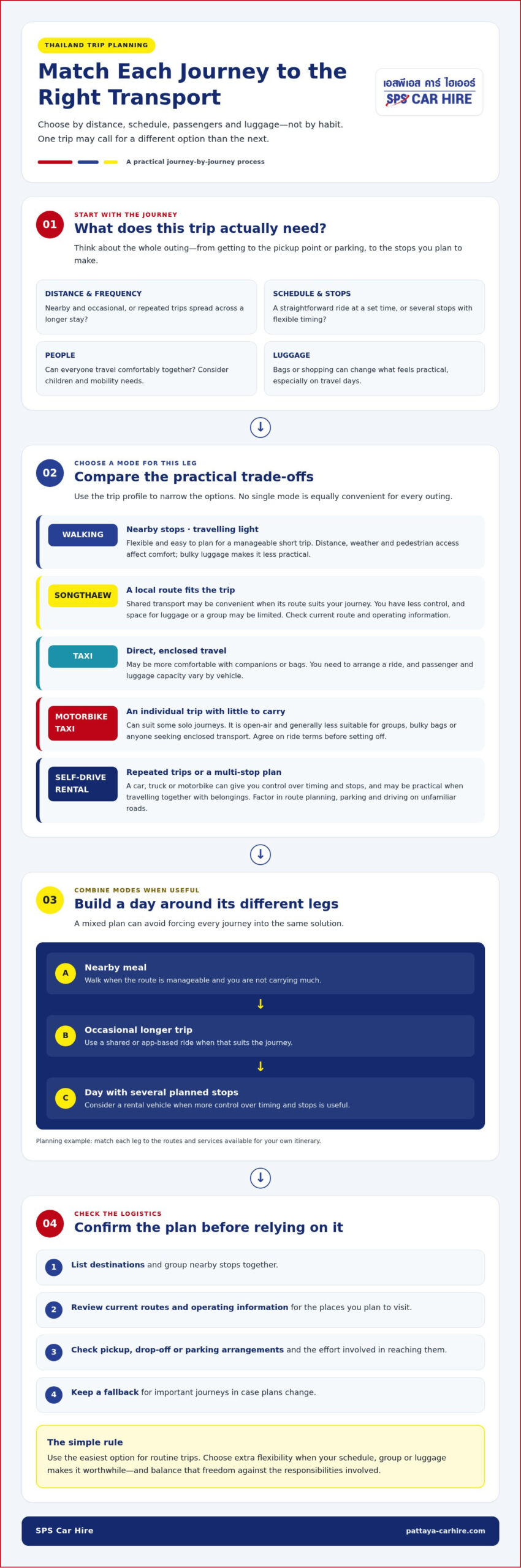
Mixing modes helps you avoid forcing every journey into the same solution. For example, you might walk to a nearby meal, use a shared or app-based ride for an occasional longer trip, and choose a rental vehicle for a day with several planned stops. Treat this as a planning example, then match each mode to the routes and services available for your own itinerary.
Before settling on a plan, review current route and operating information for the places you intend to visit. Check pickup and drop-off arrangements, and keep a fallback for important journeys. A simple rule is to use the easiest option for routine trips, then choose extra flexibility when your schedule, group, or luggage makes it worthwhile.
What transport options can visitors use, and what are the trade-offs?
Each transport mode solves a different problem. Walking keeps short trips simple, shared songthaews can help when a local route fits your journey, and taxis offer more direct travel. Motorbike taxis may suit some solo trips, while self-drive rentals give you control over timing and stops. No option works equally well for every trip, so compare the practical trade-offs against your plans.
- Walking: Flexible and easy to plan for nearby stops, but comfort depends on distance, weather, and pedestrian access. It suits people travelling light more than anyone carrying bulky luggage.
- Songthaews: Shared transport may be convenient when a local route fits your trip. You’ll have less control over the journey, and luggage or group space can be limited. Review current route and operating information before relying on one.
- Taxi: A direct, enclosed ride can be more comfortable with bags or companions. The trip depends on arranging a ride, and passenger and luggage capacity vary by vehicle.
- Motorbike taxi: Direct travel can suit an individual with little to carry, but it’s open-air and generally less suitable for groups, bulky bags, or anyone seeking enclosed transport. Agree on the ride terms before setting off.
- Self-drive rental: Offers control over stops and timing, and can be practical for travelling together with belongings. It also means planning routes, parking, and driving on unfamiliar roads.
Trip length and flexibility needs help determine which mode fits. Walking can work for a manageable nearby journey, shared transport for a route that suits it, a taxi for direct travel, and a rental for repeated or multi-stop plans. Your best option can change from one outing to the next, so don’t assume a single mode will be equally convenient throughout your stay.
When are walking and shared local transport practical?
Walking can be an easy choice for a short trip when the route is manageable and you’re not carrying much. Songthaews are shared transport, but their routes and operations are local, not universal. Heat, rain, distance, mobility needs, and luggage can quickly change what feels convenient. A walk that looks brief on a map may be less appealing in heavy weather or with bags.
When might taxis or motorbike taxis fit the journey?
A taxi can provide a more direct, enclosed ride and may be more comfortable for companions or luggage, depending on the vehicle’s space. A motorbike taxi may suit a solo passenger travelling light, but it won’t suit every traveller, group, or bag. Before setting off, clarify the fare or ride terms and destination. For frequent trips or several stops, compare separate rides with the control of a self-drive rental.
Which transport option fits your itinerary, group, and length of stay?
Use your daily travel pattern to decide whether to walk, arrange individual rides, or rent a vehicle. A short break with a few nearby outings calls for a different plan from a family trip with bags or a longer stay with frequent stops. Renting isn’t automatically worthwhile: if journeys are short or infrequent, the effort of arranging a vehicle may outweigh the extra freedom.
| Visitor profile | Journey frequency | Passengers and luggage | Likely priority | Options to consider |
|---|---|---|---|---|
| Short-break visitor | Occasional trips, often near accommodation | Solo or a small party; light bags except on travel days | Keep planning simple and avoid driving every day | Walking where practical, plus locally available shared or private transport |
| Family or group | Several outings or stops in a day | Multiple passengers, day bags, or mobility needs | Travel together comfortably and manage belongings | Compare suitable private rides with a self-drive car or truck |
| Longer-stay traveller | Regular journeys across the stay | Varies; may include shopping or activity gear | Balance the ease of separate rides with greater control | Mix local transport with a rental for repeated or multi-stop days |
Use the table as a starting point, not a fixed rule. Routes, weather, traffic, pickup arrangements, parking, and personal comfort can shift what works best. Think about the whole itinerary: a ride that suits one person travelling light may be awkward for a group carrying bags, while self-drive offers flexibility along with added responsibility.
What works for short stays and mostly short journeys?
If you’ll make only a few short trips, walking and locally available transport may cover much of your itinerary without the commitment of driving each day. Consider how often you’ll travel and the effort involved in arranging each ride, especially if plans change. For a more focused breakdown of the trade-offs, see this car rental versus taxi comparison.
When can self-drive suit groups or longer stays?
Travelling together can make one shared vehicle more convenient than coordinating separate rides, particularly if passengers have luggage or activity equipment. A vehicle can also simplify days with several stops and repeated journeys during a longer stay. If considering two wheels, factor in passenger comfort, luggage limits, and your confidence riding in local traffic; this budget scooter rental guide covers points to weigh.
For a practical decision, list your expected outings, note who and what needs to travel, then compare the convenience of arranging rides with the freedom and responsibilities of self-drive. If you are planning island journeys elsewhere and prefer private chauffeured transfers over driving, you can check out Luxor Transportation Hawaii for dedicated private car and limousine options. Choose the option that fits most of your actual plans, and keep another suitable mode in mind for days when conditions or schedules change.
How to plan everyday journeys with less friction
A little preparation can save time and make each outing easier. Plan the whole journey, not just the ride: where you’re starting, how you’ll reach the pickup point, what you’re carrying, and how you’ll return. Use this sequence before heading out:
- 1. Map your destinations. Put the day’s stops in order and use a map or navigation app to estimate distances and travel time.
- 2. Check transport options. Review current routes, operating information, and available ways to travel for each leg. Don’t assume an old schedule or service pattern still applies.
- 3. Compare the full journey. Consider walking to a pickup point, waiting, changing modes, carrying bags, and getting from the drop-off point to your destination, not only time in transit.
- 4. Leave a backup. Identify another suitable option in case weather, timing, or availability changes your first choice.
Conditions can change what’s practical. Rain may make a walk less appealing, while heat can make waiting outdoors uncomfortable. Luggage and accessibility needs may affect whether a pickup point or vehicle works for you. If you expect to return late, consider which transport options are likely to be operating then rather than assuming you can repeat the outward journey.
How can you compare options before leaving?
Use a map to understand approximate distances and the order of your stops, then review current local transport information for each journey. Compare door-to-door effort: walking to a stop, waiting, transfers, and the final stretch all count. A ride that looks quick on a screen may involve more hassle if you have bags, mobility needs, or a tight schedule.
For each leg, note the start point, destination, preferred mode, and practical constraints. Check pickup and drop-off arrangements before setting off, especially where a location has more than one entrance or access point. Leave room for changes instead of building your day around an unverified timetable or assumed route.
What backup plan helps if your first choice changes?
Choose a realistic alternative before you need one. If rain makes walking uncomfortable, identify a ride option; if a service is limited or delayed, consider whether another mode can cover that leg. Save destination details so you can share the correct arrival point, and confirm exactly where to meet a driver or board a service. Routes and options vary, so don’t assume a named service runs everywhere.
Plan your return before you leave, especially if you may finish late or your plans could change. This can prevent a straightforward outing from turning into a scramble. For days when repeated stops make self-drive more practical, compare self-drive rental options with the rest of your itinerary.
When does self-drive rental make getting around easier?
A self-drive rental can make sense when transport is part of the day’s plan, not just a way to reach one stop. Frequent outings, several destinations, passengers travelling together, or belongings that are awkward to carry can make having a vehicle available more convenient. The trade-off is taking responsibility for driving, parking, navigating unfamiliar roads, and planning each journey yourself.
Renting isn’t automatically the best choice. If you expect only occasional, short trips, walking or locally available transport may take less effort. The right option depends on your itinerary. Ask yourself whether the control of self-drive would simplify enough of your plans to make the driving and planning responsibilities worthwhile.
Is a rental the right fit for your travel plans?
Use this checklist to weigh the decision before you commit:
- Journey frequency: Will you travel most days, or make only a few short outings?
- Stops and schedule: Do you have multiple destinations or plans that may change during the day?
- Passengers: Would travelling together in one vehicle make the outing easier?
- Luggage and belongings: Do bags or activity gear make shared rides or walking less practical?
- Independence: Are you comfortable planning routes, driving, and handling parking?
If most answers point to frequent trips, shared travel, or a need for flexible timing, self-drive may suit your plans. If not, compare the effort of arranging individual rides with the added work of a rental. For longer stays, SPS Car Hire offers long-term car and truck rental packages, which can suit a routine that includes regular journeys.
How can SPS Car Hire support a self-drive plan?
SPS Car Hire provides budget-focused self-drive rentals for cars, trucks, and motorbikes. Choose a category by considering your passenger and luggage needs, the journeys you expect, and how comfortable you are driving. Factor in practical details such as parking and route planning, too. A motorbike may suit a different travel pattern from a car or truck, so choose based on your actual itinerary rather than assuming one vehicle type works for everyone.
For a short visit with few planned journeys, keep your options open and use other transport when it’s more convenient. For regular outings, several stops, or a longer stay, compare the freedom of having your own vehicle with the planning and driving it requires. Explore SPS Car Hire vehicle rental options.
Make your travel plan work for you
Before your trip, sketch out a typical day and note how often you expect to travel, what you’ll carry, and how much freedom you want between stops. This can clarify whether to arrange transport as you go or plan around having a vehicle. Choose the option that fits your real itinerary, rather than one you feel you have to use for every journey. If you are also organizing multi-destination itineraries elsewhere—such as custom ground packages across South America—services like funnytimestravel.com/vendas can help coordinate personalized routes and regional transport.
SPS Car Hire offers budget-focused cars, trucks, and motorbikes for self-drive, along with long-term car and truck rental packages. Consider which vehicle category best matches your travel plans and how often you expect to use it.
Explore SPS Car Hire’s self-drive vehicle options and choose a rental that fits your plans.
Frequently Asked Questions
Is walking a practical way to get around during a Thailand trip?
Yes, walking can work well for short journeys if the route, weather, and your mobility make it comfortable. Check the actual walking distance and pedestrian access before setting out, rather than judging by how close two points look on a map. Walking may suit a nearby café visit but feel less practical after rain or with a suitcase. Treat it as one part of your transport plan, not the answer for every outing.
Can visitors combine public transport and rental vehicles on one trip?
Yes, you can use different modes on different days. You might choose local transport for a simple outing and a rental vehicle for a day with several stops or belongings to carry. Before relying on a public service, review current operating information for your particular journey. Also plan where you’ll collect, park, and return the rental vehicle so the switch between modes feels straightforward.
How much should I budget for getting around?
Your transport budget depends on how often you travel, journey distances, party size, and the options available for your itinerary. Rather than relying on a generic estimate, list likely journeys and compare the expected use of each mode. For rentals, review the current terms and what the quoted amount covers; an advertised starting price may not represent every expense. Leave some flexibility for plan changes or journeys that take longer than expected.
What happens if local transport is unavailable when I need to return?
Plan a backup before leaving, particularly if your outing may finish late or away from busy areas. Consider what alternatives are practical at that time and save the destination and meeting-point details on your phone. If arranging a pickup, confirm the exact location so you’re not waiting at the wrong entrance. For an important return, don’t depend on an assumed route or schedule without reviewing current information.
Is a motorbike taxi suitable for travelling with luggage?
It may be inconvenient with bulky bags, multiple passengers, or if you prefer enclosed transport. Before choosing one, consider whether your belongings can be carried securely and whether the trip feels comfortable for you. A small day bag is different from airport luggage or shopping that takes up extra space. If you’re travelling as a group, compare options that let everyone and their belongings travel together.
Can I rent a vehicle for a longer stay?
Yes, a rental may suit an extended visit if you expect regular journeys and want more independence over your schedule. SPS Car Hire offers long-term car and truck rental packages. Before deciding, map out a typical week and weigh how often you’ll drive against parking, route planning, and other responsibilities. Review the rental terms and consider whether having a vehicle available fits your routine better than arranging transport for each outing.
 -
- -
- -
- -
- -
- -
- -
-