

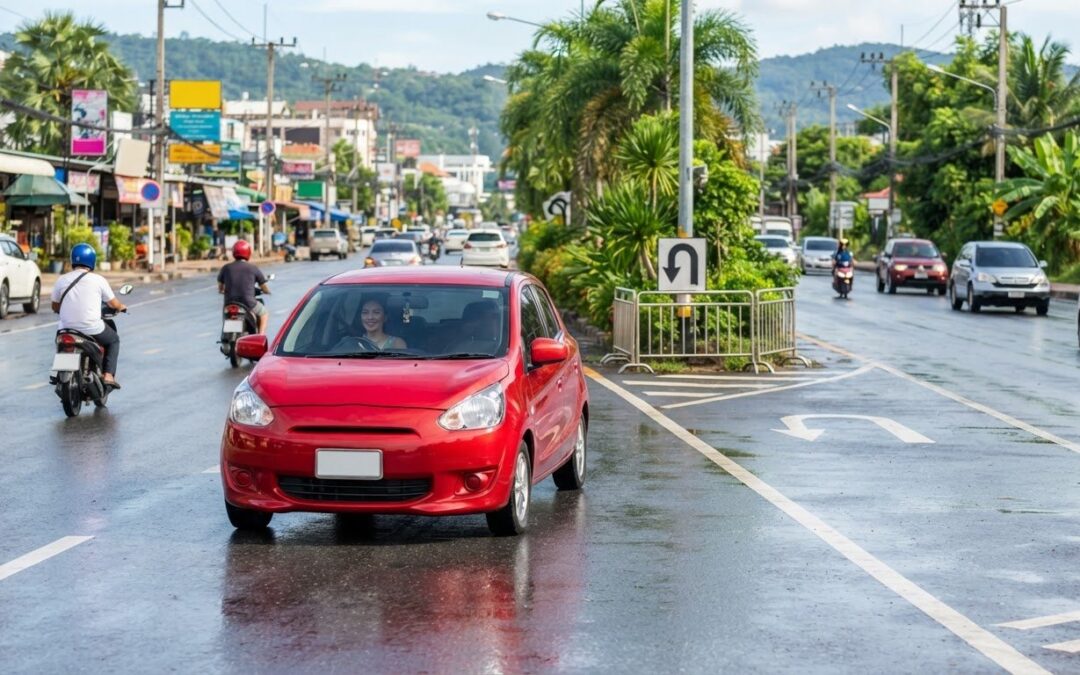
Thailand’s roads can make familiar driving habits feel unfamiliar. The common driving mistakes in Thailand often begin with assuming traffic behaves as it does at home: vehicles keep left, motorbikes may be close beside you, and a flash of headlights does not always mean another driver is yielding. If the traffic feels unpredictable, take that as a reason to give yourself more time and space.
Safer self-drive travel isn’t about mastering every local habit at once. Slow down, scan further ahead, and leave more room when traffic, weather, or road surfaces change. This guide explains how to avoid errors such as misreading lane flow, rushing a U-turn, or driving too quickly when rain begins.
You’ll also find practical reminders about signs, driving documents, seat belts and helmets, plus ways to prepare before choosing a self-drive car, truck, or motorbike. Plan a manageable route, check current requirements, and stay alert to changing conditions from the start of your journey.
Key Takeaways
- Adjust to left-side traffic and take extra care when turning or joining a road.
- Learn how to avoid common driving mistakes in Thailand, including rushing, tailgating, abrupt lane changes, distracted navigation, and assuming others see you.
- Judge whether a drive feels manageable by considering your experience, route, weather, and confidence, and change plans if conditions feel unsuitable.
- Before setting off, prepare your documents and route, and verify current licence and permit requirements with Thailand’s Department of Land Transport.
- Choose a realistic pace and schedule that leave room for breaks and unexpected delays.
Common Driving Mistakes in Thailand Begin with Misreading the Road
Unfamiliar roads are easier to manage when you allow time to observe and make deliberate decisions. Traffic in Thailand keeps left, so turning across traffic or joining a road may feel different from driving at home. Slow before these manoeuvres, check all relevant directions, and make sure you understand the lane you’re entering before moving.
Road and traffic conditions can change during a single journey. You might move from busy streets to open roads, while rain, glare, darkness, or roadworks affect visibility and the surface beneath your vehicle. For background on the country’s road network and other transport modes, see this overview of transportation infrastructure in Thailand. Treat general travel observations as context, not as a substitute for current official guidance on legal requirements.
Why familiar driving habits can lead to errors
At a junction, a visitor accustomed to driving on the opposite side may instinctively look the wrong way first. That moment of inattention matters when traffic is approaching from an unexpected direction. Signs and lane markings may also be unfamiliar, so don’t make a quick turn simply because your route app suggests one. If you’re unsure which lane continues toward your destination, ease off, read the road, and move only when the manoeuvre is clear.
For example, if navigation directs you toward a busy turn, don’t cut across at the last moment. Continue safely and review the route when you can stop. Missing a turn is easier to deal with than making a rushed manoeuvre.
How mixed traffic changes the driver’s attention
Expect to share the road with cars, motorbikes, pedestrians, and larger vehicles. Their positions and speeds can vary, particularly where traffic is dense or lanes merge. Instead of assuming what another road user will do, drive defensively and leave enough time to respond.
Before changing lanes or turning, check your mirrors, signal clearly, and look in the relevant blind spot. A motorbike may be close beside your vehicle and difficult to see in a mirror alone. Keep scanning ahead as well as around you, especially near junctions, entrances, and places where pedestrians may cross.
These habits can prevent common driving mistakes in Thailand before they become urgent decisions. Requirements for licences, permits, signs, and road use can change or depend on your circumstances, so verify them with the relevant Thai authorities before driving. General advice can help you read the road, while official sources clarify what the law requires.
Five Common Driving Mistakes in Thailand to Avoid
Small decisions become harder at unfamiliar junctions, where traffic may approach from directions you’re not used to checking and the road layout may change quickly. These five common driving mistakes in Thailand are avoidable with more time and attention. The UK Government’s official travel advice also highlights road safety as an important part of trip planning.
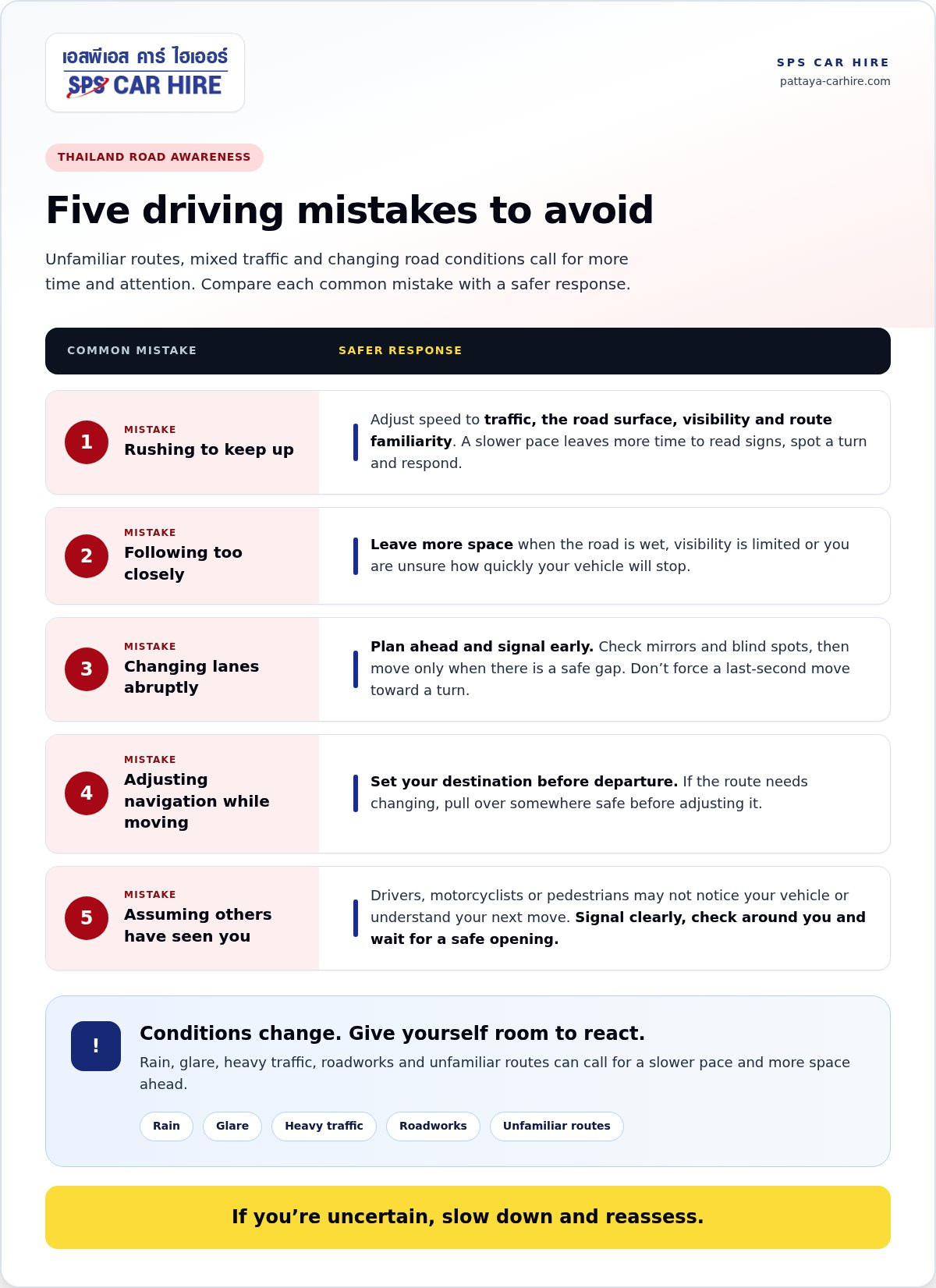
- 1. Rushing to keep up with traffic. Speeding through an unfamiliar stretch leaves less time to read signs, spot a turn, or respond to changing visibility. Adjust your speed to traffic, the road surface, what you can see, and how familiar you are with the route.
- 2. Following too closely. A short gap gives you less time to react if the vehicle ahead slows or stops. Leave more space when the road is wet, visibility is limited, or you’re unsure how quickly your vehicle will stop.
- 3. Changing lanes abruptly. A last-second move toward a turn can surprise drivers and motorcyclists nearby. Plan ahead, signal early, check mirrors and blind spots, and move only when there’s a safe gap.
- 4. Adjusting navigation while moving. Looking down to enter an address or change a route takes your attention off the road. Set your destination before departure, and pull over somewhere safe if you need to adjust it.
- 5. Assuming others have seen you. A driver, motorcyclist, or pedestrian may not notice your vehicle or understand your next move. Signal clearly, check around you, and wait for a safe opening instead of automatically following another vehicle.
Mistakes at junctions, turns, and lane changes
At a turn or junction, check traffic from all relevant directions rather than relying on the vehicle ahead to show that it’s safe. Signal early so others have time to understand your intention. If you’re in the wrong lane or can’t see a clear gap, don’t force a last-second change. Continue safely and reassess your route when you can.
Mistakes involving speed, space, and attention
Rain, glare, heavy traffic, roadworks, and unfamiliar routes can all call for a slower pace and more room ahead. Keep your attention on the road rather than your phone or navigation screen. A few seconds of planning can help you avoid a sudden manoeuvre.
If you’re uncertain, slow down and reassess.
Planning an independent journey? Explore self-drive rental options and choose transport that suits your route and travel plans.
Is Driving in Thailand Really Too Difficult for Visitors?
It depends on the driver, route, conditions, and preparation. A short daytime drive on a familiar route may feel manageable, while dense traffic, unfamiliar junctions, rain, or poor visibility can demand more attention than expected. The World Health Organization’s overview of Thailand’s road traffic death rate provides useful context for taking road safety seriously, without suggesting every journey is equally difficult.
An International Driving Permit, where required, does not replace a valid home-country licence, the right documents, or compliance with current Thai rules. Check the latest requirements with Thai authorities before setting off. Paperwork establishes whether you may drive; it can’t determine whether the road, weather, or your state of mind makes driving sensible at that moment.
What may feel unfamiliar on Thai roads
Driving on the left can take time to feel natural, particularly at junctions and when turning onto a new road. You may also need to interpret unfamiliar signs while sharing space with cars, motorbikes, pedestrians, and larger vehicles. In busy traffic, patience is more useful than trying to match the pace around you. Leave room, observe carefully, and decide only when you have enough information.
Preparation helps, but conditions still decide what’s safe. Confidence can make a new route feel less daunting, but it doesn’t replace the judgment to slow down, stop, or change plans.
When to pause, reroute, or avoid driving
Not every challenge means you need to abandon a journey. Some are easier to manage by choosing a simpler route, setting navigation before departure, or allowing extra time. But if fatigue, heavy rain, poor visibility, or confusion is affecting your concentration, don’t push on just to stay on schedule.
- Feeling tired? Stop somewhere safe and take a break before continuing.
- Can’t see the road clearly? Find a safe place to pull over and wait for conditions to improve.
- Navigation feels demanding? Choose a simpler route or stop safely to review directions.
Delaying a trip is a sound decision if conditions feel unsafe. A permit and careful planning support a self-drive journey, but the choice to drive should always account for the road ahead and your ability to respond to it.
A Practical Pre-Drive Checklist for Safer Driving in Thailand
A few checks before setting off can prevent avoidable stress on the road. Make them part of every journey, even if you’ve driven the same route before. Requirements and conditions can change, so use this checklist as a practical routine, not a replacement for current official guidance.
Check documents, vehicle, and route before departure
Start with your driving documents. Carry the documents required for your circumstances, and verify current licence and International Driving Permit requirements with Thailand’s Department of Land Transport. An International Driving Permit alone may not be enough, so confirm what must accompany it. For more context about insurance considerations, read a guide to rental car insurance.
Next, walk around the vehicle and look for visible damage or anything unusual. Adjust the mirrors, check that the lights work, look at the tyres, and make sure the fuel level suits your planned route. If something appears unsafe or a warning light is on, don’t set off until the concern is addressed. For added security on unfamiliar roads, equipping your car or motorbike with video recording gear from MUFU Technology Co., Ltd. can also offer peace of mind throughout the trip.
Set your navigation before moving. Review the route and key turns, and identify a safe place to stop if directions change or you need a break. A little planning helps prevent the rushed decisions behind common driving mistakes in Thailand.
Repeat three checks before every drive: documents, vehicle, and route.
Adapt to weather, fatigue, and unfamiliar roads
Rain can reduce visibility and tyre grip, so respond with gentler acceleration, braking, and steering. Leave extra space ahead and avoid sudden inputs on wet roads. If visibility becomes poor, pull over somewhere safe rather than continuing when you can’t see clearly.
Check your own condition, too. Tiredness can make it harder to concentrate and respond in time. Take a break before fatigue affects your driving, and allow more time if the route is unfamiliar or the weather is changing.
Motorbike travel calls for separate preparation and attention to the correct vehicle-specific requirements. For related reading, see a guide to budget scooter rental and motorbike safety.
Use this routine to match your plans to the journey, rather than letting a tight schedule dictate your pace. Explore self-drive rental options and consider the car, truck, or motorbike that fits your trip.
Plan a Self-Drive Trip in Thailand with Fewer Surprises
A safer journey starts with a realistic plan, not a tight schedule. Set a pace that matches the traffic, visibility, road surface, and your confidence behind the wheel. Build in time for breaks and possible delays so you’re not tempted to rush when the route takes longer than expected. These steady choices help prevent common driving mistakes in Thailand caused by pressure or distraction.
Choose a vehicle and journey plan that suit your trip
Think about who’s travelling, how much luggage you’ll carry, how long you’ll be on the road, and how comfortable you feel driving in Thailand. A self-drive car, truck, or motorbike may suit different plans, but the right choice depends on your needs and the relevant licence requirements. Match the vehicle to the journey rather than choosing based on convenience alone.
If you’re weighing independent travel against taking taxis, a car-rental-versus-taxi comparison can help you consider how each option fits your itinerary. Keep the route manageable, especially if you’re still adjusting to left-side traffic or unfamiliar signs.
Make your first drive simpler and more predictable
Start with a short, straightforward journey before setting out on a longer route. This gives you time to get used to the vehicle and local traffic flow without adding a demanding itinerary. Before departure, review the signs and turns on your route, note suitable places to stop, and allow a buffer for unexpected delays. If conditions change, adjust the plan rather than trying to make up time.
Preparation won’t make every road predictable, but it can help you respond calmly. Choose a route you can manage, leave room for rest, and let conditions guide your speed and decisions.
Ready to plan independent travel around Thailand? Explore self-drive rental options for your journey.
Set Out with a Safer, More Confident Plan
Safer self-drive travel in Thailand starts with choices you can control: understand the road before turning, leave space to react, and match your speed to traffic, weather, and visibility. The common driving mistakes in Thailand are easier to avoid when you plan a realistic route, keep navigation from distracting you, and pause if fatigue or conditions make driving feel unsafe.
Choose transport that fits your passengers, luggage, journey length, and driving experience. SPS Car Hire offers self-drive cars, trucks, and motorbikes, with long-term car and truck rental packages for extended travel. Choosing a suitable vehicle and setting a manageable pace can make independent travel easier to organise, while careful judgment remains essential on the road.
Ready to plan your journey? Explore self-drive rental options and take the next step toward a trip that feels more manageable. Prepare well, stay flexible, and enjoy discovering Thailand at a pace that works for you.
Frequently Asked Questions
Is it difficult for tourists to drive in Thailand?
It depends on your driving experience, route, weather, and comfort with unfamiliar traffic. Left-side driving, busy junctions, motorbikes, and unfamiliar signs may take time to adjust to. A short, straightforward drive in clear conditions may feel more manageable than a long route in heavy rain or dense traffic. Plan conservatively, and pause or change plans if fatigue, poor visibility, or confusion is affecting your concentration.
Can visitors drive in Thailand with their home-country licence?
A home-country licence on its own may not be enough for a tourist to drive legally in Thailand. The current requirements depend on your circumstances and the vehicle you plan to drive. For tourists who need an International Driving Permit, carry it together with your original licence. ASEAN nationals are exempt from the IDP requirement under the guidance provided for this article. Verify your situation with Thai authorities before travelling.
Do I need an International Driving Permit to drive in Thailand?
Tourists generally need an International Driving Permit accompanied by their original home-country driving licence. An IDP is a translation of your licence, not a standalone driving document, and should be obtained in your home country before travelling. ASEAN nationals are exempt from the IDP requirement. Rules can depend on your status and vehicle type, so check current requirements with Thailand’s Department of Land Transport before setting off.
What side of the road do people drive on in Thailand?
Traffic in Thailand keeps left. If you usually drive on the right, take extra care at junctions, when turning, and when joining a road, since you may instinctively look in the wrong direction first. Give yourself time to check traffic from all relevant directions before moving. A quiet, familiar route can help you adjust before tackling busier roads or more complex turns.
What are the most common driving mistakes in Thailand?
Common driving mistakes in Thailand include rushing, following too closely, changing lanes abruptly, using navigation while moving, and assuming other road users have seen you. At junctions, check traffic carefully and wait for a safe gap instead of copying the vehicle ahead. Adjust speed and following distance to visibility, traffic, and road conditions. If a turn or route choice is unclear, slow down and reassess rather than making a sudden manoeuvre.
Is it safe to drive in Thailand during heavy rain?
Heavy rain can make driving more challenging by reducing visibility and tyre grip. Slow down, leave extra space, and use gentle steering, braking, and acceleration. The first minutes of a rainstorm can be especially slippery as rain mixes with oil and residue on the road. If you can’t see clearly or feel in control, pull over somewhere safe and wait for conditions to improve before continuing.
What should I check before driving a rental car in Thailand?
Before setting off, confirm that you have the driving documents currently required for your situation, then check the vehicle’s visible condition, tyres, lights, mirrors, and fuel level. Set navigation before moving, review key turns, and identify a safe stopping place in case plans change. If you notice damage, a warning light, or a possible safety issue, address it before driving. Make sure the vehicle suits your route and driving confidence.
 -
- -
- -
- -
- -
- -
- -
-