

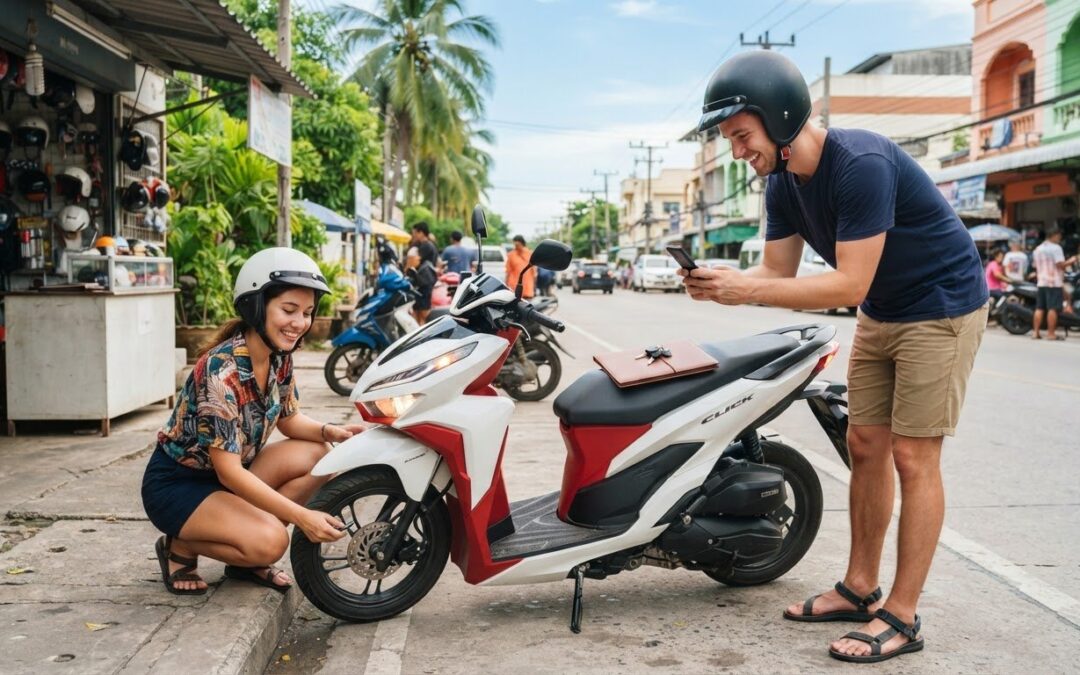
A bargain moped rental can quickly turn into your costliest travel headache the second an untrustworthy shop claims preexisting damage against your cash deposit. We completely understand the appeal: nothing beats the freedom of cruising open roads on two wheels, yet nobody wants their trip derailed by roadside police fines, ambiguous insurance terms, or sudden repair bills. What does it actually take to hire safely? Smart travel always balances the vehicle’s mechanical health with rigorous documentation defense.
You don’t have to leave your safety or your holiday budget to chance. In this guide, you’ll master the hiring process with honest, practical advice on local licensing rules, medical liability coverage, sensible vehicle selection, and proven scam prevention tactics. We’ll walk you through the essential pre-ride inspection steps and contract details you need so you can protect your wallet and explore the country with absolute confidence.
Key Takeaways
- Match engine capacity to your terrain and route requirements to select the right moped rental machine for your trip.
- Carry a valid home motorcycle license paired with an International Driving Permit to satisfy local authorities and maintain valid insurance protection.
- Execute a comprehensive pre-hire mechanical walkaround, checking tire tread, fluid levels, and lighting systems before leaving the shop lot.
- Protect your cash deposit by thoroughly documenting vehicle condition on video and refusing to surrender your physical passport as collateral.
- Adopt proactive defensive road habits to navigate local traffic dynamics safely and ensure a seamless handover during vehicle return.
Understanding Moped Rental Options and Choosing Your Machine
Walking into a rental shop without knowing what you need often leaves you with an underpowered bike or a machine you can barely balance. Modern two-wheelers range from featherweight runabouts to heavy automatic cruisers. Choosing the right machine comes down to where you plan to ride, your physical comfort, and your mechanical confidence. Reviewing the standard moped definition and classification shows that while true mopeds historically relied on pedals and tiny helper motors, modern travelers primarily encounter step-through scooters built for everyday utility.
Before signing any agreement, sit on the vehicle with both feet flat on the ground. A frame that forces you onto your tiptoes creates unnecessary instability at busy intersections or during sudden stops on gravel-strewn asphalt.
Comparing Engine Displacements: 110cc, 125cc, and 150cc
Engine displacement dictates your passing power, hill-climbing capability, and fuel efficiency across varied road networks:
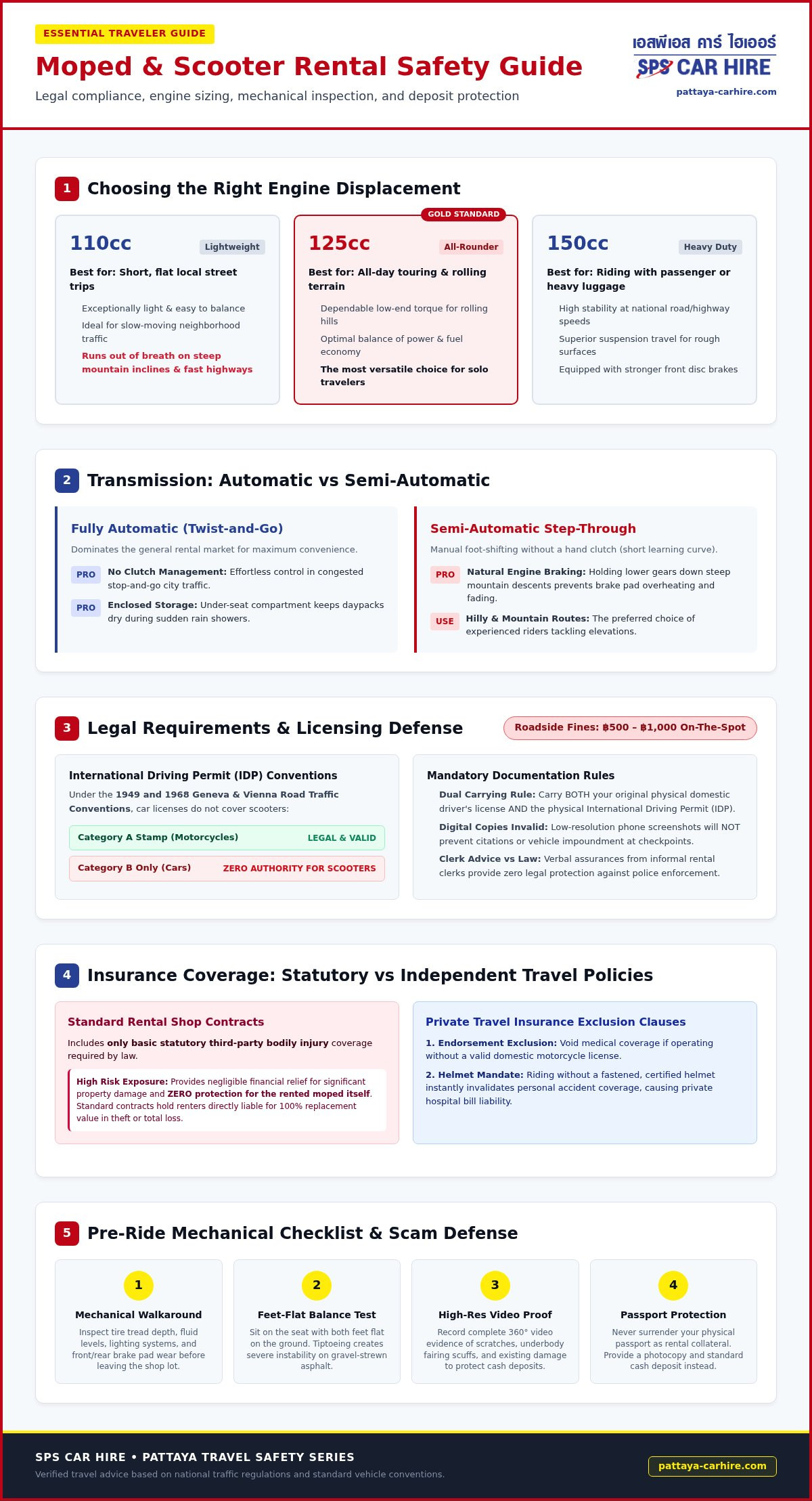
- 110cc: Compact and exceptionally light, these bikes excel at short, flat journeys through slow-moving local streets. However, they run out of breath on steep mountain inclines or faster national roads.
- 125cc: The gold standard for a dependable moped rental. A 125cc engine delivers enough low-end torque to climb rolling hills comfortably while maintaining excellent fuel economy for all-day touring.
- 150cc: Essential if you ride with a passenger or carry heavy packs. These larger chassis offer greater stability at highway speeds, superior suspension travel, and stronger front disc brakes.
Automatic Scooters vs. Traditional Step-Through Mopeds
Transmission type completely reshapes your riding experience. Fully automatic twist-and-go scooters dominate the rental market because they eliminate clutch management. They make stop-and-go traffic effortless and almost always provide enclosed under-seat storage, keeping your daypack dry during sudden rain showers.
Semi-automatic step-through bikes require manual foot-shifting without a hand clutch. While they require a short learning curve, experienced riders prefer them for hilly routes. Holding a lower gear provides natural engine braking down steep descents, preventing your brake pads from overheating and fading when you need them most.
Legal Requirements, Permits, and Rental Insurance Coverage
Many travelers assume a standard home automobile license lets them ride legally overseas. It doesn’t. Under national traffic laws, operating a motorized two-wheeler requires an explicit motorcycle endorsement. If you get stopped at a roadside checkpoint without the proper legal credentials, officers will issue on-the-spot administrative fines, usually starting around ฿500 to ฿1,000 depending on the violation. Worse, riding without an endorsement hands travel insurance providers an immediate reason to deny medical claims if an accident occurs.
Driver Licensing Rules and International Driving Permits
Staying completely street-legal requires carrying both your physical domestic driver’s license and a valid International Driving Permit (IDP). Check your IDP booklet before leaving home to ensure the Category A stamp for motorcycles is clearly validated. Under the 1949 and 1968 Geneva and Vienna road traffic conventions, holding a car-only entitlement (Category B) provides zero legal authority to operate a scooter, regardless of what an informal shop clerk tells you at the counter.
Always keep these original permits with you on the road. Presenting low-resolution phone screenshots at routine traffic stops won’t prevent citations or vehicle impoundment.
Decoding Rental Coverages and Travel Policy Fine Print
Standard moped rental contracts include only basic statutory third-party bodily injury insurance. This government-mandated coverage fulfills bare legal minimums, but it provides negligible financial relief for significant property damage and zero protection for the rented machine itself.
Protecting your financial well-being requires reading the small print on your independent travel insurance:
- Endorsement verification: Nearly every private policy contains exclusion clauses that void medical coverage if you lack a valid domestic motorcycle license.
- Safety gear mandates: Riding without a fastened, certified helmet instantly invalidates personal accident protection, leaving you responsible for massive private hospital bills.
- Damage liability limits: Standard shop contracts hold you directly liable for the full replacement value of the frame and fairings if theft or total loss occurs.
Choosing an established provider offering transparent rental terms removes this uncertainty. If you prefer touring with guaranteed mechanical standards and clear contractual protection, checking out vetted solutions like Best Price Motorbike Rental packages gives you genuine peace of mind nationwide.
Pre-Rental Inspection: The Essential Safety and Mechanical Checklist
Rushing through vehicle pickup is the fastest way to inherit someone else’s repair bill or end up stranded with sudden mechanical failure. A methodical inspection protects both your physical safety on unpredictable roads and your hard-earned cash deposit at checkout. Never let a busy shop rush you. Reputable operators always welcome a thorough inspection because clear handovers prevent misunderstandings later.
Critical Mechanical Components to Test Before Signing
Take five focused minutes to run through these non-negotiable functional checks before accepting the keys:
- Braking response: Squeeze both hand levers firmly. They should feel stiff and engage well before touching the handgrips. Straddle the machine, clamp the brakes, and push forward vigorously with your feet; the wheels must lock tight without slipping.
- Tire condition: Check the tread depth across the entire contact patch. Bald rubber provides zero traction on oil-slicked asphalt during a sudden tropical downpour. Inspect the sidewalls for dry-rot cracking, cuts, or bulging.
- Suspension and steering: Grip the handlebars, hold the front brake, and compress the front forks downward. The suspension should absorb the bounce smoothly without bottoming out, clunking, or weeping hydraulic fluid onto the brake rotor.
- Electrics and visibility: Switch on the main headlamp, check high and low beams, tap both brake levers to verify the rear stop lamp, and cycle the turn indicators. Ensure both rear-view mirrors thread tightly into their mounts so highway vibrations don’t shake them loose.
Documenting Pre-Existing Cosmetic Scratches and Damage
Protecting your deposit against unfair damage disputes requires undeniable evidence. Before signing your moped rental contract, pull out your smartphone and record a continuous high-definition video circling the machine in direct sunlight. Narrate out loud as you film, zooming in on every scuff, hairline crack, and mismatched bolt.
Focus closely on high-impact zones that most travelers overlook:
- The underside of the lower fairings and bottom plastic floorboard panels
- Exhaust pipe heat shields and pillion footrest brackets
- Outer ends of the brake levers and metal handlebar end weights
Walk the attendant around the bike immediately after filming. Insist that every scratch you documented gets marked clearly on the paper vehicle condition diagram before you hand over any money.
Rental Agreements, Cash Deposits, and Avoiding Common Scams
Handing over your original passport is the single biggest mistake you can make when securing a moped rental. Informal roadside operators often demand your primary travel document as collateral, but doing so strips away your bargaining power if an unfair dispute arises. An unscrupulous shop can easily hold your passport hostage until you pay inflated fees for minor scrapes or mechanical issues you didn’t cause.
Passport Security and Cash Deposit Protocols
Protect your identity by presenting a clean photocopy of your passport details page and entry stamp instead. Across the copy, write clearly in blue ink: “FOR RENTAL VEHICLE COLLATERAL ONLY.” Professional rental agencies routinely accept this paperwork paired with a modest cash security deposit, typically running between ฿1,000 and ฿3,000 depending on the engine class.
Demand a signed, stamped paper receipt the moment cash changes hands. That receipt must explicitly state the exact amount collected, the currency type, and the precise conditions required for a complete refund upon safe return.
Navigating Damage Disputes and Fuel Policies
Take time to read the damage clauses within the agreement before signing. Legitimate operations base repair charges directly on actual manufacturer replacement parts pricing rather than arbitrary, inflated shop penalties. Should any legitimate scrape happen during your journey, transparent operators will readily show you standardized parts catalogs rather than pulling numbers out of thin air.
Fuel return expectations can also become a surprise friction point if left undefined. Clarify whether the contract specifies a full-to-full or like-for-like return policy:
- Take a clear photo of the dashboard fuel gauge before wheeling the machine out of the bay.
- Refill the tank at a standard service station just before returning the bike to match that exact level.
- Avoid leaving the tank empty, as rental desks charge steep labor and refueling premiums compared to pump rates.
Partnering with an experienced, transparent fleet company eliminates these underhanded deposit tricks entirely. Reserve your motorbike rental through our trusted nationwide service to enjoy clear paperwork, competitive rates, and completely fair deposit terms from start to finish.
Safe Riding Techniques, Road Etiquette, and Returning the Vehicle
Operating a two-wheeler safely across unfamiliar roads demands total active concentration. Local traffic moves with its own fluid rhythm, where larger vehicles frequently claim right-of-way regardless of formal traffic signals. Adopting a defensive posture and mastering your return procedure ensures your moped rental experience stays enjoyable right up to the final handover.
Defensive Road Tactics for Foreign Operators
Assume other motorists cannot see you. Side sois and side streets frequently funnel traffic straight onto main roadways without stopping, making constant peripheral scanning mandatory. Position your bike firmly in the middle of your lane rather than hugging the dusty shoulder where loose gravel, shattered glass, and sudden car doors pose constant threats.
Keep these vital road safety rules at the front of your mind:
- Surface traction: White and yellow road markings become slick as ice during sudden showers. Cross road expansion joints, wet paint, and loose gravel perpendicular to the angle of travel without grabbing the front brake.
- Heavy vehicle blind spots: Stay clear of large commercial haulers and construction trucks. If you cannot see their exterior side mirrors, the driver has no idea you are riding alongside them.
- Helmet retention: Wear a well-fitted helmet and fasten the chin strap firmly every time you ride. Loose helmets fly off on initial impact, leaving you completely unprotected when you need protection most.
Return Protocol and Final Deposit Sign-Off
Ending your rental smoothly requires the same disciplined attention to detail you applied on pickup day. If you explored muddy rural stretches, spend ฿50 at a local pressure-wash stall before drop-off. Clean fairings allow both you and the attendant to verify the cosmetic condition instantly without dust or road grime obscuring the panels.
Walk around the machine together with the staff member. Pull up your initial timestamped check-in video on your phone if they question an existing stone chip or scuff mark. Once the representative completes the inspection sheet, sign the completion voucher and collect your physical cash deposit immediately.
Planning to stay longer or travel with more luggage? Upgrading from an informal two-wheeler setup to established long-term car rental packages or reliable utility vehicles often provides better comfort, dry air-conditioned travel, and superior cargo protection for national cross-country touring.
Secure Your Ride and Hit the Open Road Safely
Riding across open landscapes offers unrivaled travel freedom, but a smooth journey starts well before you turn the key. By verifying your motorcycle licensing endorsements, conducting a strict pre-trip mechanical check, and refusing to surrender your original passport, you eliminate the risks that catch so many travelers off guard. Navigating a moped rental doesn’t have to feel like a gamble when you stick to disciplined documentation and clear agreements.
Work with professionals who respect your safety and your budget. At SPS Car Hire, we deliver transparent rental contracts without passport retention, supported by a thoroughly maintained vehicle fleet inspected before every handover. Our experienced national vehicle hire customer support team is always ready to keep your travel seamless and hassle-free across the country. Ready to start your journey? Explore reliable two-wheeler and vehicle hire options today, take the handlebars, and enjoy every mile with total peace of mind.
Frequently Asked Questions
Do I need an International Driving Permit for a moped rental?
Yes, you legally need a valid International Driving Permit (IDP) with an explicit motorcycle endorsement alongside your national driver’s license. Operating without one violates national road traffic laws, exposing you to police fines at checkpoints and voiding your travel insurance. Even if a local street vendor hands over the keys without checking your documents, traffic officers will enforce licensing requirements strictly across the country.
Can a rental shop keep my original passport as a security deposit?
No legitimate rental agency should ever retain your original physical passport. Handing over your passport strips away your leverage and leaves you vulnerable to inflated damage extortion schemes. Reputable businesses always accept a verified passport photocopy stamped for rental purposes only, paired with a standard refundable cash security deposit. If an operator insists on taking your actual passport, walk away immediately and find a professional service.
What happens if the rental moped gets damaged or scratched during my trip?
You are financially responsible for repair costs according to the terms specified in your rental agreement. Transparent providers assess damage using official manufacturer part price lists rather than arbitrary shop penalties. Contact the agency immediately if an incident occurs, take clear photographs of the damage, and avoid unauthorized roadside mechanics who might fit substandard aftermarket components to your moped rental.
Does regular travel insurance cover injuries sustained on a rental scooter?
Standard travel insurance rarely covers two-wheeler accidents unless you hold a full motorcycle license at home and wear a helmet. Insurers routinely scrutinize police accident reports and hospital intake documents after an incident. If you were riding without the correct motorcycle classification endorsement on your license or failed to wear a fastened helmet, underwriters will deny your medical claims completely, leaving you with massive hospital expenses.
What is the standard fuel policy for two-wheeler rentals?
Most rental agencies operate on a like-for-like or full-to-full fuel return policy. You must return the vehicle with the identical fuel level marked on your initial inspection handover sheet. Always photograph the fuel gauge when collecting the bike and top up the tank at a standard service station before drop-off. Returning the tank empty results in steep refueling labor fees deducted straight from your cash deposit.
How do I choose between a 110cc and a 125cc moped?
Choose a 110cc bike for flat, slow-paced local neighborhood riding, and select a 125cc machine for steeper terrain or longer journeys. A compact 110cc engine offers exceptional fuel economy and effortless low-speed maneuvering in congested areas. However, a 125cc moped rental provides essential extra torque for passing larger vehicles, climbing rolling hills, and maintaining stable cruising speeds across national roads without straining the engine.
Can two people legally ride together on a rental moped?
Yes, two people can legally ride together provided the vehicle has designated passenger footpegs and both riders wear approved helmets. Carrying a passenger on a smaller 110cc scooter significantly increases your braking distance and reduces uphill acceleration. If you plan to ride two-up regularly, opt for a sturdier 125cc or 150cc platform with robust rear suspension to ensure balanced handling, adequate stopping power, and passenger comfort.
 -
- -
- -
- -
- -
- -
- -
-