

Driving a scooter in Thailand safely starts with the right licence: foreign visitors need a valid motorcycle licence and an International Driving Permit with a motorcycle endorsement. Wear a helmet, ride on the left, and don’t assume rental paperwork makes you legally covered. These basics matter as much as choosing a scooter you can control.
A scooter can be a convenient way to get around, but unfamiliar traffic, busy junctions, and rental details can make a ride more demanding than expected. A few careful checks before setting off can help you decide whether riding is right for your trip.
This guide covers key rules, helmet and left-side traffic basics, what to inspect on a rental scooter, and the risks of leaving your passport as a deposit. It also explains hazards specific to Bangkok, so you can decide whether riding suits your plans and what to keep in mind on the road.
Key Takeaways
- Wear a helmet and keep left; make sure the helmet fits securely before setting off.
- Inspect the scooter’s condition and document any existing damage, and offer a cash deposit or photocopy instead of handing over your passport.
- In Bangkok, ride defensively around buses, lorries, U-turns and pedestrian crossings, and avoid using your phone while moving.
- Bring a valid motorcycle licence and physical International Driving Permit with the required motorcycle endorsement before renting.
1. Helmet use and left-side traffic
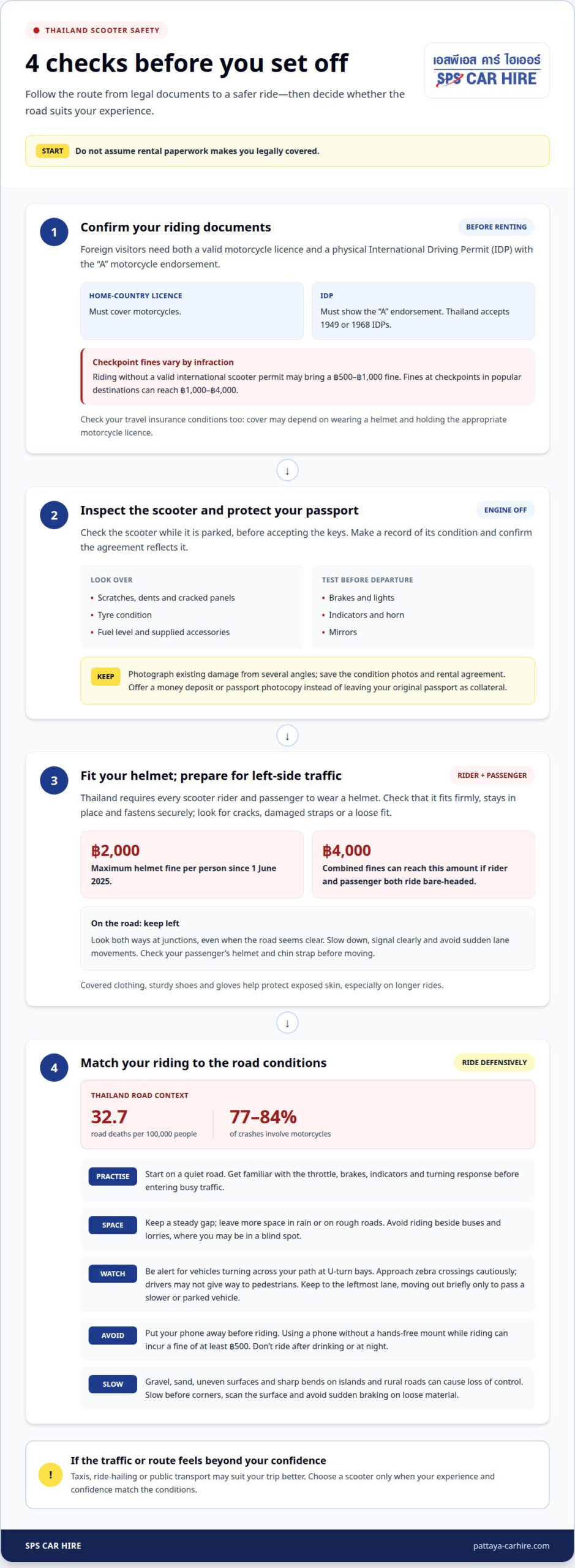
Thailand requires every scooter rider to wear a helmet; passengers must wear one too. Since 1 June 2025, the maximum helmet fine is ฿2,000 per person. If both rider and passenger ride bare-headed, combined fines can reach ฿4,000. Thai police launched a helmet-enforcement crackdown in mid-2025. A helmet is a legal requirement, not an optional rental extra.
Thailand drives on the left, so keep left and expect traffic to approach from the opposite direction than in countries that drive on the right. At junctions, look both ways before crossing or turning, even when the road seems clear. Unfamiliar traffic flows and crowded junctions can make a simple turn feel chaotic. Slow down, signal clearly, and avoid sudden movements across lanes.
Before riding, check that the helmet fits firmly, stays in place, and fastens securely. Look for cracks, damaged straps, or a loose fit. If the helmet seems inadequate, ask for a sturdier one. A helmet that shifts or comes loose offers poor protection in an accident. Wear covered clothing, sturdy shoes, and gloves to protect exposed skin, especially on longer rides.
Make the helmet check part of your pre-ride routine: fasten your own helmet, then check your passenger’s before moving. Keep the chin strap snug, and don’t ride with a helmet sitting loosely on your head. Enforcement can happen at roadside checks, so comply even on a short trip. An International Driving Permit doesn’t replace helmet use or change the left-side rule. Leave extra space around other vehicles and stay alert when traffic slows or turns.
2. Checking a rental scooter and avoiding passport deposits
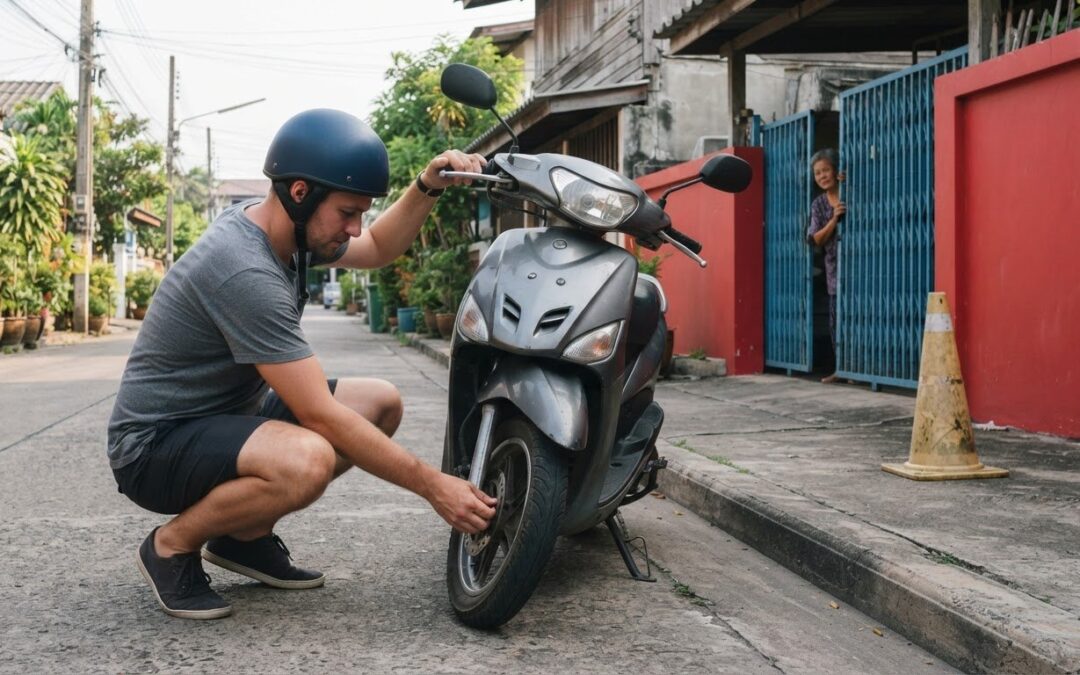
Before leaving the rental desk, inspect the scooter while it’s parked and the engine is off. Photograph existing scratches, dents, cracked panels, and tyre condition from several angles. Test the brakes, indicators, horn, mirrors, and lights before accepting the keys. Make sure the registration details and visible damage are recorded in the rental agreement. This gives you a clear record if the scooter’s condition is disputed later.
Rental prices depend on the scooter and rental period; the amount is provided after a quote request. Deposits and damage charges depend on the rental agreement and the scooter’s documented condition at return. Avoid leaving your passport as collateral. Offer a money deposit or passport photocopy instead, and keep the original document with you.
Rental companies may rent scooters without checking your permit, but responsibility for having valid documents remains with you. Carry your physical International Driving Permit with a motorcycle endorsement and the matching licence. At checkpoints, riding without a valid international scooter permit may bring a ฿500–฿1,000 fine. Fines at checkpoints in popular destinations can reach ฿1,000–฿4,000, depending on the infraction.
If police stop you, stay calm and show your documents. Don’t offer unofficial payments; ask for the ticket and follow its stated process. Before riding away, check that the fuel level and any supplied accessories are noted, and save the rental agreement and condition photos. Make sure the agreement clearly records any damage that was already present.
- Photograph the scooter before departure.
- Test brakes, lights, indicators, horn, and mirrors.
- Keep your passport and carry your riding documents.
If a scooter doesn’t suit your plans, explore transport options in Pattaya for another way to get around.
3. Is it dangerous to ride a scooter in Bangkok as a tourist?
Busy Thai traffic can be challenging for visitors unfamiliar with local roads. Thailand’s road death rate is 32.7 deaths per 100,000 people, and motorcycles are involved in 77–84% of crashes. If you’re unsure about riding, taxis, ride-hailing, or public transport may suit your trip better. Driving a scooter in Thailand safely means choosing a ride only when your experience and confidence match the traffic and route.
Practise on a quiet road before joining busy traffic. Get familiar with the scooter’s throttle, brakes, indicators, and turning response, then keep a steady gap behind the vehicle ahead. Leave more space when rain or a rough road makes stopping harder. Avoid travelling beside buses or lorries, where drivers may not see you in their blind spots.
Watch for vehicles turning across your path at U-turn bays. Don’t squeeze past a vehicle as it begins turning; slow down and wait for a clear route. Approach zebra crossings cautiously because drivers may not give way to pedestrians. Keep to the leftmost lane, moving out briefly only to pass a slower or parked vehicle.
Put your phone away before riding. Using a phone without a hands-free mount while riding can incur a fine of at least ฿500. Don’t ride after drinking or at night, when visibility and judging traffic can be harder. A new arrival shouldn’t try to learn scooter control during the busiest traffic periods.
On islands and rural roads, gravel, sand, uneven surfaces, and sharp bends can cause you to lose control. Slow down before corners, scan the road surface, and avoid sudden braking on loose material. Driving a scooter in Thailand safely also means recognizing when unfamiliar road conditions make another transport option the wiser choice.
4. Motorbikes and Scooters in Thailand: What Are the Rules?
Foreign visitors need a motorcycle licence and an International Driving Permit (IDP) to ride legally in Thailand. The home-country licence must cover motorcycles, and the IDP must carry the “A” motorcycle endorsement. Thailand accepts 1949 or 1968 IDPs. Carry the physical permit and your licence, rather than relying on a digital copy. Driving a scooter in Thailand safely starts with having the right documents before you set out.
Check your travel insurance conditions before riding. Cover may depend on wearing a helmet and holding the appropriate motorcycle licence at home and at your destination. Keep your policy details with your documents so you can contact your insurer if an incident happens. Driving a scooter in Thailand safely also means understanding your policy requirements rather than assuming every scooter ride is covered.
Vehicles drive on the left. Follow road signs and signals, and turn left at a red light only when it’s safe. Motorcycle speed limits are 80 km/h in urban areas and 90 km/h on rural roads. Check your route for restrictions and obey signs prohibiting scooters from expressways and other roads where they’re not permitted.
After a crash, move out of traffic if it’s safe, seek medical help, and exchange relevant details with others involved. Contact the rental company and insurer, and keep photographs and documents for your records. After a breakdown, move to a safe place away from traffic before reporting the problem according to the rental agreement. Don’t continue riding if the scooter appears unsafe.
In an emergency, ask someone nearby to contact the appropriate local emergency service, or use a number displayed at your accommodation or roadside location. Clearly explain your location and the nature of the incident when requesting help. Carrying your licence, permit, and insurance details makes the next steps easier if an unexpected problem interrupts your travel.
SPS Car Hire
SPS Car Hire offers practical rental options for travellers who decide a scooter isn’t right for their plans. Choose from low-cost car and truck rentals, best-price car and truck rentals, or long-term car rental packages for extended transport needs. A car may suit you better if you want enclosed transport, need room for luggage, or prefer not to ride in Bangkok traffic.
Consider your routes, trip length, passengers, and luggage before choosing. If scooter travel doesn’t suit your plans, a car or truck rental from SPS Car Hire offers another way to get around. Contact SPS Car Hire to discuss your rental needs.
Choose the transport that fits your trip
Your travel plans don’t have to depend on a scooter. If you’re not comfortable riding, choose another way to get around and enjoy the trip at your own pace. If you do ride, make your decision based on your experience, the roads ahead, and whether you can meet Thailand’s requirements. Driving a scooter in Thailand safely starts with knowing your limits and choosing routes that suit your confidence.
For travel around Pattaya, SPS Car Hire offers low-cost and best-price car and truck rentals, along with long-term car rental packages. These options can suit visitors who prefer a car or truck, including those staying for an extended period. Choose transport that works for your itinerary rather than feeling obliged to ride because a scooter seems convenient.
Contact SPS Car Hire to discuss your rental needs. Plan thoughtfully, choose what suits you, and enjoy exploring Thailand.
Frequently Asked Questions
Motorbikes and Scooters in Thailand: What Are the Rules?
Ride on the left, wear a helmet, and follow road signs, signals, and lane markings. A left turn at a red light is allowed when it’s safe, but scooters can’t use Bangkok’s tolled expressways or Motorway 7. Before setting off, plan a route on permitted roads and watch for signs restricting turns or access. These basics apply whether you’re riding in a city or elsewhere.
How to Get an IDP?
Apply for an International Driving Permit in your home country before travelling to Thailand. Make sure your underlying motorcycle licence qualifies for the motorcycle endorsement, marked “A” on the permit. Thailand accepts 1949 or 1968 IDPs for motorcycle riding. Carry the physical permit with your original licence, since a digital copy alone isn’t accepted for non-ASEAN riders.
Is it Safe to Ride a Scooter in Thailand?
Whether a scooter is right for you depends on your riding experience, route, and comfort with traffic. Before renting, consider whether you can control it confidently, respond to changing road conditions, and ride without distraction. If you’re new to motorcycles, feel uneasy, or don’t have the required licence, choose another way to travel. A helmet and careful decisions reduce risks but can’t remove every road hazard.
Is it dangerous to ride a scooter in Bangkok as a tourist?
Bangkok can be challenging for tourists because dense traffic and complex junctions demand quick, confident decisions. If you’re unfamiliar with scooters or local traffic patterns, taxis, ride-hailing, or public transport may suit you better. If you do ride, avoid manoeuvres that put you beside large vehicles, and leave room to respond when traffic changes direction or stops suddenly.
What Licenses Do You Need?
You need a motorcycle licence from your home country and an International Driving Permit with the “A” motorcycle endorsement to ride a scooter legally. A car licence alone, including a car-category permit, doesn’t meet the motorcycle requirement. Carry both physical documents while riding. Check that your travel insurance covers your licence status and helmet use, since policy conditions can affect a claim.
What happens if you are stopped by the police?
Pull over safely, remain calm, and present your physical driving licence and International Driving Permit if requested. A rider without a valid international scooter permit may face a ฿500–฿1,000 fine. Follow the officer’s instructions and the ticket’s payment process; keep the receipt with your travel documents. Don’t attempt to leave before the stop is resolved.
 -
 -
 -
 -
 -
 -
 -